Zakariya Al-Hijjawi and the Mapping of Egypt’s Musical Soul
The legacy of Zakariya Al-Hijjawi, the pioneering architect of Egyptian folk music and theater who unearthed Egypt’s living cultural treasures.
By Massoud Chouman
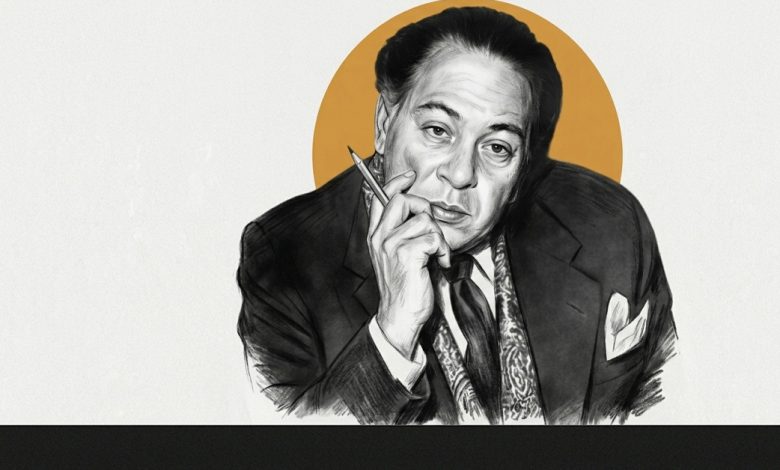
When Zakariya Al-Hijjawi departed this world on December 7, 1975, at the age of sixty, having entered it on June 4, 1915—the rababas (traditional spiked fiddles) wept bitter tears. The mawwals (narrative folk ballads) resounded in a crescendo of lamentation, a fitting elegy for a pioneer of the popular arts. He was a collector, lyricist, composer, and institutional architect who discovered a constellation of folklore luminaries, using their voices to map the rich topography of Egyptian traditional song.
In an impromptu, grieving mawwal, the legendary Mohamed Taha wept for his mentor, immortalizing Al-Hijjawi with these words:
Richly you gain in death, teacher of men,
With lore and art you guided every child, and then
May God grant Zakariya His peace and grace,
And bless the line that carries on his place.
A treasured name that fills my soul with light,
O son of Hijjawi, whose wisdom shone so bright.
The memory is sweet, in your truth we believe,
Beautiful Egypt lit her fires of art to grieve.
Your lineage in song stands high, a diamond pure,
Your generous spirit made our love endure.
From tender youth I wove the artistry of rhyme,
He who leaves immortal art survives the touch of time.
An essential question remains vital today, more than half a century after the passing of this eccentric genius: How does one encapsulate a human encyclopedia? Al-Hijjawi was a man who moved across multiple epochs and geographies, traversing an immense tapestry of folklore genres. His journey was rooted in a profound devotion to the soil and its ancestral memory, anchored by a deep, conscious understanding of the form and substance of Egyptian identity.
He remains a rare icon—a living testament to the history of a nation that recognized the value of its living human treasures early on. A true pioneer, Al-Hijjawi opened new horizons for a native folk theater that was deeply embedded in the collective consciousness of the community, creating spectacles that fiercely celebrated cultural value. He was an Egyptian forged in the furnace of a timeless civilization. Born into a creative cradle where heritage and oral folklore surrounded him from every side, he became a vast reservoir of culture, absorbing the customs, traditions, beliefs, and mawwals born of communal evening gatherings. He lived through a turbulent era of nationalist awakenings, when the collective spirit sought to reclaim the homeland through the gaze and exceptional creativity of its ordinary folk.
The Birth of a Hero in a Crucible of Revolution
Al-Hijjawi was born in Matariyya, in the Dakahlia Governorate, during a pivotal nexus in the nation’s history. As a child, his ears caught the thunderous roar of patriotic slogans and anthems during the Egyptian Revolution of 1919. These concepts of nationalism took root in his youth; as a son of the collective, he came of age in a revolutionary atmosphere driven by the search for a national identity. Raised within a community of fishermen, he listened closely to their labor songs. When music ultimately entwined itself with the veins of their spoken word, it became the thread that inspired him to become a towering beacon in his field.
His primary education was split between Matariyya and Port Said, and his daily commute was a solitary boat navigating the waters between these two worlds. Upon that vessel, the act of crossing became a daily ritual. From the deck, his worldview crystallized into vivid tableaus. The boat was the living context that shaped his artistic canvas—a canvas populated by the songs of fishermen, the rhythmic cadence of their bodies, the profound culture of manual labor, and the myths and spectral fantasies of the lake.
Thus, his soul swam in tales of water sirens, falling in love with the concise, heavily coded idioms that rolled off the fishermen’s tongues. He watched their bodies sway in harmony with the motion of the boats, knowing that standing at the bow was the preamble to speech and creative expression. As the nets were cast, the seeds of language began to germinate. The collective pulling of lines—when palms joined palms to wrench phrases from chests and from the sea—was a labor slick with sweat and saltwater. It was a harvest not just of fish, but of wisdom and poetic truth.
In those waters, he learned the division of labor, the classification of fish, the architecture of boatbuilding, and the geography of migration. His imagination became crowded with the enchantment of the lake and its seductive beauty. Simultaneously, the revolutionary fervor of the era charged him with a fierce patriotism, leading his peers to soon baptize him as a student leader within the nationalist movement.
Squandering an Inventory of Blankets for the Poor
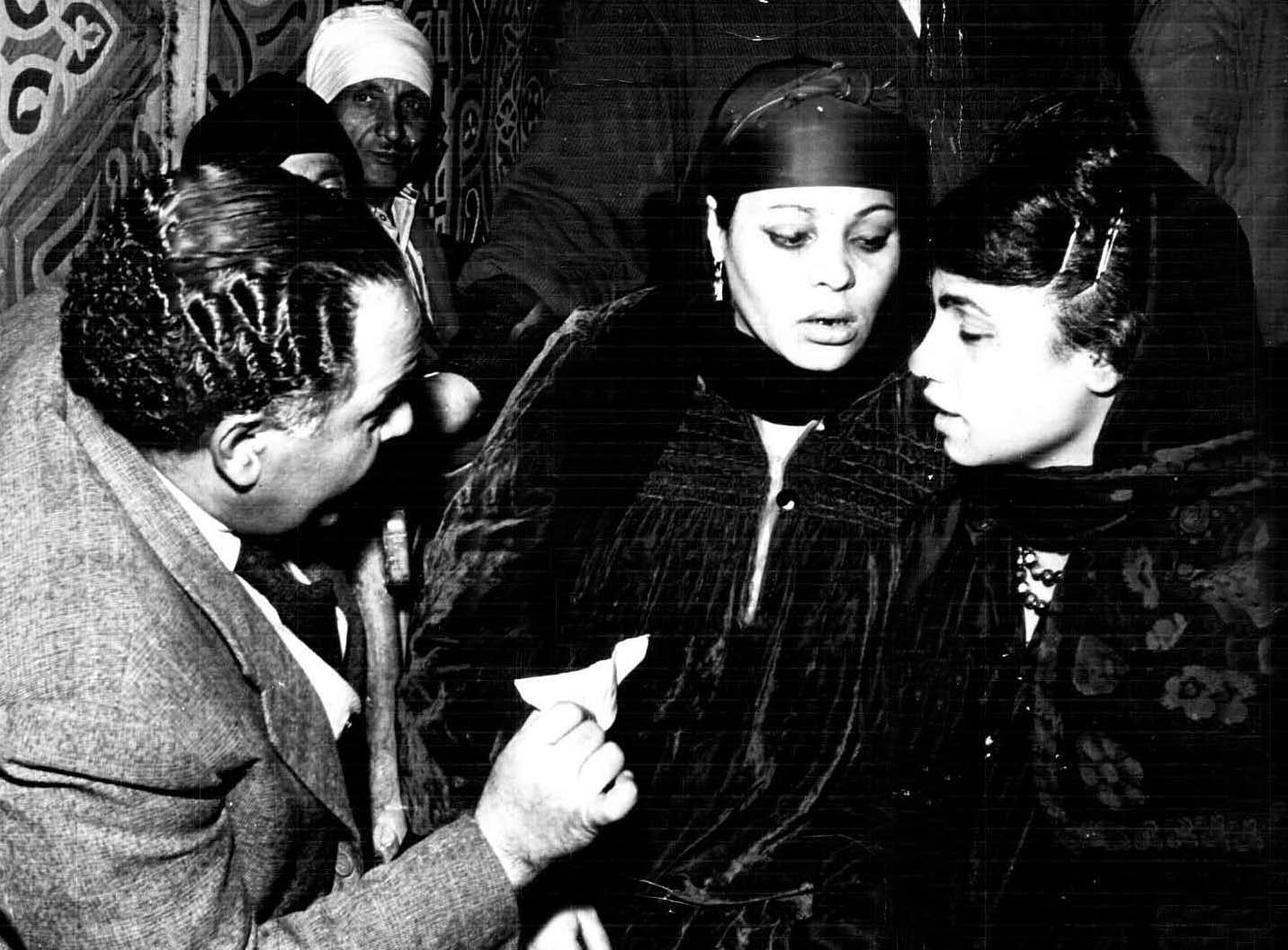
Al-Hijjawi’s professional journey began at the School of Arts and Crafts where he studied. Following graduation, he secure a post as a civil servant. However, his innate allegiance to the impoverished and marginalized subverted his bureaucratic duties. In an act of radical empathy, he deliberately depleted his official inventory of government blankets, distributing them to the destitute who resided at the very core of his consciousness.
Al-Hijjawi was a fieldworker by intuition rather than academic theory. His upbringing provided the profound insight that guided him toward the arts and daily lives of ordinary people—people who possessed a completely different kind of artistic expression. From this point, his definitive transformation occurred when he entered journalism. He produced a massive body of writing that championed traditional crafts and folk arts, brushing away the dust of neglect and propelling them into the cultural vanguard.
He remained fiercely loyal to the heritage of his community, viewing it as the only effective antidote to the crisis of identity. Although print journalism was not his ultimate destination, he weaponized it to serve the folklore and beloved arts of the people.
Alongside his print work, he consecrated his talents to the airwaves, achieving his greatest triumphs through the medium of radio drama. He produced serialized works that achieved unprecedented popularity; Egyptian streets would empty of pedestrians as millions rushed home to follow his dramatic gems, such as Ayoub, Kayd El-Nesa (The Guiles of Women), Mala’eeb Shiha (The Pranks of Shiha), and Anas El-Wogoud.
These masterworks were not mere fictions spun from an isolated imagination. They were the fruits of his labor as a field collector of a rare caliber. He possessed an acute awareness of the secrets buried in the chests of the common people, their sorrows, and their lore. His terrain comprised the distant villages and rural hamlets that would eventually become his primary source for discovering living human treasures—both male and female folk vocalists.
Al-Hijjawi never restricted himself to a single folklore genre. He was a masterful fisherman whose nets gathered epic narratives, mawwals, work songs, the liturgical texts of Hajj pilgrims, the epigrammatic morabba’at (four-line stanzas) of Ibn Aroos, and folk ballads of every dialect. It was as if he had harvested every element of oral tradition to let them stand majestic upon the grand stage, transplanting folklore from its insular communal context into the wider public sphere. Through him, Egyptians finally recognized the map of their collective arts and its profound aesthetic dimensions.
The Barber of Alexandria and the Genesis of ‘Ya Leil Ya Ein’
From early youth he loved the trees,
His innermost soul played with the breeze.
He adored the melody, he answered the call,
And built for the doves a home high and tall.
He carried the words of the folk through the air,
Like flawless diamonds, brilliant and rare.
Following the July 1952 Revolution, a state-led interest in popular arts began to crystallize. The government established the Center for Folklore in 1957, followed by the General Administration of the Arts. This shift was catalyzed by President Gamal Abdel Nasser’s personal interest in Egyptian folklore, sparked after he observed that every foreign country he visited showcased its traditional arts as the true visage of national identity. The brilliant writer Yehia Hakki was appointed as the first head of the Administration of the Arts. Hakki possessed the intellect to enlist Zakariya Al-Hijjawi, a man who had lived the arts of the common people and held the keys to the collective consciousness.
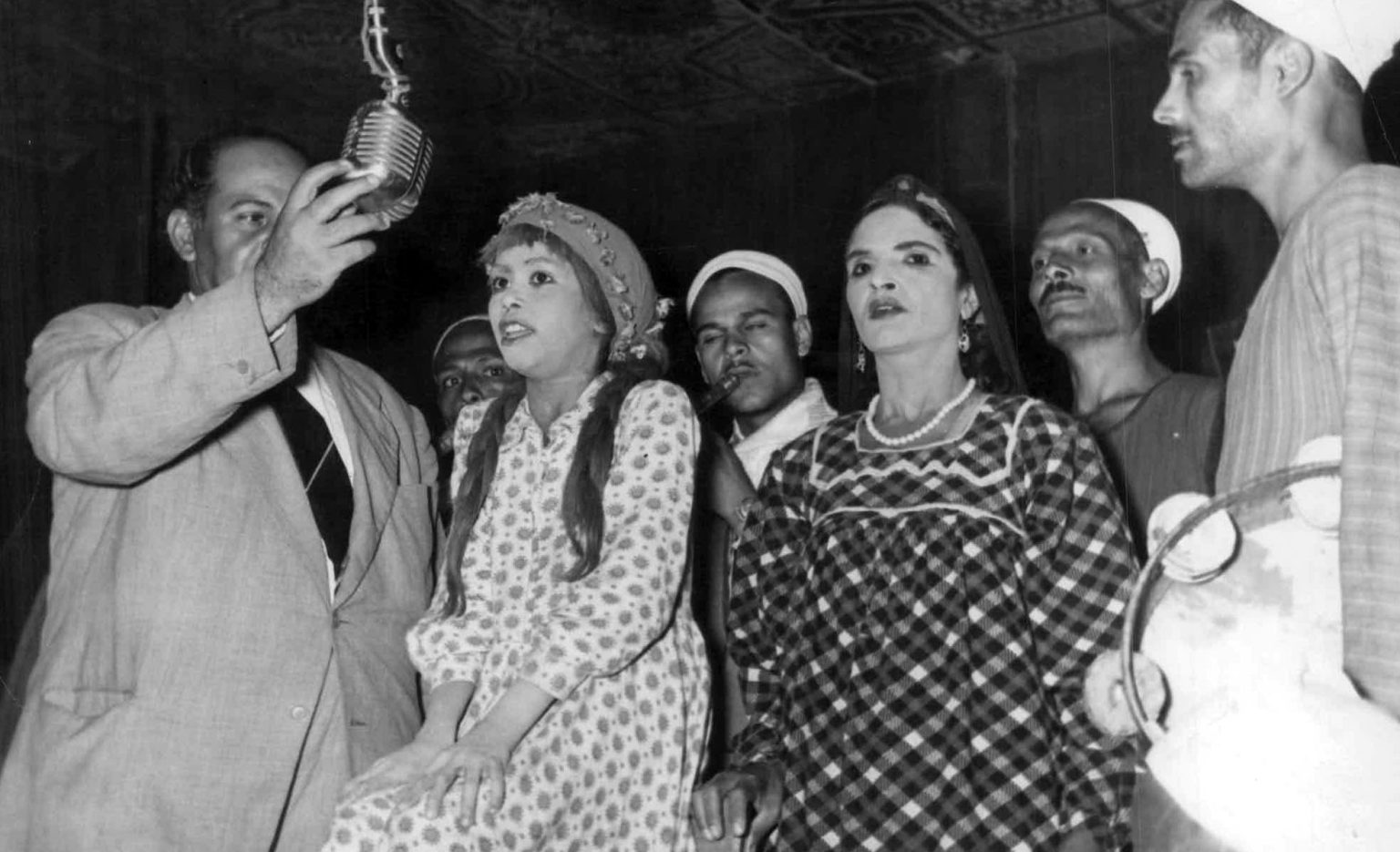
Their collaboration bore fruit in the very first theatrical production produced under Hakki’s patronage: Ya Leil Ya Ein (O Night, O Eye). This seminal operetta was entirely collected by Al-Hijjawi from a traditional barber in Alexandria. He took the core of the barber’s oral tale and spun it into a singular theatrical masterpiece. To bring it to life, he recruited the legendary performer Naima Akef and the dancer Mahmoud Reda—who was then adapting the rigorous techniques of the Russian school of dance to local movement. He also enlisted a cadre of musical geniuses, including Abdel Halim Nouira and Ali Ismaeel.
Yehia Hakki was utterly astonished when he saw with his own eyes, and heard with his own ears, battalions of traditional musicians, singers, and dancers storming the proscenium. On that stage, stars were born. Among them was the mesmerizing Khadra Mohamed Khedr, who, before Al-Hijjawi found her, had been an itinerant folk singer wandering the provinces to earn her daily bread. She had spent her life singing in Zar (spiritual exorcism rituals) circles, performing to the hypnotic cadence of the traditional Abu El-Gheit or Ayoub rhythms—tempos that would soon become the definitive sonic signature of the troupe Al-Hijjawi formed.
The Lapidary of the Vernacular Voice
Al-Hijjawi was a prospector for diamonds, seeking out the rare vocal cords that authentically represented the Egyptian alloy. His troupe was a resounding phalanx of mawwal, morabba’at, and epic narrative. Who could possibly forget the genius of Mohamed Taha, the master of ten thousand improvised mawwals? It was as if the heavens had chosen Taha’s voice to blend the rare warble of wild birds with the raw elements of nature. His voice bridged Upper and Lower Egypt, rooted in the deepest strata of popular wisdom—a living synthesis of elements fused by time, performing Ya Leil Ya Ein in his traditional donning of the tarboosh (fez) and rustic attire.
And who could forget Abu Draa, whose brave, robust voice felt deliberately sculpted by time, sounding like an ancient arghul (double-pipe reed instrument) echoing through the ages into our hearts? There was the voice of Fatma Serhan, a peasant woman whose tones seemed pressed directly from the bark of sycamore and mulberry trees; the haunting presence of Gamalat Shiha; and Metqal Qenawi, with his fierce, upturned mustache upon which a falcon could perch. Qenawi’s chiseled features looked as though they had been chiseled from the walls of a Pharaoh’s temple, and his silver teeth lent an unexpected tenderness to his rugged delivery as he played a rababa whose strings were plucked from the tails of the finest Arabian steeds.
These vocalists were the hidden gems from which Al-Hijjawi brushed away the dust, allowing them to glitter in the firmament of artistic glory. Furthermore, Al-Hijjawi stands as the legitimate architect of traditional folklore programming on Egyptian radio, despite the historical erasure attempted by certain pseudo-intellectuals who later co-opted his legacy.
In every domain concerning the common people and their creative expressions, Al-Hijjawi’s shadow looms large. He innovated several nomadic theatrical mediums that migrated directly to public squares setting up stages in Al-Hussein, Sayyida Zeinab, public arenas, and rural threshing floors offering a radical new space for art borrowed directly from the community. These experiments materialized in the Samar (communal evening) theaters, as well as the shawader (canvas pavilions) and suradiq (ceremonial tents) that became the hallmarks of mass culture and which eventually led to his bureaucratic dismissal.
The Legitimate Architect of Folk Theater
My darling, my son... I love this land of mine,
And the folk of my country, beautiful and fine.
O myself, O my land, your history I revere,
I will build it, protect it, and hold it so dear.
For the sake of my homeland, my life I will give,
To read of its past, and help it to live.
Zakariya Al-Hijjawi remains the true, legitimate founder of popular theater. He successfully elevated folklore from its vernacular origins to a grand public arena, occupying the absolute center of the movement that democratized art from the elite to the masses. His contributions to Egyptian cinema are equally undeniable; he penned the screenplays for cinematic classics such as Sayed Darwish and Adham El-Sharkawi.
In the realm of cultural criticism, his essays on folk art constitute a massive treasure trove that desperately demands compilation into a single volume. He also authored a pioneering study titled Tales of the Jews, assisted in founding folklore preservation centers across several Arab nations, and personally chauffeured the brilliant poet Salah Jaheen to rural moulids (saints’ day festivals) and traditional feasts. These field trips profoundly informed Jaheen’s populist inspirations, most notably spawning the masterpiece operetta El-Laila El-Kebeera (The Grand Night).
Exile, Eviction, and a Lonely Departure
Al-Hijjawi’s genius was not confined to journalism, radio, operetats, and fieldwork. He was also a remarkably gifted short story writer. In this genre, he left behind a singular collection titled The Violet River, in which he remained fiercely devoted to his core subject: the marginalized sons of the Egyptian soil, restoring them to their rightful place as the protagonists of history.
Yet, despite his monumental legacy and his foundational role across music, song, choreography, and literature, this vast credit did not shield him from malice. He faced administrative persecution, culminating in his dismissal from the Ministry of Culture. Compounding the cruelty, he was evicted from his home when his apartment building was demolished to make way for a new highway. Left with no alternative, he exiled himself to Qatar, where he characteristically engineered a massive cultural renaissance by establishing their national folklore troupes.
He passed away far from the homeland he loved, a stranger in a foreign land, as if embodying a traditional mawwal from his own collection:
How tragic when the sweet, once held in high esteem, is brought to shame,
And he who possessed great power is stripped of his name.
The envier scoffed, watching him walk his homeland in blame.
May God grant peace to the icon of Egyptian and Arab folklore, Zakariya Al-Hijjawi. This current initiative to resurrect his memory among the pioneers of traditional music is a vital step toward restoring historical justice to one of the truest symbols of authentic Egyptian art.
Yet, a haunting question persists: Why have our state cultural institutions failed to document and archive the wealth of materials Al-Hijjawi gathered or wrote—the epics, the mawwals, the work songs, the operettas, and folk biographies? Why have they neglected to reprint his short stories and research volumes? Why is there a lack of institutional support for the Nile Troupe for Folk Instruments, whose aging musicians represent the very last custodians of Al-Hijjawi’s living legacy?
I hold a fervent hope that the Ministry of Culture will inaugurate an official competition bearing the name of Zakariya Al-Hijjawi for traditional music ensembles. The objective of such an initiative must be twofold: to perform and preserve Al-Hijjawi’s gathered repertoire, and to inject fresh life into the genre by introducing new lyrical texts collected from fields across Egypt’s provinces. Only then can we discover new vocalists and oral narrators to carry forward Al-Hijjawi’s grand and sacred mission.