The Last Lantern-Keeper of Port Said: A Guardian of Light Defied by Time
The final traditional lantern-keeper of Port Said, charts the poignant extinction of a century-old Egyptian craft against the relentless march of modern light.
By Osama Kamal
Finding the last kloubati (lantern-keeper) in Port Said proved no easy feat. Every inquiry yielded the exact same refrain: “That profession died a long time ago.” The lanterns themselves had vanished from the city, though they were once woven into the very fabric of its daily existence, illuminating cafes, storefronts, wedding processions, small fishing boats, and the wooden carts of roaming street vendors.
Zouba the Lantern-Bearer: A Dancer of the Forties
Throughout my journey, I traced the remnants of the lantern in scattered, wondrous tales of yesteryear. Even the memory of Zouba Al-Kloubatia (the lantern-bearer), the celebrated 1940s dancer who performed with a lit lantern and a candelabra balanced atop her head fluttered through my mind during the search. It felt as though the trade itself had morphed with time into a ghostly vignette from old Egypt, leaving behind nothing but names and fading photographs.
I wandered through the historic alleys of Port Said, seeking any surviving footprint of the craft. I questioned city elders, proprietors of ancient shops, and vendors seated before their storefronts. They invoked the names of the old lantern-keepers like one speaks of the long-absent: Ibrahim Salem, Ali Suleiman, Rashed, Ahmed Jalhoum, and Mokhtar Sobh. These lights extinguished alongside their bearers, and their shops transitioned into other trades, entirely severed from that ancestral glow.
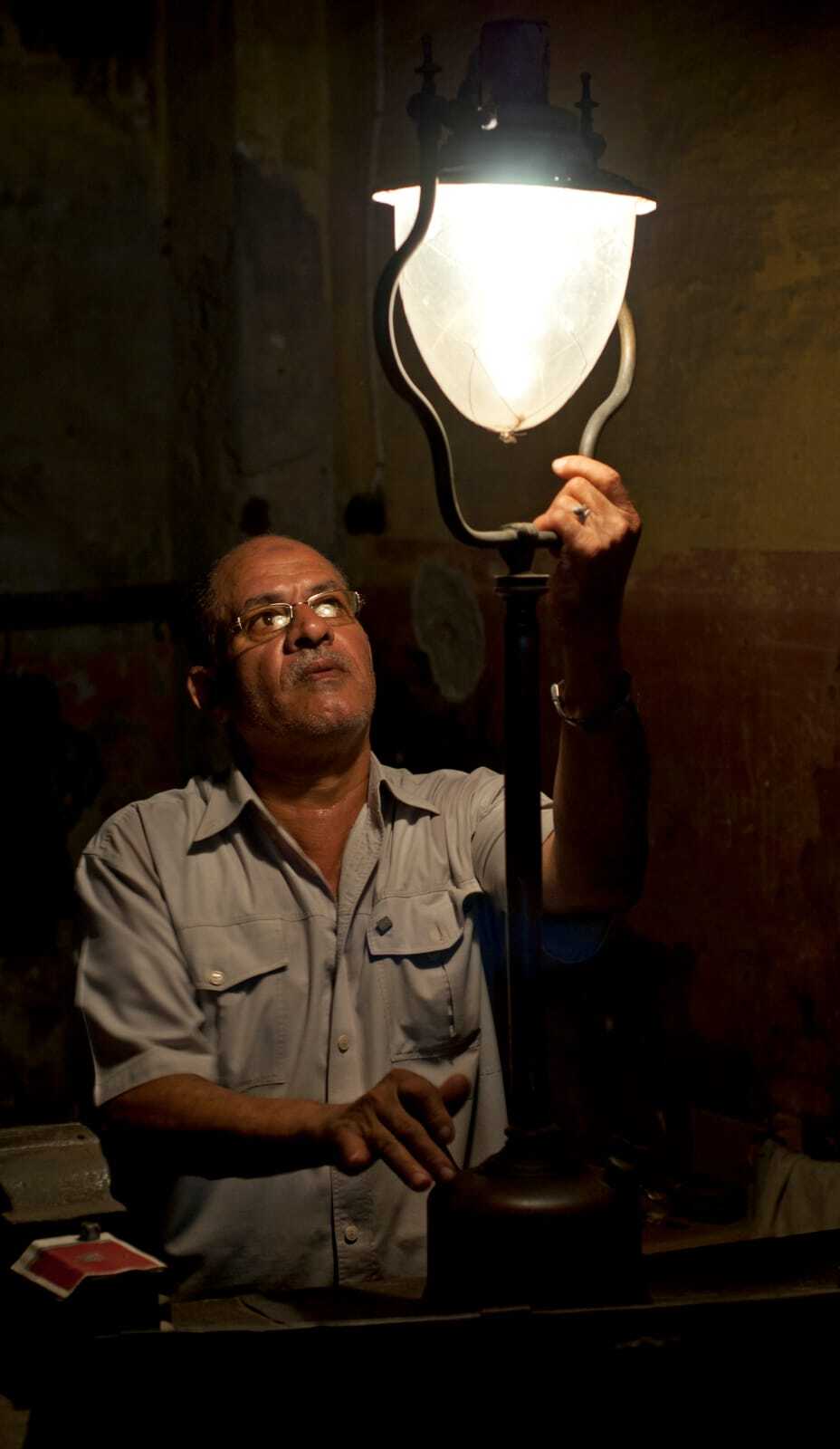
The Lone Lantern-Keeper: Witness to an Age of Light
At the intersection of Al-Hamidi and Aswan streets, nestled within the historic Al-Arab district, I met Al-Arabi Ibrahim Salem, the son of a master lantern-keeper. He spoke of his father with a palpable yearning, as if the lantern were not merely a livelihood, but an entire epoch the city once inhabited and subsequently lost. He pointed me toward Kisra Street, mentioning that the very last of the lantern-keepers still opened his shop for two hours each evening, even though no one required his services anymore.
On Kisra Street, the shop materialized like a fragment detached from time itself. It bore an ancient wooden door, weathered walls, and an antique mabkhara (incense burner) crowning the storefront. All around it, the chaos of modern traffic and the harsh glare of contemporary halogen headlights swirled, making it seem as though the entire city had transformed, save for this singular, stubborn corner.
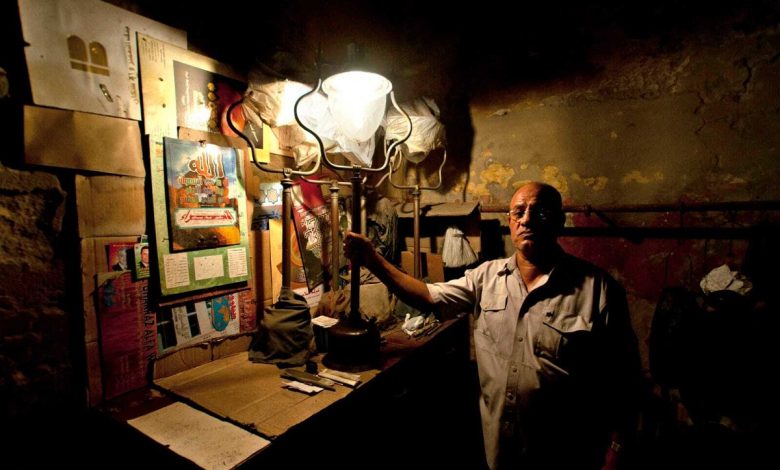
I waited until dusk to meet Mohammed Mokhtar Sobh, the final lantern-keeper of Port Said. Serene and unassuming, he sat inside a cramped shop measuring only a few square meters, looking for all the world as if he were residing inside his own memories. Only five antique lanterns remained in the shop, draped in dust and plastic sheeting. Yet, when Sobh lifted those covers, it felt as though light itself was awakening from a profound slumber.
He ignited one of the lanterns. A soft, warm radiance bloomed outward, entirely distinct from the stark, unforgiving glare of modern electricity. This was light with a soul, a glow mirroring the old nights of Port Said.
Secrets and Styles of the Lantern
He spoke of the lantern as one speaks of an old companion with whom they shared their finest memories. He explained that its crowning glory was the rateena (mantle), a delicate silk mesh that transmutes into a pure, brilliant glow the moment the white kerosene touches it. Then there is the makina (mechanism), the outer frame alongside the nozzle, the neck, and the thimble. Every single component possesses a precise function, understood by the lantern-keeper just as a goldsmith commands the secrets of precious metals.
The lanterns came in two distinct varieties: the tarabeza (tabletop) and the aleeqa (hanging). The tabletop lantern was securely fastened to the carts of street vendors, casting a mobile glow that accompanied them through winding streets and tight alleyways. Meanwhile, the hanging lantern graced the interiors of shops, cafes, and boats, varying in shape and size depending on the venue and the grandeur of the occasion.
Sobh recounted how these lanterns once illuminated the entirety of Port Said. In the nights of old, their fires sparkled upon vendors’ carts, inside bustling folk cafes, amid funerals and wedding celebrations, and even atop small fishing vessels, where schools of fish would rise, drawn to the shimmering light dancing upon the water.
Modern Spotlights and the Death of the Craft
Then came the modern spotlights, the pure white kerosene vanished, and vendors began relying entirely on electricity until the profession faced total extinction. The lantern-keepers passed away one after the other, and their shops shuttered their doors, save for this tiny haven whose owner insisted on opening every evening.
When I asked him why he still journeyed here despite the demise of his trade, a faint smile crossed his face. He replied that the shop was under an old rent contract, and he felt compelled to open it daily to avoid losing the lease. Yet, the timbre of his voice betrayed a deeper truth; it whispered that the matter far exceeded a mere rental agreement. It felt as though he feared that if he locked that door permanently, he would lock away an entire lifetime spent within that bygone era.
Sobh did not cling to the craft for sustenance. He earned his living as a pipefitter for the Port Said Company, an affiliate of the Suez Canal Authority. Yet, he faithfully returned to the shop after his father’s passing in 1983, as if his daily presence were a final, defiant attempt to preserve what remained of his lineage and a vanishing world.
He recognized that the lantern had been exiled from modern life, and that the city no longer resembled the vibrant, youthful town he once knew, bathed in the warmth of kerosene. Nevertheless, he arrived every day to sit beside his silent lanterns, occasionally lighting a few, not to illuminate the street, but to rescue whatever he could from the recesses of his memory.
When I departed that evening, I knew I had not merely visited an old shop. I had stood within the very last pool of light remaining from the original Port Said.
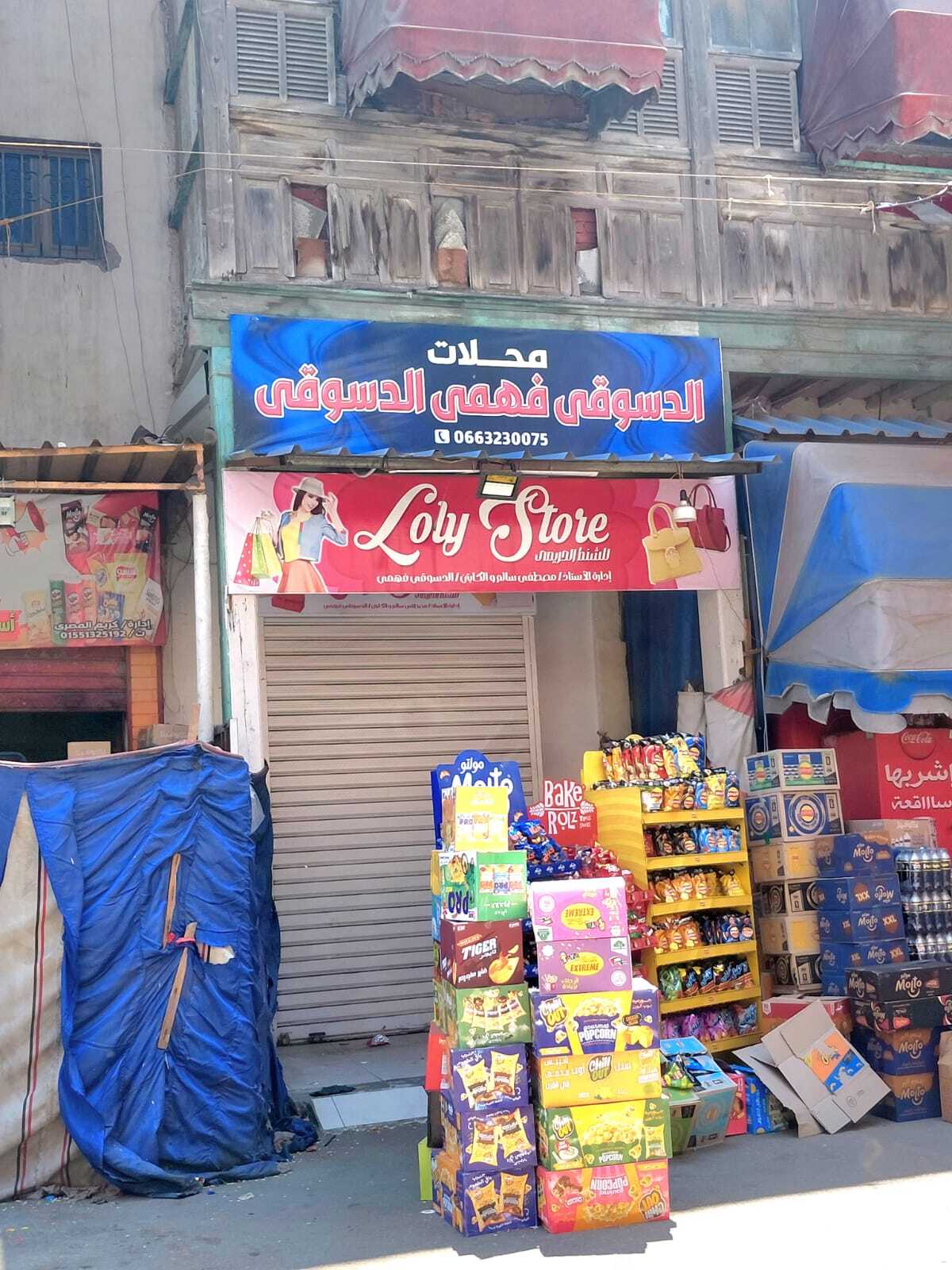
Years later, Mohammed Mokhtar Sobh passed away, taking with him the title of the final lantern-keeper in the city’s history. With his departure, the last living trace of the craft went dark. The shop changed its trade, the lanterns vanished from its interior, and the space transformed into a boutique selling women’s leather handbags. It was as if time had completed its final cycle, quietly closing the door on a profession that had lived for more than a century among the streets and ancestral lights of Port Said.