
From the Banks of the Nile to Beijing: An Environmental Exchange on Eco-City Development
(Sponsored Content)
A look at a recent Egypt-China academic exchange on eco-city development, covering forest governance, sponge cities, and bamboo as a plastic alternative.
By Sally Nabih
A recent academic exchange program brought participants from Egypt together with counterparts in China to discuss environmental policy and urban development, with sessions organised in part by China’s National Academy for Forestry and Grassland Administration (NAFGA). The program included tracks on forest law enforcement and governance (FLEG), a seminar on building eco-cities for developing countries, and discussions of biodiversity protection.
Sessions referenced a phrase associated with Chinese President Xi Jinping, “clear waters and green mountains are invaluable assets” which has been used in Chinese environmental policy messaging since the mid-2000s to frame environmental protection as compatible with economic development.
Participants travelled with logistical support facilitated by the Chinese Embassy.
Discussions touched on Shanghai and Chengdu as examples often cited in conversations about urban environmental policy in China, Shanghai for its combination of dense development and environmental initiatives, and Chengdu for its association with giant panda conservation, including a well-known breeding and research base in the city. Independent assessments of urban environmental performance in Chinese cities have noted both progress on green space and emissions targets, and ongoing challenges with air and water quality in some areas.
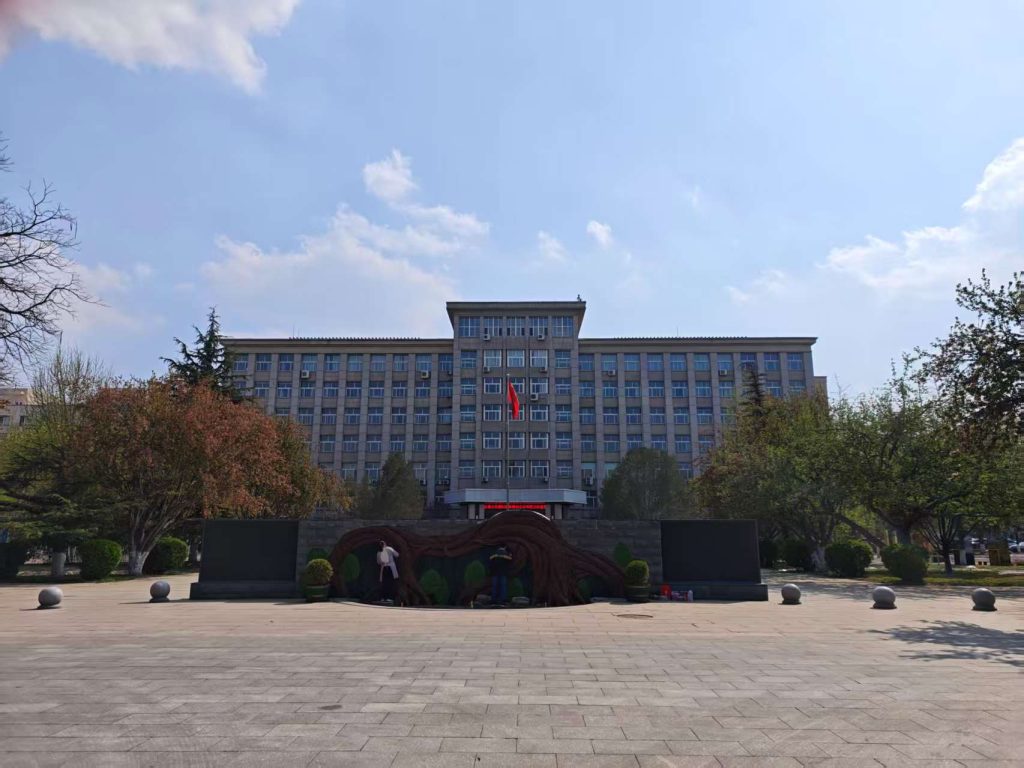
Tsinghua University, Beijing
A recurring theme was bamboo’s role in China’s “bamboo as a substitute for plastic” initiative, a program developed with the International Bamboo and Rattan Organisation (INBAR) since around 2022. Bamboo is fast-growing, regenerates without replanting, and is promoted as an alternative material to reduce plastic use, though its overall environmental benefit depends on factors like processing and transport.
The program also covered “sponge cities,” an urban planning approach using green infrastructure permeable surfaces, wetlands, and green corridors to manage stormwater. China has promoted this approach nationally since around 2015.
Sessions on the FLEG initiative addressed illegal logging and forest governance as issues with implications beyond the local level, framing forest protection as connected to global biodiversity and the sustainability of international supply chains tied to forest products.
Organizers described the exchange as part of a broader effort to share environmental and technological expertise with developing countries, framed around the idea of a “shared future for humanity”.
The program was presented as part of ongoing cooperation between Egypt and China on sustainable development and educational exchange.