The Last Shred of Al-Kareena: The Ancient Palm Fiber Craft Facing Extinction in Damietta
As modern synthetics dominate, Damietta’s ancient Kareena artisans fight to preserve the fading, eco-friendly craft of natural palm-fiber upholstery.
By Helmy Yassin
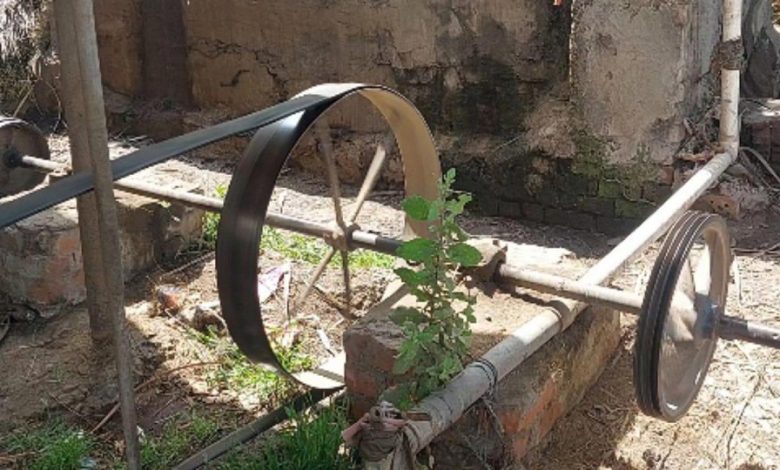
Inside cramped, rustic workshops scattered across the villages of Damietta, the mechanical drone of palm frond shredders echoes daily. This rhythmic hum sustains one of the oldest heritage crafts intertwined with Damietta’s legendary furniture industry: the art of grinding Kareena (natural palm fiber). For decades, this resilient material served as the foundational bedrock of traditional upholstery workshops, long before the onslaught of polyurethane foam, synthetic fibers, and modern industrial alternatives.
A Legacy Woven from the Earth
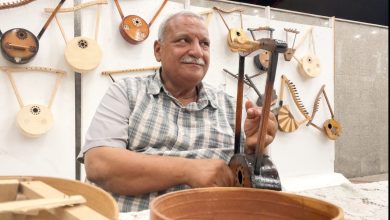
Haj Ali Abu Arbaa, a veteran crate maker, explains that this profession remains deeply anchored in the historical lineage of Damietta’s furniture making. Within these workshops, artisans transformed raw palm fronds into coarse, resilient fibers used to stuff chairs, salons, and sofas. This natural padding endowed the furniture with a signature sturdiness and an elongated lifespan, cementing the stellar reputation that Damietta’s masterpieces enjoyed for generations.
Despite the severe decline the craft has suffered in recent years, a dedicated vanguard of furniture makers refuses to let it go. They cling to it as an irreplaceable chapter of the province’s industrial heritage, fighting to preserve a trade teetering on the brink of extinction as the market pivots toward rapid, synthetic alternatives.
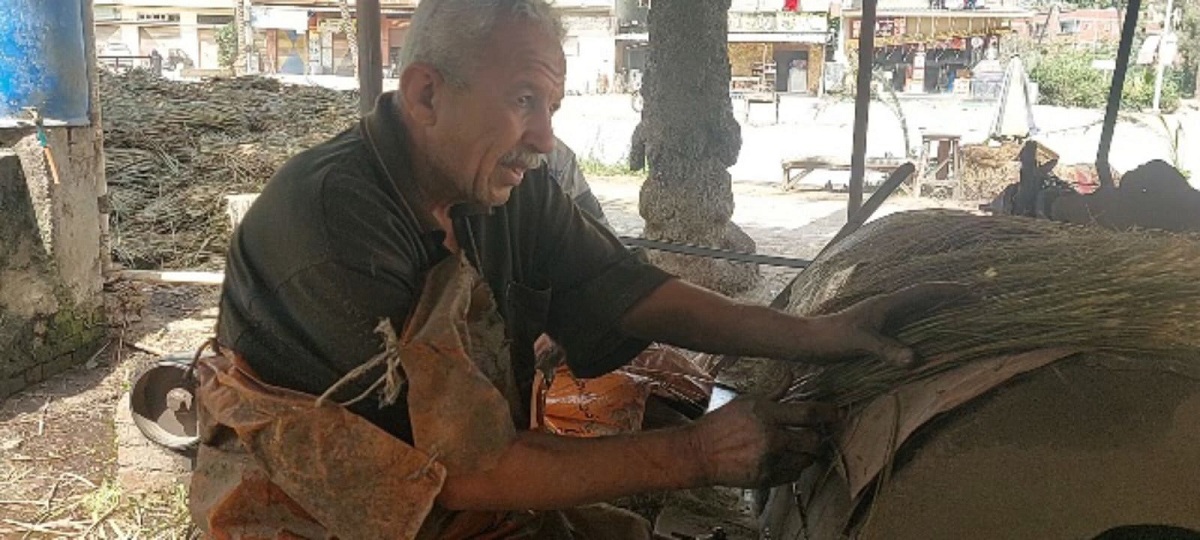
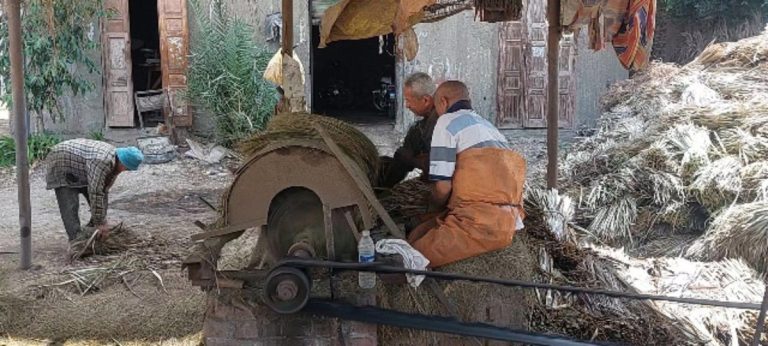
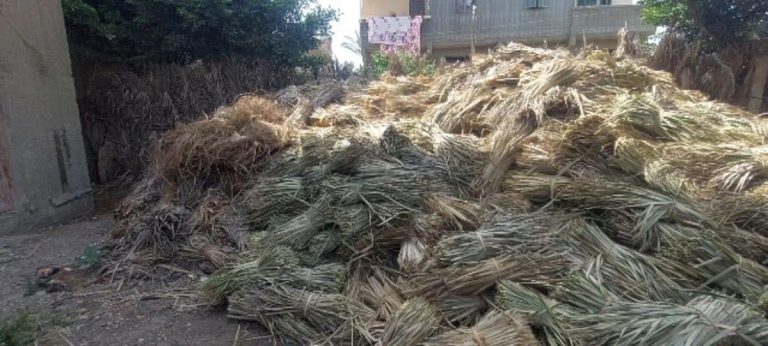
Haj Abu Arbaa notes that Kareena derives directly from palm fronds, locally known as Khoos (palm leaves). Workers feed the raw foliage into specialized milling machines that shred it into a coarse, hair-like fiber. This material is then channeled into the upholstery of classical salons and traditional seating. He emphasizes that for a very long time, this organic substance reigned as the undisputed staple of upholstery across Damietta’s artisanal quarters.
From Raw Nature to a Grand Industry
The art of palm-frond upholstery, Haj Abu Arbaa adds, was never a mere mechanical stage in assembly; it demanded profound manual dexterity and deep-seated expertise. An artisan would spend grueling hours preparing, tying, and meticulously distributing the fibers inside a piece of furniture to achieve a flawless equilibrium of firmness. This rigorous dedication bestowed legendary strength upon antique Damietta furniture, allowing it to withstand the test of decades.
The arrival of foam and polyester fiber fundamentally reshaped the landscape of the industry. The vast majority of workshops naturally gravitated toward modern materials due to their ease of handling and rapid preparation. This transition drastically reduced production time and overhead costs compared to the labor-intensive demands of palm-frond upholstery, gradually eroding the reliance on Kareena and shuttering a vast number of ancestral workshops.
Abu Arbaa points out that the profession faces annihilation due to its inherently perilous and exhausting nature. Every day, laborers stand before shredding mills bristling with hundreds of razor-sharp blades. A single moment of distraction can result in catastrophic injuries or amputations. Consequently, the younger generation shows a fierce reluctance to learn the trade, particularly given the meager financial returns when compared to more lucrative, less hazardous vocations within the furniture sector.
In its golden era, the craft thrived extensively within the villages of Kafr Mit Abu Ghalib and Al-Sawalem in the Kafr Saad district. During the 1990s, Damietta boasted more than two thousand active Kareena shredding workshops. Today, that number has plummeted to a mere 150 or 200 workshops, a direct consequence of evaporating demand for natural materials as the market surrenders to modern synthetic substitutes.
The Shift in Consumer Taste
Salah Mesbah, a member of the Association for the Defense of the Damietta Furniture Industry and Artisans, believes that evolving consumer preferences have driven the craft into its current crisis. Modern buyers increasingly favor lightweight, swiftly manufactured contemporary furniture, whereas traditional palm-fiber upholstery requires extended production periods and carries a higher relative cost.
In the past, Mesbah notes, the Damietta furniture industry relied entirely on unadulterated, natural elements: palm leaves and premium woods like oak, beech, Swedish pine, and Romanian timber. This extended to the organic glues sourced from Cairo’s Magra El-Oyoun district and traditional tanneries. Palm fronds, he underscores, stood as one of the most vital, abundantly available local raw materials throughout the year.
The regions of Ras El-Bar, Al-Senaneya, and Kafr El-Battikh host vast groves of date palms, which guaranteed a steady supply of raw material for the Kareena industry for decades. Mesbah warns that the ongoing disappearance of these ancient workshops threatens to erase a vital artery of Damietta’s industrial and artisanal identity.
From Raw Nature to a Grand Industry
The art of palm-frond upholstery, Haj Abu Arbaa adds, was never a mere mechanical stage in assembly; it demanded profound manual dexterity and deep-seated expertise. An artisan would spend grueling hours preparing, tying, and meticulously distributing the fibers inside a piece of furniture to achieve a flawless equilibrium of firmness. This rigorous dedication bestowed legendary strength upon antique Damietta furniture, allowing it to withstand the test of decades.
The arrival of foam and polyester fiber fundamentally reshaped the landscape of the industry. The vast majority of workshops naturally gravitated toward modern materials due to their ease of handling and rapid preparation. This transition drastically reduced production time and overhead costs compared to the labor-intensive demands of palm-frond upholstery, gradually eroding the reliance on Kareena and shuttering a vast number of ancestral workshops.
Abu Arbaa points out that the profession faces annihilation due to its inherently perilous and exhausting nature. Every day, laborers stand before shredding mills bristling with hundreds of razor-sharp blades. A single moment of distraction can result in catastrophic injuries or amputations. Consequently, the younger generation shows a fierce reluctance to learn the trade, particularly given the meager financial returns when compared to more lucrative, less hazardous vocations within the furniture sector.
In its golden era, the craft thrived extensively within the villages of Kafr Mit Abu Ghalib and Al-Sawalem in the Kafr Saad district. During the 1990s, Damietta boasted more than two thousand active Kareena shredding workshops. Today, that number has plummeted to a mere 150 or 200 workshops, a direct consequence of evaporating demand for natural materials as the market surrenders to modern synthetic substitutes.
The Shift in Consumer Taste
Salah Mesbah, a member of the Association for the Defense of the Damietta Furniture Industry and Artisans, believes that evolving consumer preferences have driven the craft into its current crisis. Modern buyers increasingly favor lightweight, swiftly manufactured contemporary furniture, whereas traditional palm-fiber upholstery requires extended production periods and carries a higher relative cost.
In the past, Mesbah notes, the Damietta furniture industry relied entirely on unadulterated, natural elements: palm leaves and premium woods like oak, beech, Swedish pine, and Romanian timber. This extended to the organic glues sourced from Cairo’s Magra El-Oyoun district and traditional tanneries. Palm fronds, he underscores, stood as one of the most vital, abundantly available local raw materials throughout the year.
The regions of Ras El-Bar, Al-Senaneya, and Kafr El-Battikh host vast groves of date palms, which guaranteed a steady supply of raw material for the Kareena industry for decades. Mesbah warns that the ongoing disappearance of these ancient workshops threatens to erase a vital artery of Damietta’s industrial and artisanal identity.
The Shachtoura: Carrying Damietta’s Treasures to the Mediterranean
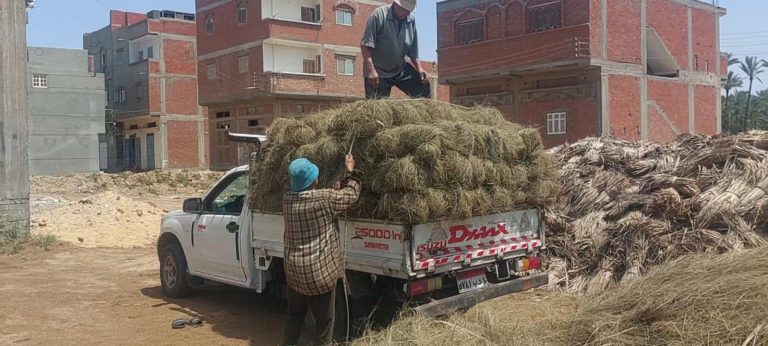
Haj Emad Abu Arbaa, an owner of a crate-making workshop who has labored since childhood inside his family’s palm-leaf mill, unravels the alchemy of Kareena production. The process begins by harvesting palm fronds from surrounding villages and orchards. Transported to the workshops, the fronds are submerged in massive water troughs to soak overnight. Emerging thoroughly saturated, the softened fronds are easier to manipulate through the shredding mills. The machine expels vibrant green fibers, which are then spread beneath the baking sun to dry completely before being hydraulically compressed into massive bundles bound for upholstery workshops.
He emphasizes that Kareena was not merely consumed domestically. Since the 1940s, it was exported to several Arab nations, including Lebanon, Syria, Jordan, and Palestine, via Damietta’s river port. This maritime trade relied on a massive sailing vessel known as the Shachtoura (traditional wooden cargo boat).
The Shachtoura would swallow cargo beds of palm-frond products, handmade ropes, organic glue, Egyptian rice, and a diverse array of wooden furniture masterpieces from Damietta, setting sail toward various Mediterranean ports. It served as the primary economic artery for Damietta’s goods in that bygone era, before gradually fading into obsolescence with the advent of modern transport and the dominance of synthetic materials that forever altered the soul of upholstery and furniture making in Damietta.
Yet, despite the severe contraction in the number of workshops and practitioners, a resilient few continue to operate the Kareena mills. They view it as a living testament to Damietta’s industrial genesis, fighting to safeguard a heritage tied for generations to the province’s identity, amid urgent calls to support traditional crafts and incentivize a new generation to master the skill before it vanishes entirely into history.