Azbakia: Of Safiya Helmy’s Casino, Umm Kulthum’s Soirées, and the Obsessions of Art
Journey through the storied history of Cairo’s Azbakia district, from its origins as Mamluk orchards to its zenith as the “Frankish” heart of Khedivial Egypt. This feature explores the legendary nightlife of Safiya Helmy’s Casino, the artistic reign of Badia Masabni, and the evocative memories of a lost era where the melodies of Umm Kulthum and the hustle of the city’s historic squares defined the Egyptian cultural landscape.
By: Hussam Gad
Azbakia: The Verdant Orchards of the Mamluks
Since the founding of Cairo near the eastern bank of the Nile, urban development crept toward the lands west of the historic city with a leaden slowness. Even after the Caliph al-Hakim bi-Amr Allah erected a mosque in the Al-Maqs region (modern-day Ramses Square and its environs), traditional historical chronicles remain parsimonious, offering only meager details regarding the territory south of Al-Maqs, nestled between the Khalij (canal) and the Nile. North of the Batn al-Baqar pond which would later become the Azbakia Pond—lay the lands of Al-Tabbala, named for the female singer and drummer of Caliph al-Mustansir, who granted her the usufruct (right of use) in 1058 AD.
Homes and grand estates eventually rose there, becoming “among the adornments and delights of Cairo,” as described by Ibn Abd al-Zahir in his The Splendid Garden. These residences overlooked orchards west of the canal, with the Nile shimmering beyond. People flocked there for nuzha (recreational outings), and as Al-Maqrizi notes in his Khitat, “countless masters of drumming and diversion would gather, experiencing pleasures and joys beyond description.” When Sultan al-Nasir Muhammad ibn Qalawun (1293–1340 AD) ordered the digging of his namesake canal, the area between Al-Maqs and Al-Dakka expanded toward the Nile’s shores. From that moment, historic Cairo began its westward march, fueled by the relative economic and political stability of the early 14th century and the pressing desire of Mamluk emirs to dwell beyond the suffocating walls of the city and the Citadel.
Furthermore, we learn from Cairo: History of a City that the Nile’s gradual recession westward following the excavation of the Nasiri Canal in 1325 AD some 1,200 meters west of the ancient Egyptian canal allowed for the reclamation of vast vacant lands. These spaces soon hosted “several magnificent houses and dwellings,” as people vied for residency, establishing hammams (public baths) and markets. It evolved into a “cradle of festivities, houses of amusement, and a playground for peers,” according to Al-Maqrizi. Consequently, life began to pulse around the Batn al-Baqar pond, which by 1475 AD assumed the name Azbakia. This was a tribute to the Mamluk Prince Azbak bin Tatakh, the Atabak al-Asakir (Commander-in-Chief) during the reign of Sultan Qaitbay, who re-excavated the pond and leveled the surrounding earth. He extended a stream from the Nasiri Canal to feed it with flowing water. “He then constructed a surrounding pavement, laboring immensely until his vision was realized,” Ibn Iyas recounts. “People began building luxurious palaces and grand locales upon this pond, and it continued to grow until it became a city unto itself.”
Despite the fervor Mamluk historians displayed for the urban efforts between the two canals, Azbakia remained largely a landscape of orchards and parks. It housed the summer villas of the Mamluk bourgeoisie on one hand, and on the other, it served as urban voids where the common folk would slip away under the veil of night to indulge in entertainment, far from the watchful, oppressive eyes of authority.
We cannot truly envision Azbakia as a “city unto itself,” as Ibn Iyas claimed; until the 18th century, it remained closer to a public park, a sanctuary for tarab (musical ecstasy) and a gathering place for magicians, acrobats, and street performers, as noted in Cairo: City of Art and Commerce. Gradually, alongside the palaces of the Mamluk Beys, Azbakia began to incorporate mills and public baths the very heartbeat of social activity in a traditional city. It became increasingly self-sufficient, its inhabitants no longer needing to seek provisions from the city’s interior, according to Middle Class Culture in Ottoman Egypt.
Azbakia: The Connector of Two Cairos
While the end of the 18th century saw historic Cairo endure the violent urban interventions of the French, Azbakia witnessed “improvements,” including the laying of pavements and the planting of trees, per Al-Jabarti. Yet, it did not escape the French cannons. The surrounding urban fabric was devastated; “the grand houses and palaces overlooking the pond were demolished, turning into ruins as if they had never been sites of passion or intimacy. Its beauties were altered, and its dwellings impoverished.”
However, we lean toward the view of British Orientalist Stanley Lane-Poole, who suggested that the Cairo visited and chronicled by Europeans in the first half of the 19th century differed little from that of the 15th. Azbakia, in particular, had preserved its historical character for centuries, both in social composition and urban form, as Nelly Hanna notes in Houses of Cairo. The irregular, labyrinthine streets of historic Cairo became a significant hurdle for the Muhammad Ali dynasty, especially with the emerging need for alay (military carriages) and karta (horse-drawn carts).
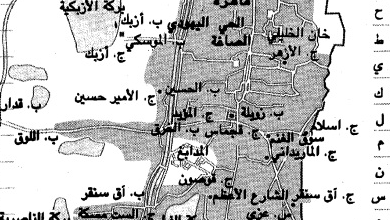
Thus, the first steps toward grooming Cairo for the new regime involved carving two grand thoroughfares Al-Azhar and Muhammad Ali streets which sliced through the traditional urban fabric to terminate at Azbakia. This fundamentally altered the district’s visage, particularly after the surrounding mounds of debris were leveled and the pond was filled.
From 1868 onward, a sweeping wave of urban transformation overtook Azbakia, as detailed in Cairo: Building a Modern City. Cairo became a tale of two cities: the historic, traditional Cairo of narrow lanes, and the newly fashioned Khedivial Cairo, which aspired to European grandeur. Azbakia became the urban fulcrum between them the seat of the “Frankish” (European) elite during the reign of Khedive Ismail. It was the geographic theater for social, cultural, and recreational mobility, boasting a unique collection of European-style buildings, including the Opera House, theaters, and casinos. Daily, the air in its gardens was thick with the sounds of both local and European music.
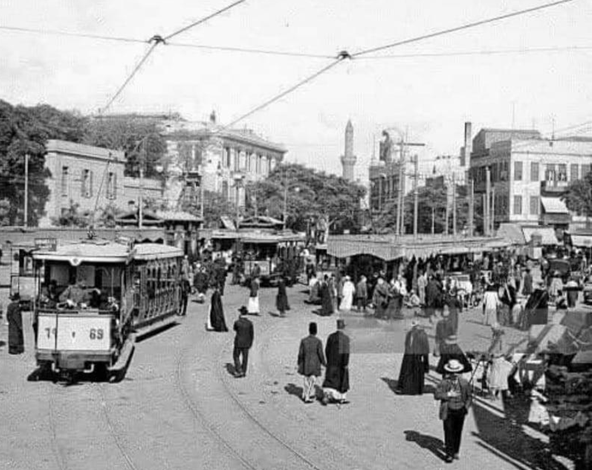
By the dawn of the 20th century, according to Sayed Kilani’s The Cairo Tram, Azbakia became the nexus for tram lines that linked this new urban tapestry with the traditional neighborhoods. Mass transit facilitated the flow of people from the city’s disparate fringes to its social and urban heart.
The scents and sounds of East and West began to mingle. The clatter of trams and hantours (carriages) merged with the cries of the makariya (donkey owners). The area buzzed with effendis (gentlemen) in their crimson tarbushes (fezzes), merchants, white-turbaned sheikhs, and peasants from the provinces. All became patrons of the theaters, casinos, and nightclubs that saturated the quarters of Azbakia.
Azbakia: Remnants of Artistic Memory
Historic Cairo possessed no public buildings dedicated to popular entertainment, such as theaters or concert halls; music and dance were performed either in the private salons of the elite or in specialized houses for wealthy merchants. Yet, these could not compare to the spectacle in Azbakia, where Egyptians of all classes stood transfixed before Aragoz (puppet) players, monkey trainers, acrobats, and musicians accompanying folk singers and ghawazi (dancers).
During the Wafaa al-Nil (the flooding of the Nile), when the waters reached their zenith, Cairenes gathered on the banks of the Azbakia pond to pitch tents. “Not a single singer, jester, or rogue remained behind,” Al-Maqrizi tells us. The cacophony of music was so profound one might think the city had been turned upside down. Azbakia, having witnessed centuries of Khayal al-Zill (shadow plays) and vocal circles, became the city’s artistic marrow by the 19th century.
According to Social Life in Egypt, Azbakia teemed with European theaters and famed casinos with silver facades, crowded with Greeks, Italians, and Levantines. While these initially attracted few Egyptians—who preferred the oriental atmosphere of traditional cafés the locals eventually found their way to these casinos, eager to explore worlds where East met West. By the end of the 19th century, ghawazi dancers moved from the streets into the cafés and casinos.
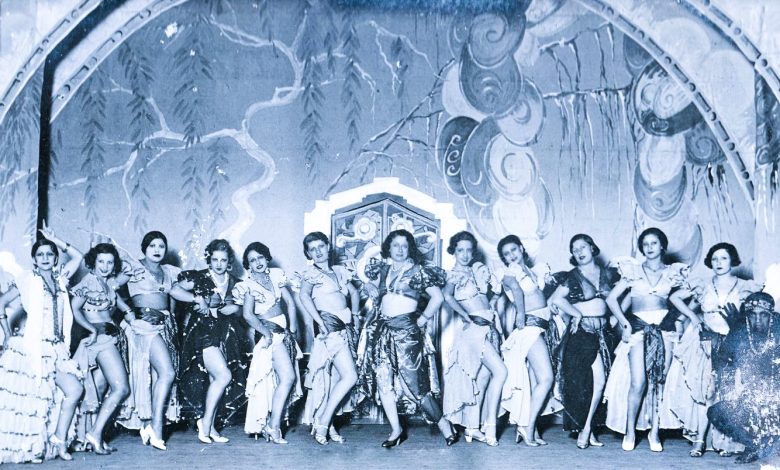
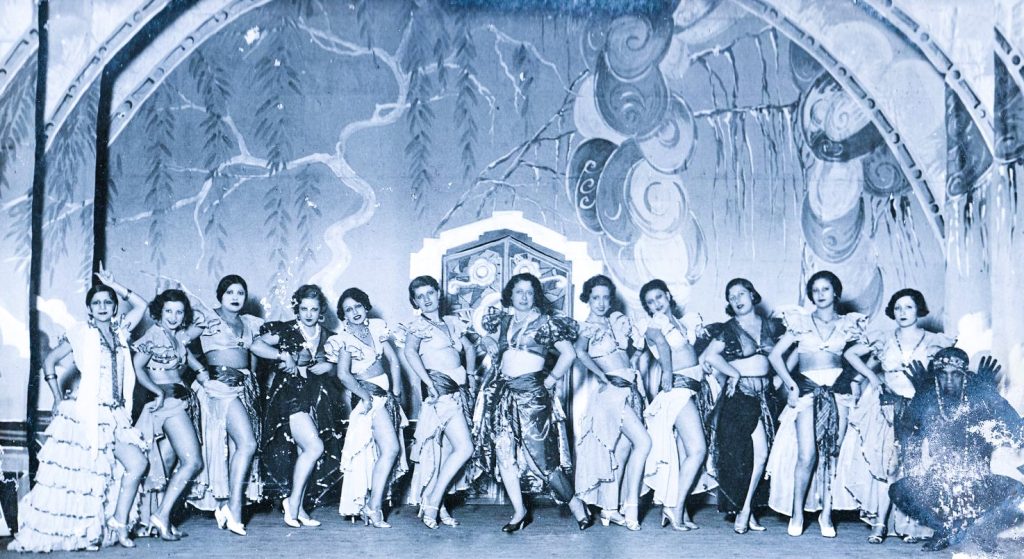
Leading this vanguard was Badia Masabni, who began her career in the early 1900s. Her star reached its zenith in 1922 when she joined Naguib el-Rihani’s troupe, earning the title “Bride of the Syrian Theaters.”
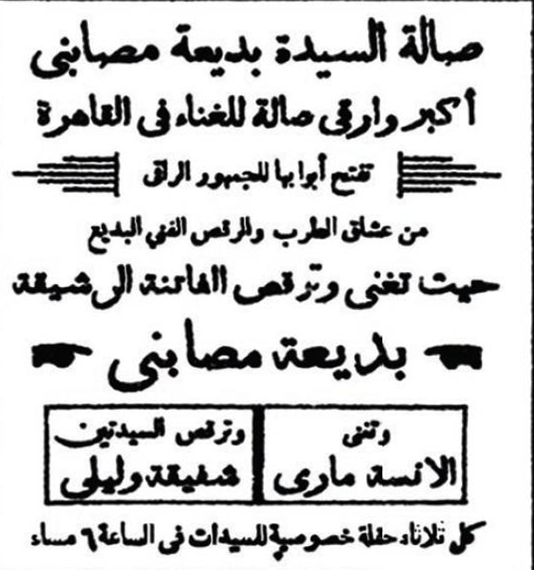
In 1926, Badia formed her own musical troupe, leading to the creation of the legendary Badia Masabni Hall on Emad El-Din Street. This venue became a hallowed stage for the era’s most famous singers and dancers. Badia’s life was a kaleidoscopic artistic journey; she leased the Printania and Majestic theaters before opening the Casino Opera in Ibrahim Pasha Square (now Opera Square) in 1940. When she left Egypt in the early 1950s, ownership passed to Beba Ezzedine, who met a tragic end in a 1952 car accident.
While Safiya Helmy’s fame blossomed in the early 1940s within Badia Masabni’s troupe, the exact date she took over the Casino Opera remains obscured. Nevertheless, under her stewardship, it became a pilgrimage site for the mid-century artistic elite. The phrase “Do you think you’re in Safiya Helmy’s Casino?” became a common Cairene idiom for someone acting with undue grandiosity. In Features of Cairo in a Thousand Years, Gamal al-Ghitani describes the casino as a three-story establishment: the ground floor served drinks and narghile (water pipes), the second was an elegant café where Nobel laureate Naguib Mahfouz held court with his devotees, and the third was a nightclub with a private entrance for cabaret performances.
This aligns with the recollections of “Ali,” a regular patron in the 1970s: “Safiya’s place was three floors. On the third, we’d spend the night revelry, women, the whole scene. They had these little curtained alcoves. The moment the red light flashed, it meant the Morality Police had arrived; everyone would scramble to hide or pull away from the ladies. A cigarette peddler would pass by while you were sitting with a girl, and she’d say, ‘Buy me two packs,’ and the customer would pay. She didn’t want the cigarettes; she was just keeping the business moving.”
“You’d order her a few drinks or a bottle; she didn’t take a salary, just a commission on the bill. Or a friend of hers would walk in and say, ‘Madam, your dress is ready, come try it on.’ She’d ask the customer for 200 pounds to pay for it. Of course, the gentleman would cough up whatever he had. There was no dress, no tailor it was just the ‘hustle.’ She’d make 500 or 600 pounds just sitting there. That was the business.” This portrait of life differs little from the secret society of Cairo’s casinos at the turn of the century.
Uncle Ali’s memory preserves a raucous image of Azbakia: “In Opera Square, there was no parking garage then; the Old Opera House was still there. Safiya Helmy’s casino sat above the electricians’ shops. Near the Kekhia Mosque, on the corner, was Safiya’s, and across was the statue of Ibrahim Pasha. Behind it was the ‘Haroun al-Rashid’ patisserie. The EgyptAir buses from the airport would drop passengers right there. That’s where Abdel Halim Hafez waited for the girl who ran away from her family in the film Day of My Life. The Cairo Studio opened toward the post office, with shops and cafés lining the arcades. One of them was the tavern where they filmed We Are the Students. Arabs from the Gulf would descend on the area, renting cars and drivers to spend the night drinking and making merry. There was money everywhere. Later, the scene moved to the Pyramids road and Mohandessin.”
Uncle Ali adds: “On the other side of the square was the Azbakia Garden, where Umm Kulthum would sing inside. Let me tell you: in 1969, four friends and I booked tickets for the Lady’s concert. We arrived at 9 PM, but they said, ‘Full suit only,’ and we were just in shirts. We rushed to the Kanto (second-hand) market in Ataba. Each of us bought a jacket for a pound and a quarter suit jackets with the buttonholes still stitched shut and we went right in.”