Dr. Yousriya Hosni on the Erasure of Egyptian Heritage and the Threat of Memory
Dr. Yousriya Hosni discusses the deep cultural evolution of Egyptian jewelry and warns against the cultural ignorance threatening to turn tangible history into distant memory.
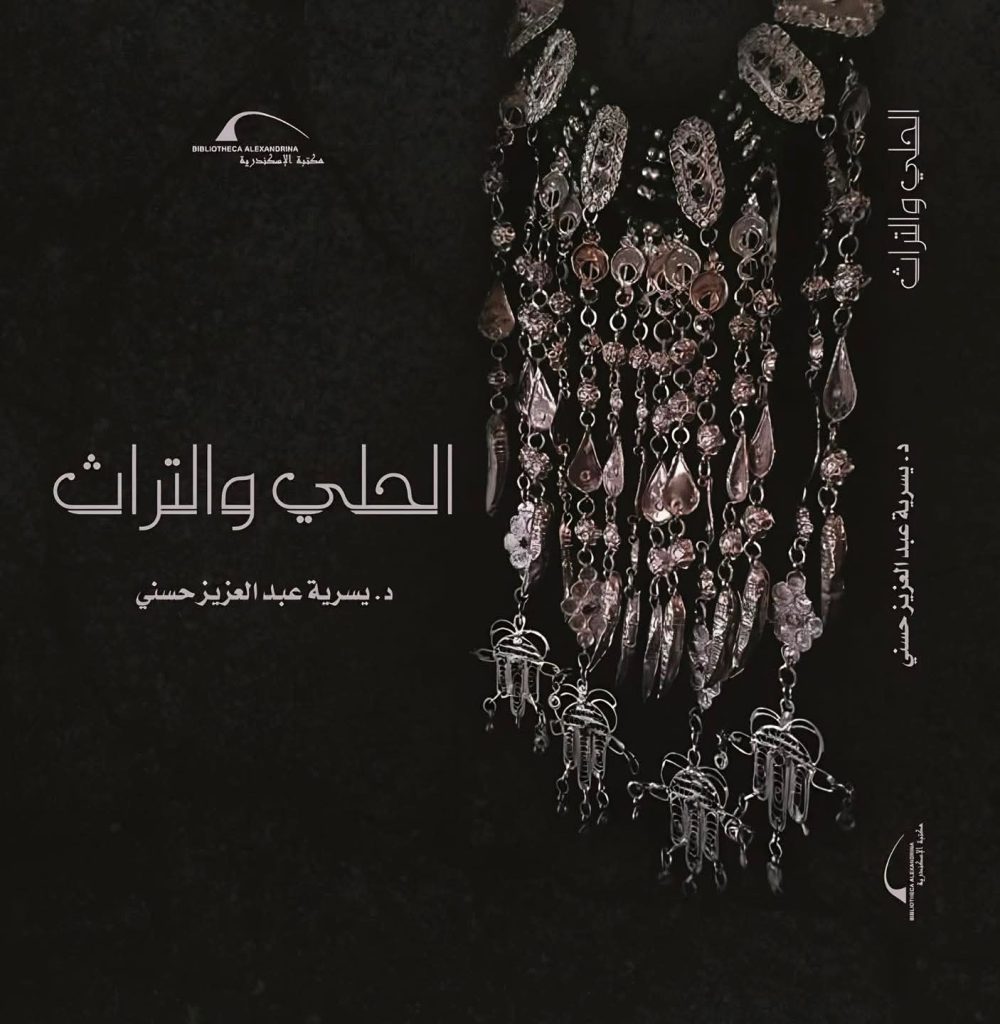
The volume Ornaments and Heritage by Dr. Yousriya Abdel Aziz Hosni, professor of art and heritage, documents an epoch-spanning journey. Through its pages, she reclaims a fragment of the Egyptian consciousness, restoring due reverence to a form of traditional heritage that has long carried the lineaments of society, its identity, and its deep-seated belief systems.
Hosni chronicles the history of Egyptian jewelry from the ancient civilization to the modern era, traversing Siwa, Sinai, Upper Egypt, and Nubia. She reveals how these small, intricate objects transcend mere adornment, morphing into living testaments that narrate the history of the Egyptian soul and its relationship with identity. Yet, the work refuses to remain marooned within academic documentation; rather, it reflects a lifelong odyssey of passion and field research. Hosni dedicated years of her life to gathering this heritage and rescuing its surviving remnants, presenting them with a contemporary vision that seamlessly bridges past and present. In this conversation, Dr. Yousriya speaks on her book, her enduring relationship with this art form, and the vital question of how we preserve our heritage and identity.
Despite the abundance of studies exploring Egyptian heritage, you chose to focus intensely on jewelry and traditional ornaments. What sparked this specific devotion?
Since my childhood, during my travels to Aswan, Luxor, Siwa, and Sinai, I found myself wandering through these locales, utterly captivated by the traditional jewelry I encountered. I discovered a profound joy in studying both the regional costumes and the ornaments themselves. Thus began my quest to decode the hidden lexicon of these pieces: what they symbolized, when they were worn, and the folklore anchored to them. Initially, it was a deeply personal fascination, but it quickly compelled me to read voraciously on the subject.
This devotion deepened alongside my formal historical studies, which commenced with ancient Egypt and culminated in my doctorate. I always felt an invisible gravity pulling me toward our heritage, intertwined with a profound love for antiquities, which naturally funneled my focus into this specific realm.
Answering this pull, I began to scrutinize every piece I acquired through the lens of its history and lineage. As my academic foundation solidified, my research expanded into ancient Egyptian jewelry, tracing the umbilical cord between the modern and the ancient. I constantly questioned whether popular or traditional ornaments possessed roots in ancient Egyptian civilization, and why certain contemporary iterations diverged from them. Over time, I unearthed historical lineages for several pieces, tracking them through the Pharaonic, Ptolemaic, and Roman eras. By virtue of my upbringing and education, all facets of heritage captivate me, yet jewelry remained closest to my heart because I interact with it directly. Of course, this does not diminish the monumental importance of architectural, cultural, and environmental heritage.
During your expeditions through the oases, Sinai, and Upper Egypt, did you unearth a single, standout piece that captured your imagination above all others?
It was never a single, isolated object. Rather, what truly arrested my attention was deciphering the broader evolutionary pathways of these ornaments. I realized that much of the traditional jewelry we see today is not a direct, uninterrupted continuation of ancient Egyptian adornments; instead, it underwent several profound metamorphoses. It transitioned from ancient Egypt into the Greco-Roman period, through Byzantium, and finally into the Islamic era.
Studying Greco-Roman art allowed me to witness how ancient Egyptian symbols migrated into later epochs. For instance, the Ankh (the key of life) exerted an influence that evolved incrementally until it mirrored the form of the Christian cross. Similarly, the winged sun disk, the symbol of Ra, underwent a visual transmutation to become the hallowed halo surrounding the heads of Jesus and the Virgin Mary in Coptic iconography. Among the most striking revelations was finding contemporary folk jewelry whose forms perfectly match ancient Pharaonic symbols. Consider the Qurt (traditional earring) that terminates in the shape of small hands; this is the exact visual motif we observe in representations of the god Aten, where the solar rays end in hands offering benevolence and sustenance to humanity. To me, this stands as the ultimate testament to the enduring phantom of Pharaonic influence vibrating through the present day.
Did the geographical landscape project itself onto the form and function of the jewelry in each distinct region?
Undeniably. Ornaments remain tethered to customs, traditions, and the ancestral wisdom a person inherits from their community. They also interface intimately with the human psyche, varying life events, and even physical health. We find numerous motifs and symbols directly linked to specific psychological and physiological states.
Take, for example, the Zar (a traditional spirit-redress ritual) that existed in Egypt’s past. This ritual involved specific dance movements rooted in the popular belief that an individual was suffering from spirit possession, even if science diagnosed it differently. This ritual commanded its own dedicated jewelry, usually forged from silver in the shape of a disc, a triangle, or a pear. These pieces were engraved with images of the afflicted master or mistress alongside Quranic verses, believed to facilitate healing if worn continuously.
Gemstones were similarly bound to traditional life. We find hematite, historically dubbed the “bloodstone,” which people believed could stem hemorrhages, while the blue bead was deployed to ward off the envious eye. Therefore, yes, a powerful, unbreakable bond unites jewelry with the folklore and belief systems of a people.
To what extent did traditional folk jewelry transcend the realm of mere vanity to perform social and symbolic roles within the community?
Traditional folk jewelry, unlike urban adornments, belonged entirely to the rural countryside and Upper Egypt. It did not belong to social strata that had mingled with European or foreign cultures; instead, it remained anchored to rural and Upper Egyptian communities that utilized it for multi-layered societal functions.
For example, Jalajal (bells) or anklets were never worn arbitrarily; they served to signal the approach of a woman. In ancient Egyptian cosmology, these resonant ornaments were linked to the goddess Hathor, as the shakhshikha (traditional sacred rattle) was one of her sacred symbols. Furthermore, in the ancient Egyptian landscape, devoid of electricity and surrounded by harsh desert, fears of the unseen world of spirits and phantoms flourished. Consequently, people believed these chiming bells possessed the power to repel malignant spirits and ghosts.
You have noted that we have squandered a massive portion of this heritage. In your view, why have we failed to safeguard it?
Because we simply lack a genuine culture of conservation. Though we boast loudly of our heritage, history, and treasures, we do not practice the actual discipline of preservation. A child is rarely raised from infancy to understand that this heritage constitutes an irreplaceable core of their identity and self-worth.
Moreover, during economic downturns, sheer financial survival becomes an urgent pressure, driving people to divest themselves of cherished heirlooms. As demand for these crafts withered, particularly in the isolated oases and remote borders, the quality of materials plummeted. We degenerated from fabricating in gold to silver, and eventually to cheaper base metals like copper, bronze, and tin.
Consequently, artisans could no longer extract a livable wage from this craft, inducing a stagnation. When alternative financial lifelines appeared, some resorted to selling off the foundational assets of the trade, such as the original antique casting dies used to stamp out the jewelry. Foreign collectors eagerly amassed these items, aided by specialists adept at scouting such pieces. Thus, a vast expanse of this heritage dissolved from our hands. Today, we rarely find those pristine, older archetypes in Siwa, El Arish, or Sinai.
To combat this, we participated in cultural conferences in Siwa to revive this heritage, attempting to cultivate an educational ecosystem for artisans and encouraging their children to return to the anvil, alongside state support.
Ornaments and Heritage does not rely solely on archival documentation; you interact directly with the physical artifacts. How does one modernize heritage without compromising its historic integrity?
When I was gathering these artifacts, they rarely arrived immaculate or complete; often, only the core components survived, stripped of their complementary details. If an original piece, such as a Kerdan (a traditional tiered crescent necklace), arrived broken or fragmented, I painstakingly reconstructed it, completing the missing elements with appropriate materials. If the original missing components were rudimentary, like glass or plastic beads, I substituted them with semi-precious or precious gemstones of identical shape and hue, ensuring the original silhouette remained unmarred.
In other instances, I preserved the foundational artifact precisely as it was, superimposing a contemporary structural design around it without violating its primary form or altering the antique stone. My absolute priority was to protect the integrity of the original relic, limiting my intervention to restoring what time had stripped away.
Was this restorative process not exceedingly difficult?
No, because the endeavor hinges entirely on the consciousness of the person executing the work. It demands someone truly enamored by heritage, not merely an individual collecting fragments to rearrange them. Armed with my expertise in the history and archaic geometry of these ornaments, I sought to recontextualize the pieces so they could function as contemporary, wearable jewelry for daily use, while strictly preserving the old, authentic artifact within the design rather than forging a replica.
There are many contemporary artisans working in handicrafts today who draw inspiration from heritage jewelry. Could this potentially dilute the value of the original?
Not in the slightest. Within our museums, we maintain a dedicated Department of Archaeological Replicas, which manufactures reproductions of statues and antiquities; this never robs the original of its majesty. They are merely pedagogical mirrors of the archetype.
Consider antique Persian carpets: why do they command astronomical prices compared to modern counterparts despite sharing identical patterns? Because the ancient ones are woven from natural dyes and raw materials, reflecting an entirely different era of craftsmanship. The same logic separates hand-woven carpets from machine-made ones. The modern iteration never obliterates the value of the original; it merely underscores its supremacy.
Do you believe the younger generations have broken their connection with their cultural heritage?
On the contrary, the mere impulse to mimic or draw inspiration from heritage is, in itself, an act of profound value, because it betrays a yearning for ancestral roots. It is beautiful to see young people loving their heritage and attempting to replicate it; far from being negative, it is an immensely heartening sign.
What role must cultural institutions play to breathe life back into this dying heritage?
The Ministry of Culture has previously launched efforts to revive traditional crafts. We possess hubs in Old Cairo, such as the Traditional Crafts Center in Fustat, which hosts artisan workshops. There was also a project to resurrect traditional ceramics in the Ain al-Sira region, sponsored by King Charles, alongside various other initiatives.
Yet, these endeavors must not remain siloed or targeted at tiny enclaves; they must permeate the collective social fabric. Schools and institutes are vital, alongside civil society. I am aware of initiatives founded by businessmen specifically to resurrect heritage jewelry. Therefore, nurturing raw talent, establishing specialized academies, and forming centers dedicated to cultural revival are mandatory steps. The state cannot shoulder this monumental weight in isolation; private individuals must step into the breach.
You gifted a massive, priceless collection of heritage jewelry to the Bibliotheca Alexandrina. Was that an agonizing decision to make?
My paramount objective is for Egyptians to truly comprehend their own heritage, for the majority remain blind to the sheer opulence of what Egypt possesses. Many live confined within small, modern bubbles, detached from the grand mosaic of their country’s history. Through this endowment, I wanted the youth who frequent the Bibliotheca Alexandrina to confront this heritage face-to-face, to witness through this expansive collection how the Egyptian lived in bygone centuries, how they labored, and the sheer volume of art and beauty that framed their daily existence.
Accompanying the book Ornaments and Heritage is a detailed taxonomy explaining the usage of each piece, whether for attire, domestic life, or even livestock decoration. These objects yield no value if hoarded by a single individual; immortality is guaranteed only when knowledge becomes communal property. I am transient, but the generations will renew. Thus, I did not hoard these pieces, despite their formidable material and sentimental value as silver and precious gems. The true reward is for the modern Egyptian to feel the pulse of this heritage flowing directly into them.
In your estimation, what poses the deadliest threat to heritage today: outright theft or collective amnesia?
I fear ignorance above all else, specifically cultural ignorance, even when it manifests in the highly educated. Education, in its basic sense of literacy, is woefully insufficient. What terrifies me is the prospect of a culturally illiterate individual ascending to a position of bureaucratic authority, entirely blind to the value of the treasures under their stewardship, destroying them inadvertently through sheer lack of reverence. That is the true catastrophe.
How can ordinary citizens actively protect this heritage?
Through awareness first and foremost. They must learn how to interact respectfully with our heritage and the tourists who visit it. We are one of the premier global tourist destinations, yet many citizens fail to perceive tourism as a form of national wealth. Treating visitors discourteously inflicts deep wounds upon the nation. If a human being does not comprehend the value of their inheritance, they will trade it away cheaply. Therefore, this awakening must begin in childhood, teaching children the weight of their heritage, where it resides, its yield for society, and how it can elevate their standard of living and critical thinking over the long term.
Do you fear that this heritage will eventually dissolve into a mere photograph or an echo of memory?
If we persist along our current trajectory, then yes, heritage will inevitably degrade into mere photographs and nostalgic memories. The antidote begins in the classroom, in the early education of our children, and through television, which remains a monumentally potent medium for public education. We desperately need documentary programming mapping the distinct heritages of our geography: What is the heritage of the oases? Of Upper Egypt? Of Cairo? And how do we defend it?
Television remains an invaluable instrument, not just for the child, but for the adult population. For the young, there are two foundational pillars: the schoolhouse and the home, and parents themselves must be awakened to this value. Thus, I see the media, hand in hand with education, as the vital vanguard of this sacred mission.