Mapping the Living Scaffolding of Egyptian Cities: Why Trees Are Architecture’s Silent Salvation
As climate change accelerates, architect Dr. Nabil El-Hady challenges modern urban planning by mapping Egypt’s forgotten native trees, offering a radical blueprint to rescue our concrete metropolises from ecological collapse.
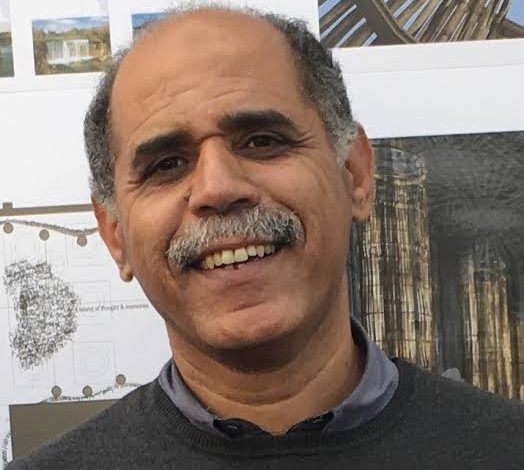
Amidst ongoing environmental shifts, the role of architects emerges at the vanguard as both researchers and practitioners who radically rethink humanity’s relationship with space and nature. Thus unfolds this conversation with Dr. Nabil El-Hady—Professor of Architecture at Cairo University and founder of the Virtual Lab for Research and Experimentation—regarding his book, Tree Maps in Egyptian Cities. His work offers an alternative reading of the relationship between the metropolis and nature by tracing trees as vital, living elements within the urban environment, rather than mere cosmetic additions.
In this conversation, El-Hady unravels how documenting these sentinel trees opens a window into the deep history and ecology of our cities. He challenges current paradigms surrounding urban planning, biodiversity, and the climate crisis, forcing us to reimagine how Egyptian cities can heal their severed connection to the land.
What drove you, as an architect, to become so deeply consumed by the study of trees?
The very nature of my work for over ten years has been in the fields of climate change and biodiversity, where trees in particular sit at the core of this focus because of their immensely vital role. Furthermore, I had addressed this subject before in an article about seven or eight years ago, where I focused specifically on the trees of Heliopolis.
You have asserted that trees are living structural frameworks, not mere ornaments. How can we integrate them today as core environmental components rather than superficial landscape architecture?
Trees are an essential part of the ecological ecosystem that encompasses multiple components, including plants, trees, and other living organisms. Consequently, it is crucial to stop treating them as a mere cosmetic addition and begin viewing them as an integrated part of the environment. We must also focus on our localized environmental problems, especially since trees can actively contribute to addressing a major part of these issues if they are consciously integrated into architectural design.
You have spoken before about the concept of “adopting” trees. In your view, how does the emotional relationship between an inhabitant and their immediate environment influence the long-term sustainability of buildings?
Planting trees, or any relationship with nature in general, is an inherently positive relationship. Therefore, it is essential for architects to integrate trees within their works and designs. Observing trees with true, genuine awareness reveals that every single tree possesses its own nature, personality, species, and characteristics that distinguish it from others. This realization directly reflects on the method of building and the nature of the relationship that arises between human beings and trees within architectural spaces.
What is your perspective on intentionally cultivating specific tree species tailored to each environment, as opposed to the current culture of haphazard, random planting?
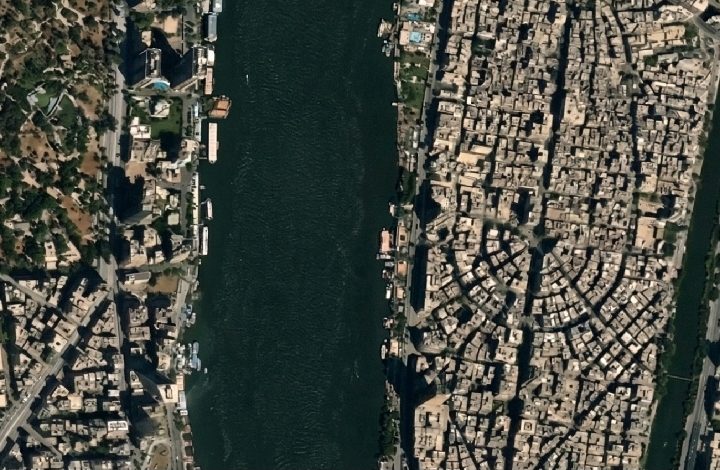
In fact, the entire book is built upon a workshop we inaugurated in January 2023. Its objective was to document the standing trees in the area surrounding the Faculty of Engineering, Cairo University, the Giza Zoo, and the Orman Botanical Garden. The idea came about as a form of practical, boots-on-the-ground action instead of merely pausing to question what the future of these gardens might be or how to develop them, so we began documenting the trees that already exist.
We successfully catalogued more than 400 trees belonging to roughly 160 different species, but the astonishing surprise was that only one solitary species among them is considered a native Egyptian variety. For us, this was an incredibly significant and sobering observation.
We must remember that Egypt is by its very nature a desert country, meaning that the water available for green canopy cover is limited. Therefore, it is unnatural for Egypt to become hyper-green beyond its ecological capacity. Even if historical spaces like the Giza Zoo and the Orman Garden appear beautiful and breathtaking, the reality that over 95% of their trees are non-native species presents a genuine problem regarding how these plants interface with the local environment.
From this point, the book underscores a foundational truth: repairing the ecological system in Egypt begins by restoring dignity and consideration to our native, indigenous trees. Granted, this variety of local trees faces distinct challenges, as some have dwindled or vanished entirely over time. Yet, they remain the most capable of adapting to our climate and supporting natural life within it. Not every green tree is necessarily suitable for planting in Egypt, even if it appears beautiful from an aesthetic standpoint.
During this extensive mapping phase, did your team find evidence of native trees that had been uprooted or whose historical lineages had entirely vanished?
The workshop focused strictly on documenting the living, standing trees currently rooted within parts of the Orman Garden, the Giza district, the entire Faculty of Engineering campus, and a portion of Cairo University. Consequently, our field research was confined to currently standing trees and did not chart previously uprooted or removed specimens. The lone native Egyptian tree we encountered and catalogued was the Sant (Acacia), a species deeply intertwined with ancient Egyptian civilization.
At the same time, we noted other authentic Egyptian plants surviving within the garden grounds, such as Bardi (Papyrus) growing around the Orman’s central pond. At that time, however, the pond had been drained dry. Furthermore, because papyrus is classified as a plant rather than a tree, it fell outside our specific mapping parameters. Nonetheless, it remains an authentic, indigenous Egyptian plant that still grows along the banks of the Nile, in Damietta, and on El-Dahab Island. We also observed the Lotus (Water Lily) within the dry bed. Thus, the garden preserves four native Egyptian flora varieties: two tree species and two aquatic plants.
Regrettably, we suffer from a deep-seated cultural complex that views imported, exotic trees as inherently more beautiful than our native flora, as if our indigenous trees possess lesser aesthetic value. This bias is historically anchored in the very founding of the Giza Zoo and Orman Garden during the reign of the Muhammad Ali Dynasty, an era when the royal court directed its greatest attention toward importing foreign botanical specimens to showcase and highlight them.
In traditional architecture, we design static, immutable structures, whereas a plant exists in a state of perpetual growth and transformation. Has your deep immersion in arboreal life altered your perception of a building’s lifespan?
Without question. Our fundamental assumptions regarding architecture are undergoing a massive shift. On a personal level, my architectural worldview has changed thoroughly, particularly following my studies surrounding climate change and biodiversity. We know today that buildings are among the most aggressive, negative disruptors of natural ecosystems and the environment. The production of traditional building materials requires a colossal expenditure of energy, consuming roughly 42% of total energy demand, and materials like cement remain some of the most ecologically toxic pollutants on Earth.
Therefore, if we evaluate architecture through the traditional, static lens we have inherited, we find ourselves facing severe environmental crises that must first be acknowledged and understood before we can hope to address them. We are still in the nascent stages of trying to fully grasp the environmental footprint of our built environment, but we have gradually begun to learn through the global discourse surrounding climate change, which represents an existential crisis touching everyone. In this context, trees emerge as one of our most potent allies to counter these challenges and soften their destructive impacts.
Because of this, we are currently attempting to redefine the very meaning of architecture—examining its relationship with climate and looking for ways a structure can exist in rhythmic harmony with the natural world.
Are there concrete, formal proposals to replace cement and other environmentally damaging materials with sustainable alternatives in Egypt?
One of the prominent strategies being deployed globally today, particularly across Europe, is a return to timber mass-construction, utilizing structural wood as the primary framing material. These nations, of course, possess vast, managed forests that allow them to rely heavily on timber. In Egypt, if we succeed in a large-scale re-cultivation of our indigenous trees like the Sant, we could eventually harvest their high-quality wood as a localized, sustainable building asset, especially since it is known to be an excellent timber variety.
At the same time, timber cannot solve this crisis in isolation. We cannot rely completely on wood alone for structural construction; we must drastically curb our reliance on cement and toxic aggregates. Furthermore, we must radically optimize the thermal insulation of our buildings to drive down operational energy consumption. A massive chunk of the crisis stems directly from how our spaces are designed and operated. We desperately need a wholesale reimagining of architectural practice, applying these principles rigorously to both new developments and existing urban structures.
Why did nineteenth-century planners, such as Gustave Delchevalerie, seem to strike an elegant equilibrium between the Nile’s volatile floods and urban expansion, while we face escalating systemic crises today?
I do not believe they were necessarily successful. We often romanticize the past, projecting an idealized perfection onto a historical reality that was fraught with ecological missteps. For instance, one of the critical historical truths we learned about the Giza Zoo and Orman Garden is that they originally formed a massive portion of the sprawling private grounds of Khedive Ismail’s Giza Palace. A massive portion of this land was reclaimed by aggressively backfilling the Nile. This was a catastrophic ecological intervention, characteristic of the Muhammad Ali Dynasty’s heavy-handed manipulation of Egypt’s topography.
We rarely see the full, compounding consequences of these historical fractures. Consider the crisis of Ward El-Nile (Water Hyacinth). It is not an Egyptian plant; it was introduced purely as an ornamental novelty during the Khedival era. Lacking natural local predators, it transformed into a violently invasive species, choking our waterways and causing monumental ecological harm. This stands as stark proof that meddling with an ecosystem without deep, foundational understanding even when driven by a desire for cosmetic beautification or modernization can trigger long-term disasters.
Thus, the legacy of that era is far from flawless or ideal. If we examine the history of the Ezbekiya Garden, its evolution reveals a telling look into the urban mentality of the time. As Jacques Berque wrote of Cairo, the Ezbekiya basin was originally a seasonal, dynamic body of water directly tied to the pulse of the Nile flood. Over time, its banks were systematically backfilled, ultimately transforming it into a manicured garden pinned down by real estate speculation. The surrounding lands were ruthlessly monetized, and its design was outsourced to a French landscape engineer to mimic a European ideal.
Even today, we continue to live with the scars of these interventions. Following the construction of the underground metro and the harsh architectural intrusions of the Ramsis Central Exchange building, Ezbekiya lost immense swathes of its environmental and urban heritage. The current state of its ongoing redevelopment remains dangerously ambiguous and opaque.
The ultimate objective back then was to forcefully superimpose a European blueprint onto Egypt, which does not equate to a successful urban experiment. Khedive Ismail, enchanted by the grandeur of the 1867 Paris Exposition, sought to remake Cairo in the image of Paris before the grand opening of the Suez Canal. Yet, this ambition amounted to a superficial copying of external forms, utterly divorced from the actual socio-ecological context of those European capitals.
Jacques Berque dismantled the myth of “Cairo: The Paris of the East,” exposing it as a grand illusion. Paris, despite its radical Haussmannization and urban destruction, possessed an integrated municipal governance structure and a cohesive vision for city management. Cairo, conversely, was treated as a speculative investment playground designed to extract maximum capital from land and property values. We continue to suffer from this fundamental misunderstanding today, still confusing superficial aesthetics with true urban design. In the beginning, there was an inclination to name it simply “The Garden,” but it seems some felt the name alone was insufficient, so they ultimately settled on the Giza Zoo. Even now, I am still waiting to see what will actually happen, because much of what is currently unfolding within the project, and what is planned for later, raises numerous questions and concerns.
Beyond that, the traditional concept of a zoo is no longer appropriate. Animals have a fundamental right to live in their natural habitats for their own well-being, and we also have a right to a quality public park that is ecologically integrated. It is entirely possible, if animals were returned to their natural environments, that this park could transform into a true ecological space dedicated to local Egyptian flora and wildlife, especially if it were linked to the Orman Botanical Garden in a fundamentally different way. Ultimately, a definitive judgment cannot be passed; it is best to wait for the completion of the project to see where things actually land.
How can we document the contributions of Egyptian architects away from an Orientalist gaze?
Fundamentally, we lack a robust, critical discourse surrounding the works and experiments of architects. For example, one cannot deny the role of Hassan Fathy in achieving highly significant architectural and intellectual breakthroughs. However, this does not mean his experiment did not produce its own problems, or that everything he presented should be approached as an idealized model beyond critique.
What is required instead is to look at various experiments with a critical awareness that evaluates both positive and negative aspects together, because any human endeavor is inherently imperfect. This is precisely what Timothy Mitchell accomplished in his book Rule of Experts, where he dissected the systematic problems associated with the New Gourna village project linked to Hassan Fathy. This is a crucial method of reading architectural history because it does not settle for blind glorification or dismissal of a person or project; rather, it attempts to understand the actual context, results, and long-term impacts of the experiment.
Therefore, we must look at architects and their works within the true framework of their practice, and we desperately need a wider arena for criticism and dialogue, as it is a foundational component of developing architecture itself.
Can transforming the ownership of trees affect their identity?
The primary objective of the book is, first and foremost, to identify and recognize the trees themselves. It culminates in a formal proposal on how to document trees across Egyptian cities. To achieve this, we must first map where the trees are located, whether in public or private spaces, because this mapping clarifies the distinction between exotic and native flora. In the future, this data will help determine the specific tree varieties best suited for our environment when planting new green spaces. It will also help identify which species are violently invasive, such as the Mesquite tree, which represents a massive ecological problem in Egypt. Consequently, we must map its distribution and manage it scientifically through experts who can dictate how to curb its spread and choose what to plant in its stead.
Regarding this, the Ministry of Environment issued the “National Biodiversity Strategy” last year, which encompasses 21 distinct clauses, including provisions for managing invasive plant species. Therefore, the process of documentation yields numerous practical benefits; without knowing what currently exists on the ground, correct decisions regarding municipal management or development cannot be made. If we genuinely desire to restore ecological balance, the starting point is trees, because they represent the foundation of the ecosystem, or what is scientifically recognized as the primary producer of biomass.
When an ancient, venerable tree conflicts with a modern construction project, how does an architect balance their design work with environmental responsibility?
The National Biodiversity Strategy included this specific clause explicitly, and it is articulated in even greater detail within the Kunming-Montreal Global Biodiversity Framework adopted in 2022. It dictates that any intervention or development project executed in any site must not lead to a degradation of local biodiversity, but must instead achieve what is known as a biodiversity net gain. Consequently, it is legally and ecologically impermissible to execute a project and leave the site in a worse environmental condition than it was previously.
Therefore, if an ancient tree that has stood for years performing a specific ecological function is removed for an overriding reason, it must be compensated for by planting an appropriate number of trees or flora that yield an equivalent or superior ecological value. In England, this concept has already been strictly implemented through assessment programs that measure a project’s impact on biodiversity, requiring developments to deliver a net biodiversity gain of up to 10%. In Egypt, we are still in the very early stages of introducing this framework, and it has not been actively enforced or activated on the ground yet.
Did your team encounter any specific obstacles or disruptions during the documentation phase?
During the workshop, we launched an open call for participation that ran for 10 days, accepting 30 individuals. However, on the very first day of actual fieldwork and mapping, and due to the sheer volume of trees required to be catalogued, 20 participants abruptly withdrew, leaving only 10 to carry on.
Here, the issue of sustained commitment emerged, which I consider one of the most prominent challenges in this type of collective labor. Had all 30 individuals committed, we would have been able to document double the amount of what was ultimately accomplished. Increasing the number of participants in documentation work directly and positively reflects on the overall quality and precision of the data gathered. Ultimately, however, commitment cannot be forcefully imposed; it relies entirely on an individual’s internal conviction regarding the vital importance of the work.
What about data-related obstacles?
This is a universal problem that is certainly not confined to Egypt alone; many developing nations suffer from a severe scarcity or poor quality of baseline data. Because of this, we attempted to generate the data ourselves using simple, accessible tools. We utilized mobile geolocation and plant identification applications, taking simple physical measurements like calculating the diameter of the canopy through pacing steps, and estimating tree height by comparing it against human height.
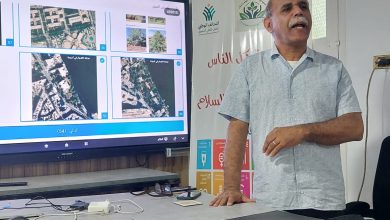
Our goal was not to achieve 100% scientific precision, as our resources did not allow for that, but rather to obtain sufficient data to help us interface with and understand our existing environment in a practical manner. One factor that greatly aided our work was that the Giza Zoo and the Orman Garden were not completely closed to the public during our research phase, which allowed us to enter and secure the necessary permits for the participants without facing major administrative roadblocks. We also leveraged our academic environment; we trained the participants in the fundamentals of Geographic Information Systems (GIS) by organizing specialized lectures and inviting foreign experts to contribute online. Through these methods, we managed to overcome funding and resource challenges in an effective way, working within simple and highly efficient means.
How do you view the future of smart architecture in Egypt if it becomes linked to precise, real-time data regarding local biodiversity?
I am not entirely certain that something called “smart architecture” truly exists; the smartest entity on this planet is nature itself. What we desperately need to learn is how to draw closer to this nature, which forms a core part of our objectives. I believe we will have a prosperous future if we stop talking about smart resources and start talking about water, food, and nature.
Following the current redevelopment of the Giza Zoo and Orman Garden, do you believe their historical botanical practices will remain unchanged?
I have deep, profound doubts regarding that. The very idea of keeping animals in these spaces remains the primary, overriding problem, because they need to live in their natural habitats for their own benefit and ours. We drastically need to shift a portion of our concepts regarding what should remain in the future.
What should architecture students be learning right now regarding the integration of natural materials into construction?
Many things. They must learn that architecture is not merely about constructing buildings. Ultimately, the essence of architecture is design, and design is the intelligent and resourceful use of assets. Therefore, we must deeply understand our resources, particularly water and trees, and think deeply about how to utilize and behave with them within the framework of our local environment.
As for academic curricula, we need to completely rethink our approach and methodology rather than simply adjusting textbook content. It is impossible to design a purely hypothetical building in a vacuum, though some educational practices unfortunately rely on this. Every single project is bound to a real, living environment with specific natural conditions. Every site differs completely, whether it sits directly on the Nile or deep in the desert, and these distinct conditions must encompass both nature and people together.
There is a strikingly similar dilemma within public housing and urban planning, where spaces are treated as blank slaves that can be altered arbitrarily without taking their unique historical and environmental contexts into account. Therefore, the core of the problem lies entirely in our fundamental method of understanding the surrounding environment.