The Living Canopy: Preserving the Heritage Trees of Aswan
Egypt’s botanical heritage, tracing the vital efforts to digitally catalog and preserve the ancient, rare trees anchoring Aswan’s historic public gardens.
By Wafa Amin
Amidst a tide of rapid urban expansion and the subsequent retreat of green spaces, a quiet battle unfolds to preserve the remaining historical and ancient trees that have long anchored the visual memory and architectural identity of our cities. Bab Masr explores the ecological, urban, and cultural dimensions of this crisis, tracing how the disappearance of these botanical titans erodes the very quality of human life.
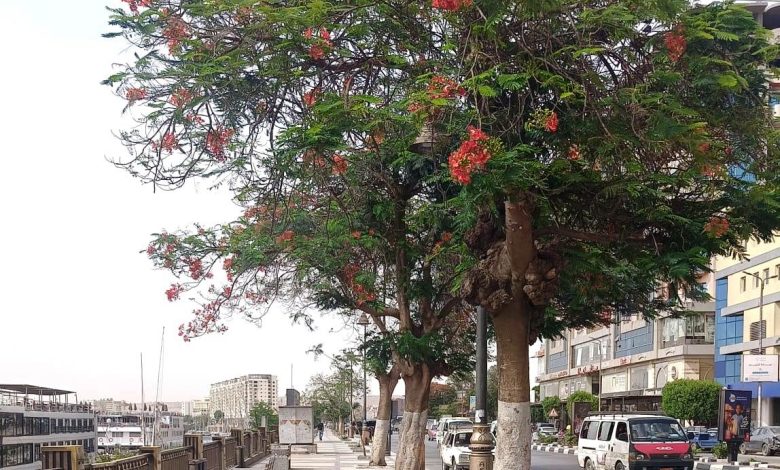
In Aswan, an ambitious effort to survey and document the trees within public gardens moves steadily forward. This initiative seeks to safeguard Egypt’s green wealth, elevating these rare and ancient specimens as vital components of the city’s environmental and natural heritage. The botanical survey spans the Botanical Garden, Ferial Garden, and the Nile Corniche, operationalizing a grand plan to build a precise database of these distinguished trees, cementing their historical and scientific value.
Chronicles of the Canopy: 575 Species Documented at the Botanical Garden
“The primary objective of this initiative is to identify the rare and ancient trees that hold deep historical significance across the Aswan Governorate, documenting their historical, medicinal, and scientific worth,” explains Dr. Amr Mahmoud, Director of the Aswan Botanical Garden.
Speaking to Bab Masr, Dr. Mahmoud notes that classifying a tree as rare or ancient rests on precise criteria. Chief among these are longevity, significant medicinal or therapeutic attributes, historical resonance, and a unique standing among diverse plant families. The director describes the Aswan Botanical Garden as an open-air museum, a living sanctuary sheltering a vast collection of rare tropical and subtropical plants of immense historical value. Within this verdant haven of more than 800 plant species, the initiative has successfully cataloged and documented 575 distinct types. This represents the highest concentration of historically significant trees recorded under the project, embodying an archaeological and aesthetic treasure for both the garden and the governorate.
Detailing the mechanics of the documentation, the director notes that the registry relies on a dedicated barcode assigned to each tree. Specialists measure the girth, height, diameter, and canopy spread before capturing the tree photographically. Consequently, every specimen now possesses an independent digital profile detailing its dimensions, botanical family, native habitat, species, genus, and ecological significance. This milestone marks the creation of an integrated scientific ledger for the governorate’s botanical wealth.
Cataloging the Giants: Jackfruit Tree Number 1
Regarding the environmental and climatic importance of these trees, the garden director explains that the registered species comprise tropical fruits, medicinal and aromatic plants, spices, oil-producing flora, ornamental trees, and valuable timber. Among the tropical fruit bearers, the Jackfruit tree received the designation of Number 1. A signature marvel of the Botanical Garden, this fruiting giant yields yields that can weigh between 30 and 40 kilograms, bursting directly from the main trunk.
The jackfruit stands as one of the largest and most magnificent offerings of the plant kingdom, revered for its high nutritional density, rich vitamin C, and iron content. Native to India, it offers bountiful yields every June, releasing a distinct, heady aroma that signals its peak ripeness.
Echoes of Empire and Elegance: The Historic Sycamore
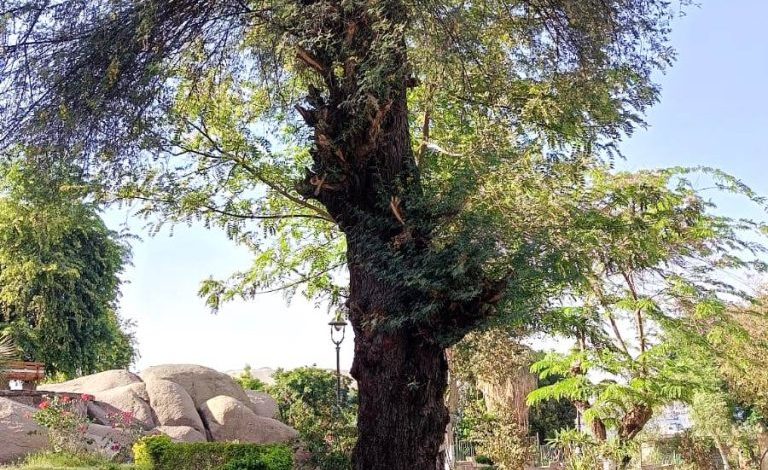
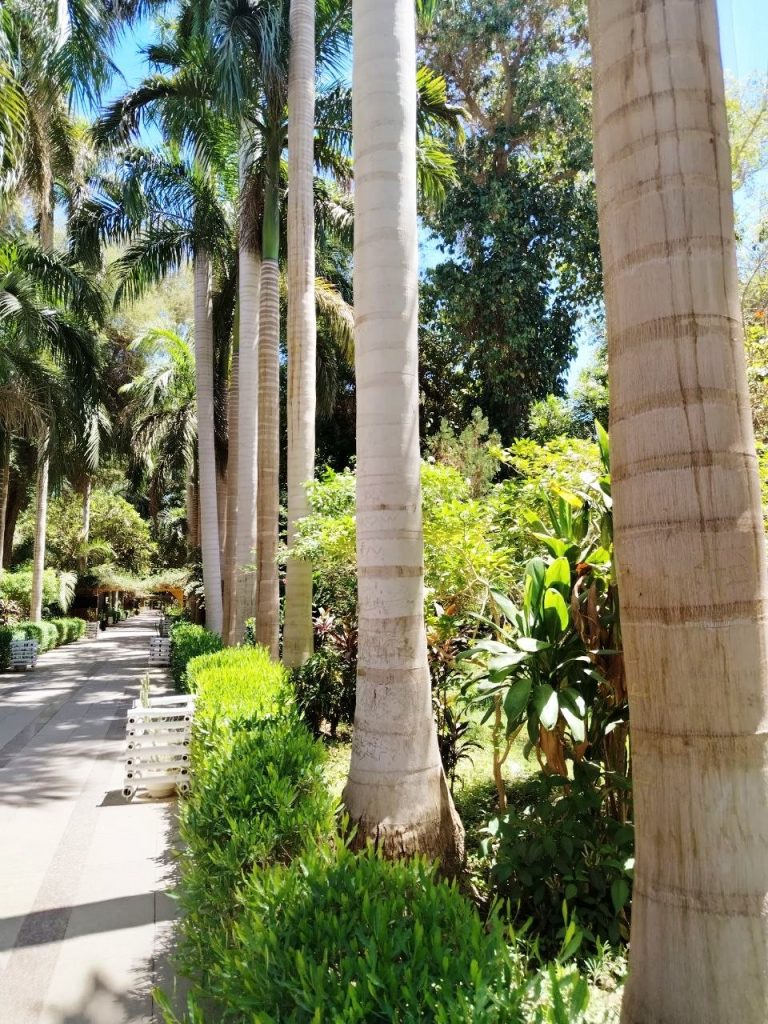
Dr. Amr Mahmoud adds that the team also documented the Royal Palm, famed for its stark, brilliant white trunk that thrives in Aswan’s intense climate. They likewise logged the Lemon Eucalyptus and a historic Sycamore Fig (Ficus sycomorus) one of the oldest residents of the Botanical Garden. Planted by Lord Kitchener when he established the island as a military headquarters, this living artifact is roughly 150 years old and has been officially enshrined as an archaeological monument under number 369.
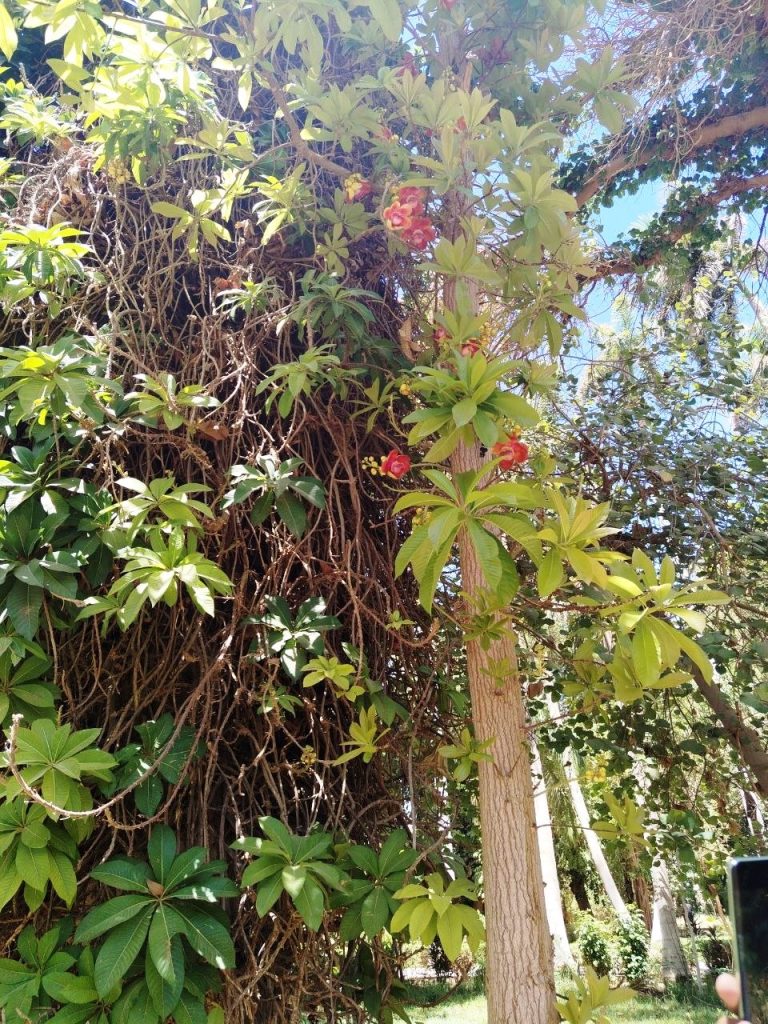
The survey also preserved the Couroupita (Cannonball Tree), a striking ornamental specimen and the only one of its kind in the Middle East. It possesses a fascinating botanical trait: its floral growth separates entirely from its foliage, producing sweeping clusters that yield some of the largest, most breathtaking, and intensely fragrant blossoms in the natural world.
Living Relics and Elephant Scratches
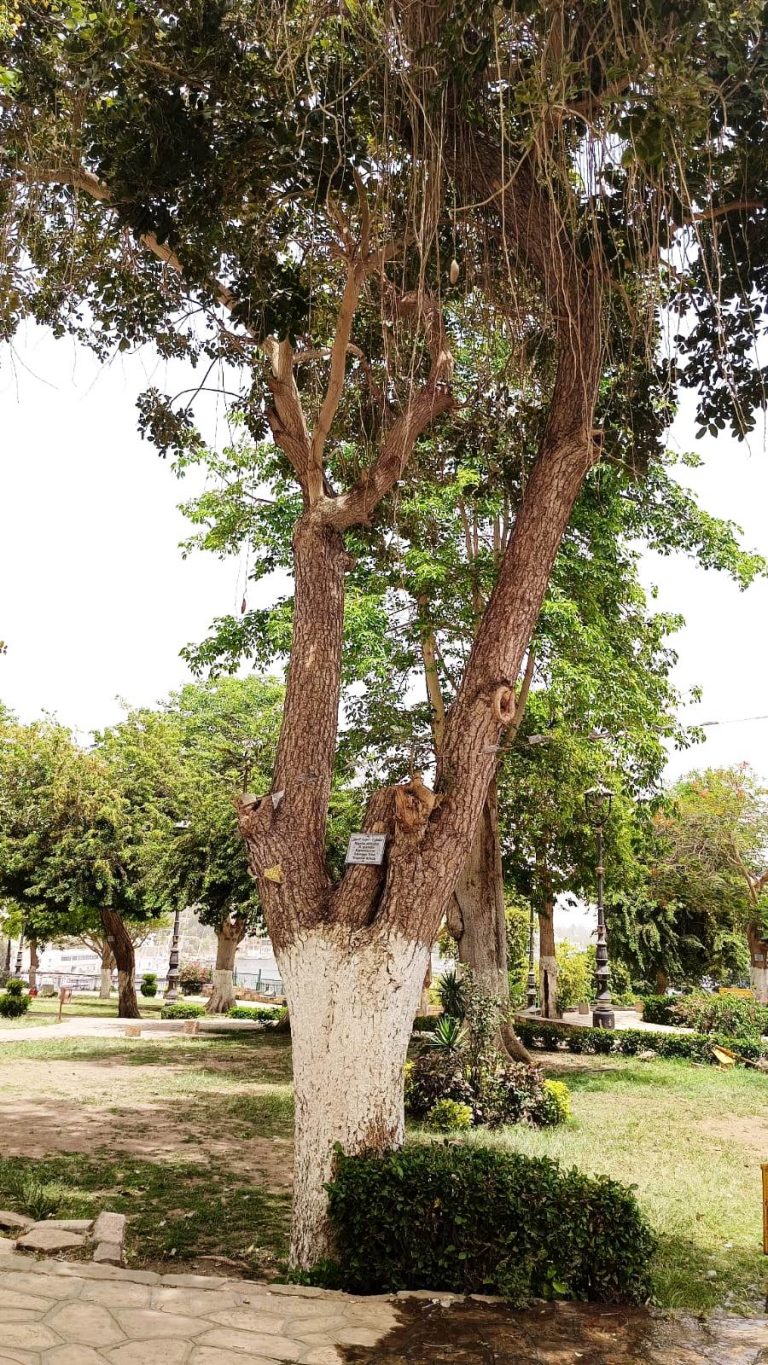
Dr. Mahmoud further notes that the documentation includes the Alstonia and the Bombax. The garden boasts three ancient Bombax trees, celebrated for their uniquely contorted trunks that draw crowds of visitors eager for a keepsake photograph. Documented under number 79, these specimens are older than 130 years, showcasing the exquisite flora that populates this sanctuary of rare growth. The Carob tree also joined the digital ledger. Carob remains an aromatic staple of Aswan, alongside tamarind, hibiscus, cinnamon, and ginger. Its pods yield the traditional Kharoub (Carob) beverage, while its remarkably uniform seeds were used in antiquity to weigh precious gemstones.
Among the most arresting features of the garden is the Chorisia tree, colloquially dubbed Mashar el-Fil (The Elephant’s Scratcher), which features dramatic buttress roots rolling over the earth a testament to its immense age. It earned its moniker because elephants in tropical forests use the thorny protrusions of its trunk to scratch their hides after bathing in rivers.
Its hollowed trunk serves as a natural water reservoir in equatorial regions, and its beautiful pink blossoms make it an extraordinary ornamental fixture. Native to Brazil, it was previously cataloged by the National Organization for Urban Harmony due to its antiquity within the garden, where visitors routinely gather to marvel at its sculptural beauty.
Securing the Future of Endangered Flora
Addressing the presence of endangered species within the surveyed plots, the Botanical Garden director reveals that a specialized research team and a dedicated seed bank actively harvest seeds from these trees. Following rigorous scientific trials, the team preserves and cultivates these botanical lineages. Through various propagation methods, they have successfully reproduced over 90% of the garden’s existing plants to yield a high volume of saplings. “Praise be to God, we have succeeded in this endeavor,” Dr. Mahmoud shares, noting that the triumph has significantly expanded the garden’s canopy.
Engineer Mohamed Hassan, General Director of Aswan Public Gardens, explains that this initiative, spearheaded by the National Organization for Urban Harmony, aims to establish a strategic framework to inventory, document, and shelter heritage and rare trees. He notes that the Urban Harmony team visited Aswan two months ago, traversing the city’s primary green spaces from the Botanical Garden to Ferial Garden and the Nile Corniche to catalog these ancient specimens.
62 Sentinels of Ferial Garden
According to Engineer Mohamed Hassan, Aswan harbors trees whose lifespans stretch past 120 years. The initiative logged 62 trees in Ferial Garden and 37 along the Nile Corniche, with some trunks measuring a staggering five and a half meters in diameter.
Hassan highlights that Aswan possesses exceptionally rare varieties, including the Bombax and the Kigeliafa miliarly known as the “Sausage Tree.” The latter stands as an exotic jewel exclusive to Ferial Garden, and local authorities plan to expand its cultivation across multiple sites in the coming period.
The Sausage Tree is prized for its dense, unyielding timber and its sprawling canopy, which offers immense expanses of shade, climbing to heights of 20 to 25 meters. Hassan also points to the Sant Nili (Nile Acacia/Gum Arabic), documented under identification number 33, the Pritchardia palm at number 62, and the Cassia nodosa at number 27. He emphasizes that the ultimate goal of this documentation is to construct an unerringly accurate database for the entire governorate, ensuring these trees are preserved and multiplied.
Hassan concludes by noting that the process leverages digital maps, identification tags, and barcodes. This makes information regarding each tree’s age, shade area, pruning schedules, irrigation needs, fertilization cycles, pest control protocols, and health conditions instantly accessible. With a simple scan of the barcode, any curious observer or specialist can unlock the entire biography of the tree, discovering its ecological requirements, its native home, and whether it belongs to equatorial or other global climes.