
The Koshary Paradox: Egypt’s Food Heritage vs. Food Sovereignty
Egypt’s beloved national dish is now a UNESCO treasure. But can a food culture survive when most of its ingredients come from abroad?
By Hala N. Barakat | Archaeo-botanist and Food Researcher
The Boom in Food Heritage
Recent years have witnessed a surge of interest in Egyptian food heritage. Social media now hosts more than a dozen Facebook and Instagram pages dedicated to traditional recipes, amassing thousands of followers. Events celebrating culinary history fill museums and historic houses. Projects in towns like Esna document and revive local foods for visitors. Restaurants featuring home-cooked Egyptian dishes have multiplied, alongside photo exhibitions and publications showcasing regional flavours.
This unprecedented enthusiasm culminated in UNESCO inscribing Koshary on the Representative List of the Intangible Cultural Heritage of Humanity, recognising it as a staple dish embodying Egyptian social cohesion, community, and daily life.
As someone who has studied Egypt’s food heritage for two decades, these developments are music to my ears. Yet they stand in sharp contradiction to what is happening in the fields and markets.
The Import Dependency
Egypt imports most of its staple foods: 50% of its wheat, 47% of its fava beans, 90% of its lentils and chickpeas, and 95% of its cooking oils — palm, sunflower, soybean, and corn. All these ingredients form the backbone of “Egyptian” food heritage, yet they are barely grown in Egypt today.
Consider the curious case of lentils.
During the winter of 2024, I contributed to a local food revival project in Esna, known for its famous dish, “Ads Esnawi,” Esna lentils. Yet even these signature lentils are imported. This is deeply ironic because lentils were among the earliest crops cultivated in Egypt, continuously grown for 5,800 years. Lentils remain an integral part of daily life for the majority of Egyptians.
According to the Egypt Food Security Report, domestic lentil production covers only a tiny fraction of consumption. The vast majority 90% is imported due to inconsistent local production capacity. The forecast is bleak: lentil production is expected to shrink by one-third of 2023 levels by 2028.
Koshary itself presents the same paradox: roughly half its ingredients, lentils, chickpeas, wheat flour for macaroni, and cooking oil, are imported.
The Export Boom
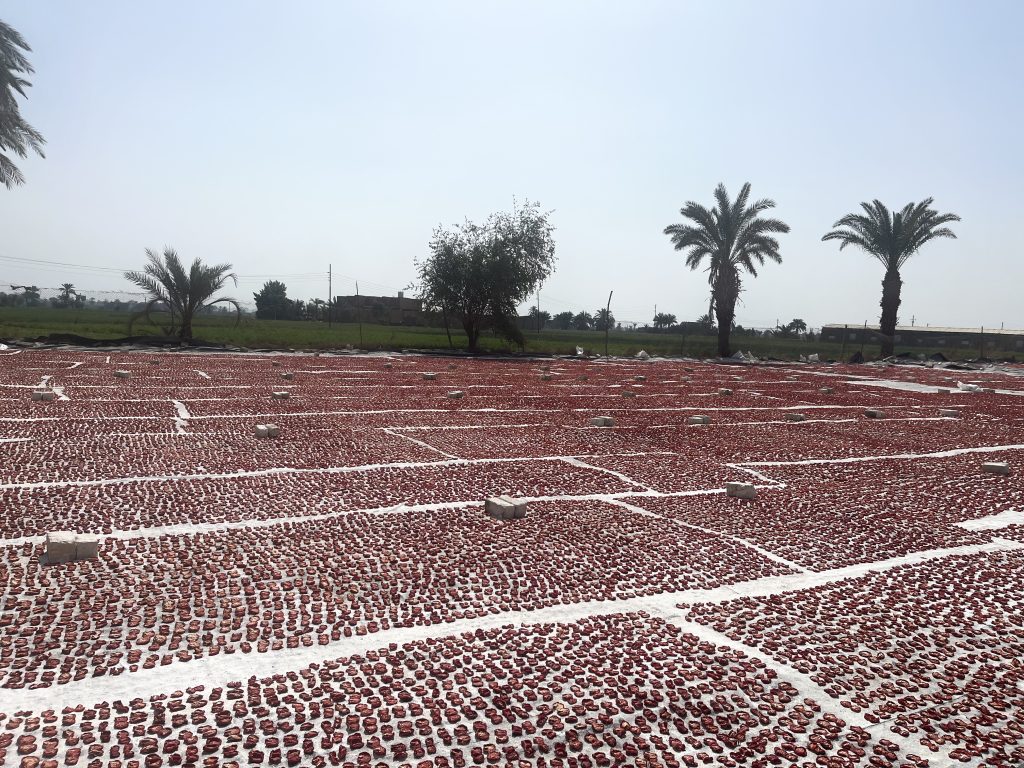
Meanwhile, Egypt exports food aggressively. Frozen strawberries and fresh citrus fruits flow to Europe. Dates ship worldwide. Dried fruits and vegetables have become key exports. Egypt now dominates Europe’s frozen strawberry market, becoming the largest supplier to Germany. In the first eleven months of 2025 alone, Germany imported nearly 82,000 tonnes of Egyptian frozen strawberries.
Citrus exports have become a multi-billion-dollar growth engine. In 2025, Egypt shipped approximately two million tonnes of citrus globally. Egypt is also the world’s largest producer of dates, with an annual production of roughly two million tonnes, much of it exported through more than 200 processing facilities.
Vegetables have emerged as the new export frontier. Carrot exports to the European Union rose from around 4,000 tonnes in 2020 to nearly 19,000 tonnes by 2023, making Egypt one of Europe’s top suppliers. Potatoes, onions, artichokes, green beans, and sweet potatoes are also exported fresh.
Egypt is moving from raw exports to value-added processed products: frozen strawberries, dried vegetables, juices, and packaged dates capture more value per tonne while extending shelf life.
The Cost to Egyptian Consumers
While these sound like success stories, they work against Egyptian consumers’ right to food. The export of vegetables and fruits often deprives the local market of essential crops or raises prices enormously. The local market receives export produce only at the end of the season or when export operations fail.
In Cairo, vegetables such as carrots, artichokes, onions, and potatoes, and fruits such as strawberries, oranges, and specialty citrus varieties are often unavailable in local markets until much later in the season, typically only when they cannot be exported. The Egyptian consumer is placed at the end of the supply chain, forced to accept, reject or overgrown produce.
The Sun-Dried Tomato Case Study
The popularity of sun-dried tomatoes illustrates the problem. Hundreds of acres once cultivated for traditional staple crops now grow tomatoes for industrial processing into paste or drying for export. In Upper Egypt, cultivation of staples for local consumption, including lentils, a specialty of Esna, has been replaced by tomatoes destined for Europe.
In 2023, the price of lentils rose from 20 to 70 Egyptian pounds per kilo. In 2026, it averaged 110 Egyptian pounds.
The sun-dried tomato story, portrayed as a success, must be seen in the context of land and water depletion. Scarce resources that could cultivate staple foods are wasted on export crops. There is also labour exploitation: women often university graduates work long hours in the sun for meagre pay and no benefits.
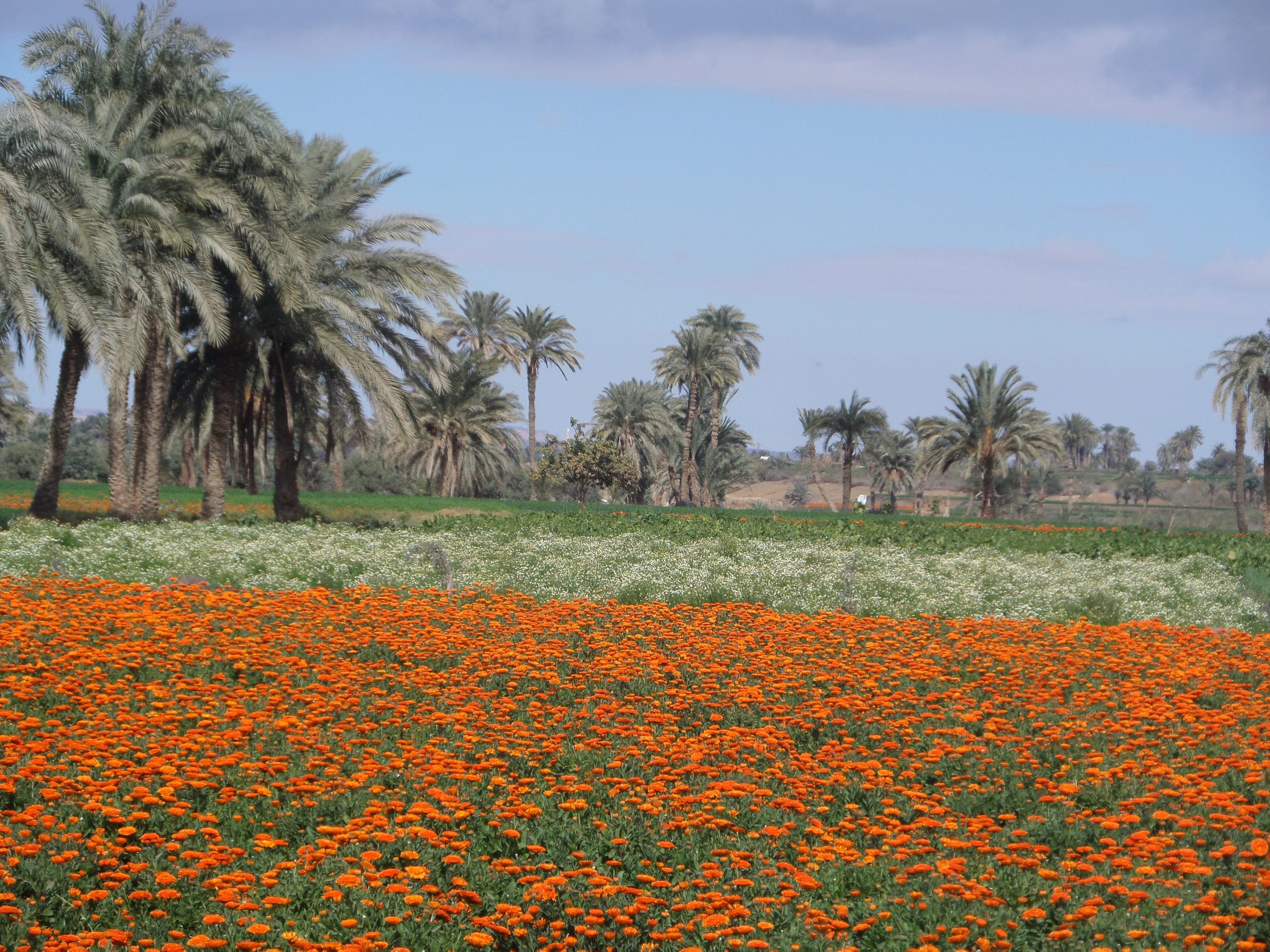
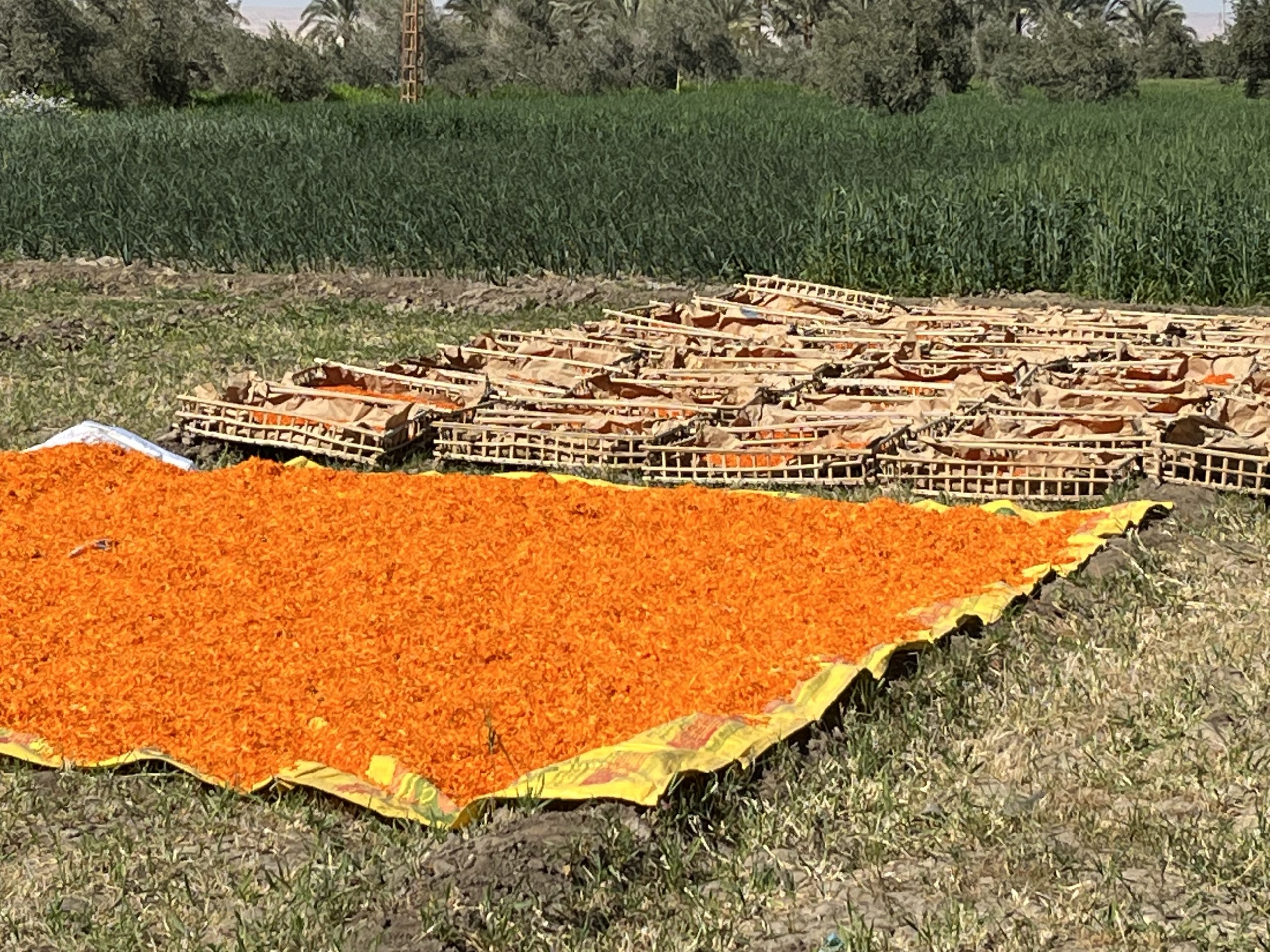
The same pattern repeats elsewhere: fields of aromatic herbs and cosmetic plants cultivated in Fayoum on land that could grow wheat and sesame.
This export-oriented transformation depletes ingredients essential to Egypt’s food heritage and culinary culture.
The Right to Food
To redress this situation, two concepts are essential: the Right to Food and Food Sovereignty.
The Right to Food has three main pillars: sufficiency, accessibility, and cultural appropriateness. When applied, people have access to enough healthy and culturally adequate food in dignity and security.
Food Sovereignty places people, those who produce, distribute, and consume food, at the centre, allowing them to decide what foods are grown and how they reach the table. At its core lies the understanding that food is a basic human need, not a mere commodity. This means appreciating the work of food producers and shortening the distance between those who grow food and those who eat it, thereby avoiding dependence on distant and unaccountable corporations. Monitoring and decision-making belong in the hands of local producers, with natural resources held as commons rather than private assets. Traditional knowledge forms the basis of skills that must be transferred to future generations through research and practice. And finally, food sovereignty calls for collaboration with nature: maximising ecosystems’ contribution while abandoning energy-intensive, mono-culture-based, industrial production methods that harm the land and deplete resources.
A Way Forward
To conserve and revitalise Egyptian food heritage, we must ensure easy access to local ingredients at reasonable prices. Small food producers must be involved in conserving and valuing their local knowledge of cultivation and processing. Their know-how and seeds are imperative to preserving the taste and nutritional value of heritage foods, and they must be the main beneficiaries of production, distribution, and consumption.
Traditional food preparation knowledge and skills must be documented and transferred to a wider, younger public.
Applying these basic principles of Right to Food and Food Sovereignty would prevent: loss of local seed varieties, corporate capture of food production, alienation of small producers, depletion of soil and water through intensive mono-cropping, and the misuse of resources for export crops while staples are imported.
Egypt could recover at least partial self-sufficiency in lentils, chickpeas, fava beans, wheat, and cooking oils. Its signature heritage dishes would remain staples in the daily lives of all Egyptians. Egyptians would again access seasonal vegetables and fruits at reasonable prices, enjoying them with dignity while appreciating the labour that produced them.
Egyptian food heritage, its valorisation, conservation, and revival, is not sustainable without Food Sovereignty and adherence to the right to Food.