Whose Grave Is This? Naguib Surur, Dante, and the Elegy That Haunts Egypt
On what would have been his birthday, we revisit Naguib Surur, the Egyptian poet who found perfection in an anonymous folk elegy. A meditation on exile, belonging, and the demolished grave that became his symbol.
By Fathy Abd El Samie
In the villages of Egypt, north and south, there is a lament sung at funerals. It is called the Adouda, a short, stark elegy for a demolished grave. Sometimes it is sung privately, over the body of the departed. Other times, more rarely, it rises in public, a raw expression of pain not tied to any one death but to the condition of exile itself: the leaving of one’s land, the abandonment by one’s people, or the more terrible fate of being forgotten by both.
The words are simple, almost childlike:
Whose grave is this that no one visits
The grave of a stranger whose family never comes around
Whose grave is this that cattle toppled
The grave of a stranger who abandoned his land
Whose grave is this that cattle trampled
The grave of a stranger who abandoned his people.
There is no rhyme scheme to marvel at, no elaborate metaphor. Just a question, repeated, and an answer that deepens with each repetition. A stranger. A grave no one tends. Cattle, indifferent and heavy-hoofed, doing the work of erasure. The power of the poem lies in what it does not say: the story of how the stranger came to be buried far from home, the reasons he left, the silence of those who stayed behind.
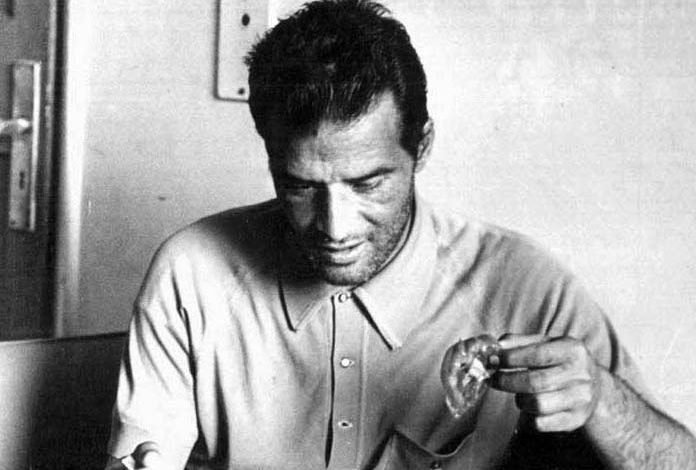
The Egyptian poet Naguib Surur (1932–1978) believed this anonymous folk elegy to be one of the greatest poems ever written. He called the unknown author the true Prince of Poets. This is a remarkable claim, not only because Surur himself was a fierce and controversial figure, a leftist, a political prisoner, a man whose own life ended in despair and obscurity.
Who was Naguib Surur?
For readers unfamiliar with Surur, a brief context is necessary. He was an Egyptian poet, playwright, and critic, born in the Nile Delta village of Akhtab. His early life was marked by a traumatic encounter with the feudal class that dominated his village: a pasha struck Surur’s father with a shoe before the young boy’s eyes. This moment became the seed of his most famous poem, “The Shoe,” and of his lifelong rage against injustice.
Surur was a child of the 1952 Revolution, initially hopeful that the overthrow of the monarchy would bring freedom to Egypt’s poor. That hope curdled quickly. He was arrested, tortured, and spent years in prison under Gamal Abdel Nasser’s regime. His poetry grew darker, more fragmented, more despairing. By the time of his death at forty-six, he had become a spectral figure in Egyptian letters: brilliant, angry, and largely forgotten. His work is not widely taught in schools. His name is not a household word. And yet, as this article will show, he had an almost mystical devotion to the anonymous voices of folk tradition, voices he believed carried more truth than the polished verses of canonized poets.
In his diwan Luzum Ma La Yalzam (The Necessity of What Is Not Necessary), Surur stages a long, hallucinatory dialogue with Dante. The two poets walk together through a landscape that resembles hell but is, Surur insists, not the afterlife. It is the present. “Here we are in it since morning,” he tells Dante. For Surur, hell is not fire and brimstone. It is something more mundane and more terrible:
Do you know what hell is?
…
Hell is to live without a homeland
And die in exile, and be buried in the soil of others.
Then, as if reaching for proof, he asks Dante to recall a song sung at Egyptian funerals. He recites the Adouda. The lines fall spare and heavy.
Dante, astonished, asks who wrote such poetry.
“No one knows,” Surur replies. “The ‘reliable authorities’ call it folklore.”
Dante insists: poetry is alive among the Egyptians as long as such words exist. He declares the unknown author the Prince of Poets. He asks Surur to convey his admiration and his greetings.
This is a startling move. Surur does not claim greatness for the elegy himself. He places that judgment in the mouth of Dante, the highest possible authority in the Western poetic tradition. The effect is both humble and radical: the greatest European poet bows before an Egyptian peasant whose name has been lost to history.
Why did the Adouda move Surur so deeply? The answer lies in what the poem encodes about Egyptian folk culture.
In traditional Egyptian society, exile was a kind of death. The harshest punishment short of execution was expulsion from the group. To leave one’s village, one’s family, one’s ancestral land was to commit a spiritual suicide. And the grave, in this worldview, is not just a resting place. It is the final anchor of belonging. To be buried among one’s own people is to remain part of the community. To be buried far away, among strangers, is to be doubly dead.
The Adouda captures this terror in three images: the grave no one visits, the grave trampled by cattle, the grave toppled entirely. The cattle are not mere animals. In Arabic poetic tradition, “cattle” (baqar) also signifies ignorance, brutishness, a lack of understanding. When the poet Al-Buhturi wrote, “What do I care if the cattle do not understand,” he was dismissing his critics as mindless beasts. But in the elegy, the cattle are both literal and symbolic: they are the forces of forgetting, the passage of time, the indifference of the living.
Yet there is a strangeness to the poem that Surur does not fully unpack. The cattle, after all, trample only the graves of strangers. They leave other graves untouched. Is this destruction or discernment? Is the poem mourning the stranger or marking him as cursed? The ambiguity is deliberate. The Adouda does not explain. It witnesses.
Surur was not alone in his fascination with the poem. The elegy draws on a deep current in Egyptian folk memory: the terror of being buried in foreign soil. The ancient story of Sabni, an Old Kingdom official, illustrates this vividly. When Sabni’s father, Mehu, was killed during a trading expedition in Sudan, Sabni traveled alone into hostile territory, retrieved his father’s body, and brought it back to Egypt for burial. Sabni’s grave still stands in Aswan, its inscriptions praising his filial courage. The message is clear: a man’s bones belong with his people.
This is why rural Egyptians who migrate to Cairo often insist on being buried in their home villages. The body must return. To be buried elsewhere is to fail not only the dead but the living who remember them.
The Adouda inverts this longing. It speaks not of the migrant who returns but of the stranger who stays away, or who is cast out. His grave is not just lonely; it is actively destroyed. The cattle do the work of the community, erasing him from the land he abandoned.
Naguib Surur understood this better than most. He, too, was a kind of stranger. His radical politics made him an outcast in his own country. His poetry was too harsh, too direct, too despairing for the literary establishment. He died in 1978, at forty-six, after years of illness and isolation. Some say he died of a broken heart.
But before he died, he wrote his dialogue with Dante. He gave the anonymous poet of the Adouda the title he himself never received: Prince of Poets. It was an act of generosity and defiance. It was also, perhaps, a confession. Surur knew what it meant to be a stranger in one’s own land. He knew what it meant to have no one visit your grave.
In his poem “The Shoe,” written years earlier, he had imagined his own funeral:
I am the son of misery
Raised in the stable and the hovel
And in my village, everyone is miserable.
He did not expect mourners. He expected, perhaps, only the cattle.
The Adouda is still sung today, in the villages of Egypt, by people who have never heard of Naguib Surur or Dante Alighieri. They sing it because it is true. They sing it because it hurts. They sing it because they know, in their bones, that a grave is not just a hole in the ground. It is a statement of belonging. And its destruction is the final, most complete exile.
Surur understood this. He heard in the anonymous folk song a greatness that no named poet could match. He heard the voice of the land itself, mourning its lost children. And he bowed to it.
Convey my admiration to him, Dante says in Surur’s poem, and give him my greetings.
The poet has no name. But his grave, unlike the stranger’s, has not been toppled. It stands in the words of the Adouda, trampled but intact, forgotten but remembered. That is the miracle of folk poetry: it survives its authors. It survives its cattle. And every time someone sings it, the stranger is buried again, and mourned again, and not entirely alone.