Between Children and Grandchildren: Hajah Mahasen Shields the Palm-Frond Craft from Extinction
Hajah Mahasen Shaker, guards her family’s ancestral palm-frond wickerwork craft from modernity in Luxor, passing the sustainable heritage down to her grandchildren
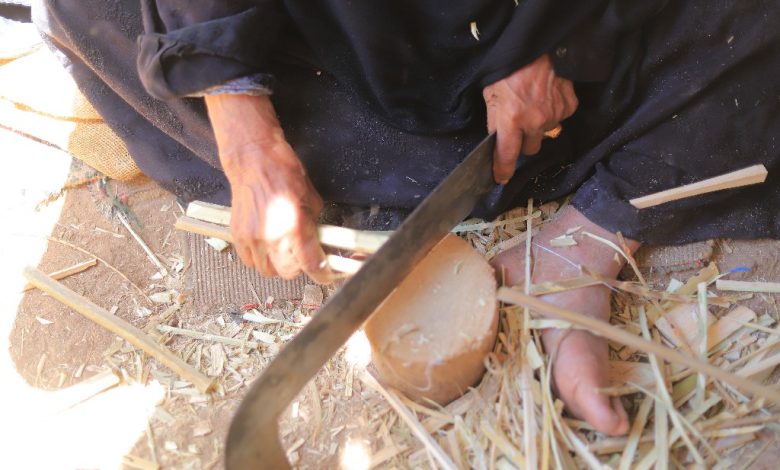
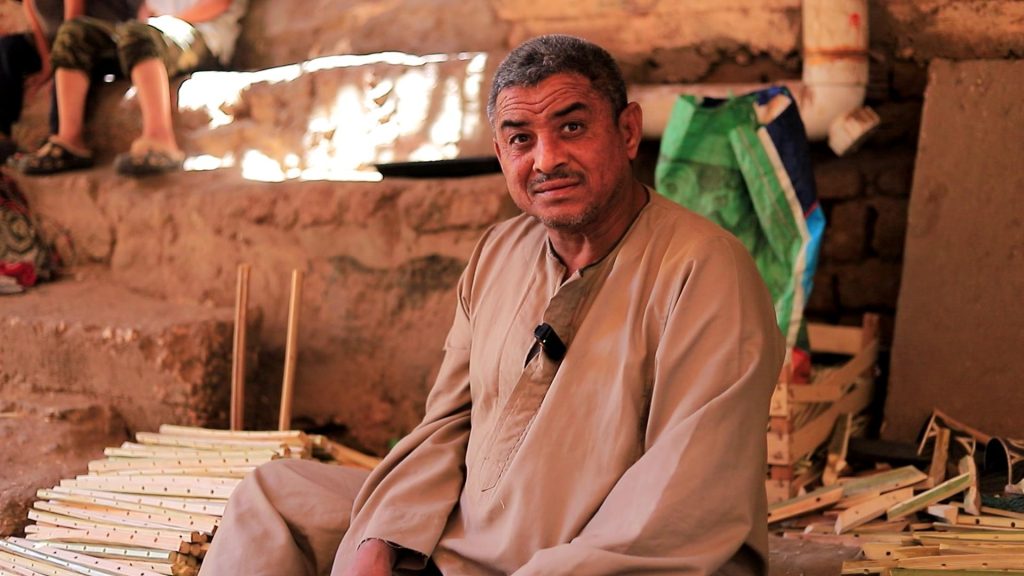
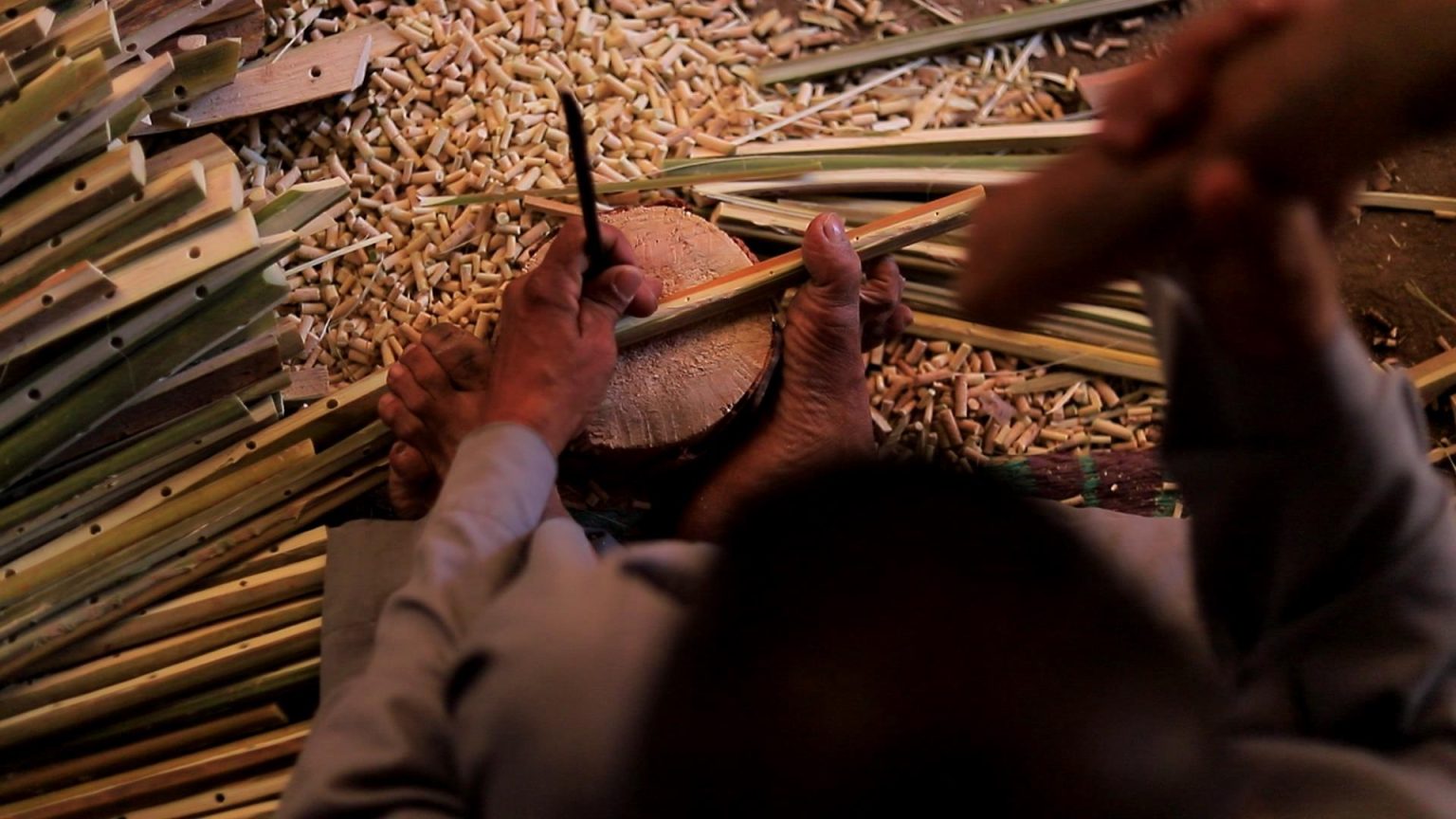
Fronting the home she erected with the patient accumulation of years, surrounded by her five children and a constellation of grandchildren, she gazes upon them with an expansive, contented joy. She has bestowed upon them the ancestral craft. Now, her hands grasp a crescent-shaped iron blade known as the hilal (crescent tool), slicing through palm fronds to splinter them into the neat components of produce crates. Though a persistent ache throbs in her feet, she refuses to yield to time. This is Hajah Mahasen Shaker. At 76, she remains the steadfast anchor of a jarid (palm-frond wickerwork) tradition inherited directly from her father.
‘This Craft Courses Through My Veins’
“This craft courses through my veins; I learned it from my father, who in turn absorbed it from his grandfather,” Hajah Mahasen reflects, her voice rhythmic as she splinters the stalks. “I began this labor at fourteen, which means my hands have shaped this wood for sixty-two years. My feet may ache, but I cannot simply cease. This trade reared me, raised my children, and built our homes. It ensured we never had to beg a soul for bread.”
She continues: “My five children tried to coax me into retirement because of my advanced age, but I rejected the idle life. For me, to sit without work is a kind of death.”
Deep within the southern enclave of Armant al-Hait, southwest of Luxor, the Yousef Hassan family has preserved the secrets of palm frond wickerwork for decades. In defiance of modernity’s relentless march, this household guards a majestic heritage, maintaining an ancestral lineage and a singular identity long after most of its practitioners have abandoned the trade.
Relying entirely on manual precision and dexterity, the craft serves as the living memory of a family led by a septuagenarian matriarch, who has never once considered deserting her heritage since her very first day at the bench.
The Architecture of the Palm Bed
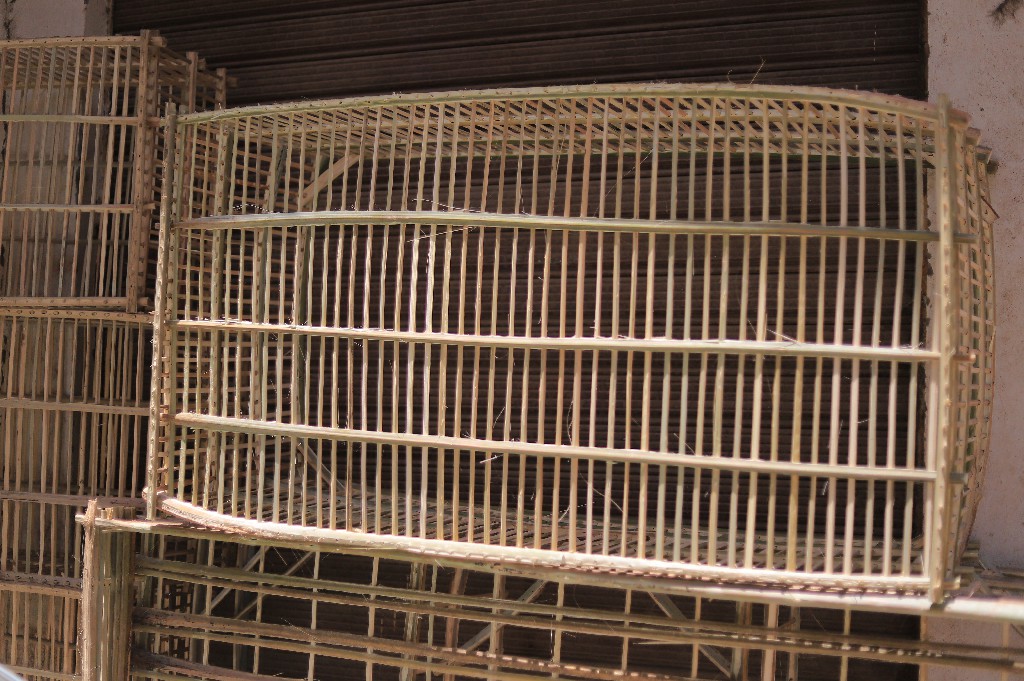
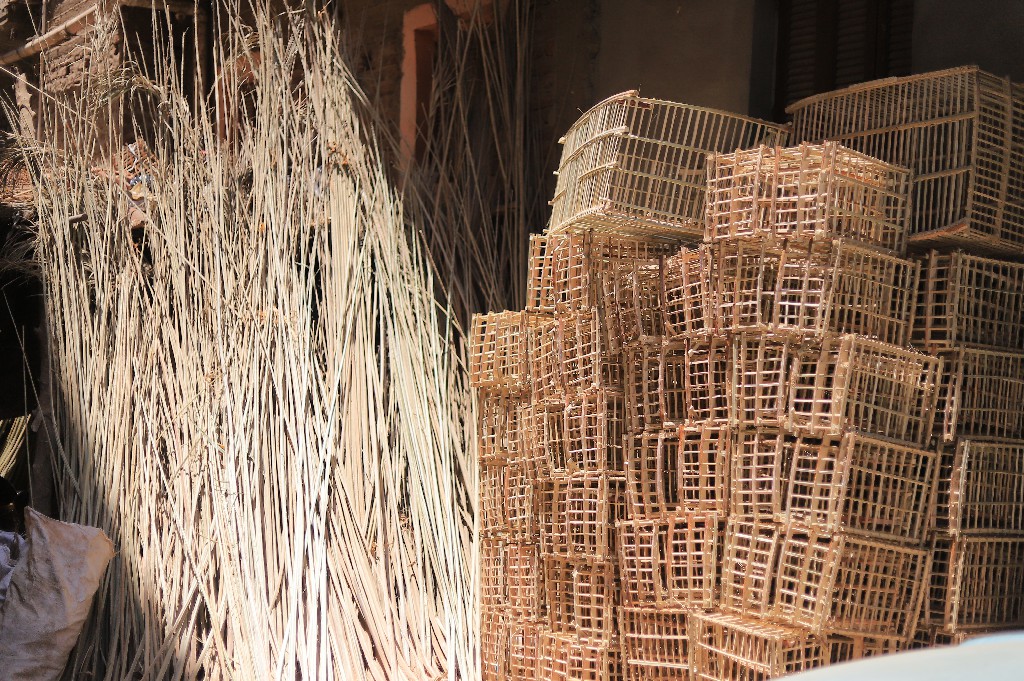
“Right now, I am crafting the structural ribs for guava crates,” Shaker explains. “The bulk of our demand here centers on fruit crates, specifically for guavas and mangoes. We also fashion traditional family beds and kifayat (poultry coops) designed to protect livestock. A single coop demands half a day of focused labor, spanning dawn until noon, while a pair consumes an entire day’s work.”
She adds: “As for the twin frames of a bed, they require a full day of undivided attention.” She notes a resurgent appetite for these jarid beds, which locals prefer over standard wooden frames for sleeping under the open night sky, a preference that extends to custom-made chairs and tables.
“Our hours dictate themselves by the volume of orders,” she observes. “We begin our rituals at the strike of four in the morning, working until eight. After a brief interlude of rest, we resume from midday until the sunset call to prayer echoes across the fields.”
She pauses, looking back: “The past was entirely different from today. Once, the practitioners of this art were legion. But time brought plastic crates and alternative commodities, and as standards of living shifted, people turned away from palm products. The market withered, and the craftsmen vanished. Yet, a slow repatriation to the craft has begun, particularly regarding agricultural crates. The plastic variants simply could not endure the brutal rigors of transport, forcing the merchants to return to us.”
A Natural Ally for the Harvest
Obeid Yousef Hassan, one of Hajah Mahasen’s sons, has dedicated fifteen years to the family trade. He admits the craft hovered on the precipice of extinction, yet notes a recent renaissance fueled by the skyrocketing cost of timber, especially within rural villages that still anchor their domestic lives around palm-frond beds and crates.
He maintains that produce merchants openly favor these artisanal crates for their sheer utility, resilience, and longevity compared to their plastic counterparts. Furthermore, they possess the virtue of easy repair, whereas a fractured plastic crate becomes instant waste.
He elaborates that palm fronds preserve the integrity of fruits and vegetables because they are born of nature, allowing air to circulate freely, unlike plastic, which suffocates the harvest by trapping heat and moisture. Beyond utility, the frond remains a biodegradable material that dissolves back into the earth, a stark contrast to the environmental blight of synthetic products.
Reshaping Modern Minds
Karam Yousef Hassan Mohamed, another son of the household, has spent roughly a decade and a half immersed in the trade he inherited from his parents. He points out that within the entire expanse of Armant, only his family and one other household still practice the craft, which was once a foundational village industry. Today, it has retreated entirely from the cities, finding its last refuge in rural pockets.
“We harvest our raw material from Qamula, west of Luxor,” Karam explains. “A single frond costs three Egyptian pounds, and we order them by the thousands, investment batches of about three thousand pounds. They arrive at our doorstep prepped for immediate manipulation.” He emphasizes that the survival of this legacy depends entirely on reshaping the consciousness of younger generations, encouraging a return to organic materials and the preservation of traditional artisanal wisdom.
The Stages of Transformation
Karam details how the raw palm frond undergoes an exacting metamorphosis. The ritual commences with the selection of prime fronds, judged meticulously by length and thickness. They are then cured under the baking sun to attain maximum rigidity, without forfeiting the vital elasticity required for shaping.
Following this curing, the artisan utilizes the hilal to slice the wood into various strips customized to the task at hand. Then begins the intricate stage of manual weaving and assembly, a phase entirely dependent on the craftsman’s muscle memory and experience to anchor and align the lattice, whether for a crate, a bed, or a livestock coop. These steps, he warns, may appear deceptive in their simplicity, yet they demand immense patience and profound expertise; a single miscalculation can unravel the entire labor.