Chronicles in Color: The Aswan Mural Reviving Southern Identity Through Inclusive Art
“Our Heritage Through Our Eyes” mural in Aswan unites visual artists and people of determination to revive Southern Egyptian identity. Through Pharaonic symbols and Nubian motifs, this inclusive street art project documents the city’s hallowed cultural legacy and the transformative power of artistic energy.
By Wafaa Amin
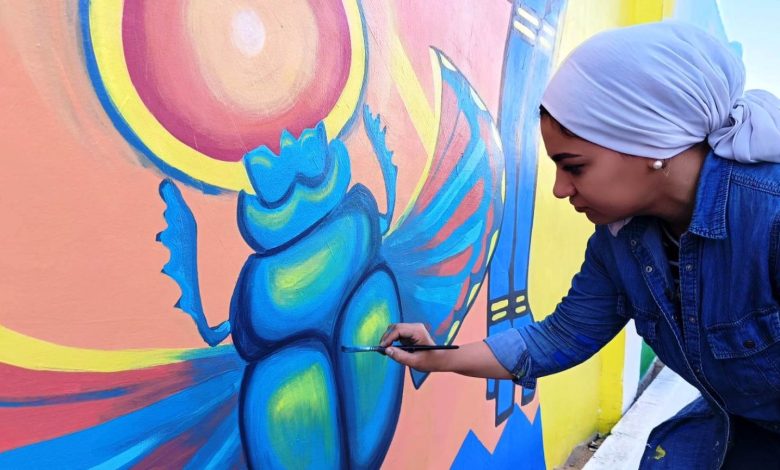
With a palette that whispers the secrets of history and brushstrokes reflecting a breathtaking landscape, the “Our Heritage Through Our Eyes” mural is transforming the facade of the Arab Contractors garage in Aswan into an open-air gallery. This sprawling canvas reawakens the memory of the South, narrating the intricate details of a civilization that spans the ages. Guided by local Aswan hands, visual artists, children, and people of determination (individuals with disabilities) are meticulously bringing this vision to life as part of the Sadat Road beautification and development initiative.
Our Heritage Through Our Eyes
Dr. Yara El-Beheiry, a visual artist and certified trainer at the National Telecommunications Institute in Aswan, explains that the concept for “Our Heritage Through Our Eyes” blossomed following directives from the Governor to launch initiatives that enhance the province’s aesthetic and visual identity. A collective of artists collaborated to design a narrative inspired by Aswan’s cultural and historical legacy across various epochs.
She notes that the designs were presented to Engineer Amr Lashin, Governor of Aswan, for approval before undergoing digital rendering and eventual physical execution. The result is a panoramic masterpiece celebrating Aswan’s history and its civilizational icons, intended to cultivate a sense of belonging and acquaint younger generations with their ancestral lore. El-Beheiry emphasizes that integrating people of determination into the project has instilled a profound sense of pride and self-assurance within them. The team prioritized communication through sign language, ensuring every participant had the agency to express their interiority through art. This project, she adds, transcends mere aesthetics; it documents Aswan’s cultural inheritance. Despite the grueling challenges of the street scorching heat, pervasive dust, and vehicle exhaust the spirit of cooperation ensured the work reached its zenith. Furthermore, a dedicated section titled “Aswan Through the Eyes of Her Children” was established to allow youth to articulate their vision of the city through vibrant hues.
The Tapestry of History and Cultural Pluralism
Mai Mohammed Abdel-Hadi, an interior designer and visual arts specialist at the Ministry of Culture, clarifies that given the team’s academic background, the objective was never to create mere decorative drawings. Instead, they aimed to deliver a sophisticated project that captures the essence of Aswan’s identity.
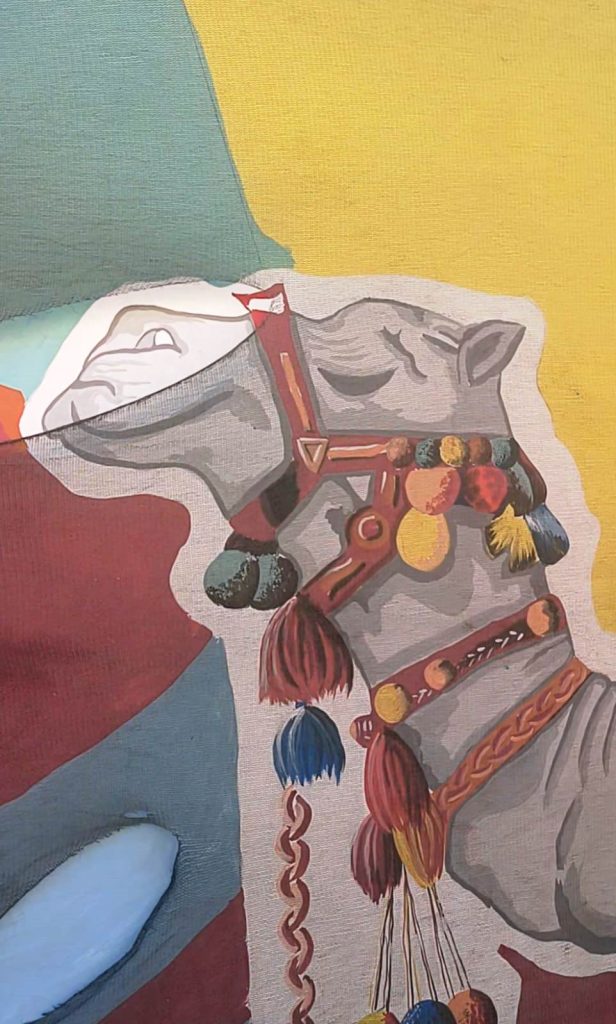
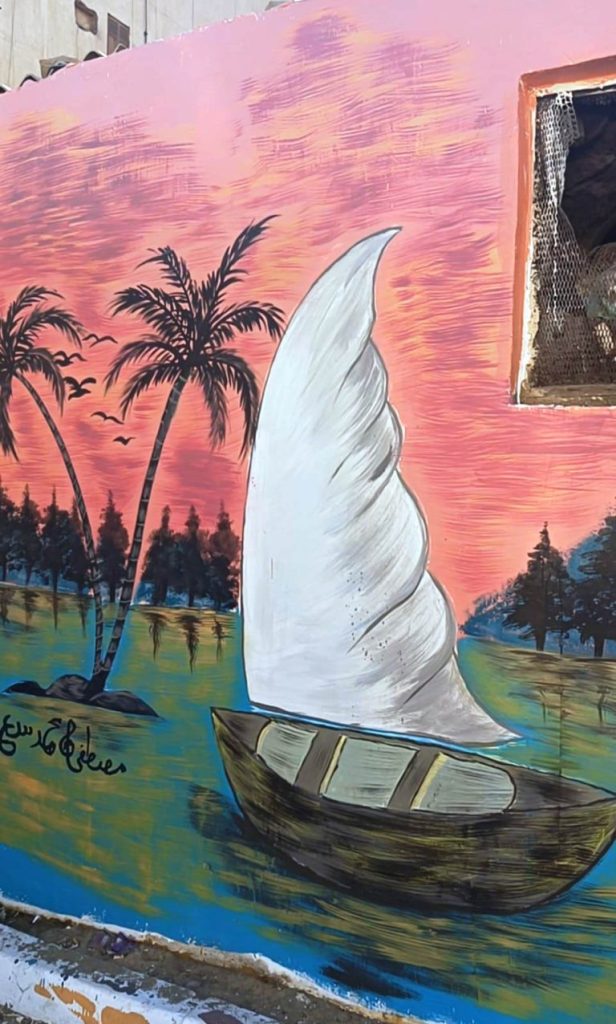
The mural is partitioned into a sequence of scenes depicting Ancient Egyptian civilization, Nubian heritage, folk traditions, and the influence of Arab tribes, all woven into a harmonious visual rhythm. Abdel-Hadi stresses that the artists selected vivid, jubilant colors that resonate with the street’s energy and reflect the “Ruh” (soul) of Nubia. Some segments blend Pharaonic and Nubian motifs to highlight the historical continuity unique to the region. The project has garnered significant public warmth, with locals frequently stopping to offer words of encouragement and praise.
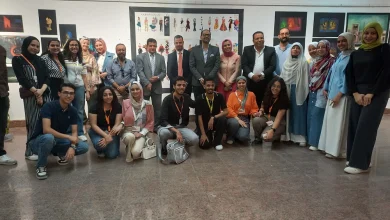
Regarding the participation of people of determination, Abdel-Hadi notes that the initiative is an extension of an ongoing partnership with the Cultural Empowerment department at the Aswan Culture Palace. Talented individuals were selected for their prowess in drawing, sculpture, and manual crafts. For many, this was their debut painting directly onto a wall rather than paper. The team was struck by their technical proficiency and infectious enthusiasm. The participants, who represent a spectrum of experiences—including those with hearing and motor impairments, autism, and cerebral palsy—produced exceptional work. Abdel-Hadi describes their involvement as the most moving human element of the entire initiative.
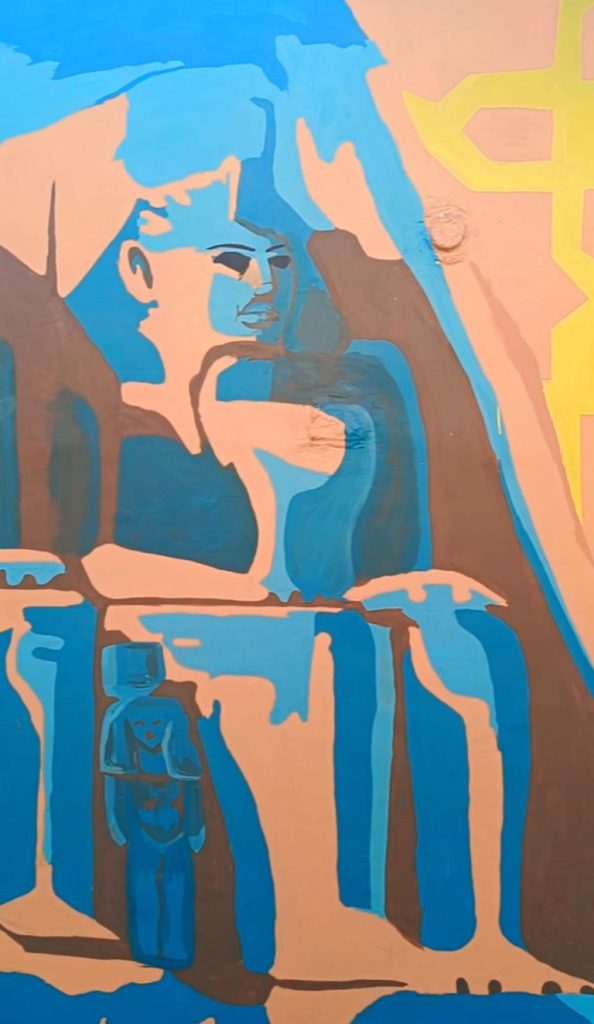
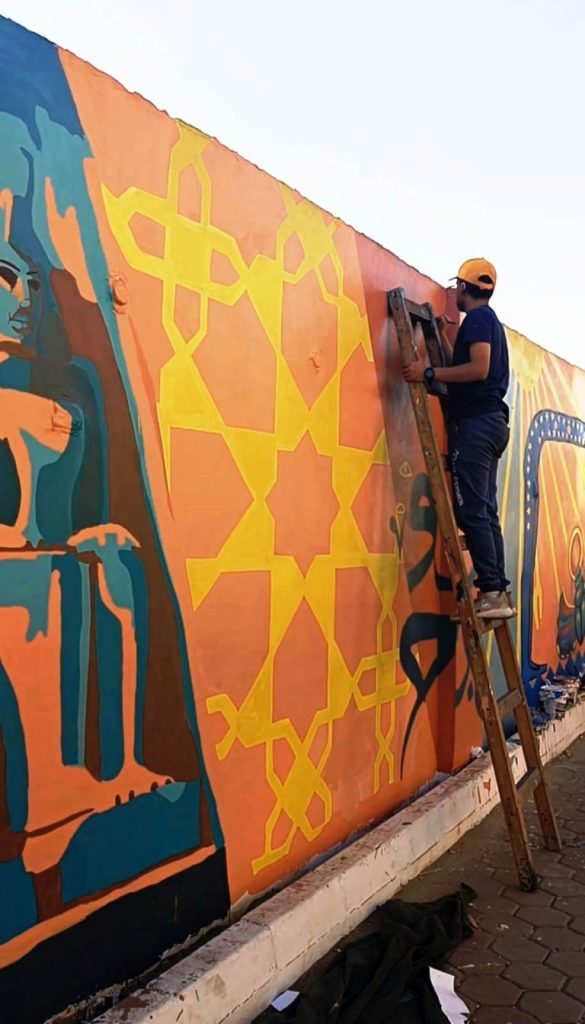
Our Heritage Through Our Eyes mural – Photo: Wafaa Amin
Elements Rooted in the Earth
Abdel-Hakim Amer, a participating visual artist, commends the Governor’s support in providing the essential materials to realize this vision. He explains that “Our Heritage Through Our Eyes” draws breath from Aswan’s multifaceted history, merging Pharaonic and Nubian motifs with a contemporary sensibility. His design relies on clean lines and bold colors to remain accessible to the everyday observer.
The work incorporates symbols anchored in the Aswan environment: the traditional Nubian house, lotus flowers, the Nile, and the “Feluccas” (traditional wooden sailing boats), capturing both the tangible and intangible heritage of the land. Amer’s focus on these symbols is rooted in his academic research; his master’s thesis explored the anthropological significance of symbols in Egyptian murals. He points out that the lotus signifies Pharaonic majesty, while circles represent the sun and infinity. Triangles act as talismans for protection and the warding of “Al-Arwah al-Sharira” (evil spirits), and the crocodile stands as a testament to strength and a sacred bond with the Nile. The stark, unmixed colors used are a nod to the traditional Nubian reliance on natural oxides for pigments. These symbols are not merely ornamental; they are vessels for inherited cultural values, which the team has reinterpreted to forge a modern visual identity for Aswan.
Profound Artistic Journeys
Basmala Mohammed Fakhri, a 19-year-old psychology student and person of determination, shares her joy in contributing to the mural. Her love for art began in childhood, though her beginnings were fraught with difficulty. Initially unable to grasp a pen with her hands, she spent her kindergarten years as a silent observer.
Her transition to painting with her mouth was sparked by a simple moment at home: while feeding her younger sister with a spoon, her mother noticed her dexterity. “You used the spoon with your mouth, and it is heavy; surely you can use a pen,” her mother encouraged. That moment became the turning point of her life.
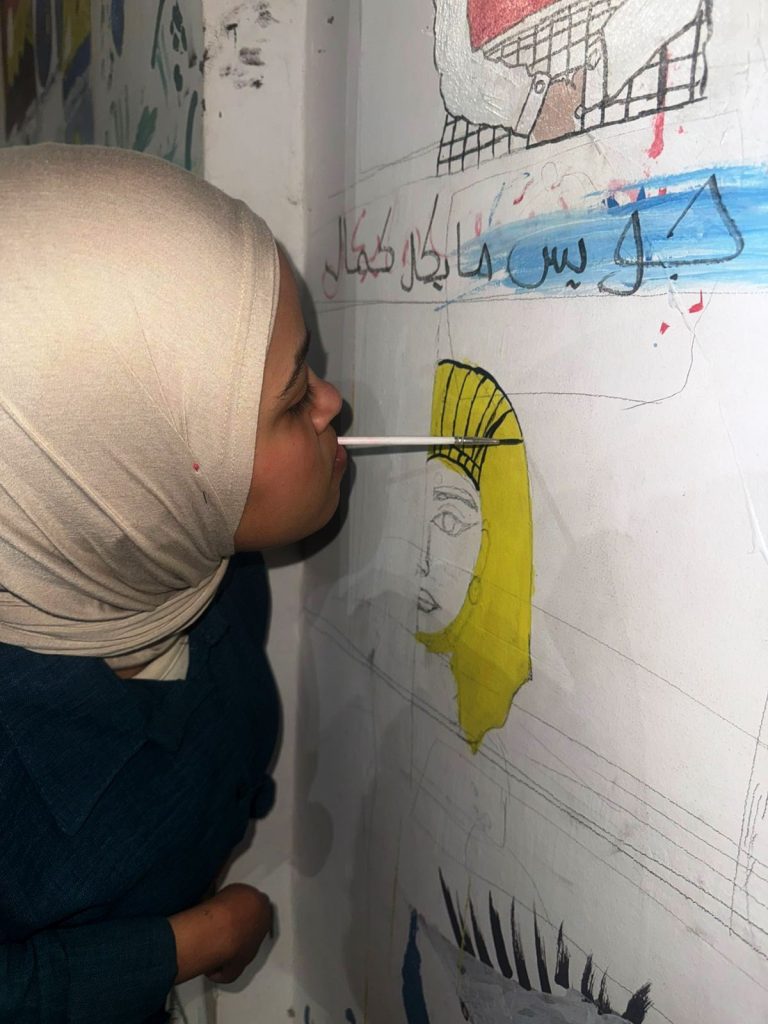
“Energy, Not Disability”
Basmala reveals that she underwent 15 surgeries before she was able to stand on her own feet. This is her second major mural project, having previously participated in visual identity works where her image was displayed at the Aswan Railway Station as a symbol of local pride. For this mural, she chose to paint King Tutankhamun to honor the grandeur of Egyptian civilization. Her family has been her bedrock, traveling with her across the province and beyond to support her participation in competitions. Her message to others like her is clear: “Keep your goal before you and never despair. Live your life fully, for we are defined by energy, not disability.”
A Talent Matured
Mustafa Said, another volunteer artist among the people of determination, recalls beginning his journey as a child drawing simple animals. His talent underwent a transformation after the age of 25, when he began mastering professional portraiture and complex compositions.
Said expresses immense pride in seeing his work displayed in exhibitions organized by the Ministry of Culture at the Al-Aqqad and Aswan Culture Palaces. He credits his brother with providing the vital encouragement needed to hone his craft. Even after a full day’s work, Said returns to the mural to complete his contributions a labor of love and a testament to his devotion to his country and the art that gives him a profound sense of belonging.