The Resurrected Soul of Damanhour: A Sanctuary for Egypt’s Vanished Manuscripts
Saving the Damanhour Library’s 600-year-old manuscripts and restoring Egypt’s neglected cultural heritage from decay.
By Mahmoud Dowair
In 1928, the municipality of Damanhour in the Beheira Governorate resolved to erect a cultural bastion befitting the city’s then-illustrious stature. Anchored by its strategic geography and its role as the primary artery for the cotton trade in Lower Egypt, Damanhour pulsed with a vibrant artistic movement that established it as one of the era’s preeminent beacons of enlightenment.
King Fuad I Inaugurates the Library
In November 1930, King Fuad I arrived to inaugurate the institution. Initially bearing the monarch’s name, it later evolved into the Municipal Library, or the Tawfiq al-Hakim Library, eventually merging into a broader cultural complex that included the Damanhour Opera House.
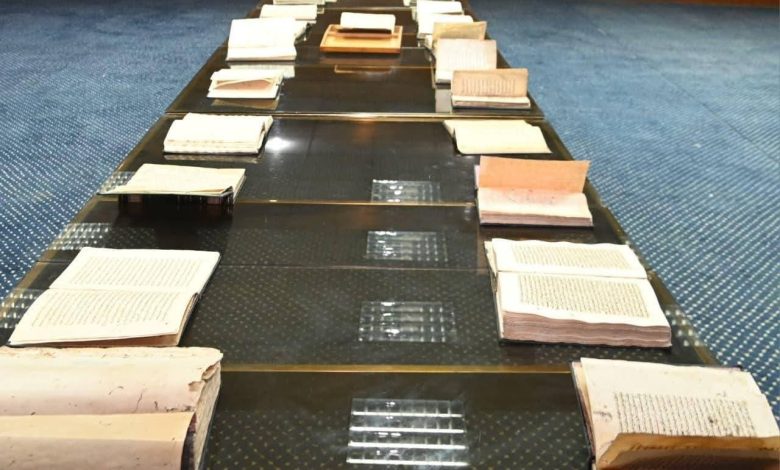
Today, this venerable library guards over 260 rare manuscripts and critical documents. Among these treasures are hand-drawn maps and copies of the Holy Quran exceeding six centuries in age. The collection includes the Risala fi Basmalat al-Dasuqi (A Treatise on the Dasuqi Invocation), a gilded manuscript of the Quran, and the Sharh Khalid al-Azhari (Khalid al-Azhari’s Commentary), alongside three thousand seminal volumes representing the “mothers of books” (foundational texts) of contemporary Arabic thought.
A Heritage Devoured by Decay
The library’s trajectory took a dark turn in 2007 when provincial officials decided to relocate and shutter the collection within the storehouses of the Damanhour City Council. The move sent shockwaves through the cultural community; a sense of profound mourning took hold as this intellectual hoard was reduced to mere “inventory” in a damp warehouse. While a local clerk stood guard at the door, moisture and woodworm began to feast upon the marrow of this irreplaceable heritage.
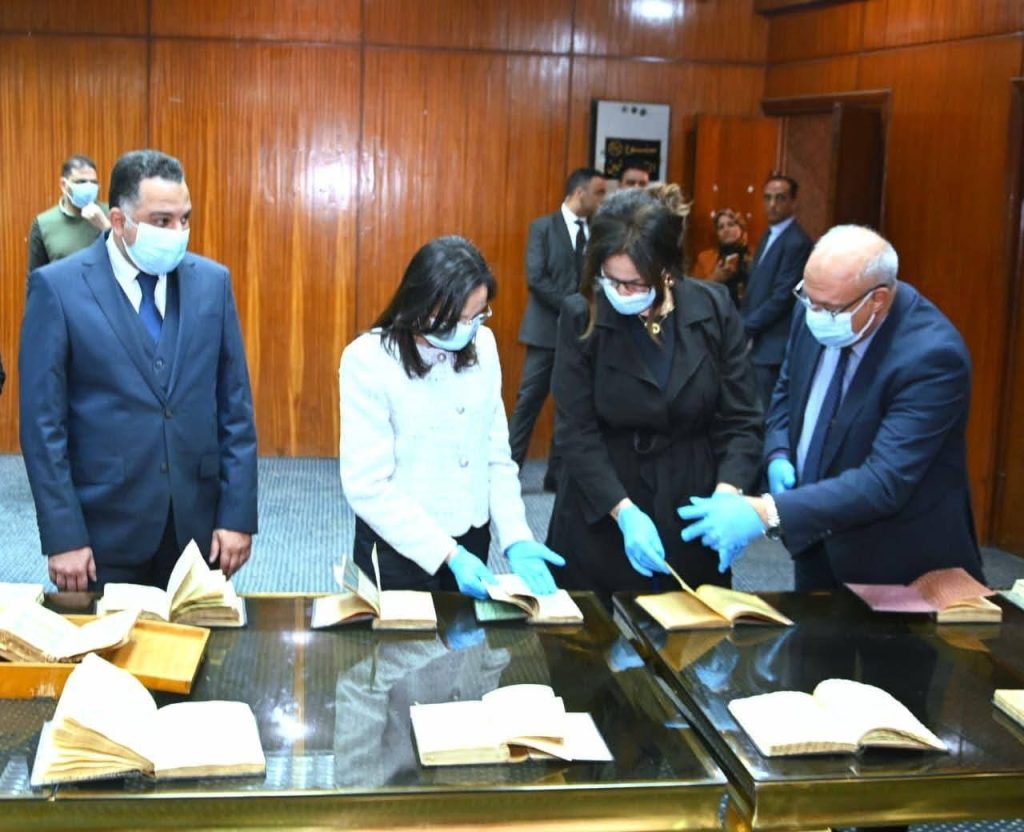
This era of neglect resulted in the disappearance of three rare documents, which investigators have yet to recover. For years, rescue efforts remained stalled in a bureaucratic void until Dr. Jacqueline Azar, the Governor of Beheira, intervened. Reaching out to the Ministry of Culture to initiate a salvage operation, she stood alongside Dr. Jihan Zaki, the Minister of Culture, to sign a protocol of cooperation between the governorate and the National Library and Archives.
Restoring the Beheira Treasures
Speaking to Bab Masr, Governor Jacqueline Azar expressed her elation regarding the partnership aimed at reviving the Damanhour Municipal Library. The project seeks to transform the site into an integrated cultural center, restoring its hallowed role as a purveyor of knowledge.
She clarified that the initiative focuses on the preservation of these rare holdings through modern scientific cataloging, sterilization, and restoration. The goal is to ensure these maps and manuscripts are presented to future generations in a manner that reflects their true worth. Governor Azar emphasized that the Beheira Governorate would provide all necessary support, noting that the Minister of Culture’s visit one of her first since taking office signals a clear national vision for cultural renewal.
Opening the Vaults to the Public
Dr. Osama Talaat, Chairman of the National Library and Archives, explained to Bab Masr that the library was historically situated in the northern wing of the Damanhour Opera House. Following a misguided move in the 1980s to an unsuitable location, the collection was eventually mothballed.
Upon the Governor’s request, a specialized team from the National Library was dispatched to evaluate the state of the books and the proposed sites for the library’s rebirth. Following their report, the Ministry fast-tracked the protocol signed last April. Immediately following the signing, experts descended upon Damanhour to begin the delicate first phase: the in-situ sterilization of manuscripts. Given the long years of storage, many items were suffering from fungal and insect infestations. This critical decontamination was completed on April 30.
A National Duty of Restoration
Dr. Talaat noted that while the sterilization concludes, the governorate is preparing the library’s new home. The National Library is lending its technical expertise for the subsequent phases, which include digitizing and restoring rare periodicals and photo albums. While some pieces require the specialized labs at the National Library, much of the technical work will be conducted on-site.
The ambition is to leverage the National Library as a “house of expertise” to restore the institution to its zenith, ensuring it serves once again as an influential cultural axis for the region.
Reclaiming the Soul of the City
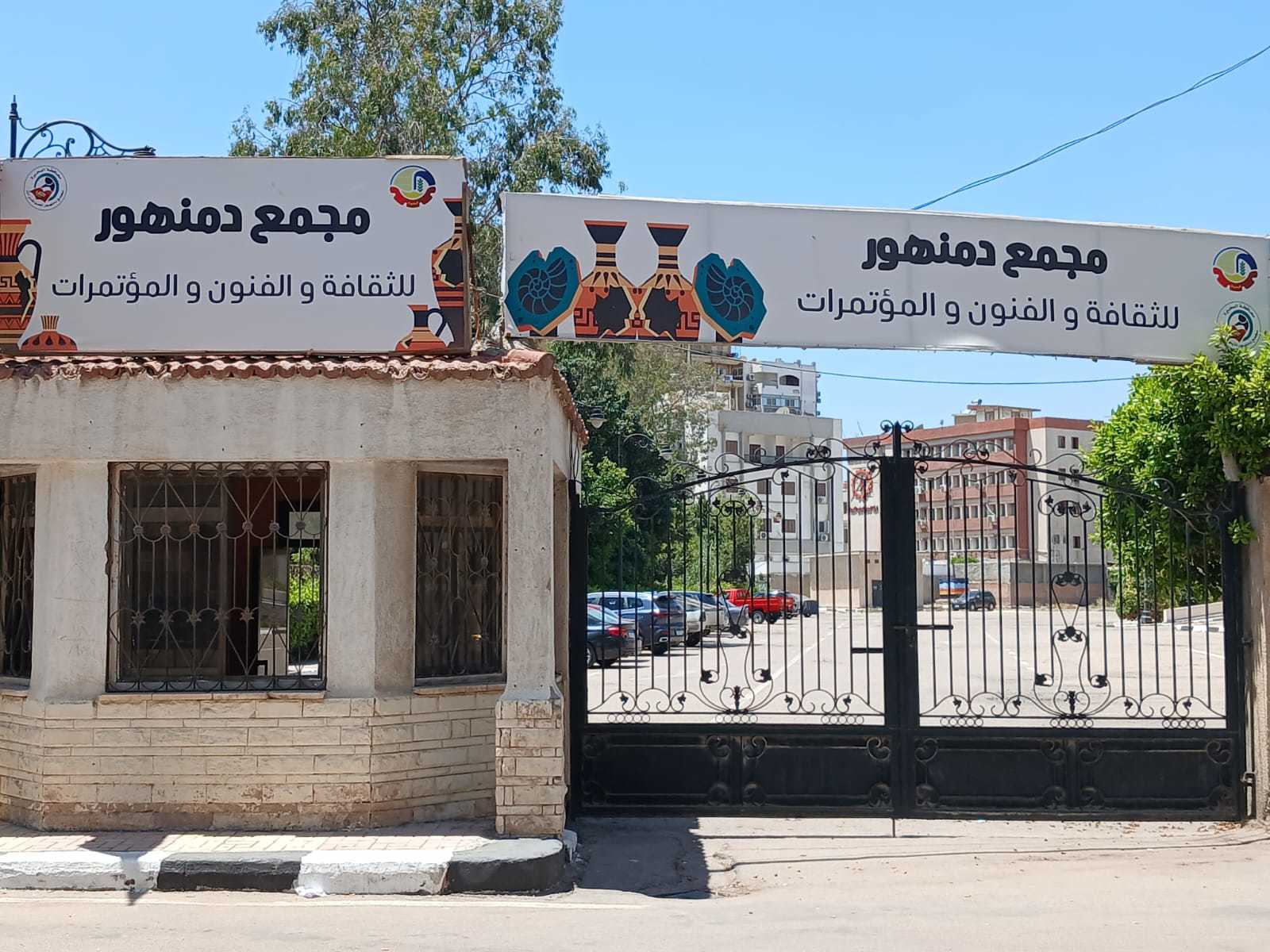
Ayman Shrifa, Director of the Damanhour Complex for Culture and Arts, noted that the recent push to save the documents—dormant since 2007—finally broke years of institutional inertia. The momentum began in December when Governor Azar reviewed the files and demanded immediate action. The forthcoming phases include training staff in modern library management and preparing dedicated halls where researchers and the public can finally access these treasures under strict protocols.
A Call to the Intelligentsia
Dr. Khaled Azab, former head of Central Projects at the Bibliotheca Alexandrina, emphasized that the Damanhour Municipal Library contains rare volumes printed in Egypt before 1952, many of which were personal gifts from the city’s elite. He argued passionately for returning the library to its original architectural home. “Removing these books from their original halls is like tearing the soul from the body,” he remarked, describing the displacement as an erasure of the city’s history.
The collection includes first editions of works by Al-Manfaluti and the writings of Ahmed Zaki Pasha, which once served as the intellectual bedrock for titans like Tawfiq al-Hakim, Khairy Shalaby, and Abdel-Wahab El-Messiri.
Dr. Azab called for the library’s management to be handed to those who truly grasp its cultural weight, urging the involvement of Damanhour’s intellectuals who had been sidelined during the warehouse years. He proposed the formation of a “Friends of the Damanhour Municipal Library” association to provide ongoing support, pledging that he would be the first to contribute to its cause.