‘The City Will Pursue You’: Why We Celebrate Alexandria
A lyrical exploration of Alexandria’s founding celebrations, tracing its evolution from a meticulously planned ancient metropolis to a modern-day cultural paradox where the ordinary individual was first immortalized in art and science.
By Mirna Gohar
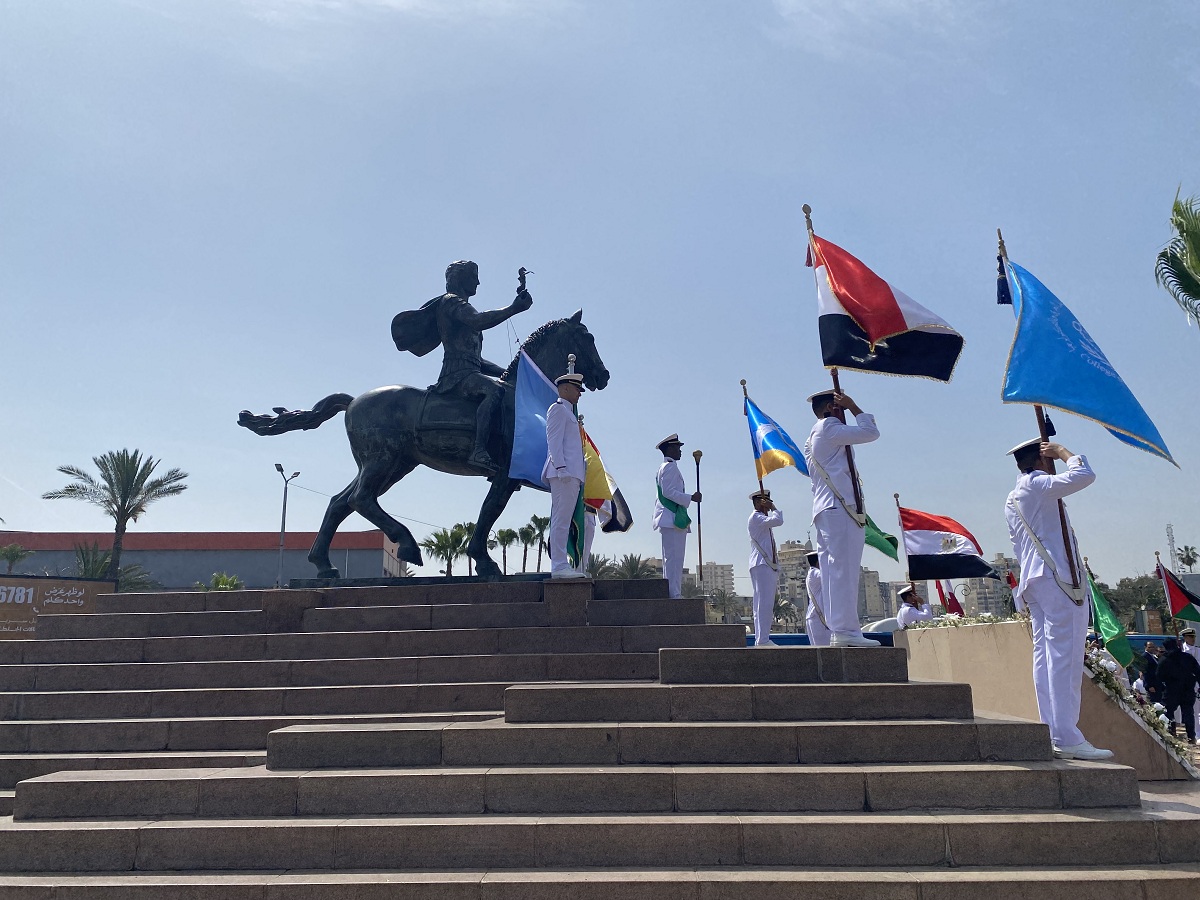
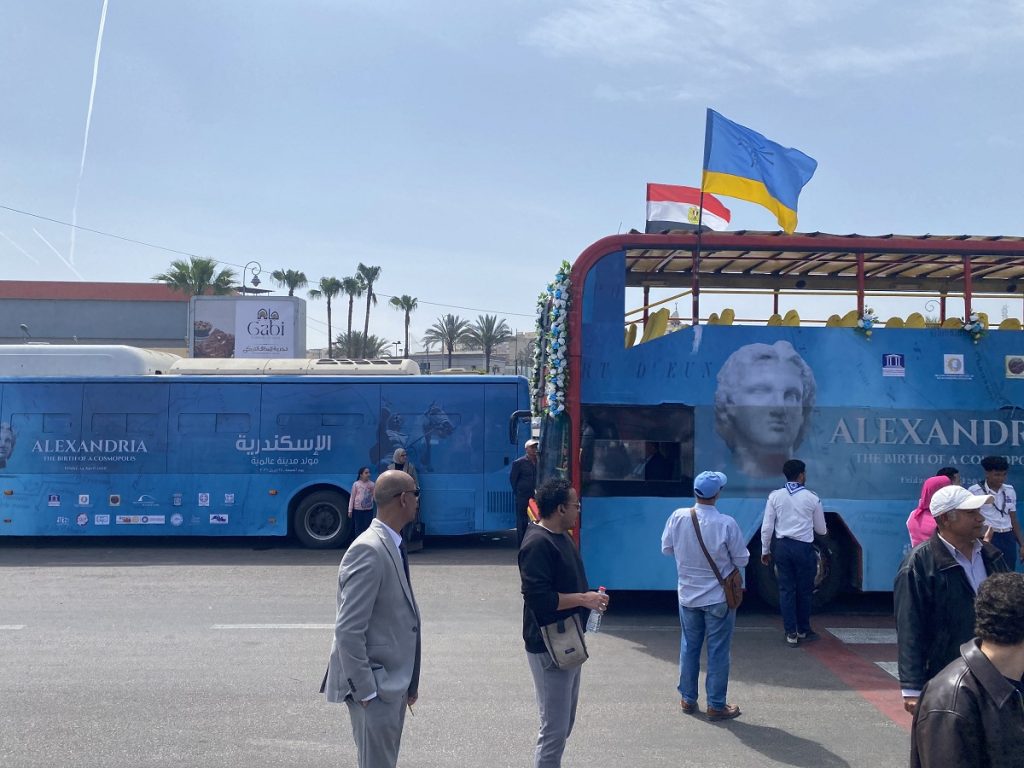
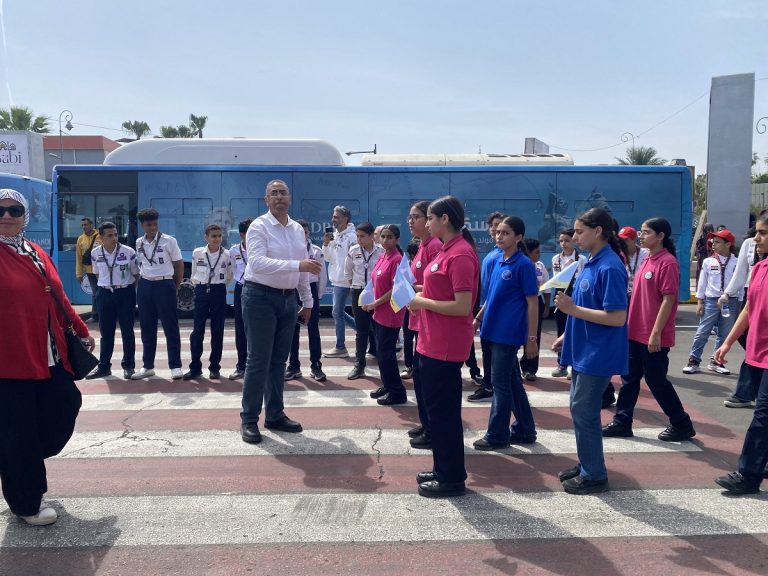
Last week, from the threshold of the Graeco-Roman Museum, the “Alexandria: Birth of a Cosmopolitan City” festival commenced. The rhythmic pulse of military brass echoed through Tariq al-Horreya formerly Fouad Street reawakening an ancient rite celebrating the city’s founding. Historically, this jubilee was observed on the 25th of Toba (the fifth month of the Coptic calendar), corresponding to the seventh of April, before the calendar shifted to align with the 25th of January.
The scene was one of solemn festivity, yet the attendance of the city’s own sons and daughters was noticeably sparse. The crowd consisted largely of organized student groups, official delegations, and a few curious passersby who lingered to watch. Here, a question asserts itself: Why do we celebrate Alexandria? Are we honoring the history of a singular metropolis, or the enduring idea of a city born to be global?
Perhaps the answer lies closer than we imagine. As the Alexandrian poet Constantine Cavafy famously penned in The City: “You will find no new lands, you will find no other seas. The city will pursue you.” Andreas Vafiadis, President of the Greek Community in Alexandria, anchored his opening remarks with this quote, suggesting that Alexandria is an obsession a multifaceted, open-ended idea that haunts our collective consciousness.
The Procession Begins: A Living Artery
The march set off from the museum, traversing Fouad Street on foot. Dr. Mona Haggag, President of the Archaeological Society of Alexandria, describes this thoroughfare not merely as the oldest street in urban history, but as a rare specimen that still serves its original purpose. Unlike other historic avenues that have withered into mere tourist relics, Fouad Street remains vital.
Known in antiquity as the Canopic Way, it has long functioned as the city’s primary artery. Stretching five kilometers with a width of thirty meters double the breadth of major streets in other ancient capitals it stood in its zenith as one of the most magnificent boulevards of the known world.
A City Denied to Chance
We continue our trek toward the statue of Alexander the Great, who stands proud, overlooking a city that did not emerge by happenstance. Alexandria was a conscious project, a blueprint of intent. Reaching the monument, this realization becomes starker; the music swells and the procession marches on despite the thin crowds. Why was the city structured with such deliberate precision?
One theory proposed during the festival’s closing seminar suggests that Alexander drew inspiration from his ancestral home of Pella, Greece, where landmasses were stitched together by bridges. This mirrored the engineering feat of the Heptastadion (a massive causeway), which tethered Pharos Island to the mainland.
Whether this interpretation holds or not, the fact remains: Alexandria was never left to the whims of fate. It was designed to be a gateway, forever open to the sea and the world beyond.
Dinocrates: The First Architect
Continuing past Alexander’s likeness toward the Bibliotheca Alexandrina, one likely passes a street bearing the name Dinocrates. As Dr. Ahmed Zayed, Director of the Bibliotheca Alexandrina, noted, this commemorates the architect who laid the city’s foundational grid.
Dr. Haggag explains that Alexandria is among the few cities in human history to be fully realized on parchment before a single stone was laid. It followed a rigorous “Hippodamian” grid system of perpendicular and parallel streets. This early obsession with planning before construction is perhaps the defining trait that explains why Alexandria remains a subject of hallowed celebration today.
Khartoum Square: The Birth of a New Aesthetic
Passing Khartoum Square, a solitary ancient column adorned with Corinthian flourishes catches the eye. The scene demands a pause, not merely for the aesthetic grace of the stone, but for its historical interiority. Dr. Haggag points out that this style was not a mere import; it was refined and evolved within Alexandria itself before radiating across the globe. Architects once flocked here to apprentice under its innovations. The column ceased to be a mere structural element and became a testament to a city that did not just build—it authored a new language of art.
Alexandria: The Zenith of Knowledge
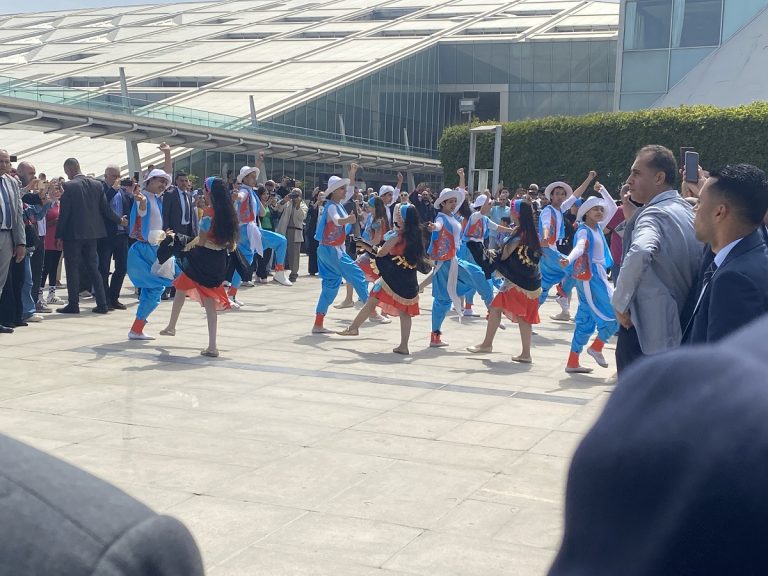
Finally, we arrive at the Plaza of Civilizations at the Bibliotheca Alexandrina, accompanied by military melodies that lend the air a fleeting joy. The music gradually yields to the grace of Greek and Egyptian dancers, a prelude to a discussion on the city’s role as the world’s intellectual forge.
Here, the city reappears as a sanctuary of thought. Dr. Ahmed Zayed reminds us that Euclid established the bedrock of geometry here. Within these halls, Eratosthenes proved the Earth’s sphericity and calculated its circumference with startling precision. From its light, Archimedes derived his laws, and here, the foundations of anatomy were first codified. Yet, perhaps the most profound shift occurred in the realm of art.
Art and the Individual: When the Ordinary Became Worthy
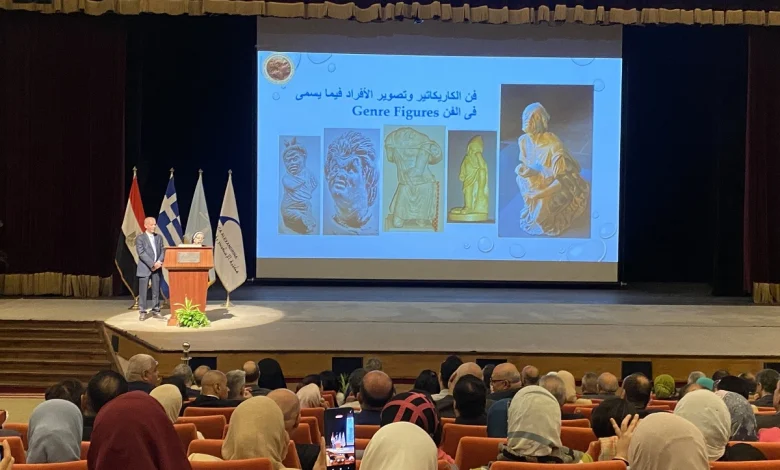
According to Dr. Haggag, the ancient Alexandrian artist began to mirror the vibrant reality of the street. While the Old Kingdom focused on the divine and the regal, Alexandrian art embraced the mundane: an elderly woman, a child, or a slave clutching a lamp, overcome by sleep while awaiting his master.
These figures, previously deemed inconsequential, found value in the eyes of the Alexandrian creator. While the ancient Egyptians utilized caricature in a folk sense, Alexandria birthed “Caricature” as a formal art of the street and the commoner.
This evolution reflects a nascent recognition of individual worth. Alexandria gifted the world the radical idea that the ordinary person deserves to be seen—to be immortalized in expensive marble. In this vein, the city also excelled as a structured educational hub. Dr. Haggag noted that while many cities knew “teaching,” Alexandria possessed a “system,” evidenced by the expansive lecture halls of the Roman Theatre at Kom El Deka. It also stands as a rare witness to the formal education of women, another mark of its civilized exceptionalism.
The Paradox of Celebration
Despite Alexandria’s towering legacy, the haunting image of the sparse crowd remains, even as the lecture halls filled. A festival celebrating a “Cosmopolitan City” felt, at times, more like an institutional exercise than a spontaneous outpouring from the citizenry. Here lies the paradox: a city designed from its inception to be an open, living pluralism is today celebrated in moments that feel narrower than the idea itself.
Do we celebrate Alexandria as it truly was, or as we wish to remember it? Perhaps more urgently: if this city was born of a clear, integrated vision, is it still managed today with that same foresight… or has its grand design been surrendered to the fragmented?