The Preservation Paradox: Why Humanity, Not Time, Is the Greatest Threat to Heritage
Experts convene to ask: How can Egypt’s legacy become a perennial engine for tourism?
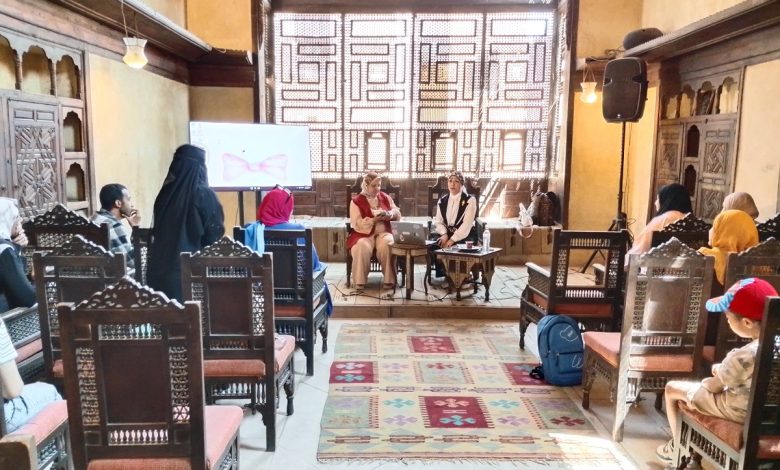
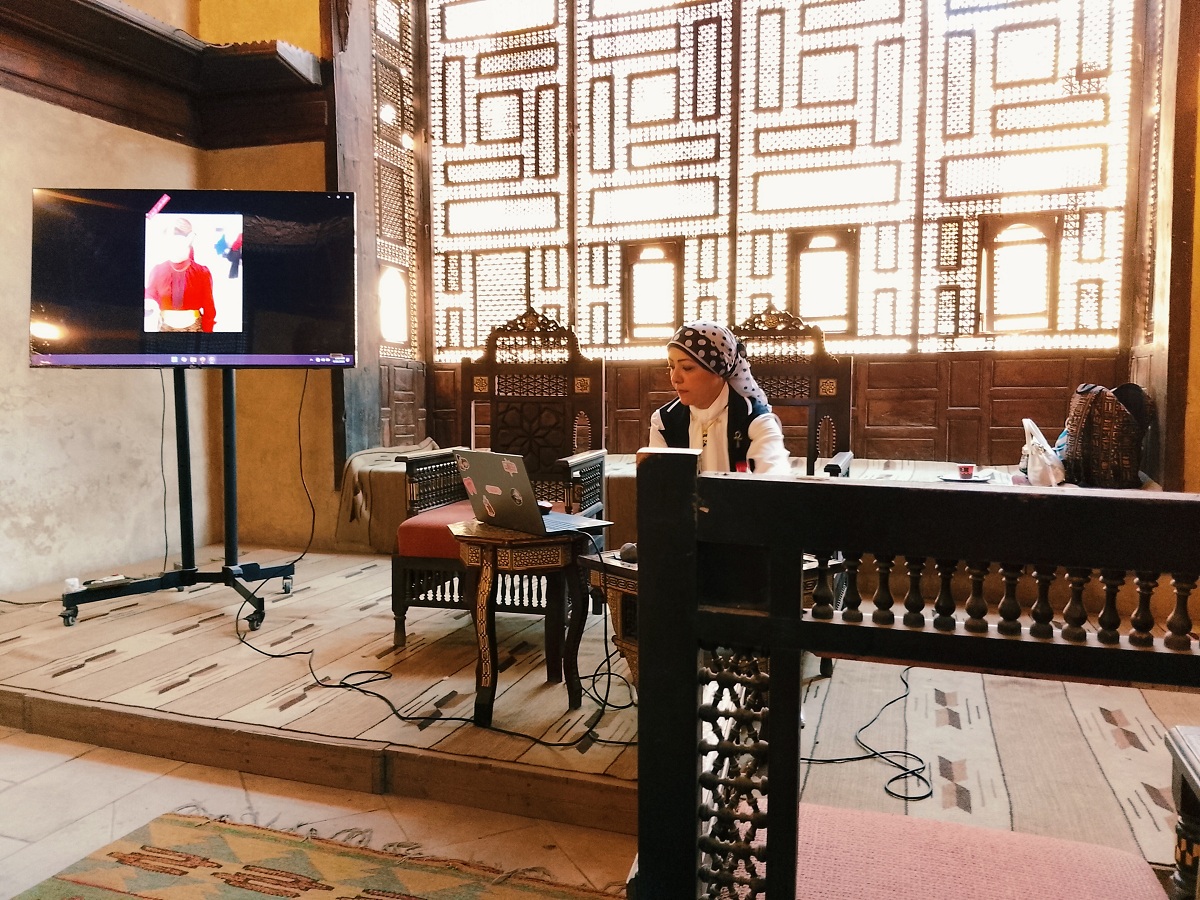
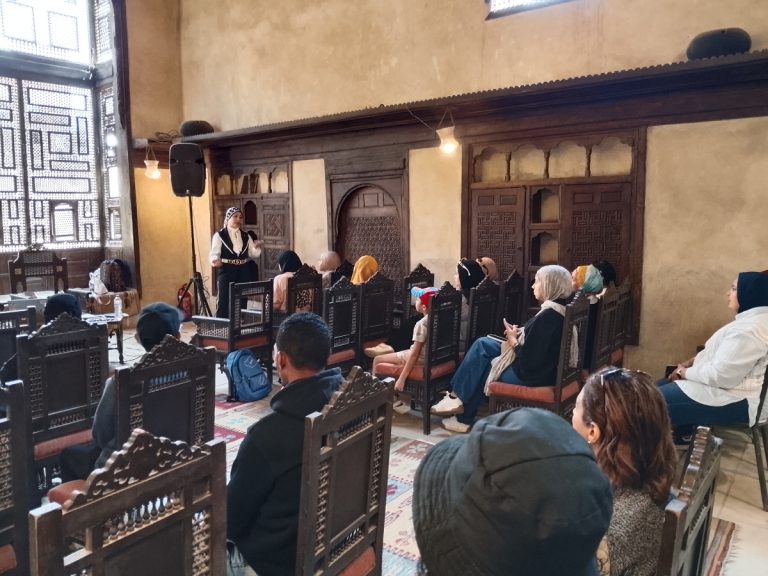
The hallowed halls of Bayt al-Sinnari (an 18th-century Ottoman mansion) in Sayyida Zeinab recently played host to a poignant seminar titled “Egypt Across Generations: Heritage as a Renewed Touristic Gateway.” Presented by Dr. Rasha Hussein El-Sayed, a professor of Heritage and Museum Studies and technical member of the Ministry of Tourism and Antiquities, the event unfolded under the auspices of the Historic Cairo Archaeological Awareness Department.
The Metrics of Majesty
Dr. Dalia El-Gohary, Director General of Archaeological Awareness and Community Engagement in Historic Cairo, inaugurated the session by outlining the evening’s thematic pillars.
Dr. Rasha Hussein began her discourse by tracing the storied lineage of Bayt al-Sinnari itself. She then transitioned to the hard data of the sector, analyzing tourism indicators since 2025. With visitor numbers surging toward 19 million, the region has witnessed a zenith in hotel occupancy and a marked rise in average tourist expenditure. This steady momentum has been further catalyzed by the inauguration of the Grand Egyptian Museum, which has revitalized both domestic and international interest. Dr. Hussein drew a sharp contrast between Egyptian museums and global institutions like the Louvre, which devotes three floors to Egyptian civilization, or the British Museum, home to the Rosetta Stone. She navigated the complex history of how these treasures left Egyptian soil, whether through unauthorized removals or as diplomatic gifts during the era of Muhammad Ali Pasha.
The Architects of Global Interest
The discussion turned toward the primary “exporter” nations of tourism. Dr. Hussein noted that European travelers from Germany, France, England, and Italy seek the intellectual depth of cultural tourism, while visitors from Ukraine often favor the coastal allure of the beaches. These currents are complemented by diverse traveler profiles from the Gulf, Russia, East Asia, and the United States.
However, the conversation shifted toward the interiority of the local gaze. Dr. Hussein addressed the dichotomy of how heritage is perceived at home, noting that for some, appreciation remains a matter of rhetoric rather than action. She cited the physical toll of human interaction: the scarring of monuments with graffiti, the harmful touch of hands, and the degradation caused by camera flashes. Even the spectacle of concerts at the Pyramids was scrutinized as a double edged sword, balancing global promotion against the physical vibrations threatening the ancient stones. In this context, she defined the two lungs of Egyptian legacy: Tangible Heritage, encompassing the soaring temples, pyramids, churches, and mosques, alongside historic residences like Bayt al-Sinnari, Bayt al-Suhaymi (a traditional Cairene house), and Sabil al-Sitt Wasila (a charitable water fountain and school), as well as the physical artifacts and manuscripts they house.
Conversely, she highlighted Intangible Heritage: the tapestry of customs, traditions, music, dance, handicrafts, and folk tales. Dr. Hussein warned that this living heritage is perhaps more vulnerable than stone, as it can vanish silently into the ether if not actively practiced.
Egypt Across the Aeons
Dr. Hussein asserted that the Egyptian state has been anchored in the concept of sustainability since antiquity. Egypt stands as one of the few civilizations to embody the principle of continuity, a thread that runs from the Pharaonic era to the present day. This began with the ancient belief in the afterlife and immortality, which birthed such engineering marvels, and evolved through the Greco-Roman period into a vibrant cultural exchange.
The journey continued through the Coptic era, which revealed the spiritual and symbolic depth of the land, followed by the Islamic era, where architecture and ornamentation were refined to reflect the soul of each passing century. Today, we exist in an era of adaptive reuse. Dr. Hussein argued that Egypt is not merely a graveyard of stacked civilizations but a living testament to their interaction. She framed heritage as a premier “touristic product,” yet insisted it is far more than a physical inheritance; it is the most vital artery of cultural tourism, drawing millions to the heart of the nation.
To transform any heritage site into a successful destination, Dr. Hussein outlined four essential criteria: Authenticity, ensuring the site reflects the true essence of history; Uniqueness, the singular characteristics that distinguish it on the global stage; Historical Value, which secures its place in the collective human memory; and finally, The Narrative. It is the story, she argued, that breathes life into the cold stone. She noted that every block in a temple and every historic alleyway is a human chronicle. Our modern customs are but a natural extension of our ancestors’ lives. This “renewal” of heritage is achieved through adaptive reuse, reviving old structures for contemporary cultural life. She cited the recent developments at the Giza Plateau and the modernization of museum displays as prime examples of integrating the ancient into the modern social fabric.
Modern Marketing and the Youth Vanguard
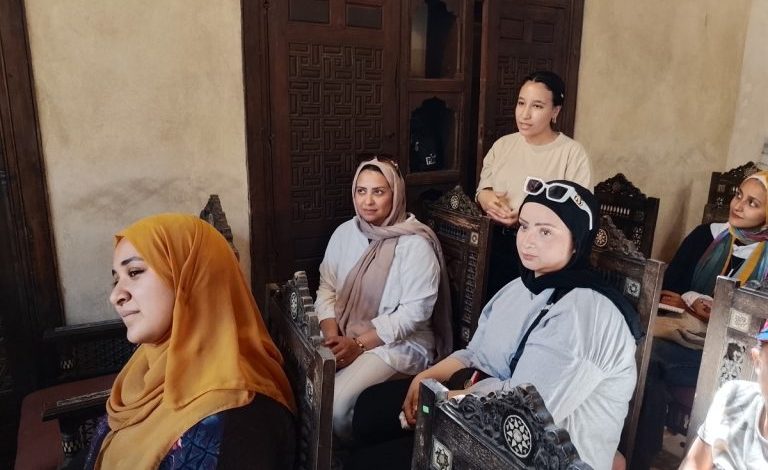
The dialogue then turned to the volatile world of modern marketing. Dr. Hussein weighed the influence of social media and content creators. While they offer unprecedented reach, she cautioned that they possess the power to inadvertently broadcast a negative image of the country if not properly informed.
She placed the future of this legacy squarely in the hands of the youth. Their role, she insisted, involves more than just reading history; it requires active guardianship. This includes disseminating accurate information in accessible formats, maintaining the cleanliness of sites, and rejecting destructive behaviors. By leveraging technology correctly and pioneering fresh ways to present old stories, the youth become the protectors of a legacy that belongs to them.
The Challenges Ahead
In her closing remarks, Dr. Hussein was candid about the obstacles hindering Egypt’s potential. These include a deficit in cultural awareness and a lack of decisive deterrents against misconduct, such as the defacing of monuments. Furthermore, she pointed to a marketing imbalance where focus is lavished on famous landmarks while other equally significant sites are left in the shadows.
Her final thesis was a sobering reminder: the greatest danger to heritage is not the slow erosion of time, but the hand of man. The session concluded with a visual journey through Egypt’s architectural soul, featuring film of Bayt al-Sinnari, the Zaafarana Palace, the Belle Époque buildings of Emad el-Din Street, the historic Wabor al-Gaz (the kerosene station), and the storied halls of Groppi and Primus, ending in the timeless sands of Siwa Oasis and the iconic Yacoubian Building.