The Trinity of Restoration, Management, and Community: A Roadmap for Preserving Heliopolis
The Heliopolis Salon opens a dialogue on the vital role of culture in the architectural resurrection of heritage cities.
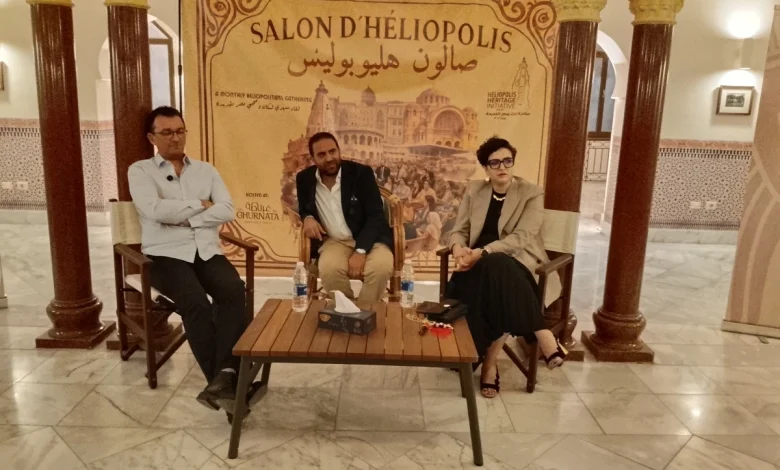
Inaugurating the 2026–2027 season of the Heliopolis Salon, the monthly gathering convened for a seminar titled “Culture as a Shield for Heritage Areas: A Special Focus on Heliopolis.” The panel featured Dr. Monica Hanna, Dean of the College of Arts and Sciences at the American University in Baghdad; Dr. Shukri Asmar, Chairman of the Board of Trustees of the Heliopolis Heritage Foundation; and Dr. Ahmed El-Shaboury, CEO of “Turathna” (Our Heritage).
Heritage Beyond Borders
Before turning the lens toward Heliopolis, Dr. Shukri Asmar invited Dr. Monica Hanna to reflect on global precedents: how international heritage zones are safeguarded and the weight culture carries in their preservation. Dr. Hanna anchored her response in the 1972 UNESCO World Heritage Convention. She observed that the convention’s original sin was the bifurcation of tangible and intangible heritage—a problematic schism, as the two are inextricably linked. Over time, she noted, this flaw was reconciled through the evolution of the “Cultural Landscape” (Al-Mashhad al-Thaqafi) concept, which unites the physical structure with its narrative soul. A building, she argued, cannot be severed from its stories.
From Australia to Italy: Models of Resonance
Hanna offered the Australian landscape as a case study, where archaeological sites hold profound sanctity for Indigenous peoples. When these sites transition into tourist hubs, a palpable friction emerges between the commercial gaze and the hallowed meaning of the land. Heritage, she stressed, is not merely stone and mortar; it is the lore woven into the fabric of the place.
“I recall from my childhood the whispers that the Baron’s Palace was haunted by ’Afarit (spirits),” she recounted. “Yet, we would venture in at night to spin tales and capture photographs. This lore is the intangible heartbeat of our heritage.” She further evoked memories of communal tea gatherings shared with foreign residents in the city’s lush gardens as part of this living history.
On a global scale, she pointed to an Italian royal palace that had been reduced to military barracks until the 1970s, eventually falling into such decay that even the flora ceased to grow. Local villagers resisted its demolition, choosing instead to restore the palace restaurant. The revenue from this small endeavor funded a gradual, systematic restoration of the entire estate. Witnessing this grassroots devotion, the authorities intervened, eventually securing approximately 180 million Euros from the European Union to complete the zenith of its restoration.
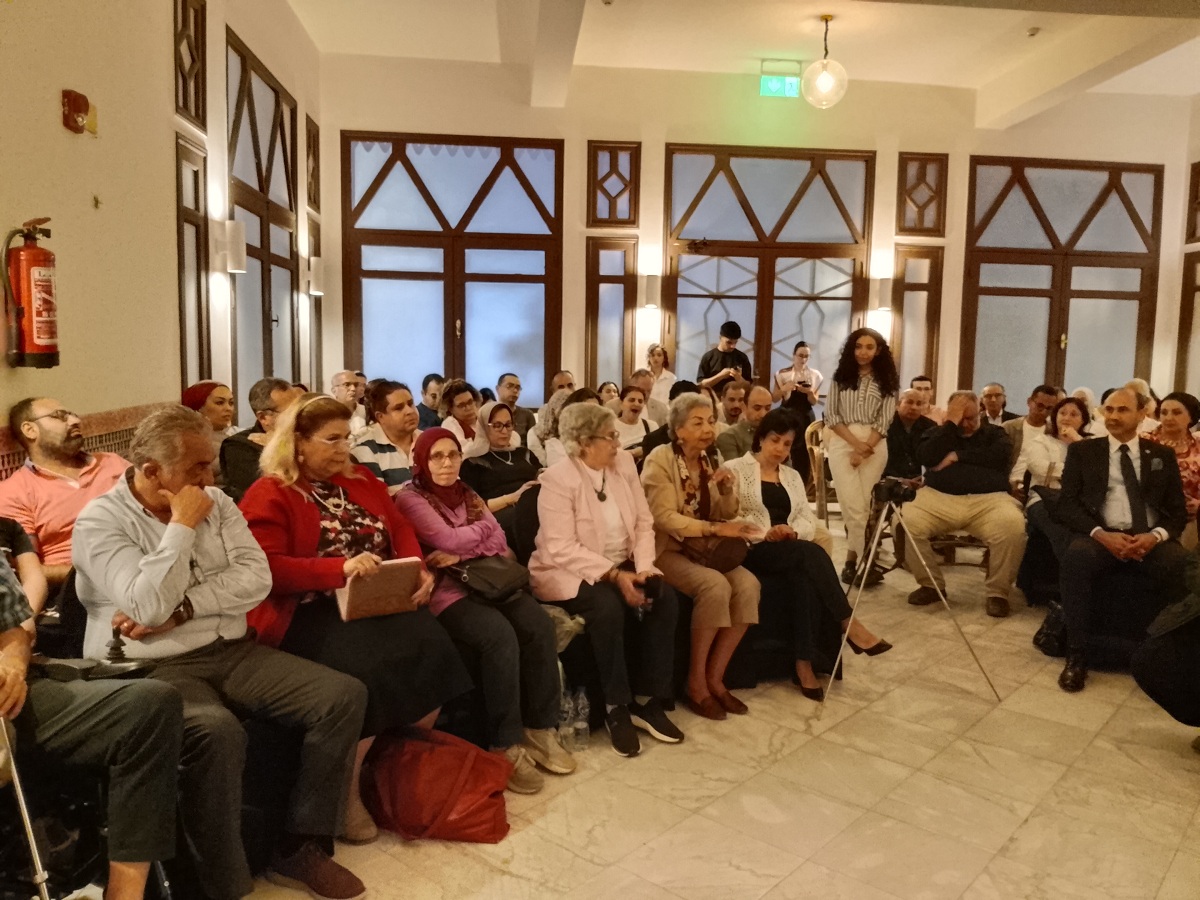
Dr. Monica Hanna emphasized that the narrative has shifted; we no longer view a building solely as a physical relic, but as a vessel for human interaction. It is this engagement that truly preserves it.
“I remember during my first university years, rumors spread that the Baron’s Palace was to be demolished,” she said. “We gathered signatures and sent faxes to every union imaginable. Some say they even reached the Presidential Palace because the residents of Heliopolis rose up in defiance. We are anchored to this place and every story it holds. Even if some view these memories as trivial, they constitute our intangible heritage and our very culture.”
She explained that buildings shape the interiority of the people just as people shape the longevity of the buildings. The urban voids and open spaces of Heliopolis have crafted a collective consciousness among its inhabitants, driving them to defend their surroundings.
In this vein, Dr. Shukri Asmar turned the floor to Dr. Ahmed El-Shaboury to discuss how “Turathna” bridges the gap between the public and their history.
The Pulse of Engagement
Ahmed El-Shaboury traced his journey back to museum restoration, a field he stepped away from before returning in 2010 to work alongside his father and brother. He noted that the years 2012 and 2013 presented a pivotal opening. As the political and security landscape stabilized, the state began seeking ways to breathe life into its dormant palaces.
Egypt possesses immense potential, El-Shaboury argued, but it requires a sophisticated evolution of the services surrounding these sites. Having participated in the development of some 60 museums, he identified that the malaise was rarely a lack of funding, but rather a failure of management. All too often, a site regresses following its initial restoration rather than flourishing.
A Manifesto for Dormant Heritage
This systemic issue led El-Shaboury to pursue a Master’s degree focused on “Sustainable Development in Cultural Heritage,” where he advocated for Public-Private Partnerships (PPP). He views this model as the most potent vehicle for the current era, marrying the state’s regulatory power and vast assets with the private sector’s agility, investment, and innovative spirit.
He noted that the last decade has seen a remarkable shift in how the youth perceive heritage. Once viewed with indifference, these sites are now sought out by a generation eager to reconnect with their identity.
This philosophy was first realized on a grand scale with the Grand Egyptian Museum, the first museum globally to be managed through a PPP. He also touched upon the 2014 Hassan Allam initiative as a milestone in this evolving relationship.
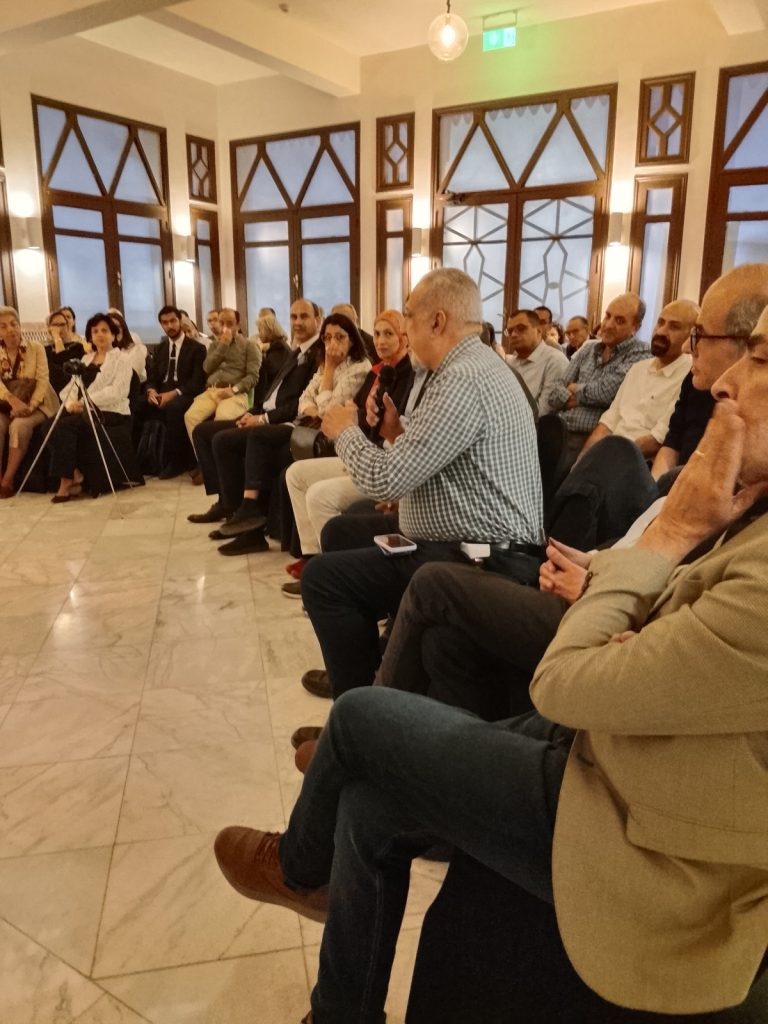
El-Shaboury concluded that the mission extends far beyond restoration. It is about “re-living” the space. Without magnets of attraction to bring the public back, sustainability remains an illusion. Sites must evolve from “one-time visits” into spaces of perpetual interaction.
Working with the Heliopolis Heritage Foundation, the goal was to ensure these spaces weren’t merely commercial hubs or eateries, but integrated communities. Within three months of post-restoration operation, the site hosted cultural, social, and educational programs, alongside community health activities and vibrant Bazaars (traditional markets). By teaching arts and skills, the project succeeded in tethering the public back to the heart of the city.
Safeguarding the Aesthetic
Dr. Shukri Asmar raised the question of how culture can specifically protect the aesthetic soul of a district like Heliopolis.
Dr. Monica Hanna challenged the narrow definition of culture as mere literacy. Culture, she argued, encompasses customs, music, Amthal Sha’biya (folk proverbs), and even culinary traditions. Echoing the heritage critic Laurajane Smith, she asserted that the value of an artifact or building stems entirely from its human connection. She cited Alexandria’s presence in the poetry of Cavafy verse that is still studied globally as an example of how a city becomes an immortal part of cultural memory.
The Power of Collective Ownership
Hanna maintained that this impact is only achieved when buildings are integrated into the social fabric. This requires two pillars: physical spaces that invite interaction, such as the Granada building, and the involvement of the community in the decision-making process for their city. This fosters a sense of “collective ownership,” even in the absence of private deeds.
Dr. Ahmed El-Shaboury added that Heliopolis is rich in tangible heritage that is deeply rooted in the community. However, preservation requires a concerted effort, for “one hand cannot clap alone.” He praised grassroots initiatives like those of Nevine El-Gendi, who works tirelessly to sensitize the community and bridge the gap between residents, the state, and the private sector.
He noted that reclaiming heritage values serves to reignite the interest of the community, asserting that such a feat requires both active engagement and seamless coordination among all stakeholders. He further emphasized the vital role of the academy in providing a clear, structured methodology for this field. This conviction stems from his early aspirations to become an architect, a path that compelled him to seek a rigorous scientific and systematic foundation one that ensures professional order and guards against the pitfalls of haphazard execution.
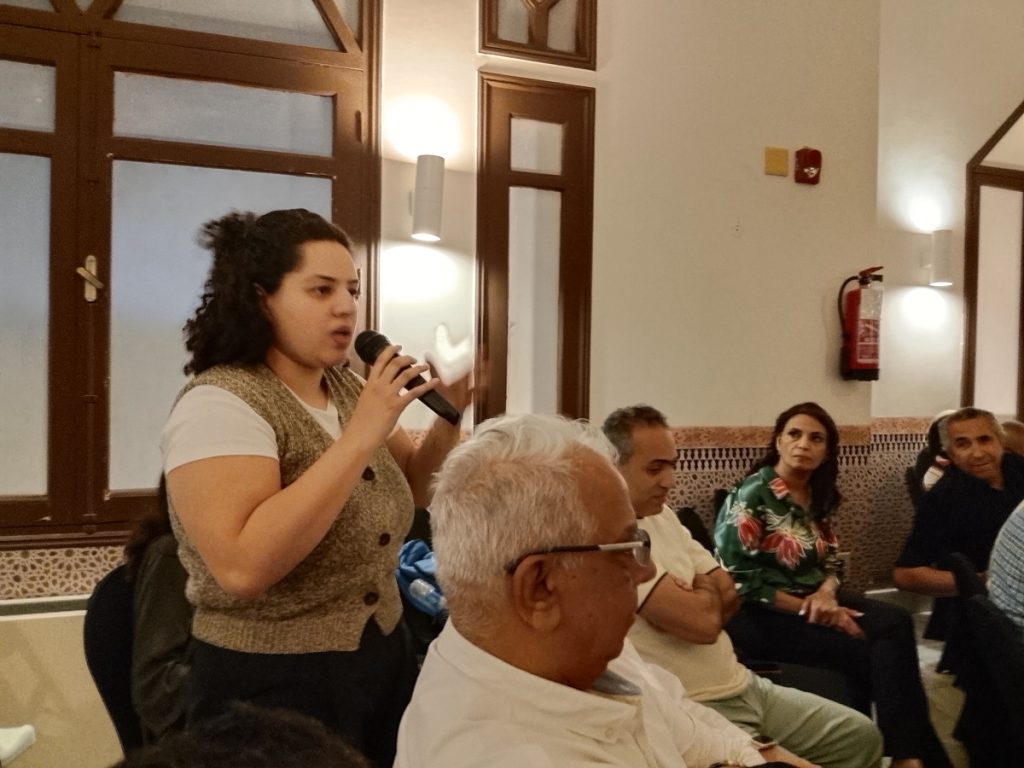
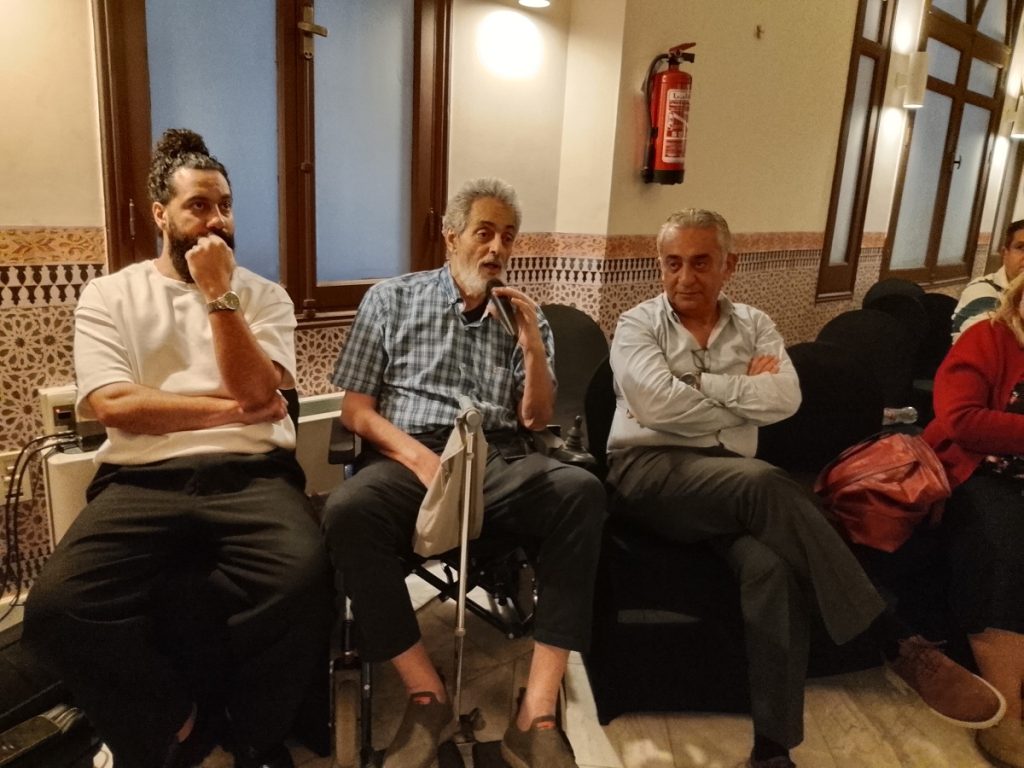
As the seminar drew to a close, Dr. Shukri Asmar invited the audience to share their visions for the future of Heliopolis.
Dr. Ola Al-Obaidi, a professor at Cairo University’s Faculty of Archaeology, offered a poignant reflection: “In my view, every generation that left Heliopolis for New Cairo or elsewhere must find their way back. Our parents and grandparents have passed on; my generation needs to return, though how, I do not yet know. I dream of sipping my coffee in the Korba (the historic heart of Heliopolis) as I once did, or visiting the Normandy Cinema. We share a single identity rooted in the 1980s. If we can resurrect the rituals of that era, it would create a vital bridge between the Heliopolis of today and its future.”
Dr. Osama Abdel Wareth, Director of the Child Museum, added: “Heliopolis commands a sense of Wataniya (patriotism). We are duty-bound to serve the people of this district.”
The Philosophy of Quality of Life
Engineer Seif Abul Naga observed that Heliopolis remains a unique case study. Though it hosted diverse foreign communities, it was never strictly “cosmopolitan” in the traditional sense; rather, its founder, Baron Empain, envisioned a philosophy of “Quality of Life.” The city was built on the bedrock of social cohesion and shared security.
Abul Naga argued that the district’s greatest strength is its “beyond-imagination” communal culture, preserved in the archives of its social clubs and the private collections of its residents. He noted a missing link in current discussions: urban management. The area was once governed by local municipalities—a system that has vanished. To truly reclaim our heritage, he concluded, we must rediscover the mechanisms that once managed this intricate urban tapestry.