Colorful Houses, Camel Rides, and Crocodiles: Inside Egypt’s Most Awarded Nubian Village
In 2024, the Nubian village of Gharb Seheil was named one of the world’s best rural tourism destinations. From camel rides along the Nile to handmade crafts and crocodile encounters, here’s what makes it a must-visit.
By Wafaa Amin
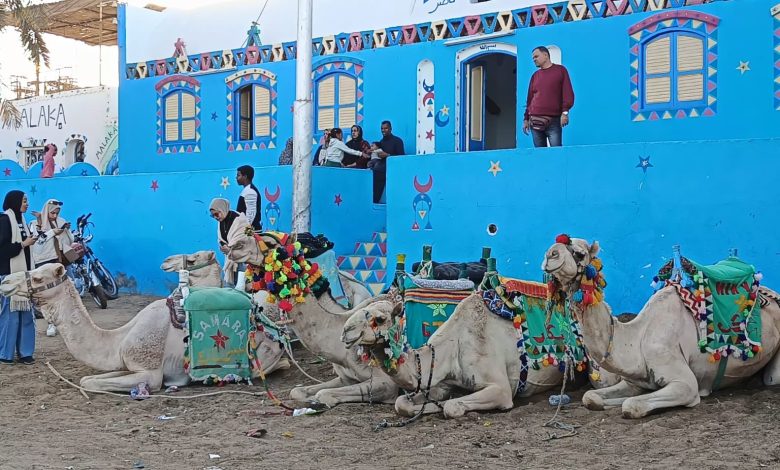
In the heart of Aswan, where the colors of the Nile meet the warmth of Nubian hospitality, lies the village of Gharb Seheil. It is one of Egypt’s most distinctive tourist destinations, a place where the simplicity of everyday life blends with breathtaking beauty. Here, the bright colors of the houses mirror the river’s reflections. Ancient customs coexist with modern tourism. And visitors are offered not merely a view, but an experience.
One of the World’s Best Rural Tourist Villages
In 2024, Gharb Seheil was named among the world’s best rural tourism villages. The recognition came during the 122nd session of the UN Tourism Executive Council, held in Cartagena de Indias, Colombia. Egypt’s Ministry of Tourism and Antiquities presented the village as a model of sustainable development and environmental preservation. The award honored the efforts of the villagers themselves, who have worked to protect their surroundings while developing eco-tourism.
Today, the village continues to draw visitors from around the world. Tourist numbers have reached unprecedented levels, with growing crowds arriving daily. They come for the unique heritage, for the distinctive experiences, for the chance to walk through streets where colorful houses form a living canvas that reflects the authenticity of Nubian life.
A Wide Range of Activities
The village offers a variety of tourist activities. Visitors can take sailboat rides on the Nile, a memorable way to take in the surrounding sand dunes and stunning natural scenery. The village also provides an exceptional opportunity to taste Nubian cuisine, from traditional bread to dishes seasoned with spices that give them a unique flavor.
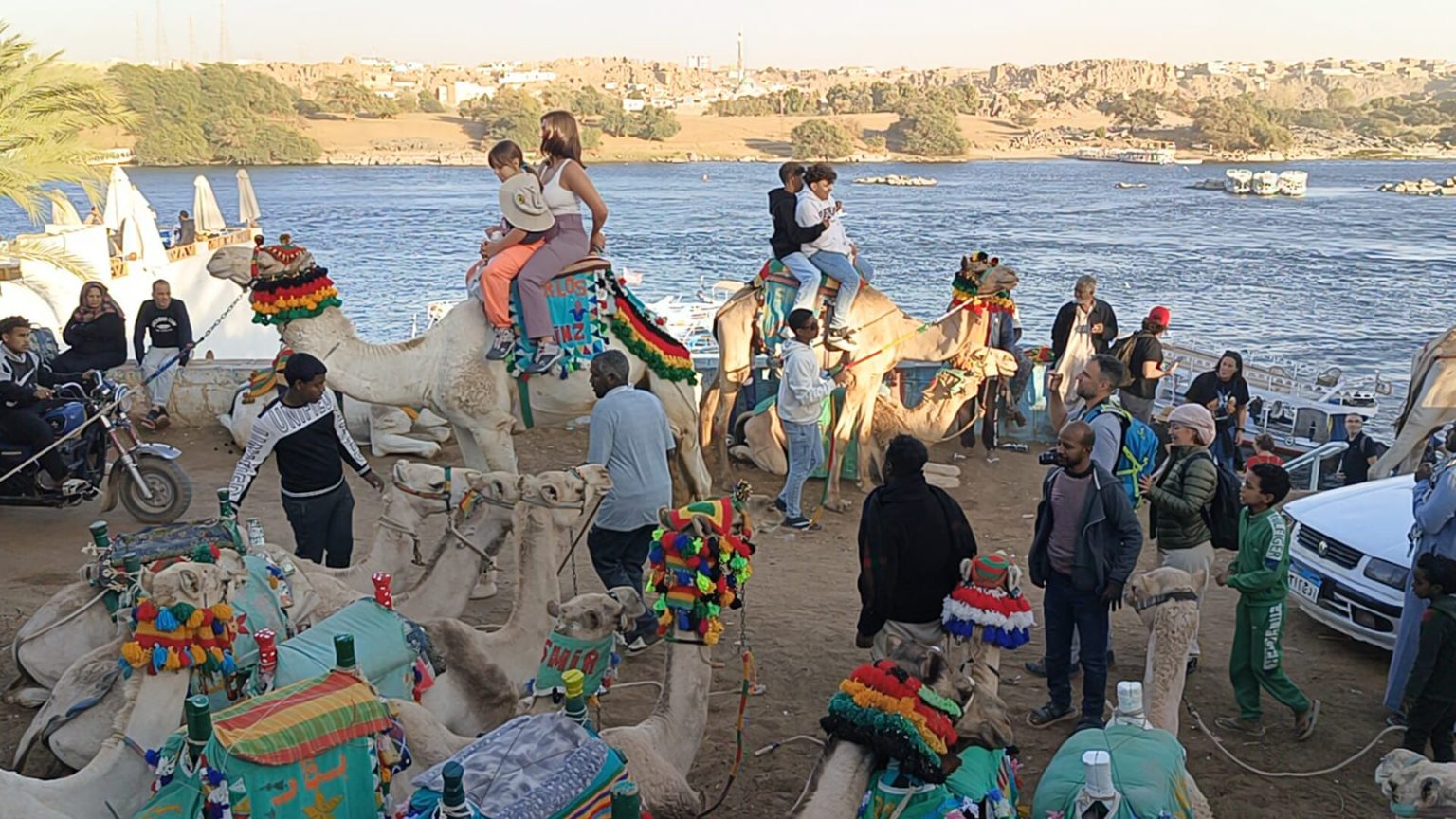
One of the most popular activities is camel riding, a tradition that tourists eagerly try when visiting. The experience allows them to appreciate the beauty of Nubian nature and its authentic atmosphere as they travel along sandy paths beside the Nile. It offers a chance to enjoy the tranquility and breathtaking views that distinguish the village.
This activity is part of Nubian heritage, connecting visitors to local culture and traditions. Villagers welcome tourists warmly, providing trained camels prepared for these journeys. It is an immersive way to experience the Nubian way of life.
The Gharb Seheil Market
The market at Gharb Seheil stands as one of the village’s most important landmarks. It is a unique destination that combines shopping with the pleasures of authentic Nubian culture. The atmosphere is vibrant, the colors bright, reflecting the spirit of Nubia and its rich heritage.
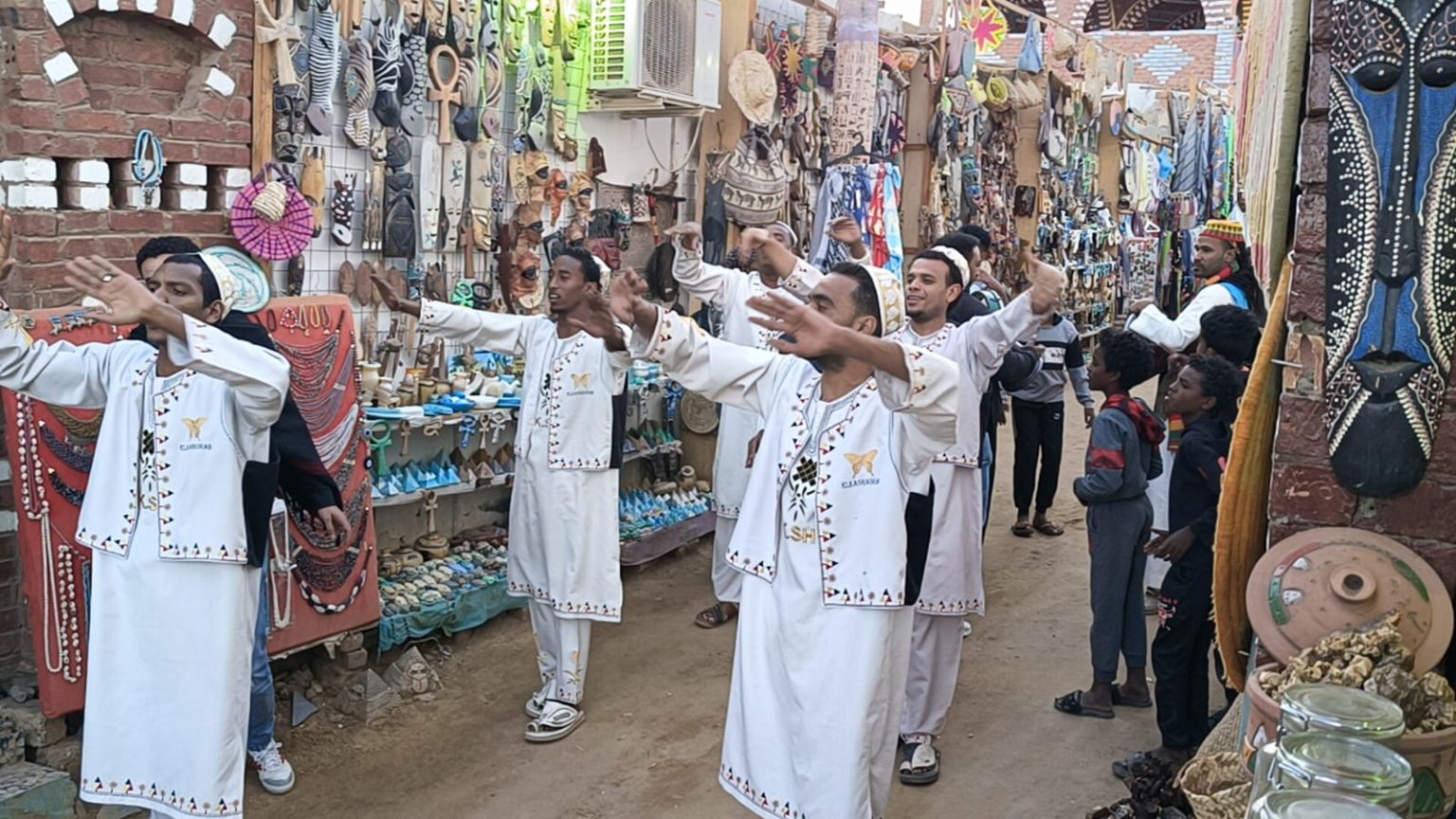
In the market’s narrow alleys, small stalls and shops offer handmade crafts passed down through generations. Notable items include hand-embroidered textiles, traditional Nubian robes, bags, Nubian figurines, and accessories made from beads and colorful threads. Nubian perfumes and essential oils also draw visitors with their variety and quality.
Among the market’s highlights are the spice shops. A diverse selection of herbs and spices that add distinctive flavors to food are available: thyme, cumin, turmeric, and more, sold in small, attractively colored bags. Vendors are happy to offer advice on how to use them.
Souvenirs
The Gharb Seheil market is an ideal place to buy souvenirs. Visitors can find a wide range of products to take home: handmade bags woven from palm fronds, traditional crafts made from colorful threads, silver pieces, and paintings and drawings depicting daily life in Nubia.
Samba, a craftsman in the village, says the high tourist demand has pushed him to develop his products to attract visitors. His most famous creations are traditional accessories such as hazazat, bracelets made from colorful threads characteristic of Nubia, along with necklaces and earrings inspired by Nubian heritage.
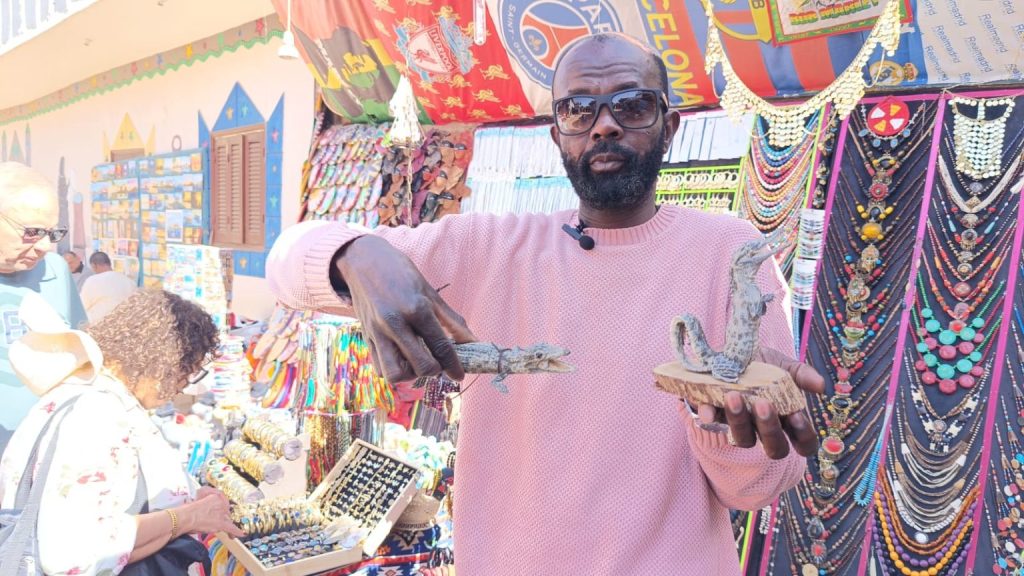
He also makes the famous colorful Nubian plates, which are among the most popular souvenirs tourists seek out. He also preserves small crocodiles, selling them as unique items for visitors looking for something different. These products are bought as souvenirs or for personal use.
Spice Shops
Spice shops in the Gharb Seheil market see high demand from tourists and visitors alike. Mahmoud Mohamed Hassan, a vendor at one of the market’s spice shops, explained to “Bab Misr”: “Nubian spices are among the most famous products that distinguish Aswan. They include herbs and natural plants that have been connected to the Nubian environment since ancient times. Hibiscus and tamarind are among the most popular, along with a range of spices unique to Aswan.”
Tourists vary in their familiarity with these products. Some, including international chefs, know exactly what they are looking for. Others need explanations. This pushes shop owners to clarify the types, benefits, and uses of each product, whether for medicinal purposes or specific recipes.
He added that tourists often buy spices as gifts for loved ones, while others purchase them for personal use. Egyptian visitors from the Delta region also buy them to give to relatives and friends.
An Integrated Cultural Experience
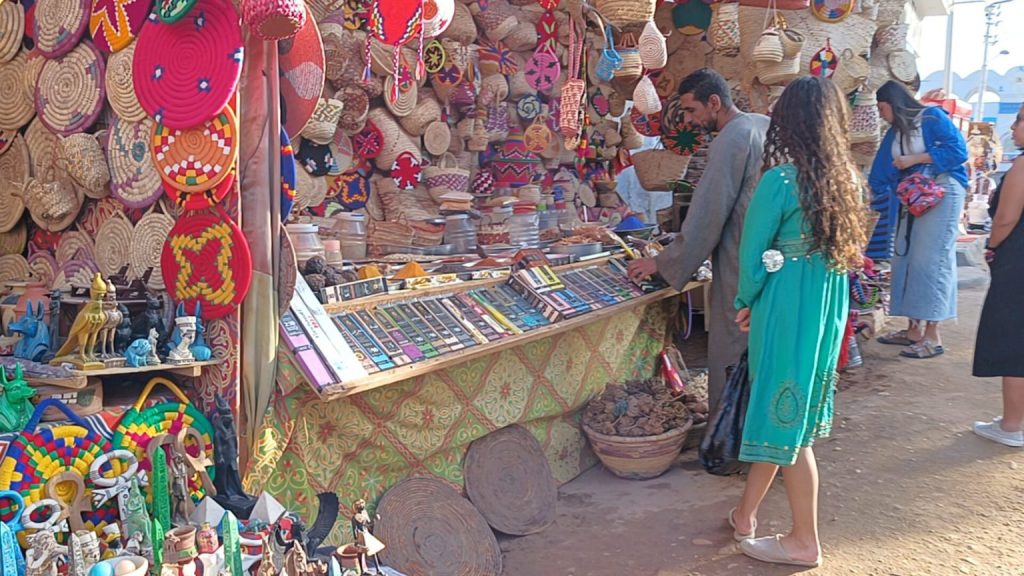
The Gharb Seheil market is about more than shopping. It offers visitors a complete cultural experience. The vendors, with their renowned Nubian warmth, welcome tourists with genuine smiles. They are eager to share the stories behind the products they sell. Traditional Nubian music plays in the background, adding a special dimension to the shopping experience.
A visit also offers a chance to experience Nubian hospitality, for which the villagers are famous. They introduce visitors to their traditions and customs through an immersive experience of Nubian life in the home. Tourists can also participate in cultural events and artistic performances featuring traditional Nubian dance and song, reflecting the region’s rich cultural diversity.
Crocodiles: A Unique Attraction
One of the most distinctive experiences in Gharb Seheil is seeing crocodiles and taking souvenir photos with them. Some Nubian homes keep small crocodiles in safe conditions, creating a scene that blends excitement with curiosity. Visitors from various nationalities eagerly pose for photos under the supervision of local families, who provide simple explanations about the crocodile’s nature and its connection to Nubian heritage and the Nile. This unique attraction adds a different dimension to a visit to the village and reflects the villagers’ ability to use their environmental and cultural heritage to promote tourism and support their livelihoods.
Raising and Selling Preserved Crocodiles
Inside a Nubian home in Gharb Seheil, specifically that of Hajja Soma, her brother Taha explained that raising crocodiles is one of the tourist attractions the village is known for. Villagers keep them to offer visitors a unique experience.
He explained that they obtain young crocodiles from Lake Nasser during June, when the crocodiles are in their egg-laying phase. The crocodiles are between one day and two months old. They are cared for until they reach about eighteen months.
He added that he trains the crocodiles from a young age, allowing tourists and visitors to hold them and take souvenir photos in a safe environment. During winter, they enter a fasting state known as hibernation. In summer, they become active, feeding well and building up layers of fat on their backs and tails that sustain them through the winter months.
A Village That Reached the World
Hamza El-Maghrabi, a resident of Gharb Seheil, confirmed that the village has achieved global recognition and become a major tourist destination. It has transformed into a key stop on tourist itineraries favored by visitors from many countries.
He explained that a tourist’s journey typically begins on Barbar Island, where visitors enjoy swimming and nature before setting off on a camel ride, which serves as the starting point for a scenic tour of the area. The journey continues to Gharb Seheil as the second stop, where the desert meets the Nile and the Nubian houses draw visitors in.
El-Maghrabi said the camels used for tourist rides are purchased from the Daraw market after being checked for suitability and safety. They are tested by tying them and passing a car or motorcycle in front of them to ensure they remain steady and are not frightened by loud noises before being used for tours in the village. The decorations and colors adorning the camels reflect authentic Nubian heritage and are used to attract tourists for photos or rides within the village. These activities, he emphasized, represent an important source of income for the people of Gharb Seheil.