Between Legend and Archaeology: The Uncertain Origins of Al-Tawba Mosque
n the heart of Damanhour, Al-Tawba Mosque anchors daily life—hosting prayers, funerals, and Ramadan gatherings. But its origins are shrouded in debate. Did Amr Ibn Al-As really build it? And why isn’t it on Egypt’s antiquities list?
By Mahmoud Dueir
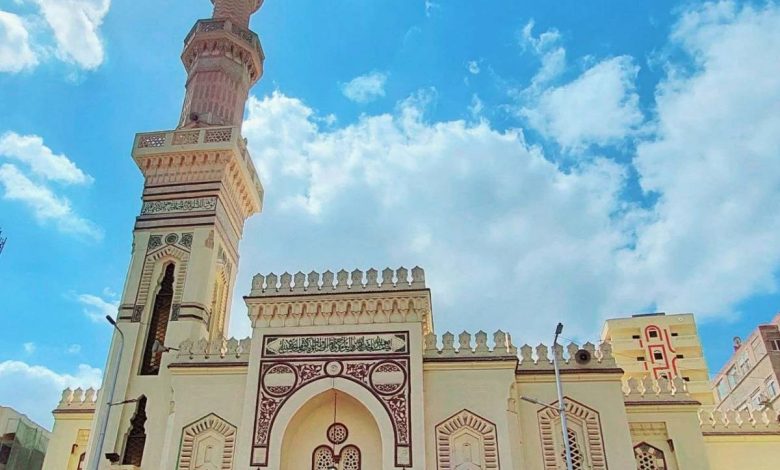
In the heart of historic Damanhour, near the railway station and opening onto the city’s main thoroughfares, stands Al-Tawba Mosque. It sits at the intersection of the city’s commercial centres, a silent witness to the daily rhythms of urban life, receiving the living for prayer and bidding farewell to the dead on their final journey.
But this is no ordinary neighbourhood mosque. Al-Tawba is a symbol of Beheira Governorate’s sprawling capital,a city of geographic expanse and cultural diversity. Its minaret punctuates the skyline. Its courtyard fills with worshippers from every quarter. And its history, or rather the debate over its history, reveals something important about how Egyptians relate to their past.
The Debate Over Origins
Ask about Al-Tawba’s founding, and you will hear different answers.
Local tradition attributes it to the Arab commander Amr Ibn Al-As, who led the Islamic conquest of Egypt in 641 CE. According to this account, as Muslim forces entered the Nile Delta, Amr ordered a mosque built in Damanhour to serve as a centre for prayer and for teaching Islam to the local population,a policy consistent with Muslim practice in newly conquered cities.
Archaeological experts, however, are more cautious. They point to the absence of conclusive evidence. Unlike many historic mosques in Egypt, Al-Tawba has not been added to the Ministry of Antiquities’ registry of protected heritage sites. It shares this status with other old mosques in Beheira, including Al-Habashi Mosque in Damanhour itself.
Dr Ibrahim Marguna, professor of Islamic history and civilization at Damanhour University’s Faculty of Arts, explains the complexity. “Islamic geography books reveal the importance of Damanhour during the Islamic centuries,” he says. “This makes it plausible that a congregational mosque existed here from an early period.” But plausibility is not proof.
Why “Al-Tawba”?
The name itself is subject to multiple interpretations.Some connect it to a specific event, a collective act of repentance by the city’s residents, who gathered in the mosque to pray and seek forgiveness after a calamity or crisis befell Damanhour. Others see the name as reflecting the mosque’s spiritual and educational role over the centuries, without reference to a particular incident.
Dr Marguna notes that Al-Tawba Mosque has undergone multiple phases of renovation and restoration across different Islamic eras, particularly during the Mamluk and Ottoman periods. This explains the variety of architectural elements visible in the current structure.
Throughout the centuries, the mosque remained an important religious and social centre in Damanhour. It hosted circles for Quranic education and religious sciences. It served as a gathering place for residents during religious and social occasions.
The Amr Ibn Al-AS Theory
The most common local narrative, that Amr Ibn Al-As founded the mosque, remains just that: a narrative.
“Despite its prevalence,” Dr Marguna says, “early Islamic sources do not explicitly mention Al-Tawba Mosque by name.” Comparing the various accounts, he concludes that the attribution to Amr Ibn Al-As is historically possible but lacks direct textual evidence from early sources.
“The explanations related to the name seem closer to social and religious interpretations that emerged in popular memory,” he adds. A critical reading suggests the mosque may indeed have been founded in the early Islamic period, while its current name emerged later, shaped by the spiritual role it played in the life of the city.
This interplay between written history and popular memory, Dr Marguna observes, reflects how religious landmarks evolve in Islamic cities over time. There is a gap between what people believe and what documents confirm.
Architecture and Urban Presence
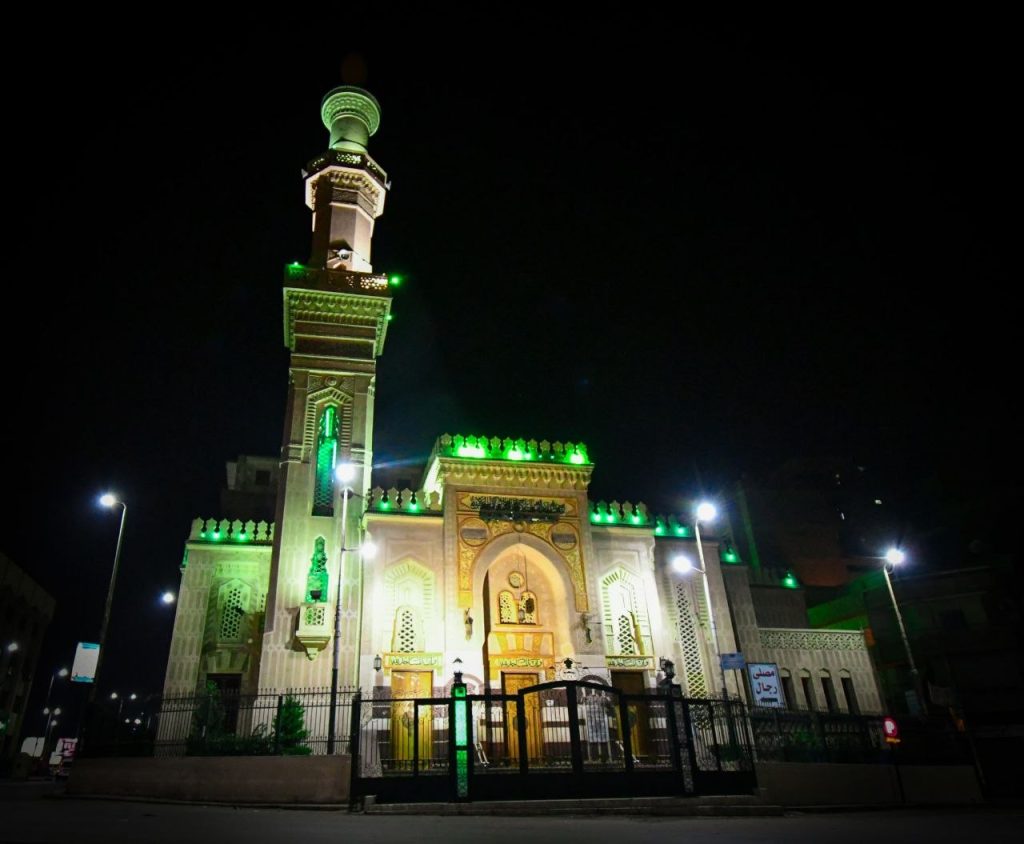
Architecturally, Al-Tawba belongs to the traditional Egyptian mosque style. It features a central open courtyard surrounded by prayer arcades. The main prayer hall, oriented toward the qibla, rests on rows of columns supporting a wooden roof, a common feature in traditional mosque design.
A mihrab marks the direction of prayer, and a wooden minbar is used for the Friday sermon. Both elements bear the geometric decorations characteristic of Islamic art.
The minaret rises conspicuously above the surrounding buildings, a visual landmark in Damanhour’s urban landscape.
These architectural features suggest that the mosque likely underwent renovation or reconstruction during the Mamluk period, a common fate for old mosques that remained in continuous use over centuries. In the modern era, restoration work has continued, preserving the mosque’s character while preparing it to receive worshippers.
Living Mosque, Living Role
Sheikh Attiya Gebril, imam and preacher at Al-Tawba Mosque, describes its contemporary significance. It is the main congregational mosque of Beheira Governorate, hosting official religious ceremonies. Friday prayers are sometimes broadcast on state radio and television.
Eid prayers draw crowds that include government officials. The mosque’s location,near the railway station and markets, makes it a destination for residents from across the city. A significant number of funeral processions begin here, heading to nearby cemeteries.
Beyond prayer, the mosque hosts a range of religious and cultural activities: Friday sermons, public Quran recitation circles after prayers, structured lessons for children and adults, cultural seminars, and programs organised by the Ministry of Endowments.
Because of the surrounding markets and its central location, Sheikh Gebril notes, the mosque never lacks for congregants. Throughout the day, worshippers come and go.
The Question of Demolition and Reconstruction
Researcher Khaled Maaroof, who specialises in Damanhour’s urban heritage, grew up hearing that Al-Tawba Mosque is the second oldest in Egypt and Africa, after Amr Ibn Al-As Mosque in Fustat. This is what local tradition holds, even if no documented evidence supports it.
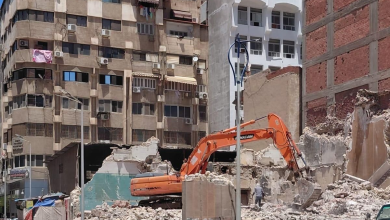
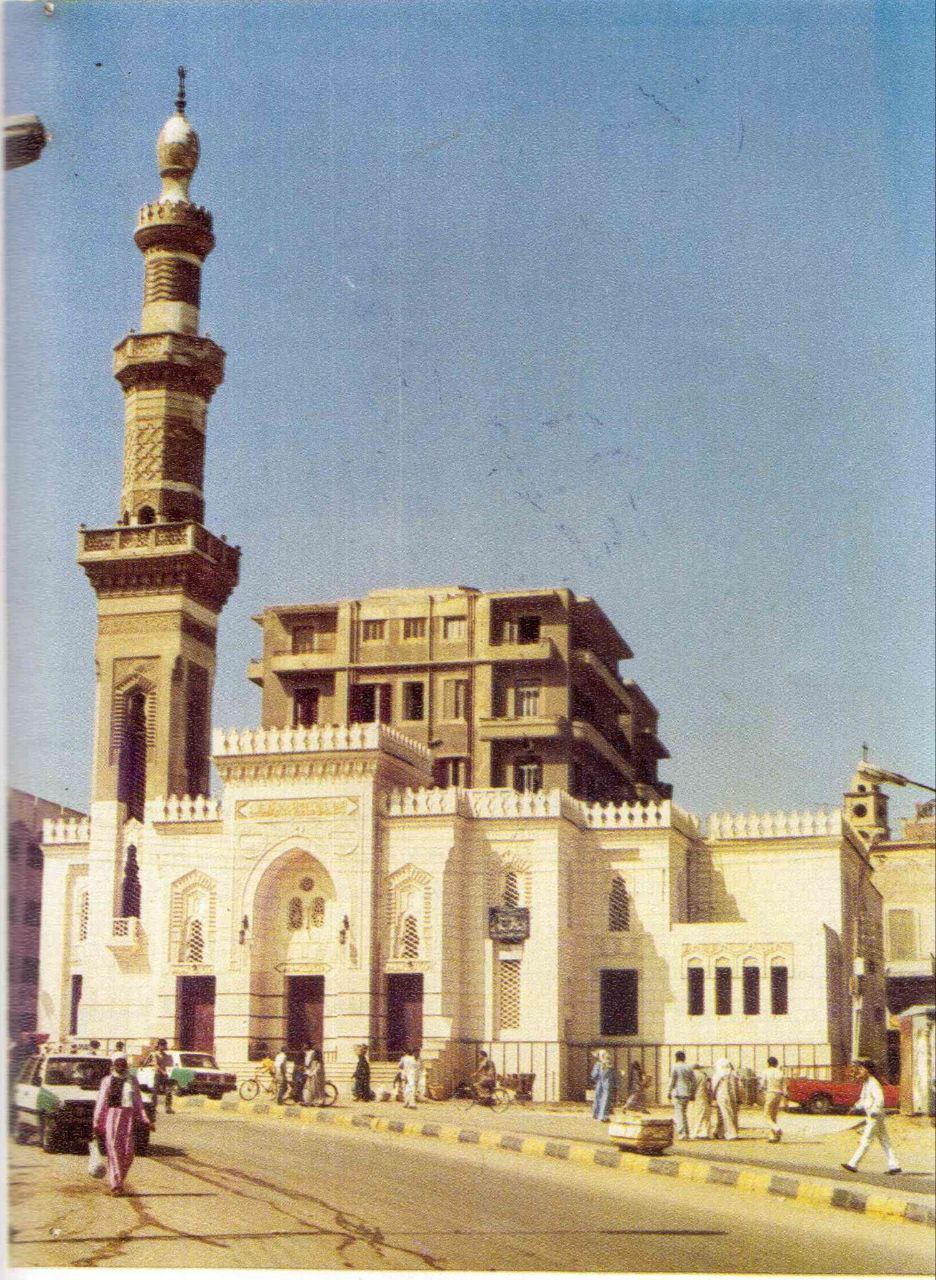
He describes the mosque before its demolition in 1956: simple in design, with three doors, an open courtyard surrounded by prayer spaces. Over the centuries, its size and shape changed—particularly after the earthquake that struck Egypt in 1303 AH (1886 CE), during the reign of Sultan Al-Nasir Muhammad ibn Qalawun, which caused extensive damage in Damanhour.
The mosque was completely demolished after another earthquake in September 1599. The current structure, built to the same dimensions, opened in 1959 and underwent its most recent renovation in 2020.
Why Not a Protected Monument?
Dr Alaa Al-Nahas, director of archaeological awareness at the Beheira Antiquities Authority, explains why Al-Tawba Mosque is not on Egypt’s antiquities list: it lacks the necessary archaeological characteristics. There are no elements within the structure that meet the legal criteria for protected heritage status.
Nevertheless, Dr Al-Nahas acknowledges the mosque’s importance in the consciousness of Damanhour’s residents. “Whether the popular narrative is accurate or not, whether the mosque is officially archaeological or not, the awareness of the population regarding its importance gives it great value.”
Dr Ahmed Al-Adham, former director of Beheira Antiquities, is more definitive. The claim that the mosque was founded in 21 AH (642 CE) cannot be confirmed. There are no archaeological remains or historical documents to support it. What circulates are oral traditions, passed from generation to generation.
He notes that Ali Mubarak’s famous encyclopedia, Al-Khitat al-Tawfiqiyya, published in 1886, discusses all the famous mosques of Damanhour but does not mention Al-Tawba. This suggests, Dr. Al-Adham argues, that the mosque is relatively recent in its current form,despite the persistent popular narratives.