The City of Our Dreams: Reimagining Alexandria Through the Art of Memory
An evocative exploration of the “City of Our Dreams” exhibition in Alexandria, where interactive maps and oral histories resurrect the city’s vanishing Greco-Egyptian heritage to redefine urban memory through the stories of its people.
By Mirna Gohar
Can a city be reconstructed anew each day, built not with limestone and mortar, but from the collective whispers of its people? In Alexandria, a metropolis defined by centuries of accumulated cultural strata, this question is far from academic; it is a lived reality. Here, streets are not merely read by their signposts, but by the weight of the narratives left behind by wanderers and residents alike, many of whom have vanished, leaving only their indelible traces.
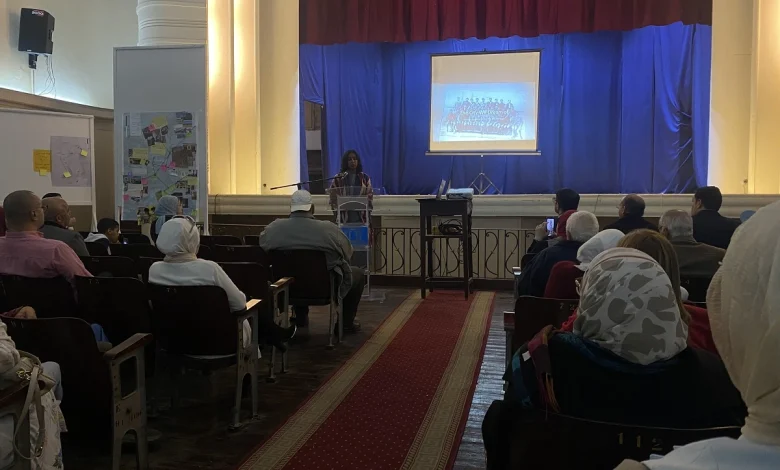
Within the hallowed halls of the Greek Community of Alexandria, the Raquda Foundation for Art and Heritage hosted its concluding exhibition. The showcase was the culmination of a workshop titled The City of Our Dreams: A Journey Through Its Past, Present, and Future, held in collaboration with the Greek M55 Association and the Greek Community of Alexandria.
Shadowed Memories of Alexandria Re-emerge
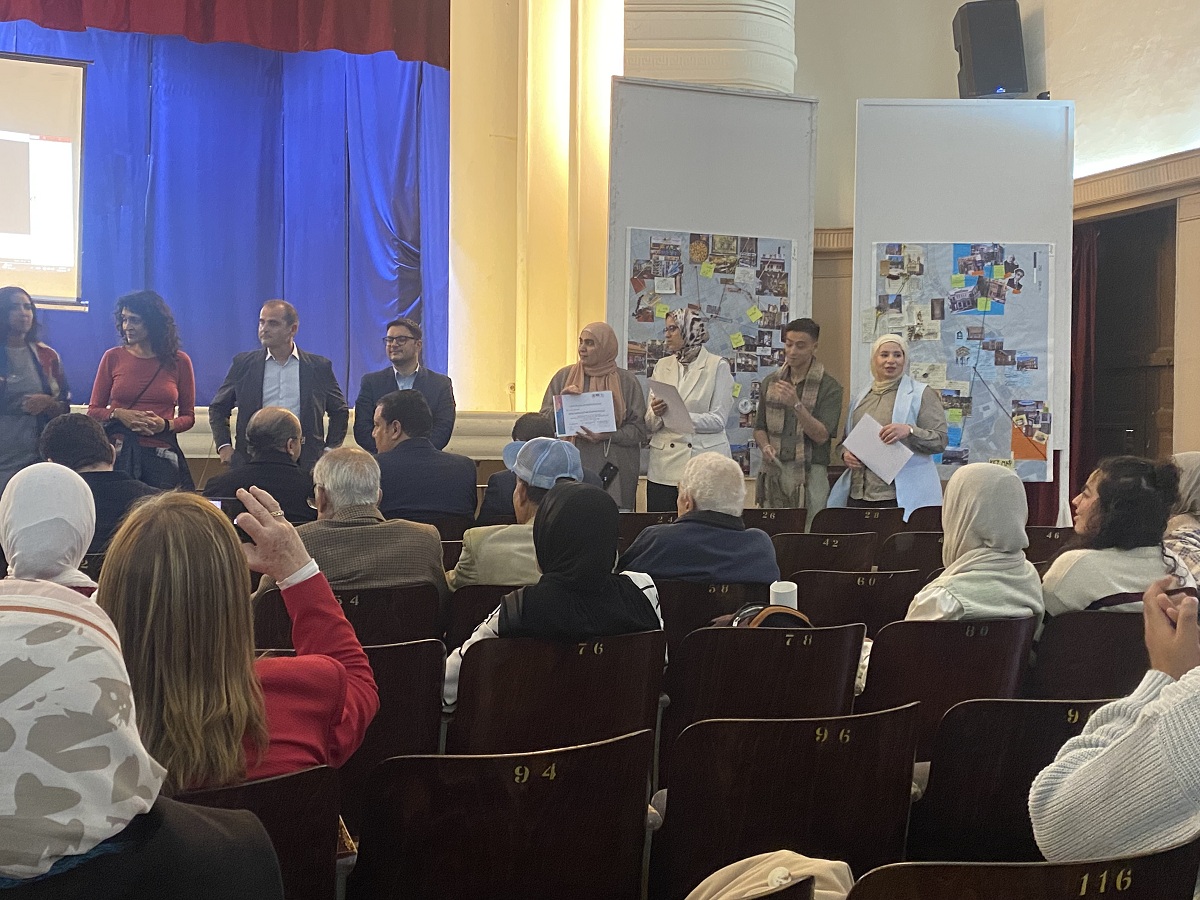
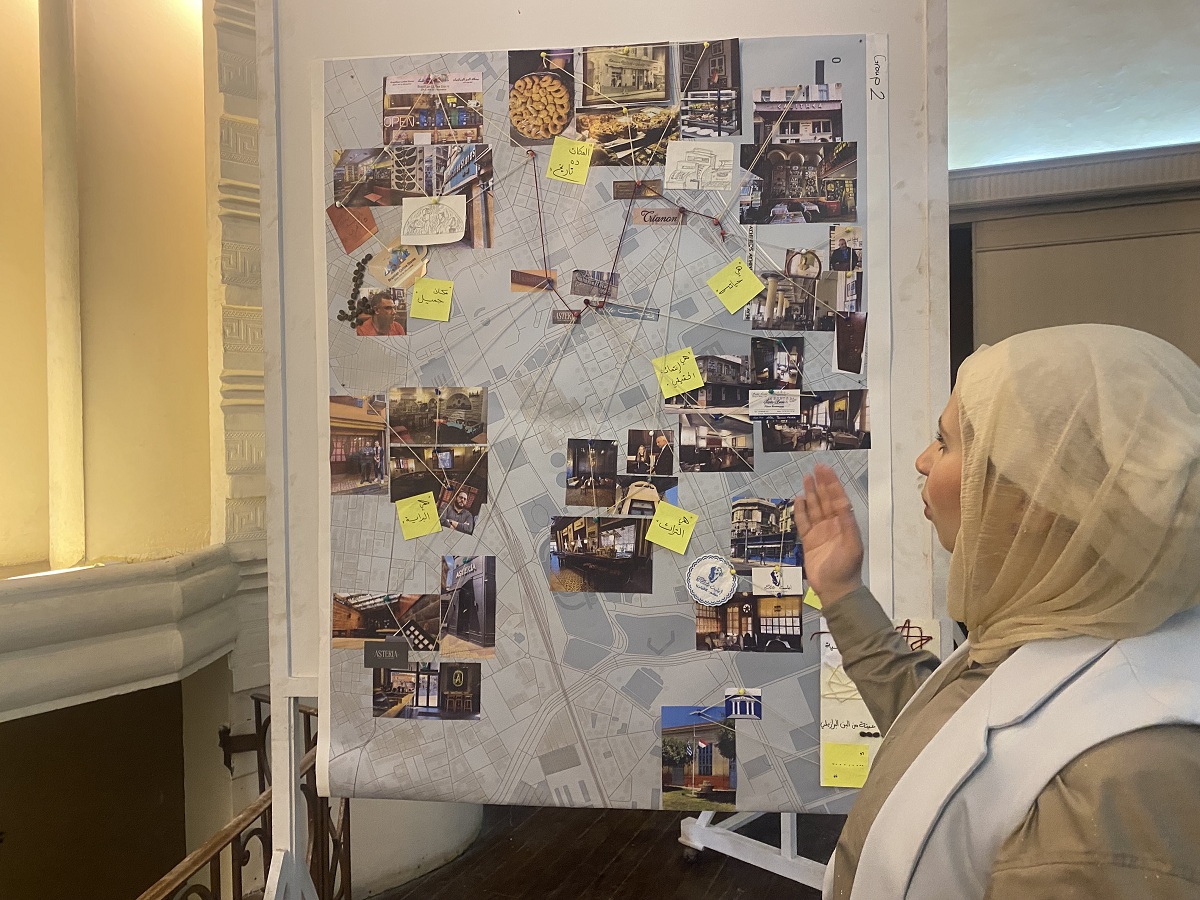
Printed maps adorned the walls, layered with photographs, illustrations, and archival data, while a large screen flickered with short documentary films dedicated to the city’s interiority. Visitors gathered before a sprawling map, leaning in to point at specific coordinates, each gesture unspooling a new thread of history.
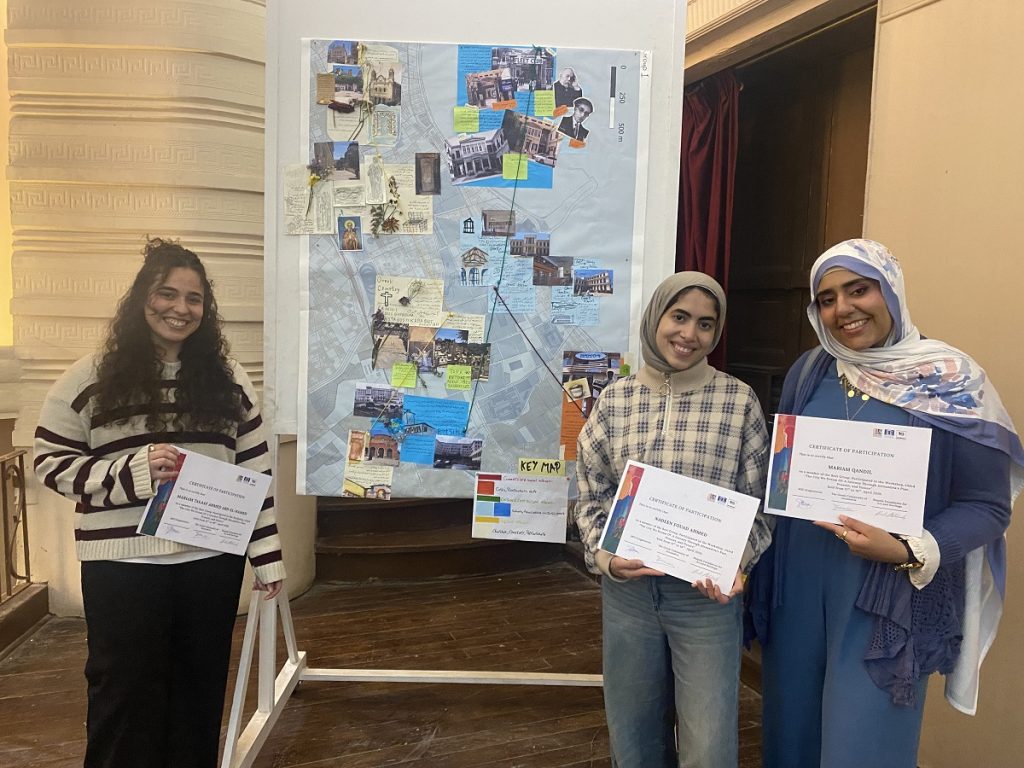
“We are not merely exhibiting locations; we are attempting to resurrect the stories that breathe behind them,” explained one participant, her finger tracing a line across the map. The exhibition resulted from a four-day intensive workshop involving fifteen young men and women. Divided into three cohorts, they documented twenty-seven sites of Greek origin, seeking to retrace the Greco-Egyptian legacy through interactive community engagement. The objective transcended simple cataloging; it was an exercise in learning how to “read” a city by descending into its streets and conducting interviews with proprietors and patrons. This raw material was then distilled into three interactive maps, three short films, and scores of photographs.
The Greek Influence Embraces Alexandrian Detail
Upon the streets of Alexandria, names like Cavafy, Antoniadis, Pastroudis, Chez Gaby, and Sofianopoulo echo through the air. Often, we pass them by without pausing to consider their origins, yet they beckon toward a series of inquiries: Why does the Greek footprint remain so vivid? How did Alexandria embrace this influence with such enduring affection? Dr. Rawda Abdel-Hadi, an antiquities restoration specialist and director of the Raquda Foundation, spoke with Bab Masr: “The Greek community was the most adept at weaving itself into the social fabric of Alexandria, exerting a continuous economic, social, and cultural influence. Their impact was not restricted to politics or urban architecture; they left a cultural and artistic soul that remains present today.” The choice to focus on the Greeks was not dictated by history alone, but because they offer a profound example of how a human presence can recede or diminish while its essence remains distributed across a city via buildings, banners, and the names that anchored their stories. These customs, traditions, and fragments of lore continue to ripple through the Alexandrian memory.
When Maps Defy Silence to Speak
The most striking achievement of the workshop was the creation of the maps. These are not conventional charts used for navigation, but rather maps to be read in layers. The religious layer unveils cathedrals and necropolises, such as the Church of Saint Saba and the Latin Cemeteries; the cultural layer examines historic institutions like the Greek Club; and the economic and leisure layers highlight storied cafes and restaurants like Elite and Santa Lucia.
“Our goal is to illuminate the intangible heritage of these places, such as the food and the memories,” said Maryam Manar, a participant. These maps do not merely plot coordinates; they visualize the distances between souls, the testimonies of owners, the chronicles of founding, and the nostalgia intertwined with every stone. At certain junctures, visitors can contribute their own anecdotes, rendering the map an open, evolving document that shifts with every passerby.
Greek Spirits Inhabiting the City
How does the essence of those who departed remain present in a city they no longer inhabit? The maps offer a partial answer. Along one route, a former hospital belonging to the Greek community in the Mahadat al-Raml area appears. The map traces its metamorphosis through time, recounting its transition into the Royal British Navy Club, and its subsequent lives as a gymnasium and a wedding hall. Similarly, the maps chronicle the history of the Gamal Abdel Nasser Hospital, originally established by Greeks and known as the Koutsika Hospital before it became a public institution. Elsewhere, the Church of Saint Saba is documented, where monks from various African nations still regard Alexandria as their “second home.” Yet, what binds these examples is not the masonry itself, but the narratives that orbit them. “The building exists on the ground, but it is the people’s stories that grant it a soul; it is their tales that define its worth,” observed Hadeer El-Naggar, another participant.
“Khabbini” Cafe: A Sanctuary for Politicians and a Wartime Refuge
Among the sites meticulously documented is the Ali Al-Hindi cafe in Mansheya, famously known as Khabbini (Hide Me). The moniker derives from its modest, tucked-away stature, easily overlooked amidst the broad expanse of the street, yet it holds accumulated strata of memories.
As workshop participants revealed, the cafe was originally owned by a Greek woman named Maria Chariatiopas, who partnered with Ali Al-Hindi before he eventually purchased it. It later became known as Khabbini due to its obscure location, overlooking the street through three hidden passages that only those “in the know” could find. Over decades, the cafe transformed into a haunt for politicians and activists, serving as a literal refuge during the First and Second World Wars. Despite its humble aesthetic and unchanging facade, its significance shifted repeatedly, reflecting how a single site can hold a history as diverse as those who passed through its doors.
How Bar “Cap d’Or” Became “Sheikh Ali”
This narrative of transformation mirrors the documentation of another nearby site. The Cap d’Or bar was established in 1900 in a narrow alley near Mansheya, originally owned by Greek and French proprietors. Following the waves of nationalization, it was purchased by an Egyptian man named Ali, who preserved its character while merely adding a food menu.
Despite the shift in customs the foreign owners once closed on their religious holidays, whereas Ali shuttered the doors on Fridays patrons affectionately dubbed it Sheikh Ali, a name that clings to it to this day. For decades, the establishment drew a diverse elite of merchants, pashas, and horse-racing enthusiasts, forming a cloistered community of regulars. Though the city transformed around it, the interior details and decor remained frozen in time, retaining an ancient charm and singular character. It became more than a bar; it became a living vessel for the city’s memory and its myriad transitions.
A City Being Rewritten
The exhibition does not seem to offer a finality, but rather opens a new portal of perception, raising questions about the intersection of history and the present. Buildings remain vital components of material heritage, yet this heritage is hollow without the stories anchored to them. These narratives do not create heritage from nothingness; they imbue it with an extended, renewed meaning, tethering it to the contemporary moment.
Thus, a city is never built only once in stone; it is reread and reimagined every day through the stories added by its inhabitants and the memories they leave behind, even long after they have gone.
This experiment does not end within the gallery walls. The Raquda Foundation plans to make these maps available on its website, furthering its mission to democratize knowledge and ensure these stories are not confined to an institution, but returned to the city that birthed them.