From Jakoud to Abrey: The Flavors of a Nubian Ramadan Table
In Nubian villages across southern Egypt, Ramadan iftar is a communal affair. Families bring their home-cooked dishes to shared tables in the street, welcoming neighbours, travellers, and Sudanese guests to meals that blend tradition, hospitality, and centuries-old recipes.
By Wafaa Amin
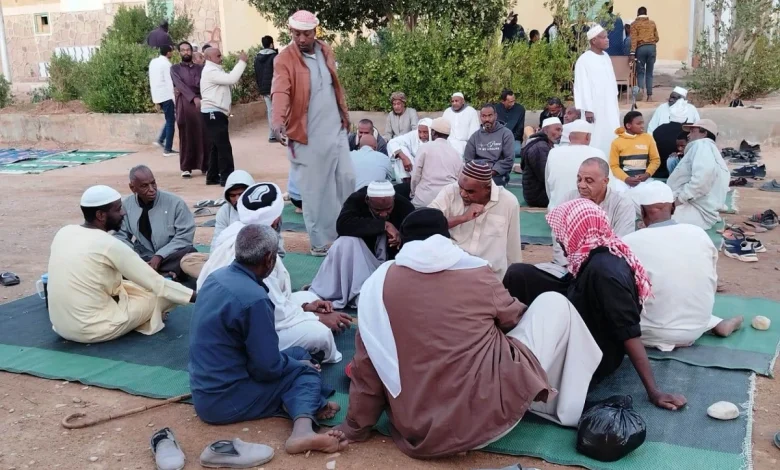
As the Maghrib call to prayer approaches in the Nubian villages of Aswan Governorate, the streets and squares transform. Long tables appear, stretching down alleyways and across open plazas. Families emerge from their homes carrying trays of food, each dish prepared in a different kitchen but destined for a single shared meal.
This is a collective iftar in Nubia,a tradition that embodies the region’s legendary hospitality, its spirit of mutual support, and its deep-rooted sense of community. The tables welcome not only local residents but visitors from across Aswan and, in many villages, members of the Sudanese community who have made their homes in the area. In the warm southern evenings, the meal becomes a gathering of cultures, a celebration of shared humanity, and a living link to the customs of ancestors.
Wadi Kerker: Nubians and Sudanese Brothers Breaking Bread Together
In the villages of Wadi Kerker, south of Aswan, public squares become gathering points throughout Ramadan. The collective iftar rotates weekly among the villages, each taking its turn to host.
Ahmed Abdel Hamid, head of the Wadi Kerker Community Development Association and a secondary school principal, explains the tradition. “Nubians are committed to this annual custom during Ramadan,” he says. “Each village in Wadi Kerker takes turns organising the iftar throughout the holy month. It brings the people of all the villages together around a single table, strengthening feelings of love and familiarity among us.”
The table is not limited to villagers, he emphasises. “We also welcome our guests from the Sudanese community living in the area.” This openness reflects deep historical and cultural connections. “This custom goes back to old Nubia,” Abdel Hamid notes. “There are shared cultural foundations that link Nubians and our Sudanese brothers.”
Hag Gomaa Abdel Majid, mayor of the Wadi Kerker villages, adds that the collective iftar features the most famous Nubian dishes and drinks. Beyond the food, the gathering serves a social purpose. “It brings people together to get to know one another, to have a conversation.” The invitation is extended widely. “Nubians make a point of inviting people from all across Aswan, from every tribe in the governorate, to participate in this Ramadan table.”
Al-Tayyab: Iftar on the Banks of the Nile
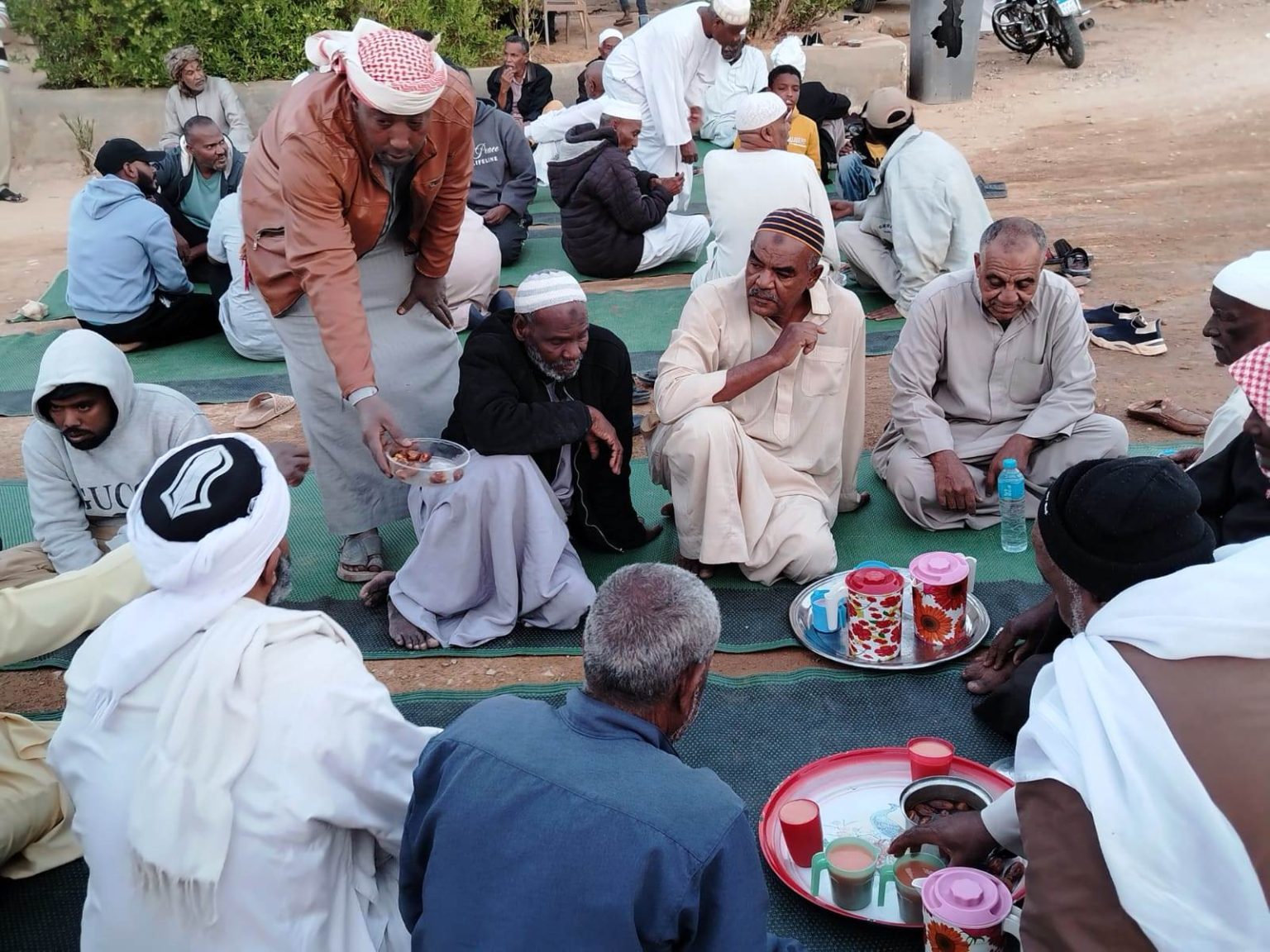
In the hamlet of Al-Tayyab, in the Korour Bahri area of Aswan city, the collective iftar takes on a different character. Here, families gather on the banks of the Nile itself, surrounded by the stunning natural beauty of southern Egypt,a setting that combines the spiritual atmosphere of Ramadan with the timeless landscape of the river.
Walid Taj al-Sir, chairman of the Al-Tayyab Community Development Association, opens the conversation with a classic Nubian greeting: “Dirtig ayi nalwa“,”May every Ramadan bring you goodness.” He explains that the collective iftar is organised annually throughout the holy month, with the entire village participating.
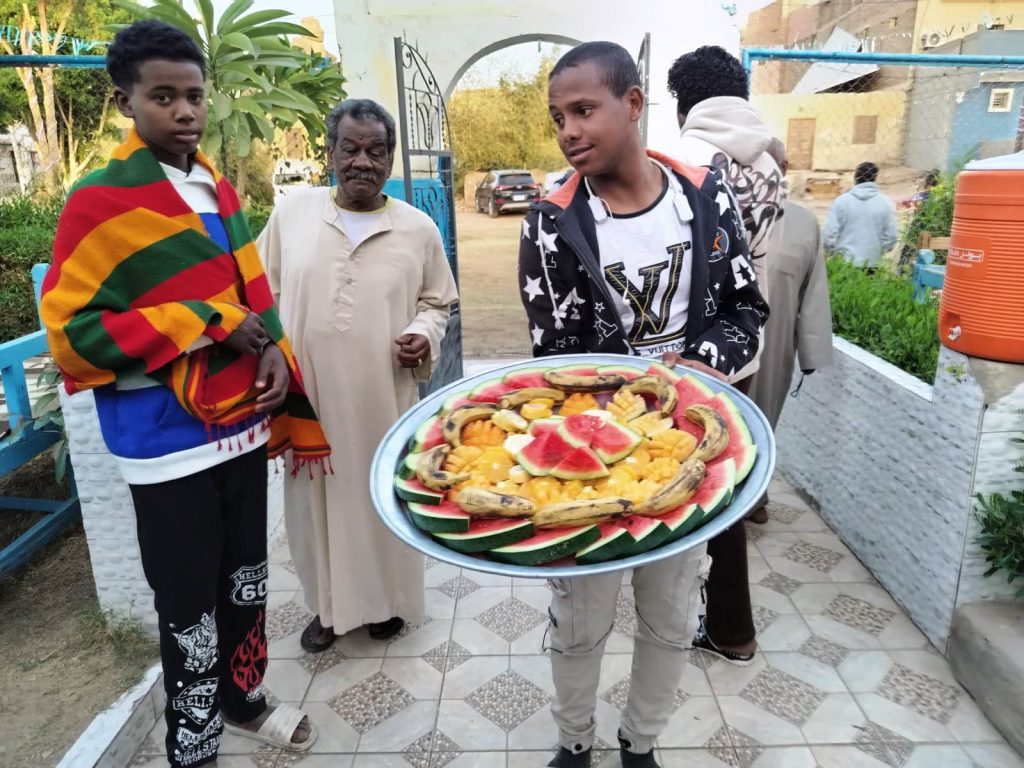
What distinguishes the Nubian iftar, he says, is the involvement of every household in preparing the food. Each home prepares a tray to contribute to the shared table,a vivid expression of the solidarity and mutual affection that characterise Nubian society. A particularly striking feature of the Al-Tayyab iftar is the variety of fruit trays, carefully prepared by a village chef, that adorn the Ramadan table as an essential part of the meal.
Jakoud, Sobed, and Khamreed: Nubian Dishes with the Taste of Heritage
Hag Nuri Dehab, a resident of Al-Tayyab, traces the collective iftar back to ancient Nubia. “This is an old custom,” he says. “It has passed through generations, from grandparents to children.” The transmission continues: “We will pass it on to future generations to preserve this social heritage.”
In the past, he explains, Nubians would set their iftar tables in front of their homes, so that any passerby or stranger to the village could share the meal. It was, and remains, a clear expression of Nubian generosity.
The preparation begins a full day before the meal. Nubian women start readying their food trays well in advance, each determined to prepare the best dishes to offer to those who will gather, both residents and guests.
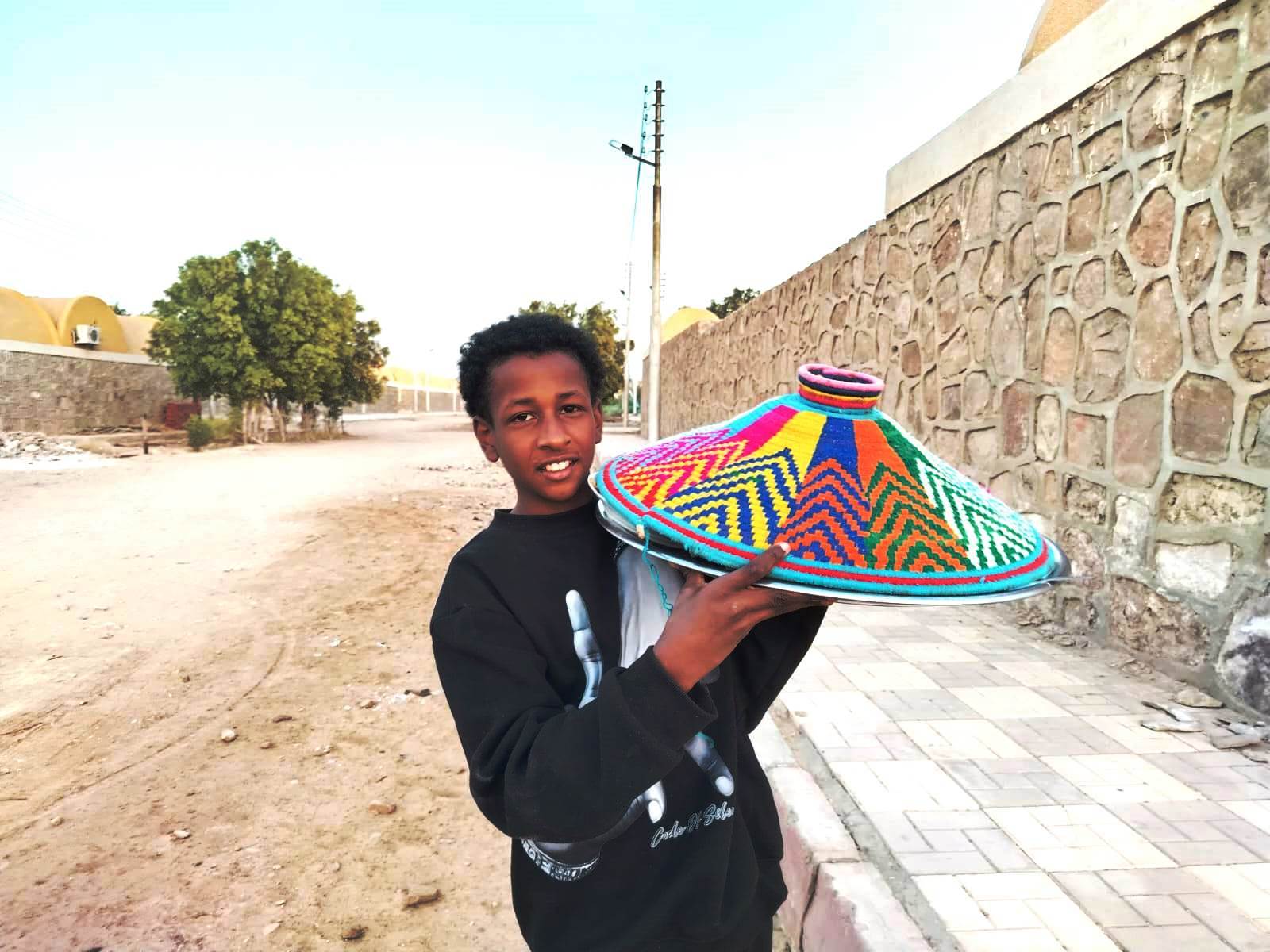
Among the most famous dishes on the Nubian table is jakoud, also called itr. It is a type of fatta made with cooked mulukhiya or spinach, combined with dried okra that has been crushed with a wooden tool called a mifrak. It is served with khamreed bread or sanasin bread, baked on a dooka griddle. The bread is cut into a large dish, the mulukhiya is added, and the resulting jakoud is eaten hot, by hand, without utensils.
Another distinctive dish is sobed, a type of fatta made with tomatoes, a Nubian speciality.
Abrey: The Official Nubian Ramadan Drink
Hagga Karima Bakkar, a Nubian woman from the region, describes the unique customs that set Nubian Ramadan apart.
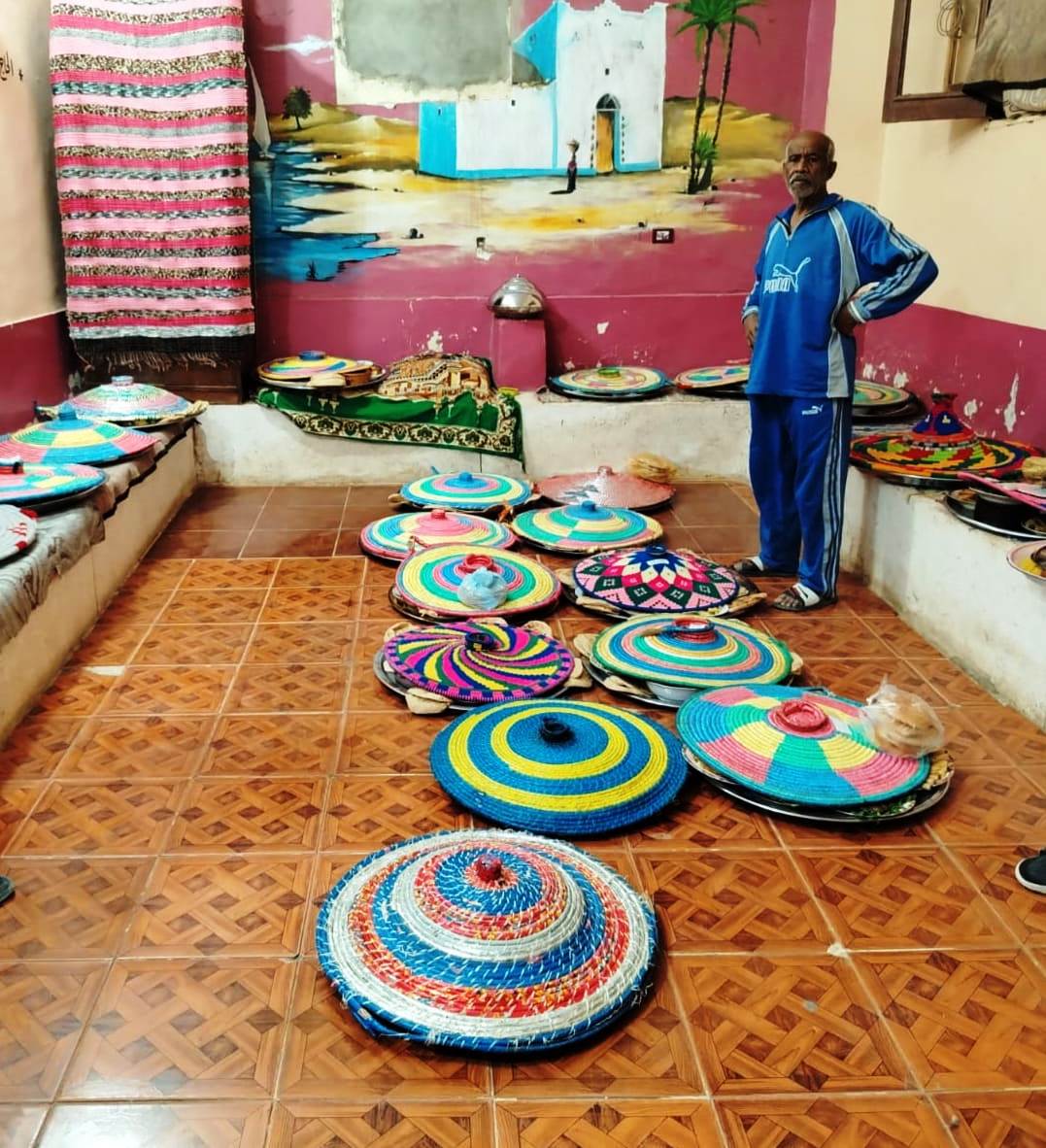
“Our traditions are different from any other tribe’s,” she says. Iftar always begins with dates and a glass of abrey, the official Nubian Ramadan drink, before performing the Maghrib prayer. Only after that do we continue with the rest of the distinctive Nubian dishes.”
The timing is intentional. Drinking abrey before eating helps prepare the stomach to receive food after a long day of fasting, even if that food contains fats. “Iftar in Nubia has a different taste, a special character you won’t find anywhere else,” Karima insists. “It’s tied to the family atmosphere, to the gathering,the lamma, that makes everything beautiful.”
Kod Bey and Kod Kreed: The Nubian Woman’s Dishes
Hag Maher, another Al-Tayyab resident, points to the distinctive drinks that accompany the Nubian iftar: ardeb (tamarind), karkadeh (hibiscus), helou murr (a bitter-sweet infusion), alongside fresh fruit juices prepared for guests.
Among the famous dishes, he highlights kod bey, traditionally made with dried meat. Today, it is prepared with minced meat, dried okra, and khamreed bread cut into pieces for fatta. Then there is kod kreed, which incorporates the green leaves of cowpeas, spinach, or green bean leaves,a dish in which Nubian women display their culinary artistry on the Ramadan table.
“The Big House”
Khaled Ahmed Shalaby explains that the collective iftar in Al-Tayyab is organised at the Korour Bahri Association, which locals call “The Big House.” During Ramadan, this gathering place becomes the heart of the village,a space where residents come together to break their fast, exchange conversation, and strengthen the bonds of love and connection that define their community.
Nubian Ramadan customs, he emphasises, are not only about food. They are about gathering, about the lamma that gives the holy month its special character. The shared table is one of the most important expressions of Ramadan,a symbol of the ties that bind the Nubian community together, generation after generation.