The Damanhur Opera House: A Sovereign Union of Italian Elegance and Islamic Heritage
Damanhur Opera House, an architectural masterpiece blending Italian elegance with Islamic heritage, now restored as Egypt’s radiant cultural beacon.
By Mahmoud Dowair
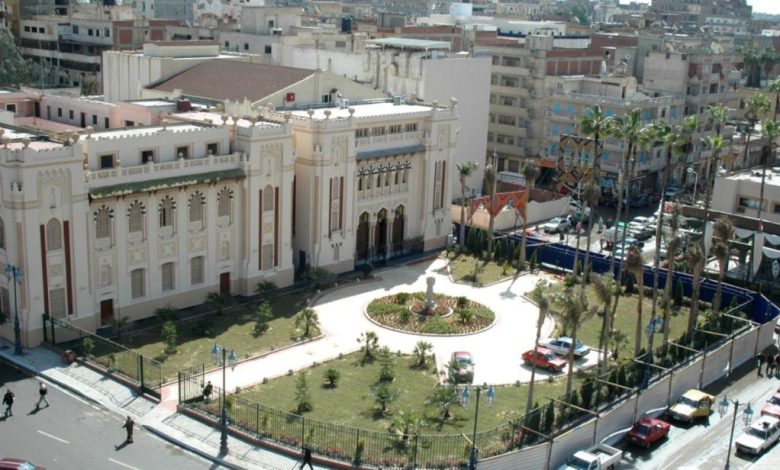
In a striking confluence of the Italian aesthetic that permeated Egypt at the dawn of the last century and the storied traditions of Islamic architecture, the Damanhur Opera House stands as a testament to the vision of Italian architect Verrucci. Commissioned in 1930, Verrucci brought this sanctuary of art to fruition in just two years. Its royal inauguration was a grand affair, reflecting a prestige that befitted its architectural splendor.
Yet, the history of this edifice is a rhythmic cycle of vitality and silence. Following eras of artistic zenith, the building succumbed to a long winter of neglect. Decades of deterioration saw its hallowed grounds transformed into a stable for beasts and a station for hantours (horse-drawn carriages). For many, it seemed the inevitable fate of one of Egypt’s cultural jewels. Standing in the historic Clock Square, the most distinguished pulse of the city, the opera house shared its pedigree with the Cairo Opera and Alexandria’s Sayyid Darwish Theatre, yet it was nearly lost to time. The turning point arrived when former Minister of Culture Farouk Hosny resolved to breathe life back into the structure, rescuing a rare monument from the scars of disfigurement. The subsequent restoration was a meticulous labor of love, preserving its archaeological soul and architectural idiosyncrasies.
The Alchemists of Culture: Al-Hakim, El-Messiri, and Zewail
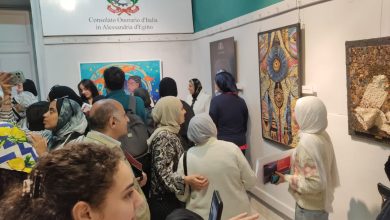
To wander through this historic hall is to encounter the ghosts of intellectual greatness. The walls are adorned with the visages of literary and artistic giants birthed from the soil of the Beheira Governorate: Tawfiq al-Hakim, Mohamed Abdel-Halim Abdullah, Abdel-Wahab El-Messiri, and the melodic voices of Mohamed Abdel-Muttalib and Karem Mahmoud. Alongside them hang the portraits of novelist Youssef El-Qaied, actors Abdelaziz Makhyoun and Mahmoud El-Jendy, and the Nobel laureate Dr. Ahmed Zewail, signaling the profound cultural richness anchored in this locale.
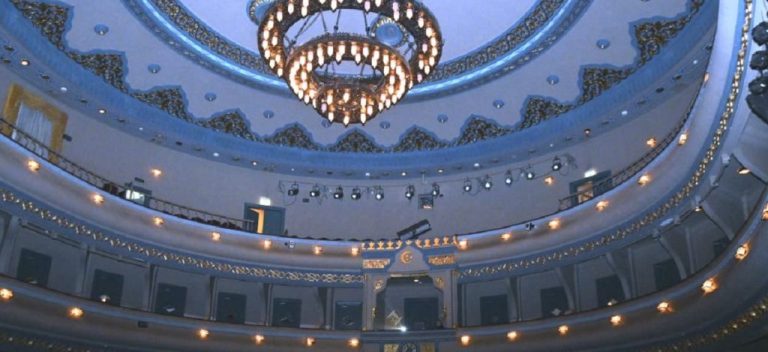
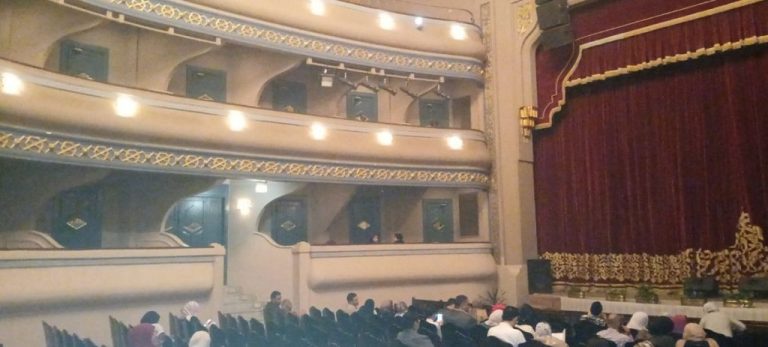
The auditorium itself, housing some 450 seats, is a masterpiece of interiority. Its walls carry intricate engravings and motifs that weave Italian flair with the antiquity of Islamic art in a harmony that speaks to precision and beauty. Dr. Alaa El-Nahas, Director of Archaeological Awareness in Beheira, notes that King Fuad laid the foundation stone for the municipal complex which included the cinema, theater, and library on November 8, 1930.
Initially, the western wing was christened the “Farouk Cinema and Teatro,” before becoming the “Municipal Cinema” in 1952. It bore various names over the decades, including the “Winter Victory Cinema,” before finally assuming its rightful identity as the Damanhur Opera House.
A Dialogue of Styles: The Marriage of Europe and the East
Dr. El-Nahas further explains that the building serves as a definitive model of early 20th-century Egyptian theater architecture. While its blueprint follows the Italian opera house style introduced during the era of Khedive Ismail, it distinguishes itself through the clever integration of Islamic decorative elements.
Verrucci achieved a delicate equilibrium between European functional planning and Islamic motifs rooted in various historical epochs, including the Fatimid era. The use of broken arches and Andalusian-style flourishes grants the building a unique personality. These botanical and geometric carvings, coupled with the sweeping circular arches, elevate the theater into a rare artistic record of the period.
The Theater as an Islamic Monument
Recognizing the building’s immense artistic value, the Islamic and Coptic Antiquities sector of the Supreme Council of Antiquities officially registered the opera house as an Islamic monument in 1988. This status was solidified by a ministerial decree in 1990, ensuring the permanent protection of its architectural DNA.
Further legal safeguards were applied under the Law for the Protection of Antiquities, categorizing the building among the elite artistic and historical landmarks of Beheira. Abdul-Jalil El-Khouly, a member of the Board of Trustees, views the opera house as a beacon of enlightenment. He argues that the institution could play an even more vital role in combatting aesthetic decline if its activities were expanded to engage the youth through diverse programming and contemporary marketing.
He emphasizes that support from state institutions, civil society, and the business community is essential for the opera house to reclaim its full stature as one of the few cultural bastions operating outside the traditional hubs of Cairo and Alexandria.
A Crucible for Emerging Talent
Said Abu Daher, another member of the Board of Trustees, recalls that the opera house resumed its activity in 2009 after its long hiatus. Today, it shines as a radiant point in Egypt’s cultural life, nurturing the creative spirit of a governorate that has always been a wellspring for talent.
Board member Hussein Mohamed Hussein notes that the building’s mission extends far beyond the stage; it is a sanctuary for discovery. He highlights the necessity of reviving events like the Damanhur Folklore Festival, which once served as a vibrant window for cultural exchange and the celebration of folk heritage.
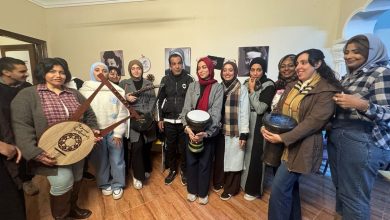
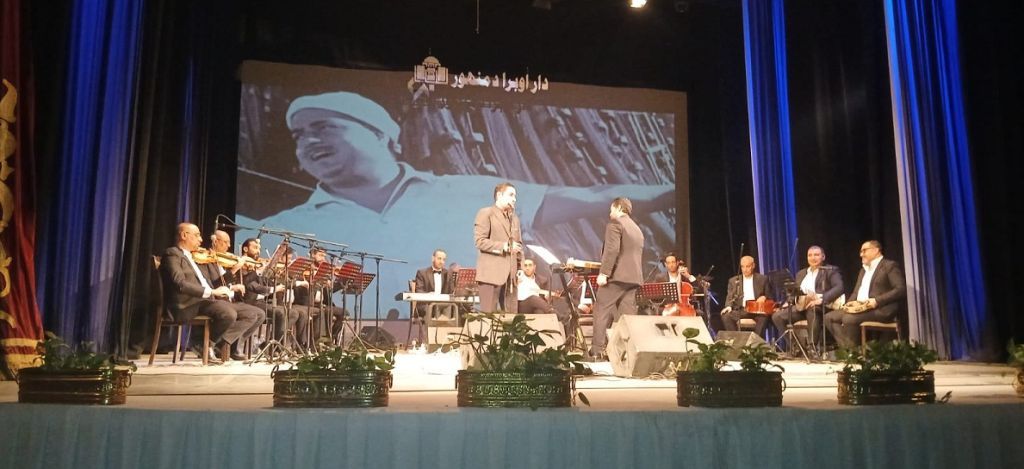
Rania Qannawi, Director of Public Relations, describes a diverse calendar that hosts masters of Arabic music alongside cultural salons and a cinema club organized with the National Cinema Center. At the heart of this activity is the Talent Development Center.
Viviane Atef, who oversees the center, explains that since its inception in 2009, they have provided training for children and adults alike. From the delicate movements of ballet to the mastery of the oud (lute), piano, and violin, the center cultivates a new generation of performers through regular showcases of their progress.
Preserving the Vocal Heritage
Dr. Mohamed Hosny, Professor of Singing and Choral Performance, explains that the center’s work begins with children as young as five. “Working with children requires us to distill complex musical concepts and present our vocal heritage in a way that resonates with their age,” he says.
The curriculum balances works of profound artistic value with international repertoire in English and French. The focus remains on providing these young talents with the mentorship they need to transform raw ability into a lifelong mastery of the arts.