
Interview | Dr. Muhannad Foda: Heritage is not a luxury… and “Save Mansoura” fights oblivion through documentation

In a city haunted by real estate maps and on the verge of losing the features that centuries of history have carved into it, a voice has risen up to say, “Enough.” This voice did not come from a demonstration or a seasonal campaign on social media, but from the streets themselves, from the heart of homes and balconies, and from silent inscriptions that tell of forgotten glory.
More than ten years ago, architect Dr. Muhannad Foda decided to stand up against this oblivion, not as a hero, but as a citizen who loves his city. He launched the “Save Mansoura” initiative as a beacon to raise awareness and restore people’s relationship with their city. The road was not easy, with many battles and even more disappointments, but what remained was the belief that heritage is not just an architectural style, but the character of an entire city and a mirror of its people’s conscience.
In this interview, we take you to the heart of the story… where passion for a place meets determination to protect it, where architecture becomes a message, and where old images become a form of resistance.
• To begin with, Dr. Muhannad, what circumstances led you to establish the “Save Mansoura” initiative in 2013?
We founded the initiative in October 2013, inspired by the wave of community initiatives that emerged after the 2011 revolution to confront encroachments on heritage buildings in Egypt. It started with “Save Alexandria,” then the idea spread to other governorates, and that’s when we decided to launch the Mansoura version, especially since the city has a large number of diverse heritage buildings.
The real launch of the initiative took place in December 2013, following the bombing of the Dakahlia Security Directorate, which caused serious damage to a number of important heritage buildings, such as the Mansoura National Theatre, the Al-Saleh Ayub Mosque, Dar Bin Luqman, and an old 19th-century church. At that moment, the initiative played a fundamental role in documenting what happened and communicating with the media and social media, becoming a voice that informed people about the importance of these buildings and the value of preserving them.
• How does the initiative document heritage buildings? Do you have an organised database?
I was a member of the committee for the inventory of buildings of architectural interest in Dakahlia governorate for 13 years, and I contributed significantly to documenting buildings in Mansoura and other cities in the governorate. Initially, the data was on paper, but we are currently working on a research project affiliated with Mansoura University to create an interactive map of all documented buildings, including their dates, photos, and architectural details. This map will be available to the public and interested parties, in an important step towards bringing heritage closer to the people.
• How do you assess the threat to buildings? Is there local response and growing awareness of heritage?
We document through a photo archive that goes back years, which allows us to compare and monitor changes. As a specialist who has been living with the scene for years, I can sometimes spot alterations at a glance.
Most importantly, people have become partners in the initiative: citizens now photograph violations and report them to us. Awareness has really grown significantly, and I always say, “Everything the people have learned, we have gained.”
In Mansoura specifically, we are fortunate because the city is relatively small and has only about 150 heritage buildings, which makes it easier to intervene when an encroachment is detected. However, the response from officials often only comes after the issue is highlighted in the media or on social media, and unfortunately, it is not a direct response.
• Is there any cooperation with schools, universities or civil society organisations to promote heritage culture?
Mansoura University has played a very important role. Through my work as an assistant professor in the Department of Architecture, we always use heritage buildings as practical examples for students, whether in drawing, architectural documentation or field training. This helps students connect directly with heritage and understand its value.
At the neighbourhood or executive level, there is no real cooperation, and responses often come after community and media pressure.
• How do you deal with owners or residents who see preserving buildings as a financial burden or useless?
Very few owners are aware of the value of heritage buildings. The majority see them as an investment opportunity they want to get rid of in favour of a commercial or real estate project. This is a bitter reality, rooted in a legislative problem, and there are no real incentives or compensation mechanisms to encourage owners to preserve buildings. We need the state to intervene by establishing clear policies and laws that protect heritage while respecting the rights of owners.
• What are the most notable successes achieved by the initiative over more than 10 years? Have you actually saved any buildings?
Thank God, the most notable achievements are the preservation of the Mansoura National Theatre after the decision to demolish it, and its conversion into an opera house. We exerted pressure through the media and parliament until a budget was allocated for its restoration, and we are finally close to its opening.
We also contributed to the continued restoration of the Shinawi Palace and stopped the demolition of buildings such as the Iskandar Palace in the Mukhtal neighbourhood. We organised cultural events to raise awareness of these places, in collaboration with independent cultural entities.
• On the other hand, what are the biggest losses you have faced? How have they affected your morale?
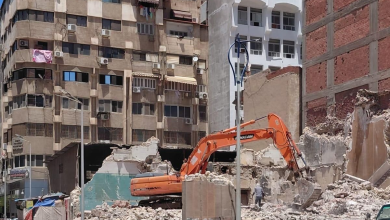
We have suffered painful losses, including the demolition of several buildings in the mixed neighbourhood and the conversion of heritage buildings to inappropriate commercial uses. We have also lost important public parks such as the zoo, the Bride of the Nile and Happy Land. But despite this, we never feel that what we are doing is futile. Every gain, no matter how small, gives us the energy to continue.
Finally, what does the Save Mansoura initiative need today to become more effective and sustainable?
We need real support from officials and awareness that the initiative is not just a critic, but a partner striving for the same goal: a more beautiful city and a preserved history. If this partnership is achieved, we will all succeed, and the city will be the biggest winner.
Read also:
Eid celebrations change in the streets of Mansoura: Batina takes over the city

Your article helped me a lot, is there any more related content? Thanks! https://accounts.binance.com/es-MX/register-person?ref=GJY4VW8W
Thank you for your sharing. I am worried that I lack creative ideas. It is your article that makes me full of hope. Thank you. But, I have a question, can you help me?
Can you be more specific about the content of your article? After reading it, I still have some doubts. Hope you can help me. https://www.binance.com/register?ref=IXBIAFVY
Thanks for sharing. I read many of your blog posts, cool, your blog is very good. https://www.binance.info/register?ref=IXBIAFVY
I don’t think the title of your article matches the content lol. Just kidding, mainly because I had some doubts after reading the article.
Your point of view caught my eye and was very interesting. Thanks. I have a question for you.
I don’t think the title of your article matches the content lol. Just kidding, mainly because I had some doubts after reading the article.
Thank you for your sharing. I am worried that I lack creative ideas. It is your article that makes me full of hope. Thank you. But, I have a question, can you help me?
Thanks for sharing. I read many of your blog posts, cool, your blog is very good.
Your article helped me a lot, is there any more related content? Thanks! https://www.binance.com/register?ref=IHJUI7TF
Your point of view caught my eye and was very interesting. Thanks. I have a question for you. https://www.binance.com/futures/ref?code=L4EUT9FG
Your article helped me a lot, is there any more related content? Thanks! https://www.binance.bh/register?ref=QCGZMHR6
I don’t think the title of your article matches the content lol. Just kidding, mainly because I had some doubts after reading the article. https://www.binance.info/register?ref=QCGZMHR6
Your point of view caught my eye and was very interesting. Thanks. I have a question for you.
Your point of view caught my eye and was very interesting. Thanks. I have a question for you.
Can you be more specific about the content of your article? After reading it, I still have some doubts. Hope you can help me.
Can you be more specific about the content of your article? After reading it, I still have some doubts. Hope you can help me.
I don’t think the title of your article matches the content lol. Just kidding, mainly because I had some doubts after reading the article.
Your point of view caught my eye and was very interesting. Thanks. I have a question for you.
Your point of view caught my eye and was very interesting. Thanks. I have a question for you.
Thanks for sharing. I read many of your blog posts, cool, your blog is very good.
Your article helped me a lot, is there any more related content? Thanks!
Thanks for sharing. I read many of your blog posts, cool, your blog is very good. binance anm”alan
Thank you for your sharing. I am worried that I lack creative ideas. It is your article that makes me full of hope. Thank you. But, I have a question, can you help me?
Thanks for sharing. I read many of your blog posts, cool, your blog is very good. https://accounts.binance.com/register/person?ref=QCGZMHR6
Thank you for your sharing. I am worried that I lack creative ideas. It is your article that makes me full of hope. Thank you. But, I have a question, can you help me?
Thanks for sharing. I read many of your blog posts, cool, your blog is very good. https://accounts.binance.bh/de-CH/register?ref=W0BCQMF1
Your point of view caught my eye and was very interesting. Thanks. I have a question for you.
Your point of view caught my eye and was very interesting. Thanks. I have a question for you. https://www.binance.com/en/register?ref=JHQQKNKN
Your article helped me a lot, is there any more related content? Thanks! https://www.binance.com/futures/ref?code=JW3W4Y3A
Thanks for sharing. I read many of your blog posts, cool, your blog is very good.
Your point of view caught my eye and was very interesting. Thanks. I have a question for you. https://www.binance.com/register?ref=IXBIAFVY
Can you be more specific about the content of your article? After reading it, I still have some doubts. Hope you can help me. https://accounts.binance.bh/ru-UA/register?ref=JVDCDCK4