
“Created by the Poor, Stolen by the Rich” — How Football Became a Billion-Dollar Empire
From medieval mud to a multi-billion-dollar empire, discover how football evolved from a lawless working-class ritual into the world’s most powerful commercial industry.
“Created by the poor, stolen by the rich.” With this searing declaration, fans of the Tunisian club El Africain raised a massive banner during a 2017 clash against Paris Saint-Germain. It was a poignant nod to an age-old grievance: the bittersweet transformation of football from a raw, populist pastime born in streets and dirt squares into a behemoth global industry churning out billions of dollars. This profound evolution is meticulously documented in Mickaël Correia’s A People’s History of Football.
Although the Football Association in England established the first uniform rules of the game in 1863—effectively birthing the modern sport we recognize today—its lineage stretches back into antiquity. How did this anarchic, populist game migrate from the chaotic streets of rural villages to become a global phenomenon unifying billions of devotees? And what socio-cultural currents catalyzed its birth and worldwide conquest?
The Genesis of the Game
How did football truly begin? Perspectives diverge on the exact genesis of this sport, known globally as football and recognized as the planet’s most popular pastime. According to These Football Times, while the game did not assume its modern, codified structure until 1863 with the founding of the English Football Association, its roots are anchored centuries deeper.
That historic 1863 meeting laid foundations that endure to this day, such as the post-goal kickoff, the strict ban on handling the ball, and early offside parameters that evolved into contemporary rules. Thus, England stands as the cradle of organized football, yet the sport did not materialize from a vacuum. It emerged gradually from crude ball games that had occupied human societies since the Middle Ages, and indeed, ancient times.
Though those ancient iterations differed vastly from modern football in discipline and structure, they mirrored an innate human instinct: the desire to manipulate a sphere with the feet. When exactly did this begin?
Since antiquity, humans have engaged in games involving a ball and the feet—with historical traces found among the Greeks, Egyptians, and Chinese dating as far back as 2500 BC.
While no direct evolutionary lineage links these ancient pastimes to the contemporary sport, these recreational rituals illuminate humanity’s timeless inclination toward ball play, whether for social cohesion, leisure, military conditioning, or sacred ceremonial rites.
Prehistory of the Pitch
Ancient ball games shared rudimentary mechanics, alternating between hands, feet, or sticks to dictate the ball’s movement. According to LiveAbout, the Roman game of harpastum was anchored entirely in possession, challenging each team to retain the ball for as long as possible.
Meanwhile, the ancient Greeks contested a similar, highly physical game called episkyros. Both pastimes bore a far closer resemblance to modern rugby than football. The treatise Origins: A Prehistory of Football interrogates four distinct ball traditions across disparate eras and geographies, focusing its opening chapters on the Japanese kemari, Mesoamerican ball games, the classical spheres of Greece and Rome, and the Chinese game of cuju.
According to These Football Times, a marble stele dating back to roughly 400 BC depicts a man bending his leg, expertly balancing a sphere upon his thigh. Scholars deduce he was engaged in episkyros, a sport where players used both hands and feet to drive the ball past the opponent’s boundary lines.
Though the structural overlaps with modern football are sparse, this striking ancient relief compelled FIFA to formally recognize episkyros as an early ancestor of the sport.
The Chinese Court and the Global Cosmos
The ancient game bearing the closest resemblance to contemporary football is the Chinese discipline of tsu’chu (cuju), which translates literally to “kick ball.” Serving as a rigorous training exercise for soldiers, its origins trace back to the Han Dynasty, fluctuating between 206 BC and 220 AD.
As detailed by LiveAbout, tsu’chu required players to orchestrate a small leather ball into a net suspended between high bamboo poles, strictly forbidding the use of hands. The singular, stark divergence from the modern game lay in the height of the goal, which hovered a staggering 30 feet in the air.
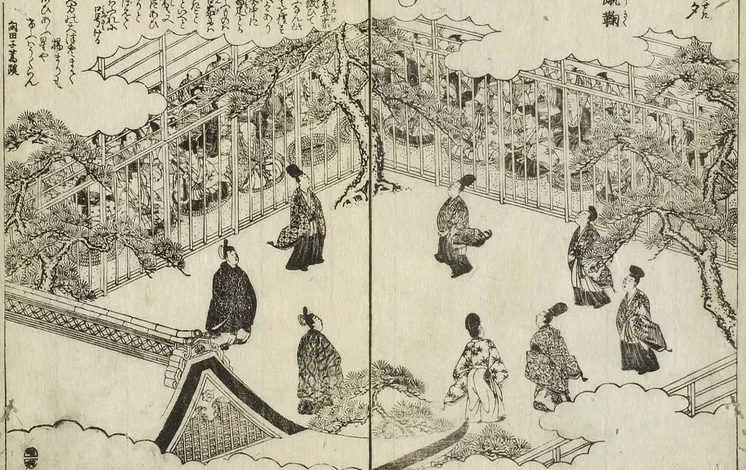
Subsequently, a constellation of foot-based ball games sprouted across the globe. Among them was the Japanese kemari, a traditional, ritualized exhibition practiced for over a millennium that survives to this day alongside China’s cuju.
Across the Atlantic, Native Americans practiced a game known as pasuckuakohowog, while the Indigenous peoples of Australia engaged in the rhythmic movements of marn grook.
Britain: The Crucible of the Modern Game
Moving into the modern era, long before football coalesced into its definitive shape, the British Isles played host to a myriad of folk games that foreshadowed the world’s favorite sport.
Football’s European evolution gained momentum during the Middle Ages. By the ninth century, communities in England plunged into games centered on kicking an inflated pig’s bladder, a practice so disruptive it faced repeated royal prohibitions throughout British history.
These historical matches mobilized vast, unruly multitudes, resembling clashing mobs far more than disciplined sports teams. The competitive fray routinely spilled across entire townships as players fought to propel the bladder into the rival faction’s territory.
Folk Football and Anarchy
Though Britain is heralded as the birthplace of modern football, it possessed no organized ball sports in antiquity. The Romans introduced harpastum during their occupation of the island, but indigenous ball games only truly crystallized after their departure in the early fifth century.
Throughout the medieval epoch, “folk football” flourished—a chaotic, lawless spectacle devoid of standardized rules or capped player numbers, often engulfing entire villages.
Among the most famous of these spectacles were Shrovetide matches, where villagers fiercely competed to drive an inflated pig’s bladder toward the parish church of their rivals. Due to the inevitable civic disruption and violence, a succession of English monarchs attempted to banish the game. Yet its deep-rooted popularity among the populace resisted eradication, remaining a stubborn fixture of working-class life for centuries before evolving into the beautiful game.
These sprawling contests lacked any centralized codification; they were defined by atmospheric violence and tactical anarchy. Scoring a goal was an exceedingly rare feat given the unbound nature of the pitch.
According to LiveAbout, Shrove Tuesday hosted the zenith of these annual confrontations, transforming the sport into a massive social spectacle that drew townspeople and villagers alike to participate or spectate. However, as industrialization swept the nation, the shrinking architecture of cities and the grueling schedules imposed on laborers suffocated the traditional folk game.
Stripping the Poor of Their Pastimes
A People’s History of Football illuminates the stark socio-political mechanics behind the suppression of folk football during that era, noting:
“A Liverpool correspondent for The Times wrote in 1842: ‘The poor have been stripped of all their games, all their festivals, and everything that could offer them solace or recreation.'”
The text continues:
“This synchronized precisely with the Highway Act of 1835, which explicitly banned the playing of football on town streets, dictating that it must be confined to fields or designated enclaves.”
The Aristocratic Shift
While folk football raged through the modest working classes of Britain, Renaissance Italy cultivated a far more structured alternative enjoyed exclusively by the nobility, known as calcio.
According to These Football Times, though calcio relied heavily on the use of hands, it captured the imagination of British aristocrats traveling abroad. They saw in it a refined, disciplined alternative to the chaotic folk games of their homeland. As the wealthy elite took interest, football found a sanctuary within Britain’s elite public schools and private academic institutions, where its rules gradually began to crystallize. It was during this formative phase that football and rugby began to diverge, carving out separate identities.
With the refining of laws and tactical structures, the sport was finally primed for its definitive codification—a milestone achieved in 1863 with the birth of the Football Association.
The Emergence of the Modern Discipline
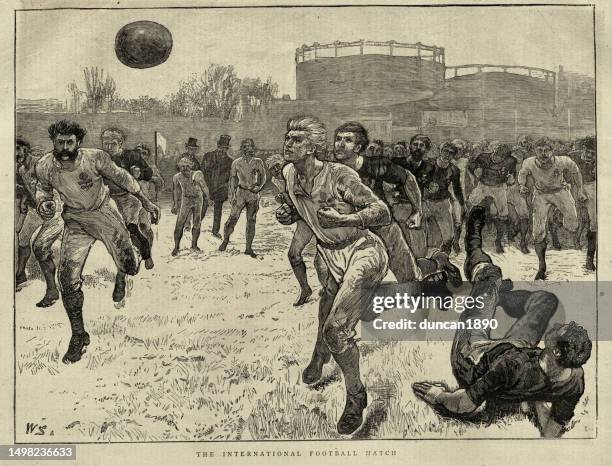
Once codified in Britain, the modern game radiated outward, taking root in Germany, Italy, France, and across the European continent. The genuine metamorphosis into the sport we know today unfolded in British schoolyards during the first half of the nineteenth century, as academic institutions sought to impose structural discipline upon the game.
At the time, the term “football” encompassed an array of disparate styles—some permitting handling and violent physical tackling—but the distinct silhouette of the contemporary game was steadily emerging.
Eventually, formal goals were anchored at opposite ends of the pitch, the specialized role of the goalkeeper materialized, and teams began adopting sophisticated tactical formations. These innovations gradually curbed the raw violence that had characterized the ancient folk variations.
Nonetheless, uniformity remained elusive. Some schools favored a handling and bruising style akin to rugby, while others championed a game anchored purely in kicking and delicate dribbling. Ultimately, the enclosed courtyards of these schools acted as a crucible, minimizing the wild chaos of the past.
The Evolution of Law
As the codification of the game advanced through nineteenth-century Britain, dedicated football clubs began to crystallize both within elite academies and the broader community.
Despite this increasing organization, the border separating rugby from modern football remained blurred for years. On-pitch collisions were frequent, and hacking—the deliberate kicking of an opponent’s shins—was perfectly permissible under certain school rules, provided the victim was not being held at the time.
According to the historical essay The Search for the Roots of Football in China, the Cambridge Rules were drafted at Cambridge University in 1848. This crucial blueprint allowed students to continue playing a unified game after graduation, catalyzing the proliferation of adult football clubs. At that juncture, touching the ball with the hand was still tolerated under specific conditions.
The Architecture of the Association
The colloquialism “soccer” was birthed from a playful abbreviation of the word “Association,” utilizing the “-er” suffix fashionable among the student bodies of the Rugby School and Oxford University.
Young scholars frequently used this linguistic shorthand to truncate various proper nouns. The word “Association” itself became immortalized on October 26, 1863, with the historic founding of the English Football Association (FA).
The Rise of professionalism
In 1872, the inaugural FA Cup tournament commenced, sparking a wave of affiliations that saw the Association’s ranks swell to 128 clubs by 1887. From that milestone onward, a centralized, universal rulebook governed the sport.
By 1888, the Football League was established, dominating the north and midlands of England. Yet, the FA regulations of that era stood in stark contrast to the modern industry; they strictly dictated that players remain amateurs, forbidden from receiving wages. This purist stance held firm until the late 1870s, when clubs began charging spectators entry fees. Players, observing the capital accumulated from their labor on the pitch, grew dissatisfied and demanded financial compensation for their rigorous training and time. As stadium gates swelled alongside soaring revenues, clubs capitulated, embracing paid wages and transforming football into a fully professional sport.
It was not long before continental Europe surrendered to the British obsession. Domestic leagues began sprouting across the globe: the Netherlands and Denmark ignited their competitions in 1889, followed by Argentina in 1893, Chile, Switzerland, and Belgium in 1895, Italy in 1898, Germany and Uruguay in 1900, and Hungary in 1901. France established its formal league in 1903, despite having adopted the British sport years prior.
The Dawn of FIFA
The Fédération Internationale de Football Association (FIFA) was founded in Paris in 1904 by seven pioneering nations: Belgium, Denmark, France, the Netherlands, Spain, Sweden, and Switzerland. On that very day, Germany formally declared its intention to join the alliance.
By 1930, the inaugural FIFA World Cup was contested in Uruguay. At the time, FIFA’s global family had grown to 41 member nations. Since that historic summer, the tournament has stood undisputed as the absolute zenith of the footballing world.