Woven with Golden Hands: How the Looms of Bani Adi Narrative the Tale of Kilim and Its Women
Discover how the women of Bani Adi preserve Egypt’s ancient Adawi kilim weaving heritage against rising economic challenges.
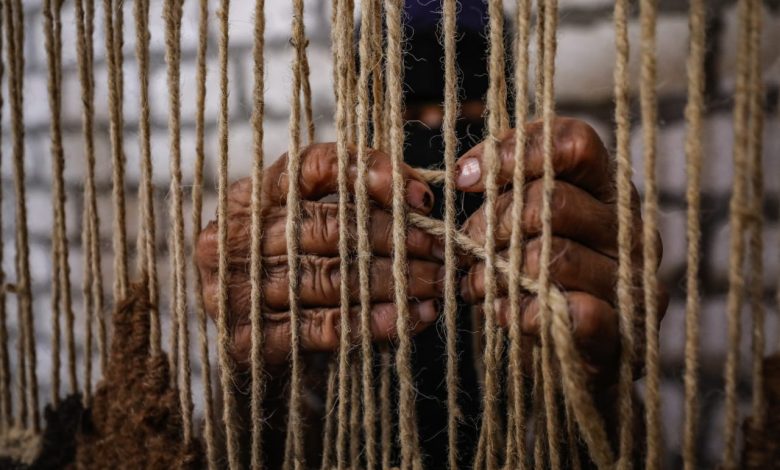
The Craft of Adawi Kilim in Asyut – Photo: Ahmed Mostafa
Across the taut strings of the manual loom and through vibrant skeins of wool, a timeless narrative unfolds in the village of Bani Adi, nestled within the Manfalut center of the Asyut Governorate. Here, one of Upper Egypt’s oldest heritage crafts, the making of kilim (traditional handwoven tapestries), endures. Mothers and grandmothers pass the secrets of the trade through generations, safeguarding a craft that has long shaped the identity of the village and provided a vital livelihood for dozens of families. For hours on end, women sit before the intricate lattice of woolen threads, transforming raw, simple materials into artistic canvases that bear the indelible stamp of authentic Egyptian heritage.
The Art of the Adawi Kilim
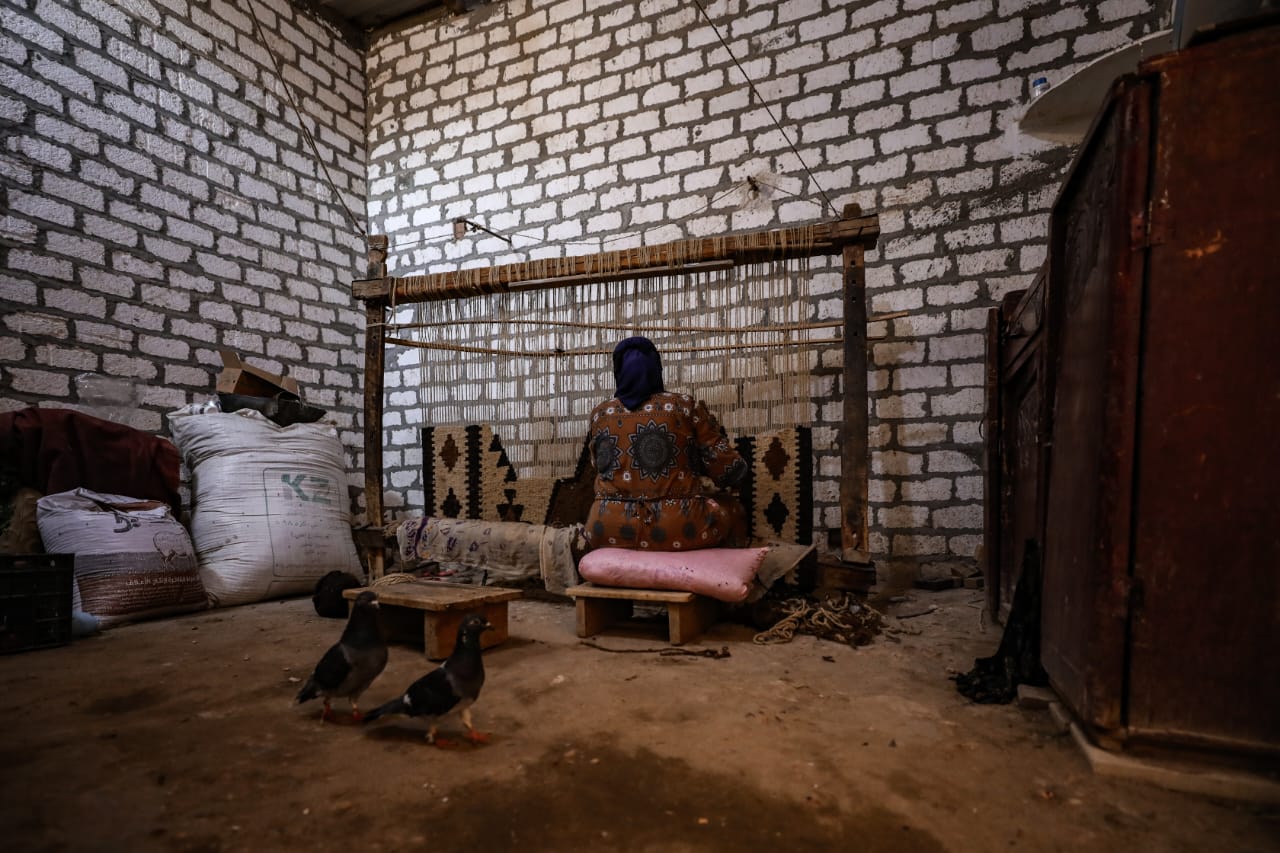
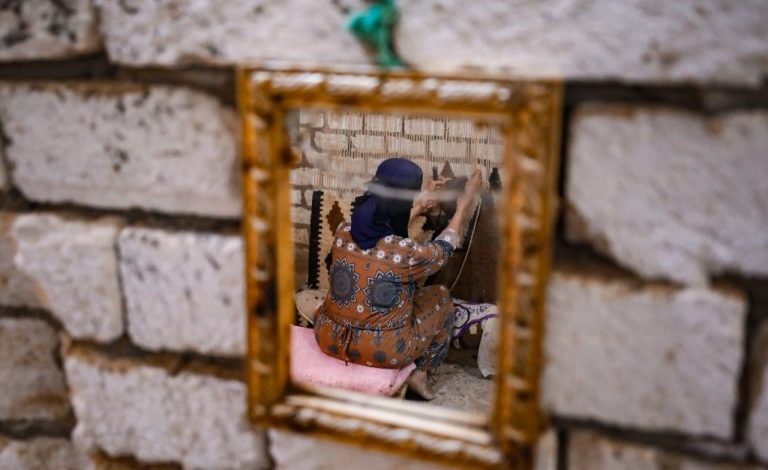
Inside a modest room in the village of Bani Adi, Um Yasser Ahmed, a woman in her fifties, sits before the wooden loom that has accompanied her for decades, her hands weaving through the threads with an expertise nurtured since childhood. She inherited the craft of making Adawi kilim from her mother, who in turn learned it from her grandmother, rendering the trade a cherished family legacy passed down exclusively through the women of the lineage.
Speaking to Bab Masr, she explains that her day begins the moment she finishes her domestic chores. She then sits alongside her daughter before the loom to compose and weave a piece of kilim, emphasizing that this craft demands far more than raw skill; it requires an immense reservoir of patience and precision. It is this meticulous devotion that has elevated the craft into one of the most prominent heritage industries for which Bani Adi has been renowned for centuries.
A Journey of Resilience Upon the Loom
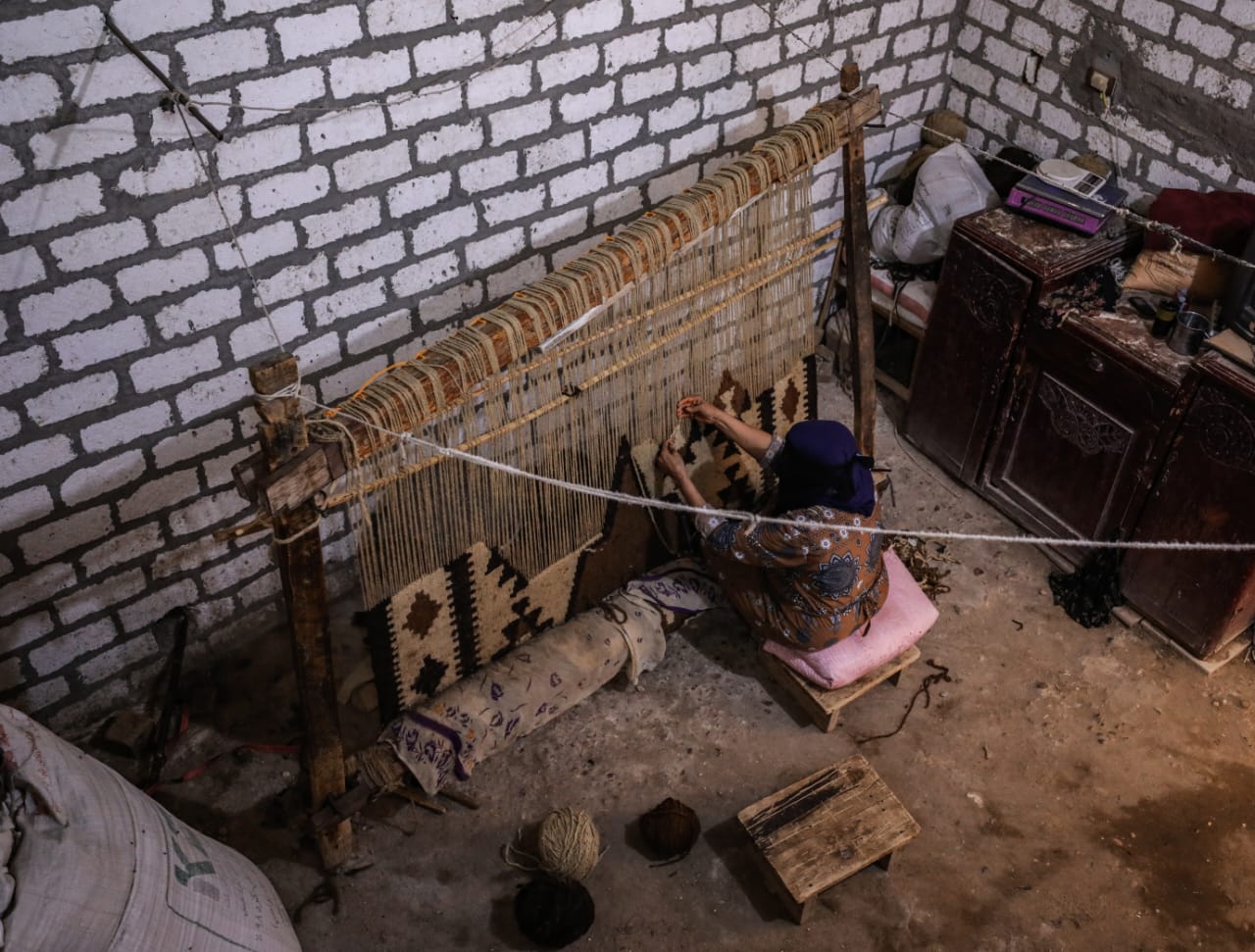
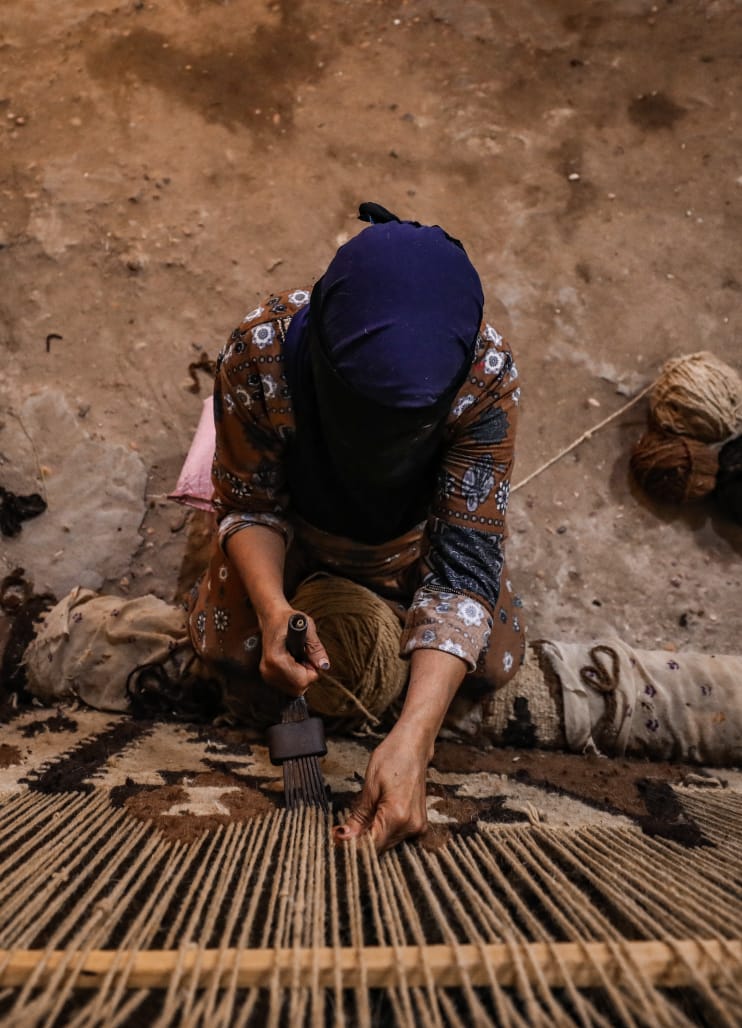
“The loom and I share a profound story of struggle, a partnership spanning more than 25 years,” Um Yasser says. “Together, we play a melody using the khelala (a traditional wooden weaving comb) upon the strands of sheep’s wool to produce the finest quality of kilim in Asyut, and indeed, in all of Egypt. I work in cooperation with a merchant who purchases the loom for us, which I then assemble inside one of the rooms of my home, and he supplies the yarn.”
She continues: “My daughter and I labor over the loom, while the merchant handles the marketing and sales to customers. We receive 500 Egyptian pounds for each piece we create, though the amount fluctuates depending on the type of the piece and its dimensions.”
“I manufacture two varieties of the Adawi kilim,” she notes. “The first is spread across floors and used just like carpets, known as the mafrash (large floor tapestry), which was more widely used in the past. The second variety is called the farashiya (small decorative cover), a smaller textile used to drape over sofas and wooden benches in traditional madafeh (guest reception halls) and homes. It takes only three days to produce, and it is currently the most requested by customers.” She adds that a large-scale kilim demands exhausting effort and a stretch of time that can reach up to ten days to complete.
Um Yasser reflects on the physical toll of her artistry: “Sitting before the loom and spinning is exhausting, but despite the fatigue, absolute focus and continuous work are non-negotiable because it is our sole source of income.”
“We are fighting to preserve our heritage, especially since the production of Adawi kilim has dwindled due to the skyrocketing costs of raw materials,” she admits. “My dream is that over time, we will establish our own independent project away from the merchant, which would increase our income and give us the drive to continue in this craft and enter the labor market through a different gateway.”
The Heritage of the Ancestors
Dr. Mohamed Abdel Rahman Al-Samani, Vice President of the Environmental Protection Association in Asyut and a son of Bani Adi village, tells Bab Masr that the Adawi kilim is an ancient heritage industry inherited across generations within the village. It relies entirely on natural materials, where threads are harvested from sheep’s wool after it is spun.
“In the beginning, the processing of raw materials was done in a primitive manner,” Al-Samani explains. “However, with industrial progress, specialized factories emerged to process raw materials from sheep’s wool at a much faster pace, which made the endeavor significantly easier.”
He continues: “The reality is that the Adawi kilim industry, despite being a heritage craft that represents a magnificent legacy not just for Asyut but for the whole of Egypt, has never received its fair share of marketing. Yet, despite this neglect, the Adawi kilim retains its historical value in terms of quality, durability, and sheer resilience. It still commands its own niche markets and boasts dedicated connoisseurs who acquire it to use as furnishings or as tapestries to adorn home walls, imparting an aesthetic and heritage touch.”
“For some, this craft embodies the very scent and soul of history, evoking a deep nostalgia for the past,” Al-Samani observes. “However, the majority of the younger generations do not grasp the value of this industry, a disconnect that perhaps stems from its rarity and its high prices, driven by the cost of raw materials and the grueling effort invested in its creation. We are trying, to the best of our ability, to revive this industry in the village of Bani Adi by teaching new generations, so that it may return to its former glory, standing as the pride of our village and a symbol of the heritage we hold dear.”
The Alchemy of Creating Adawi Kilim
Detailing the stages of crafting the kilim, Al-Samani says: “The process begins with the shearing and gathering of sheep’s wool. It is then transported to a specialized factory where it is washed, cleansed, and subjected to several refinement stages before being placed into the deeba (a carding machine), which transforms the wool until it resembles soft cotton.”
“Next comes the combing phase, where the wool assumes a texture akin to cotton candy,” he adds. “Then arrives the final stage: spinning and producing the actual threads.” He notes that the price of a kilogram of thread now reaches 25 pounds, while a spool of wool costs around 225 pounds, with prices determined by weight. He points out that current prices soar to nearly four times what they were in the past.
Regarding the pricing of the finished products, Al-Samani clarifies that the price of a large mafrash reaches up to 4,000 pounds per piece, while the smaller farashiya costs around 600 pounds. These products are sold across the governorates of Upper Egypt, from Aswan to Minya, which remain the regions most anchored in the use of Adawi kilim.
A factory for Adawi kilim raw materials
Al-Samani points out that years ago, Bani Adi housed a dedicated factory for producing the raw materials specifically for the Adawi kilim, which served as one of the most critical factors helping merchants and craftspeople reduce the costs of cleaning wool and extracting threads.
“Regrettably, however, the factory was closed,” Al-Samani laments. “We are now forced to transport the raw wool to factories outside the Manfalut center to produce the materials used in making the Adawi kilim, which contributes heavily to the inflation of production costs. We hope in the near future to establish a new factory that will alleviate a major portion of these production expenses.”
Al-Samani concludes with a forward-looking vision: “We hope to open foreign markets to export Adawi kilim products, because that will aid in the sustainability of this craft and its expansion on a wider scale, shielding it from extinction. The Adawi kilim requires a massive marketing effort that far exceeds the capacity of the local villagers to undertake alone; therefore, the relevant state authorities must shoulder this responsibility to safeguard this invaluable cultural legacy.”