
140 Sites Destroyed: Is the Threat Against Iranian Heritage Being Realized?
Iran’s heritage sites face unprecedented danger as modern conflict threatens to erase millennia of Persian architectural and cultural history.
“The destruction of 140 archaeological and historical sites in Iran, with losses estimated at approximately 95 million dollars.” This was the grim preliminary assessment from the Iranian Ministry of Cultural Heritage regarding the impact of American and Israeli strikes on the nation’s ancestral landmarks. This devastation persists despite the presence of the internationally recognized “Blue Shield” (a protective emblem for cultural property), designed to safeguard such hallowed grounds from military aggression. In this report, Bab Misr surveys the Iranian sites currently enshrined on the UNESCO World Heritage list that now stand in the crosshairs.
Ruins of Antiquity
Seyed Reza Salehi, Iran’s Minister of Cultural Heritage, Tourism, and Handicrafts, has denounced the targeting of more than 140 historical sites during the ongoing conflict involving the United States and the Israeli occupation. According to the Xinhua news agency, Salehi characterized this destruction as a “grand crime,” asserting: “We are a nation possessed of a deep history and ancient civilization; our enemies fail to grasp that they cannot confront a people whose roots are so firmly anchored in the past.”
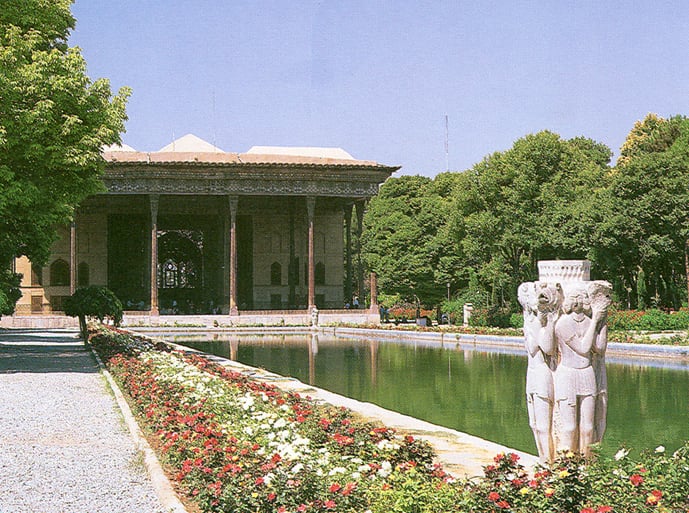
Describing the scars of war, the Minister noted that strikes have reached historical landmarks across 20 Iranian provinces. The Ministry moved immediately to initiate restoration efforts, noting that the list of damaged sites includes some of the world’s most exquisite architectural triumphs. Among the casualties are the Golestan Palace and Saadabad Palace in the capital, Tehran, as well as the Chehel Sotoun (Forty Columns) Palace in Isfahan. Salehi described these sites as “masterpieces of Iranian architecture” that mirror the evolution of various historical epochs.
A Blueprint for Salvation
In statements to Xinhua, Minister Salehi outlined urgent measures to rehabilitate the fractured edifices. The initial phase focused on emergency preservation and stabilization, alongside the comprehensive documentation of losses. These findings have been formally submitted to international bodies, including the United Nations, UNESCO, and the Islamic World Educational, Scientific and Cultural Organization (ICESCO).
The financial toll on these 140 landmarks is estimated at 7.5 trillion Tomans (roughly 95 million dollars). In response, the Ministry has launched a public appeal, calling upon Iranians both at home and abroad to contribute to the monumental task of restoration.
The Echo of a 2021 Threat
The question remains: was the targeting of these cultural treasures intentional? According to a 2020 report by the BBC, former U.S. President Donald Trump stated during his previous administration that he had identified a list of 52 Iranian targets. He explicitly noted that heritage sites were among those that could face American military action.
Twenty-Nine Wonders Under the UNESCO Banner
Iran is home to approximately 43,000 registered cultural landmarks, with 29 specifically inscribed on the UNESCO World Heritage list. The nation is ranked among the top ten globally for its cultural wealth, featuring sites that date back millennia and represent the zenith of architectural and natural wonder. These sites illuminate the brilliance of Iranian civilization across the ages. Key landmarks include:
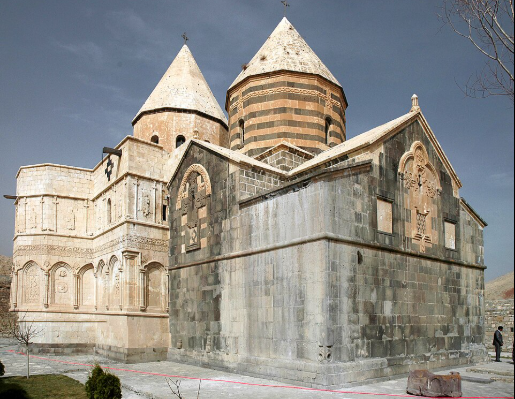
The Armenian Monastic Ensembles of Iran
Located in the northwest within the Azerbaijan province, this site comprises three Armenian Christian monasteries built between the 7th and 16th centuries. Inscribed by UNESCO in 2008, the ensembles reflect the profound cultural dialogue between Armenian traditions and Iranian civilizations.
Bam and its Cultural Landscape
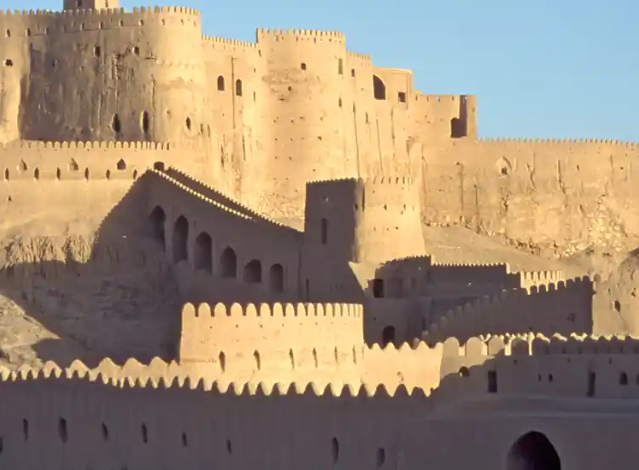
According to UNESCO, the city of Bam is situated in a desert environment on the southern edge of the Iranian high plateau. Its origins trace back to the Achaemenid period (6th to 4th centuries BC), reaching its commercial height between the 7th and 11th centuries as a vital crossroads for the silk and cotton trade. Life in this oasis was sustained by Qanats (underground irrigation tunnels). The Arg-e Bam (Citadel of Bam) remains the preeminent example of a medieval fortified city constructed using the indigenous Chineh (layered mud) technique.
Bisotun
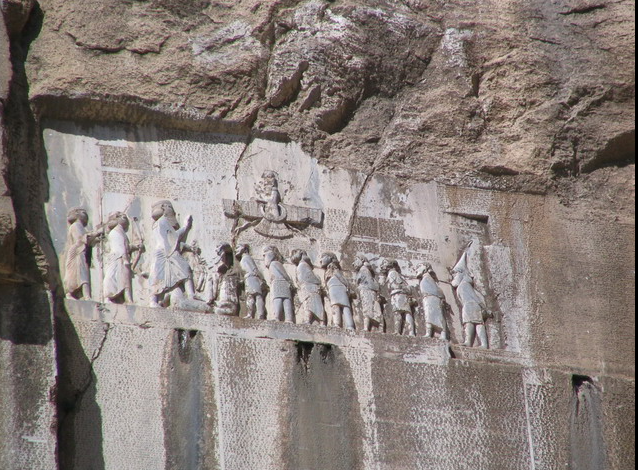
Bisotun stands apart from other archaeological sites; it is a monumental bas-relief featuring cuneiform inscriptions carved into a limestone cliff. Located along the ancient trade route linking the Iranian high plateau with Mesopotamia, UNESCO notes that its reliefs span from prehistory through the Achaemenid, Sassanian, and Ilkhanid eras. It was commissioned by Darius I upon his ascension to the Persian throne in 521 BC. The site contains 1,200 lines of inscriptions in three languages, chronicling Darius’s battles against the pretenders who sought to dismantle the empire founded by Cyrus the Great.
The Cultural Landscape of Maymand
This isolated, semi-desert region near the mountains of central Iran is inhabited by semi-nomadic agro-pastoralists. The valley is famous for its troglodyte dwellings carved directly into the soft rock. The homes are divided into two types: the Markhaneh (circular, semi-subterranean houses protected from the wind) and the Mashkadan (above-ground structures built with dry stone walls and thatched branch roofs).
Lut Desert
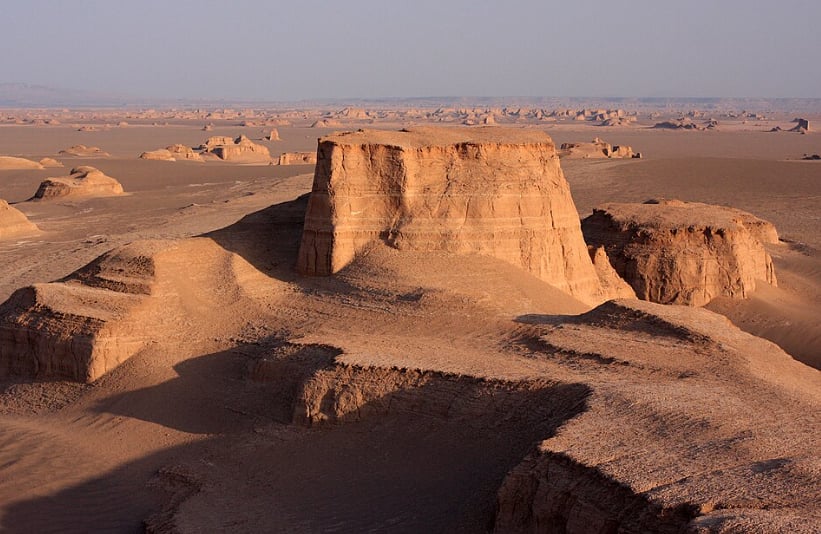
The Lut Desert, or Dasht-e Lut, situated in eastern Iran within the Kerman province, was inscribed as a natural World Heritage site in 2016. It is characterized by some of the most extreme temperatures on Earth and the lowest recorded rainfall.
Gonbad-e Qabus
This historical beacon is the mausoleum of Qabus ibn Wushmagir, erected in 1006 AD in northeastern Iran. It is the sole remaining vestige of Ziyarid-era Gorgan, a former center of arts and sciences decimated during the Mongol invasions of the 14th and 15th centuries. The tower is a technically innovative masterpiece of Islamic architecture that influenced tomb construction across Anatolia and Central Asia. Built from unglazed fired brick, it embodies the flourishing of mathematics and science in the Islamic world at the dawn of the first millennium.
The Cultural Landscape of Hawraman/Uramanat
This remote, mountainous landscape in the heart of the Zagros Mountains (spanning Kurdistan and Kermanshah provinces) bears witness to the traditional culture of the Hawrami people. This Kurdish tribe practices a unique form of semi-nomadic pastoralism and agriculture, defined by their vertical tiered villages.
Naqsh-e Jahan Square
Located in Isfahan and dating back to the 17th century under the reign of Shah Abbas I, this square reflects the opulence of Safavid architecture and Persian urban planning. The square is anchored by a complex of magnificent buildings and two-story arcades. It also features the Royal Mosque (Masjid-e Shah), famed for its intricate Islamic tilework, and the Sheikh Lotfollah Mosque, celebrated for its delicate artistry. A palace portico leads directly into the grand entrance of the bazaar.
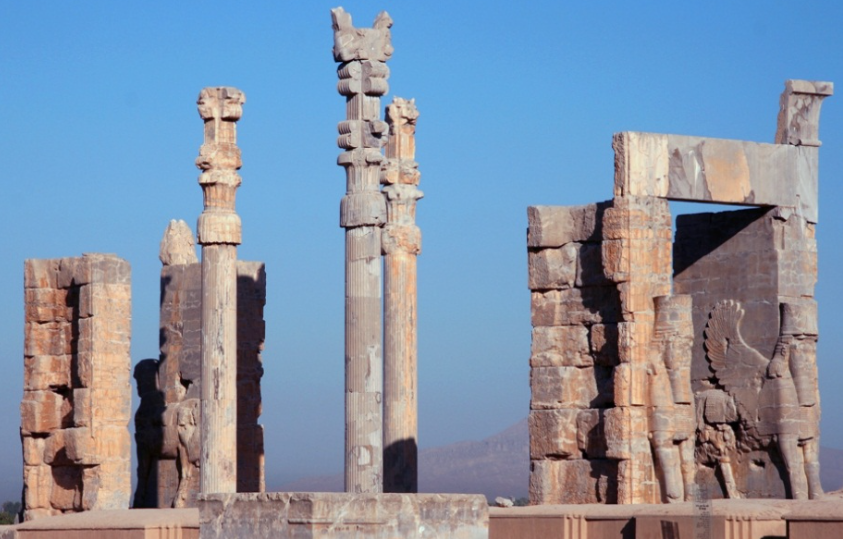
The City of Persepolis
The genesis of Persepolis, the ceremonial capital of the Achaemenid Empire, dates to 518 BC under Darius I. He designed the city to serve as a potent symbol of power and prestige. Perched atop a massive terrace, the complex of palatial buildings—known as the “City of the King of Kings”—was influenced by Mesopotamian styles. Designed as a stage for imperial celebrations, its grand terrace remains a physical manifestation of Achaemenid kingship, where images of the monarch are immortalized at the summit.
Sheikh Safi al-Din Khānegāh and Shrine Ensemble
Located in Ardabil and originating between the 16th and 18th centuries, this site represents the spiritual heart of Sufi heritage and the brilliance of traditional Iranian architecture. The ensemble includes a library, a mosque, a school, and mausoleums. The path to the shrine of Sheikh Safi al-Din a mystic of the 13th and 14th centuries is divided into seven stages, symbolically mirroring the seven stages of the Sufi mystical journey.
Shushtar Historical Hydraulic System
This system stands as a testament to the engineering genius of Iranian civilization. Dating back to Darius the Great in the 5th century BC, it is one of the most remarkable examples of ancient hydraulic engineering. It utilizes a sophisticated network of canals and tunnels to divert water to the city, harnessing the current’s power to operate watermills. The system creates a series of dramatic waterfalls that flow over cliffs into basins before irrigating the southern plains.
Tabriz Historic Bazaar Complex
This commercial heart dates to the 13th century in the city of Tabriz, Azerbaijan province. As a former Safavid capital, it was a pivotal center for cultural and economic exchange along the Silk Road. The bazaar consists of a vast network of interconnected, brick-covered structures that maintained their vital role despite Ottoman expansions until the late 18th century.
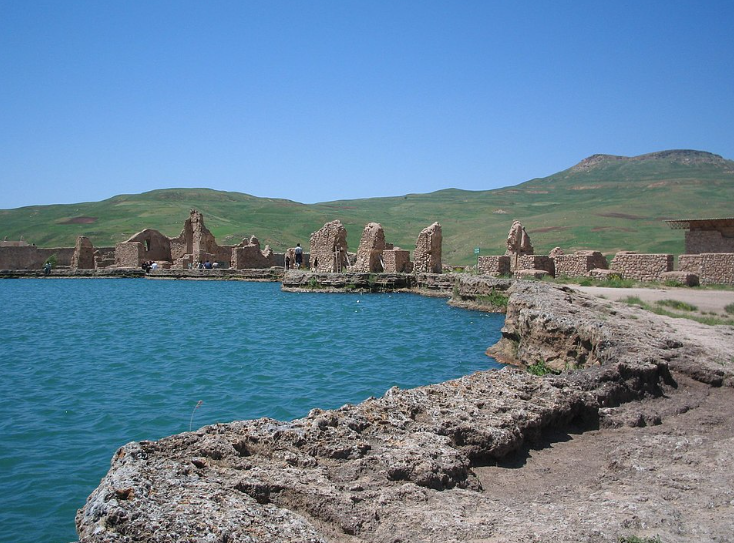
Takht-e Soleyman
The archaeological site of Takht-e Soleyman (The Throne of Solomon) sits in a valley within a volcanic mountain region. It features a Zoroastrian sanctuary rebuilt during the Ilkhanid (Mongol) era in the 13th century, alongside a Sassanian-era temple from the 6th and 7th centuries. The site is noted for its distinctive Islamic architectural planning and the remains of its fire temples and palaces.
The Persian Gardens
This World Heritage entry comprises a collection of royal estates known as Bagh-e Irani (Persian Gardens). The nine gardens, spread across various provinces, reflect the evolution of garden design since the 6th century BC under Cyrus the Great. Divided into four sectors, they utilize water for both irrigation and ornamentation, symbolizing the biblical Garden of Eden and the Zoroastrian elements of sky, earth, water, and flora.
The Tentative List: Heritage in Waiting
The Tentative List includes sites that the state intends to nominate for future World Heritage status, representing a preliminary inventory of assets with immense cultural value. Several sites have been on this list since 1997, including the Jameh Mosque of Isfahan, the historical ensemble of Qasr-e Shirin, Naqsh-e Rostam and Naqsh-e Rajab, and the Sialk Silk Mound.
Iran has an additional 57 sites awaiting registration with UNESCO. According to the Adventure Iran portal, these sites along with ten others form part of the “Classic Route of Iran,” the country’s most celebrated tourist path. This route stretches from Tehran, skirts the southern Caspian Sea, and descends to Shiraz near the Persian Gulf. Key destinations along this path include the rock reliefs of Naqsh-e Rostam in Marvdasht, the city of Shiraz in Fars province, the Sialk Mound in Kashan, and the historic city of Meybod in Yazd.
The list also features the historic village of Abyaneh in Isfahan, the Silk Road, the Zandieh Ensemble in Fars, the traditional Persian House of the Central Plateau, and the Saint Amenaprkich Monastery in Shiraz.