
Shadows Over Antiquity: The Occupation’s Assault on Lebanon’s Living History
The Israeli occupation’s impact on Lebanon’s ancient soul, detailing the systematic destruction of UNESCO-listed Roman, Crusader, and Phoenician landmarks from Tyre to Shama.
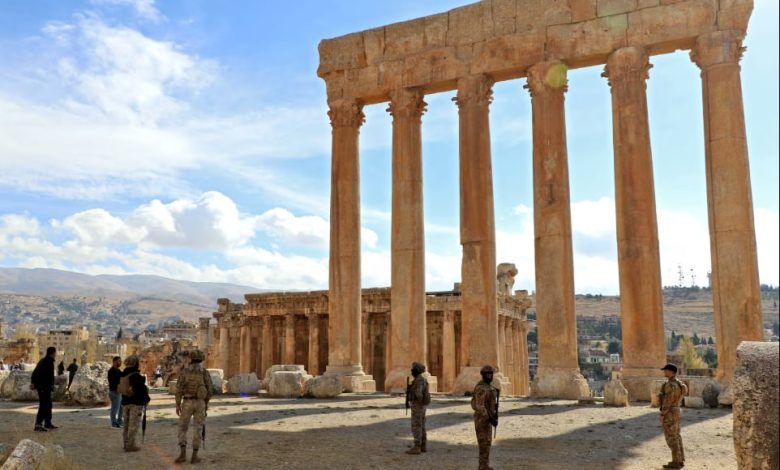
The reach of Israeli occupation strikes across Lebanon has extended far beyond the immediate horizon of conflict, piercing the very heart of the nation’s historical memory. Monuments that have stood as silent sentinels for centuries Roman, Crusader, and Phoenician now face an existential threat. While some sites have been reduced to rubble despite their hallowed status on UNESCO’s World Heritage list, others teem on the precipice of extinction. Bab Misr charts the geography of these cultural casualties, mapping the scars left by a campaign of bombardment that has shattered Lebanon’s architectural soul.
The Desecration of a UNESCO Sanctuary
In early April, reports confirmed the destruction of the Shrine of Prophet Shamoun al-Safa in the village of Shama, near Tyre (Sur). A site enshrined within UNESCO’s protective ambit, the shrine was leveled by Israeli airstrikes targeting southern Lebanon.
According to Middle East Monitor, the shrine a locus of profound historical and spiritual interiority sustained catastrophic damage. Its destruction occurred despite its inclusion in a global heritage system designed to safeguard such treasures from the caprice of war. This escalation coincides with mounting anxieties regarding the structural integrity of Lebanon’s southern heritage; even when spared a direct hit, the seismic tremors of nearby explosions threaten to destabilize the ancient masonry of these fragile edifices.
Urgent Pleas for Global Intervention
The wreckage is not confined to religious sanctuaries alone. The Lebanese Ministry of Culture has issued an impassioned plea to UNESCO for the immediate protection of the historic Shama Castle. The fortress, a twelfth-century marvel, has suffered significant degradation under the weight of persistent bombardment.
As reported by The Art Newspaper, the Ministry submitted an urgent formal complaint to UNESCO, emphasizing the castle’s peerless historical value. Throughout the conflict, the site has required heightened vigilance as occupation forces operate in its vicinity, leaving the Crusader-era stones vulnerable to the relentless rhythm of military operations in the south.
Samar Karam, Director of Archaeological Sites at the Lebanese Directorate General of Antiquities, informed The Art Newspaper that Lebanese authorities reached out to Lazare Eloundou Assomo, Director of the UNESCO World Heritage Centre, on April 13. The Ministry’s communique underscored the necessity of an immediate intervention to shield the site from further ruin.
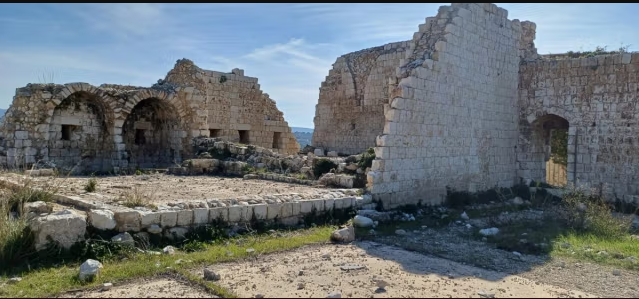
The Legacy of Shama Castle
Perched within the rugged heights of Jabal Amel, Shama Castle dominates the village of Shama, situated seventeen kilometers south of the Mediterranean port of Tyre and a stone’s throw from the Palestinian border. Reuters notes that the Crusaders erected this bastion over eight centuries ago, naming it after the nearby religious station known as the Maqam (shrine) of Prophet Shamoun. It served both as a formidable military garrison and a seat of administrative power.
Constructed during the zenith of early Crusader military architecture, the castle remained a functional landmark until the late nineteenth century. According to The Art Newspaper, UNESCO granted the site its highest tier of protection in 2024 following initial damage from Israeli attacks. However, the subsequent destruction of parts of the fortified village violates the 1954 Hague Convention, which strictly prohibits the targeting of cultural property or its appropriation for military purposes.
This is not the first time the castle has been caught in the crosshairs. Occupation forces previously seized the region south of the Litani River, converting the castle into a military post for twenty-two years until their withdrawal in May 2000. Reuters reports that while painstaking restoration followed, the 2006 war saw airstrikes obliterate over 80% of the structure, though the surrounding towers and the Maqam survived. Following that conflict, the Italian government financed a restoration project totaling approximately $700,000 to breathe life back into the ruins.
Surveillance from the Heavens
With occupation forces present on the ground, preventing an on-site assessment of the latest carnage, the Lebanese Directorate General of Antiquities has called upon UNESCO to conduct a comprehensive audit via satellite imagery.
According to The Art Newspaper, UNESCO recently extended “enhanced protection” to 39 cultural sites in Lebanon, bringing the total under international watch to 73. Nevertheless, fears persist for other vulnerable landmarks in occupied zones, such as the Dubbieh Castle in Shaqra and the Umm al-Amad site near Naqoura. The ripples of the assault have also reached the Roman temple of Hebbariyeh, the ancient basins of Ras al-Ain, the archaeological site of Qana, the Tomb of Hiram, Beaufort Castle (Qala’at al-Shaqif), and Toron Castle (Qala’at Tibnin).
The Tomb of King Hiram
Among the casualties is the Tomb of King Hiram, believed by some to be the final resting place of the Phoenician monarch and contemporary of King Solomon. This monumental limestone sarcophagus sits six kilometers southeast of Tyre, near the village of Hanaway on the road to Qana.
Architecturally, the tomb mirrors Persian funerary styles, such as the Tomb of Cyrus. While traditionally attributed to Hiram I, scholars suggest it dates to the Persian period, some four to six centuries after Hiram’s reign. The monument was famously documented by French scholar Ernest Renan in his 1861 seminal work, Mission de Phénicie. Beaufort Castle, anchored atop a strategic limestone cliff, has also been scarred. Historically known as Beau Fort (the beautiful fortress), it was founded by Romans and fortified by Crusaders before being restored by the Emir Fakhr al-Din II. In 1978, Ariel Sharon famously entered the castle; it remained under occupation for decades until the resistance forced a withdrawal.
A Perpetual Assault on Lebanon’s Soul
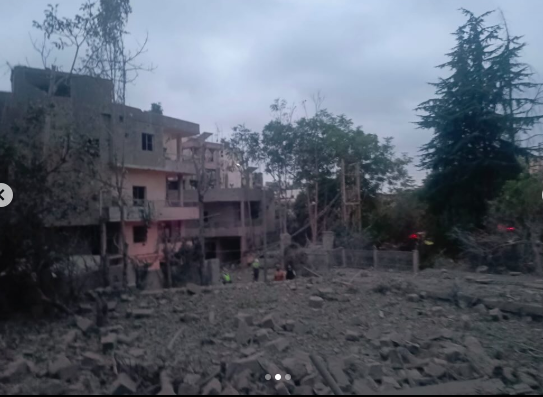
The peril facing Lebanon’s history is a recurring tragedy. From the fifteen-year Civil War that ignited in 1975 to the cataclysmic Beirut Port explosion in 2020, the nation’s heritage has been constantly besieged. The current escalation involving the occupation, Gaza, and Iran represents yet another dark chapter.
In a bid to deter further destruction, Lebanon has marked 34 sites with the “Blue Shield,” the international signifier for cultural property during armed conflict. According to the Middle East Monitor, this designation aims to signal the immense universal value of sites like Baalbek and Tyre, theoretically reducing the risk of deliberate bombardment.
Unseen Scars and Irreparable Loss
In a December 2024 report titled “Lebanon’s Priceless Heritage Sites Destroyed by Israeli Bombing,” The Irish Times detailed the toll of strikes near Roman, Crusader, and Ottoman landmarks. The report warns that while some damage is visible, other sites suffer from “invisible” degradation.
Heritage organizations have condemned the onslaught. Experts interviewed by the newspaper suggest that the strikes have inflicted wounds that may be beyond the reach of restoration. Biladi, a Lebanese NGO dedicated to cultural preservation, reported that between September and November 2024, nine heritage sites were entirely decimated, while fifteen others sustained severe or partial damage.
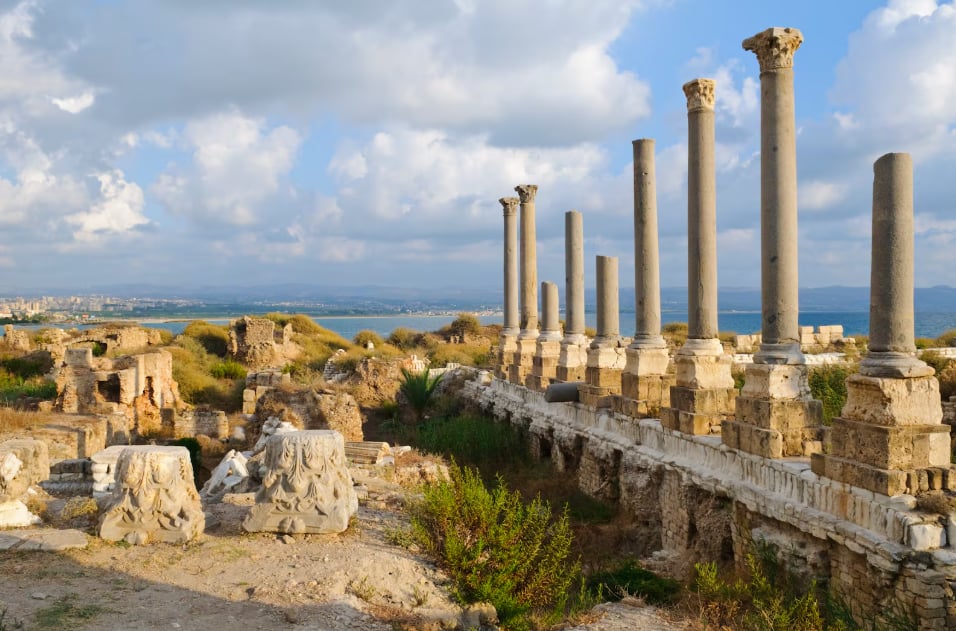
The concussive force of explosions near the Roman ruins of Baalbek and the sprawling archaeological complex in Tyre threatens to accelerate the erosion of ancient stone and the collapse of weakened structures. Tyre, one of the oldest inhabited cities on the Mediterranean, sits a mere twenty kilometers from the border. Agence France-Presse reports renewed fears for its 3,000-year-old necropolis, a relic of its Phoenician zenith that survived through the Arab conquests of the seventh century.
A Calculated Erasure
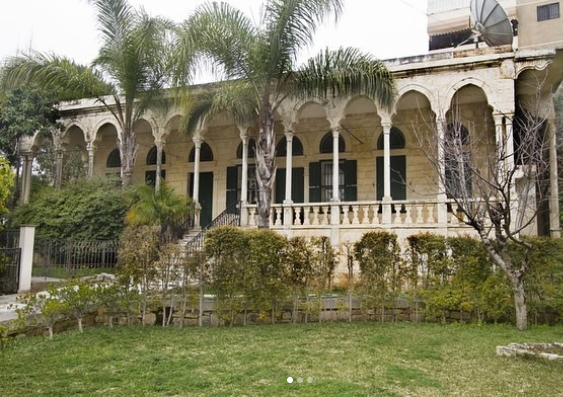
The Irish Times frames the destruction of Lebanon’s treasures as the latest iteration of cultural targeting in the Middle East, echoing the tragic fate of Palmyra in Syria and the Old City of Sana’a in Yemen. In 2024 alone, the casualties include three mosques, a religious shrine, three historic homes, a traditional market, and a Roman wall.
The UNESCO Regional Office in Beirut released a report detailing airstrikes that leveled a building in the coastal city of Tyre, renowned for its Roman colonnades and historic alleyways. Remote sensing has revealed extensive damage to heritage buildings from the Ottoman and French Mandate eras. Lisa Mol, a professor of geomorphology and heritage in conflict at the University of the West of England, explains that blast pressure is a silent killer of antiquity. Even if a wall remains standing, the shockwaves accelerate the interior decay of the stone.
Drawing on her experience in Libya and Yemen, Mol warns: “We often see the full structural collapse of these ancient places a decade after the initial explosions occur.”