Hajjah Zakia: A Sufi Legacy Between the Shadhili Shrine and the Desert of Humaythara
The story of Hajjah Zakia, the blind visionary who abandoned Cairo for the desert of Humaythara. A compelling portrait of a modern Sufi saint whose legacy of devotion and service continues to anchor the spiritual landscape of the Shadhili shrine.
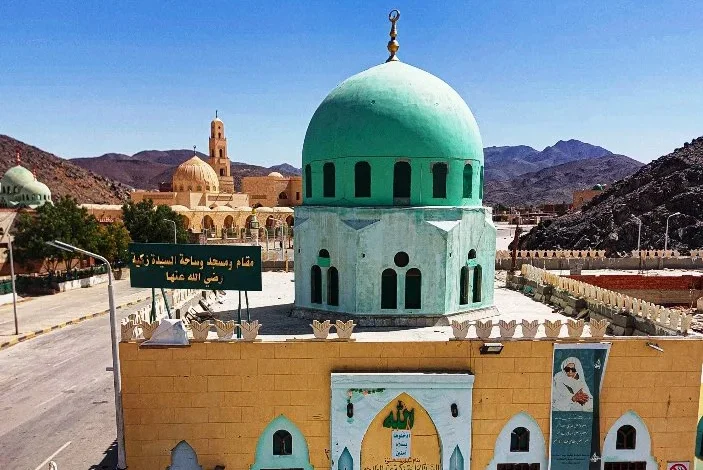
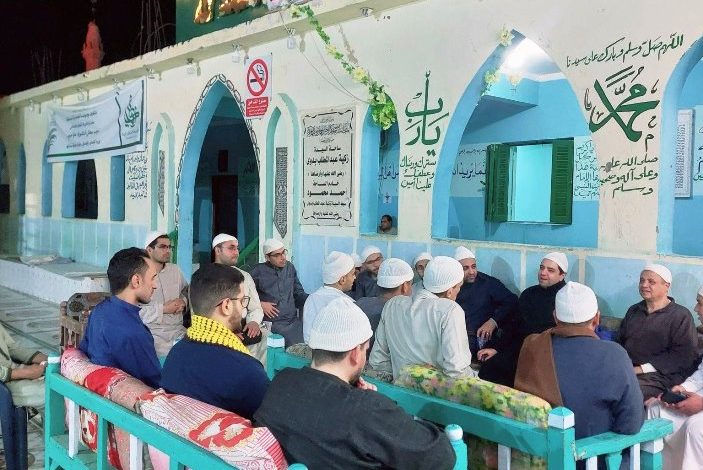
As the Hajj season approaches, the eyes of Sufi devotees turn toward the city of Marsa Alam, where the air thickens with the spiritual anticipation of rituals surrounding the shrine of Imam Abul Hassan al-Shadhili. Within this sacred atmosphere, the courtyard and tomb of “Hajjah Zakia” emerge as a parallel sanctuary, pulsing with a Sufi presence. Here, throngs of seekers and lovers gather to revive the rites amidst a chorus of supplicatory hymns and dhikr (remembrance of God).
The Saha (courtyard) of Hajjah Zakia holds a hallowed status for followers of the order. It serves as the primary assembly point and a place of spiritual preparation before the ascent of Mount Humaythara on the Day of Arafat. There, voices rise in takbir (proclamations of God’s greatness) and prayer, creating a mystical tableau where pure faith intermingles with folk heritage, reflecting a profound attachment to these Sufi luminaries who represent, for the faithful, a path toward serenity and hope.
A Life of Devotion
Ahmed Mahmoud, the grandson of Hajjah Zakia and current supervisor of the Saha in Humaythara, explains that the shrine’s prestige stems not only from its proximity to the great rituals, but from the life of the woman herself. According to his account, she was not merely a student of Imam Abul Hassan al-Shadhili by name, but was raised in a household steeped in divine knowledge and spiritual lineage. She charted her own Sufi path through the Arusi-Shadhili school, connected to Sidi Abd al-Salam al-Asmar of Zliten, Libya, eventually becoming a beacon for those seeking tranquility and baraka (divine blessing).
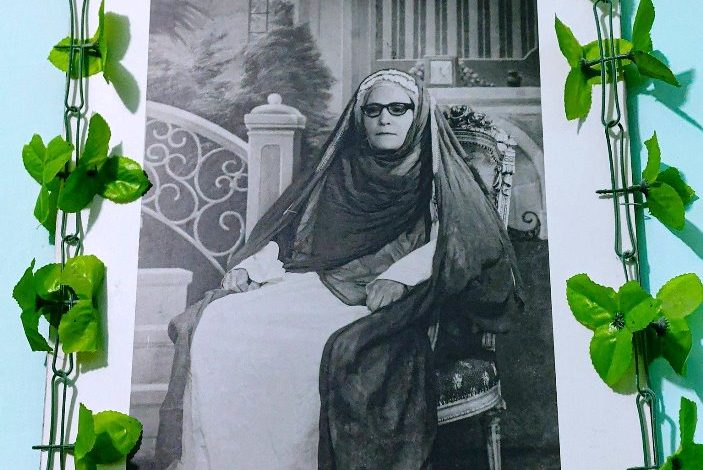
Ahmed identifies his grandmother as Zakia bint Abdul Muttalib, born at the dawn of the twentieth century in the village of Mit Salsil, Dakahlia. She was raised in a distinguished Azhari home. Though she lost her sight, she completed the memorization of the Holy Quran by the age of fifteen, embarking on an extraordinary journey that fused asceticism with service. In her youth, she joined the Shadhili order before moving to reside near the Imam al-Hussein Mosque in Cairo. There, she anchored her life in the service of the destitute, spending all she possessed on the poor and repeating her famous invocation: “O God, make my food a healing for them.” Her role transcended mere charity; she became a refuge for the broken and a mediator for the needy, utilizing her connections with the influential to serve the common folk, embodying a profound human and spiritual grace.
In the Heart of the Desert
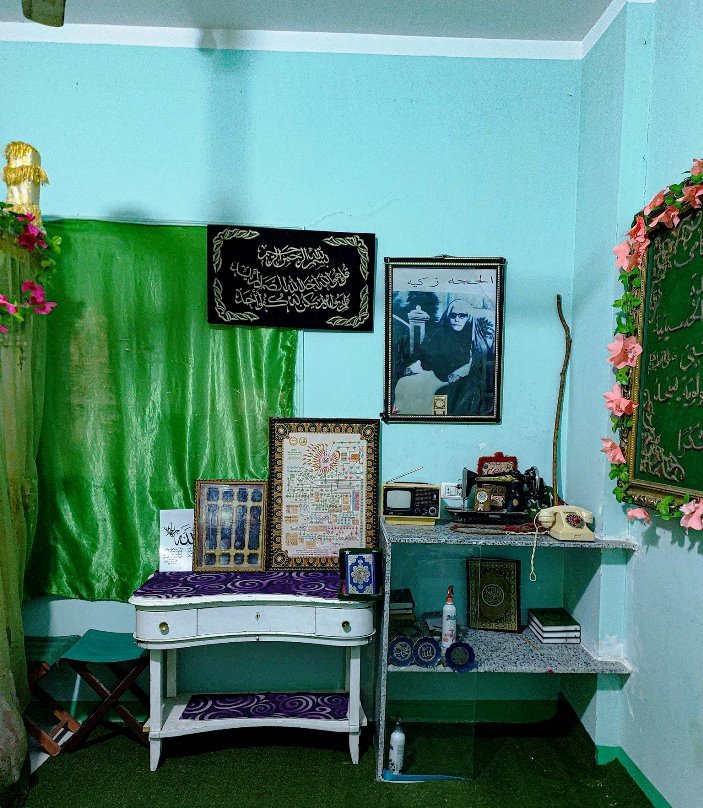
The grandson adds that Hajjah Zakia was not buried beside Imam al-Hussein despite the decades she spent in his shadow. While performing Umrah in her late seventies, she saw a vision in a dream foretelling that her final rest would be in the heart of the desert. Consequently, she purchased a plot of land adjacent to the Shadhili shrine and erected a modest room, where she withdrew for dhikr and Quranic recitation during her twilight years. She instructed her servant, Muhammad Abd al-Latif—who later became the Imam of the Al-Qusayr Mosque saying: “When God reclaims His trust, bury me beside Al-Shadhili.” When relatives and devotees attempted to persuade her to return to the comforts of Cairo, she refused, declaring: “My master Abul Hassan al-Shadhili has commanded me to remain here.”
Among the tales of her karamat (spiritual wonders), Abdullah Abd al-Shafi, a resident of Al-Qusayr living near her courtyard, recounts that General Youssef Afifi, then Governor of the Red Sea, visited her to urge her return to the capital. He informed her that President Gamal Abdel Nasser had issued a decree in 1962 for her tomb to be located in Cairo near Imam al-Hussein. She smiled and replied: “The place of my burial is greater than Gamal Abdel Nasser; the matter rests entirely in the hands of God.” Amir Darwish, a follower of the Shadhili order, notes that upon approaching the shrine of Abul Hassan al-Shadhili, one finds the grave of the righteous Lady Zakia bint Abdul Muttalib, a woman of profound asceticism and worship who lived to see the Sheikh’s favor and was granted the spiritual permission to be interred in his vicinity.
The Bond with Abul Hassan al-Shadhili
Her grandson traces her devotion to Sheikh Al-Shadhili back to her childhood. When she mastered the Quran, her father rewarded her with a pilgrimage to the Holy House of God. They traveled overland to Aidhab before taking to the sea toward the Hijaz. En route, they visited Al-Shadhili’s resting place. Her father, a devotee of the order, would speak at length of the saint’s virtues and miracles. Zakia listened with rapt attention, and a deep love for the Sheikh took root. Even her husband, her cousin Sheikh Muhammad al-Mahdi, was a Shadhili who accompanied her to the Hadra (spiritual gathering) held by the order every Friday in Cairo.
Eventually, her yearning for the path intensified. After settling in Darb al-Tablawi, she became consumed by the service of the poor and the love of the Sheikh. When her wajd (ecstatic fervor) grew so great that it distracted her from domestic life, her husband consulted his mentor, Abd al-Rahim, a righteous man. The mentor told him: “The sun and the moon do not occupy the same space.” Understanding the message that his wife had a higher calling the husband granted her a divorce and left her to her mission. She wandered on pilgrimages to the shrines of saints before finally settling in the corner of the Shadhili path. Her reputation spread, and the needy flocked to her for aid and prayers; she never turned a soul away empty-handed.
Dignitaries at the Door
Sheikh Ahmed, the supervisor of the courtyard, notes that the visitors were not limited to the poor. Ministers, businessmen, and celebrities from the arts stood at Hajjah Zakia’s door. High-ranking state officials would personally wash the restrooms of her zawiya (small prayer house), and men of power would kiss her hands, acknowledging her wilaya (sainthood) and praising her generosity. Rumaisa al-Gazzar shares a well-known story: General Youssef Afifi once visited her modest room near the Imam’s shrine, bringing five tons of rice, sugar, and oil to support her habit of feeding visitors. During the visit, he offered her a house in Magawish near Hurghada. She refused, asking instead for the paving of the road leading to the Great Pole’s shrine and a telephone line for her zawiya. The road was paved for the very first time because of her request.
The Final Days
Muhammad Abd al-Latif recounts the final chapter of her life. She was diligent in visiting the shrine of Abul Hassan al-Shadhili daily from Maghrib until Isha. One evening, she remained until dawn, informing him that her time was near. She requested elaborate preparations: bottles of sharbat (sweet cordial), twenty sacks of flour, and several sheep from the locals, as if preparing for a grand feast. Upon returning to her quarters, she washed her shroud with Zamzam water she had kept for the occasion. She requested that her funeral prayer be held inside the Imam’s shrine and that a banquet for the poor be served after her burial.
On the morning of September 28, 1982, she summoned Abd al-Latif to tell him she would meet her Lord that day. She called for Sheikh Sayed Jaafar, the Imam of the nearby Al-Faran Mosque, and asked him to recite Surat al-Ikhlas over her grave. Following her passing, six men carried her casket into the shrine at six in the morning. Amidst a shroud of grief and weeping, the funeral prayer was performed, and she was laid to rest in the exact spot she had chosen.
An Atmosphere of Serenity
To this day, visitors to the Shadhili shrine continue to flock to her grave and her zawiya, where they find an atmosphere of profound stillness and devotion. For those who knew her, her final words still echo: “Tomorrow, you shall see the secrets and the miracles here.”