Dr Zainab Hashish on Bioarchaeology Ethics: “Human Remains Are Not for Spectacle”
Dr Zainab Hashish, bioarchaeology expert at Beni Suef University, discusses her groundbreaking project documenting 11,000 ancient Egyptian skeletal remains at the Egyptian Museum with dignity and scientific rigour.
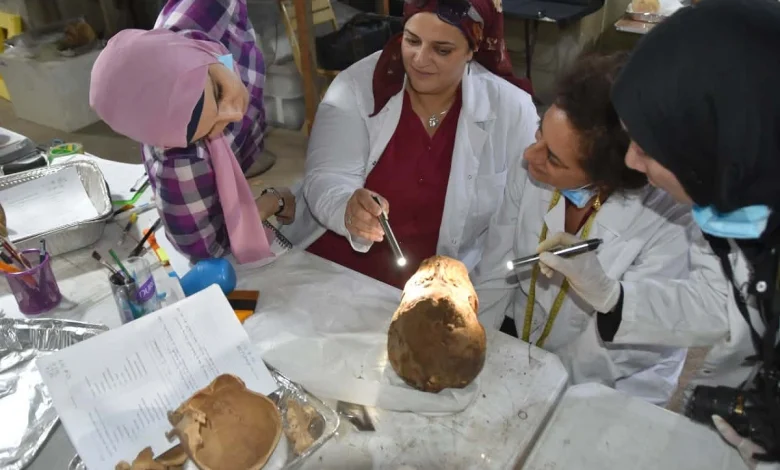
In the basement of the Egyptian Museum in Tahrir, human skeletal remains rest, telling a history not conveyed by inscriptions or recorded by temples. Here, Dr Zainab Hashish, Assistant Professor of Ancient Egyptian Antiquities at Beni Suef University, works on one of Egypt’s most delicate scientific projects in bioarchaeology, documenting and recording skeletal and mummified remains.
The project began in 2018 with specialized methodology and international partnerships. Dr Hashish leads a team preserving what she calls the “living archive” of ancient Egyptians, re-reading history through their health, diseases, and daily lives. In this interview, she reveals how silent bones speak in the language of science about an entire nation’s identity.
The Origins of Egypt’s Skeletal Remains Documentation Project
How did the project begin, and what motivated its launch in 2018?
My speciality is bioarchaeology, how to deal with human skeletal and mummified remains. Since joining the Ministry of Tourism and Antiquities in 2001, I’ve worked with foreign and Egyptian missions in this field. The number of specialists is not large, so our team aimed to help ministry workers handle skeletal remains properly.
In 2018, we approached curators at the Egyptian Museum about cooperation and training on human remains. During Sabah Abdel Razek’s tenure as museum director, we organized two-month training: one month of theory at the American University covering bone documentation importance, human anatomy, and deducing information like age, height, and occupation; followed by practical work inside the museum.
During training, we discovered mummified skeletal remains in the basement needing documentation. There were no separate numbers for each skeleton—only box numbers. From here, the project was born to make these materials available to researchers, especially since these remains were unknown to anyone inside or outside Egypt.
We established the project in partnership with the Egyptian Museum and London’s Institute of Bioarchaeology. Since late 2018, we’ve recorded approximately 11,000 bones from excavations during the High Dam construction,work by pioneers like Reisner, Walter Emery, and Petrie from 1893 to 1980. These collections are like a treasure being uncovered anew.
The team includes specialists from Beni Suef University’s Archaeology Department under Dean Dr Azza Johari and Professor Dr Wazir Abdel Wahab, alongside Ministry experts and museum workers led by Asmaa Ahmed. We’ve expanded from a small space to three equipped rooms with high preservation capabilities—potentially Egypt’s first centre for studying skeletal remains.
Ethical Framework for Handling Ancient Egyptian Remains
How did you balance scientific research with the human and ethical dimension?
The human dimension was our main goal from the start. We differ from others because these remains are our ancestors, not other civilisations’ remains like those in the British Museum. We have a direct connection with them, so our first goal was preserving, respecting, and honouring them humanely.
We instil in students and workers the commitment to treat these remains as humans, not merely artefacts. The human aspect surpasses the scientific in importance. We work within a strict ethical framework with clear standards: prohibiting purposeless photography, preventing exposure, and ensuring scientific publication adds value without recklessness.
We don’t accept Western experiments in making mummies talk or reconstructing appearances. We’re not searching for “trending topics.” We publish within an ethical framework, addressing their care and health. We have four scientific papers, not case studies, but explaining what exists and the discovery history.
International Partnership and Challenges
What was the cooperation with London’s Institute of Bioarchaeology?
The Institute of Bioarchaeology has extensive expertise with projects worldwide in Peru, China, and England. Cooperation involved raising efficiency by sending experts like Dr Roxie Walker, and supporting us with necessary tools, moral support, and help with publication and documentation.
What challenges did you face?
The entire project was challenges. First, clarifying this work’s importance to the public and explaining its part of our heritage. Second, the lack of personnel with prior knowledge, difficulty finding people interested in learning registration, documentation, study, and storage.
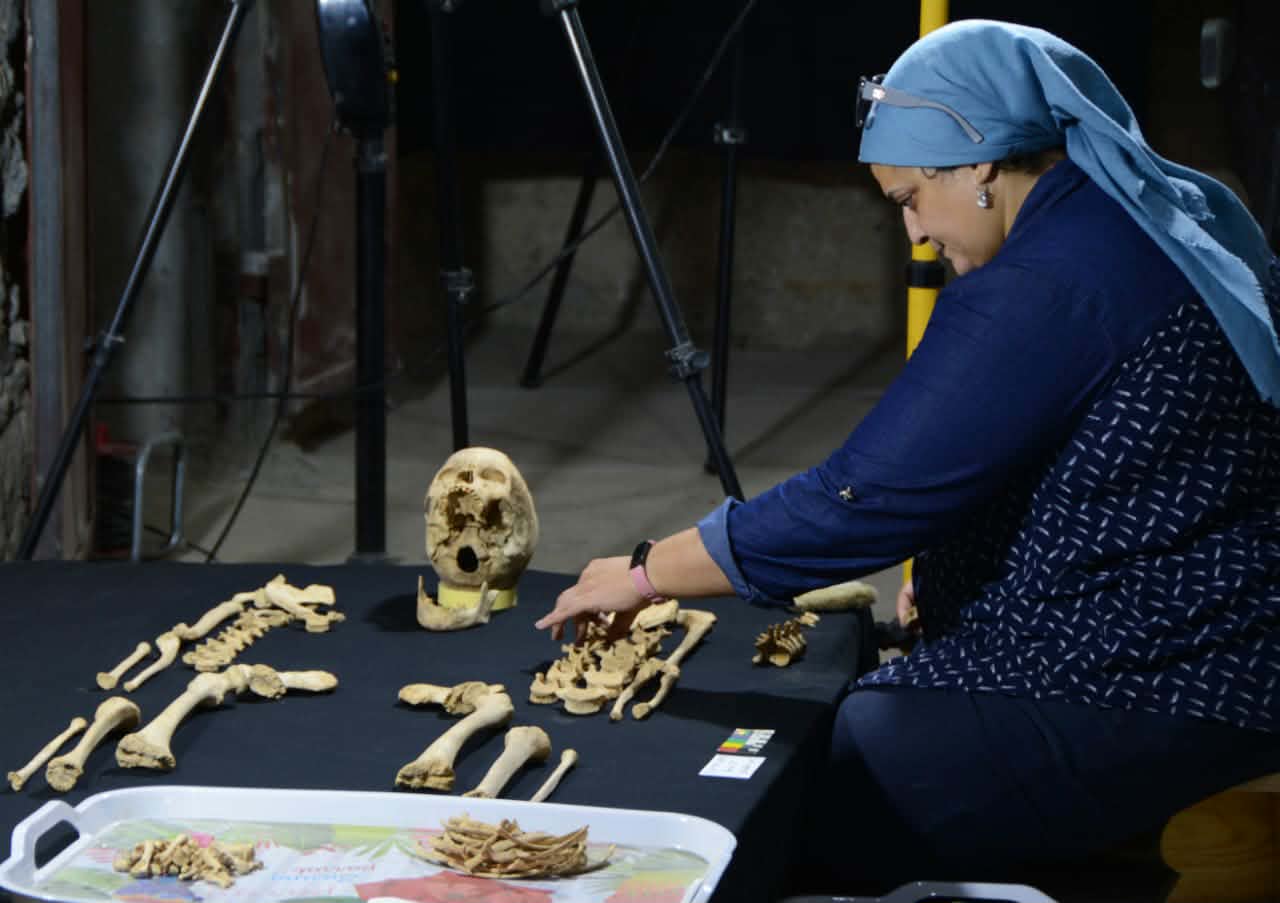
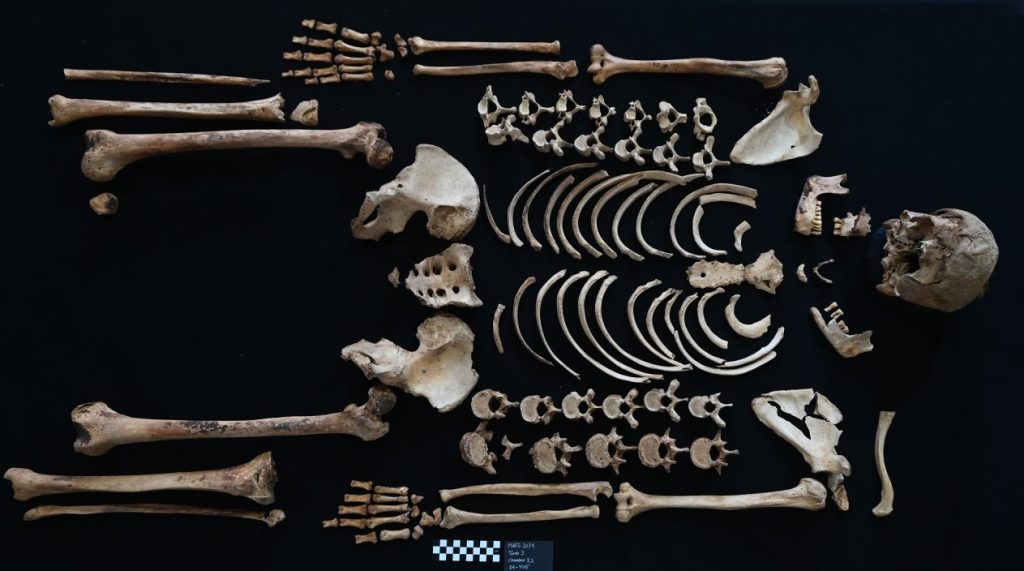
The major obstacle was the material itself. Old preservation methods stored skeletal remains by type, heads in one place, humerus bones in another, pelvis and hands elsewhere. The challenge was reassembling one human and preserving it in a box representing a single body, which took years. Some remains were split between the Egyptian Museum and Qasr Al-Ainy Medical School storage, a challenge we still face. Infrastructure challenges included electricity, maintenance, and monitoring insects.
Re-Reading Ancient Egyptian History Through Bones
Have results led to re-reading periods or health conditions of ancient Egyptians?
Undoubtedly. We’re documenting collections that will enter scientific publication, revealing new information. For example, we’re working on a group discovered in 1895 by Demorgen—kings from the Twelfth Dynasty’s end and the Second Intermediate Period’s beginning. Five skeletons, four from the royal family, whose re-examination will have historical significance.
Other important groups include priests and priestesses of Amun from the Luxor Cache, crucial for understanding the 21st Dynasty. The tomb contained 154 coffins distributed to 16 museums worldwide in 1893. The museum also contains the Deir el-Bahari cache, Dahshur groups, Nubian antiquities, and prehistoric groups,all confirming our civilisation is purely Egyptian.
Part of the documented materials is now available in the museum’s Scientific Research Department. This is our goal: opening a new window for researchers. We’ve seen completed PhD theses and researchers working on our documented materials.
The Most Difficult Professional Decision: Dignity Over Fame
What was your most difficult professional decision?
In our profession, suffering comes when we stand face to face with history to make “the decision.” We live in an exhausting grey area: Do we publish the bare scientific truth, or resort to silence respecting death’s sanctity?
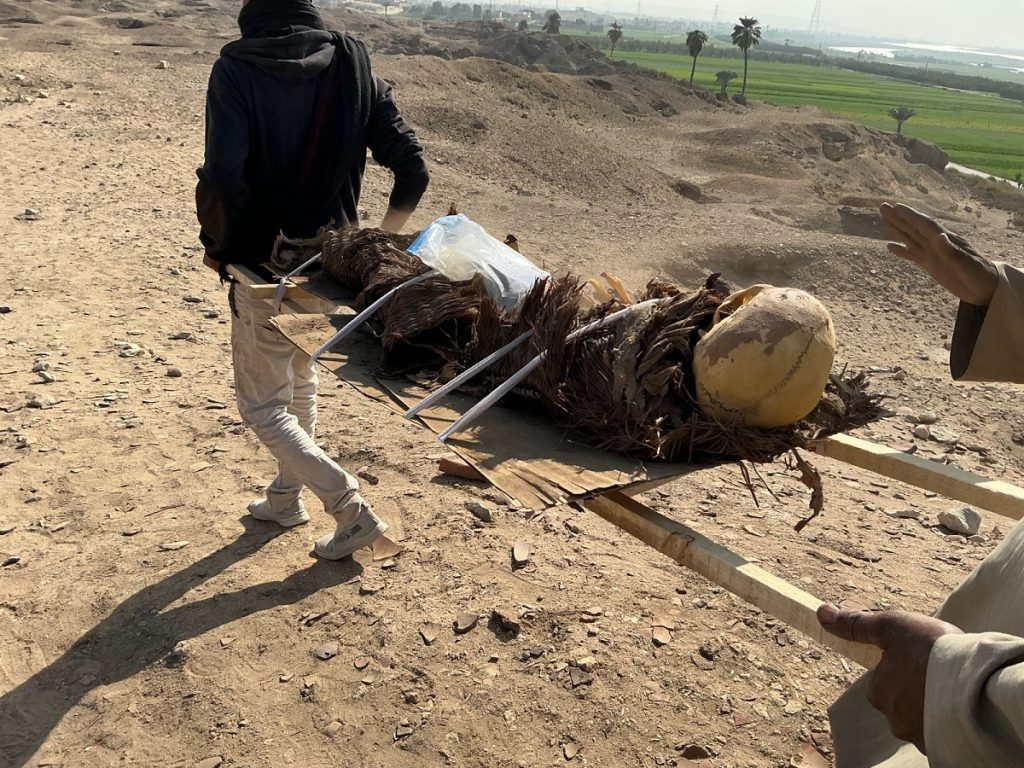
I once faced a harsh test: a king’s body, of which time left only scattered remains. I could have achieved personal glory and media uproar in his name, but I sided with his humanity. I couldn’t accept presenting him “incomplete” before curious eyes; human remains are not material for spectacle. The real challenge: How do I grant the public their right to knowledge without violating this king’s right to dignity? How do we present history without wounding death’s solemnity?
Sometimes I feel sorrow for the young king; his body paid dearly for his fame. Frequent moving, touching, and camera lights made him suffer “exhaustion” unbefitting his resting place. My first principle became: “Protection before revelation.”
Even when using X-rays or taking samples, I ask sincerely: Does this “hurt them”? The question may seem strange for a scientist, but I’m dealing with “humans” who have sanctity, not lifeless stones. There’s no place for scientific luxury if the price is the body’s dignity.
I’m not against the world seeing our ancestors’ greatness, but I favor presentation that respects tranquillity. I admire the National Museum of Egyptian Civilisation’s display style; you don’t feel you’re in a museum, but visiting a real royal tomb. The calm lighting, the body wrapped in dignity, showing only face and hands, forces you to look with reverence, not stare.
In the end, we’re not displaying “mummies,” but summoning spirits that lived, built, and suffered. Our mission is to connect the world with its history.