Greater Cairo

How Egypt Is Trademarking 5,000 Years of Culinary History

How one initiative is turning Ancient food knowledge into economic opportunity

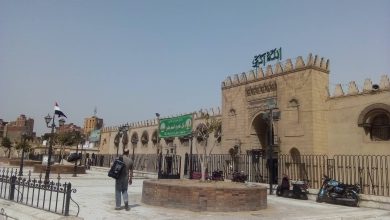
The fourth season of the “Tabliyet Misr” Egyptian Table initiative, launched under the slogan “Reviving the Past and Documenting the Present,” is running from January 15 to February 5, 2026, in cooperation with the SADCO Group. The opening day featured a workshop on intellectual property titled “The Origin of a Dish is a Story of Heritage and a Protected Secret,” held at the Al-Mudayfa Hotel in Tahrir Square, Cairo’s historic centre.

Ancient Egypt: The World’s First Food Brand

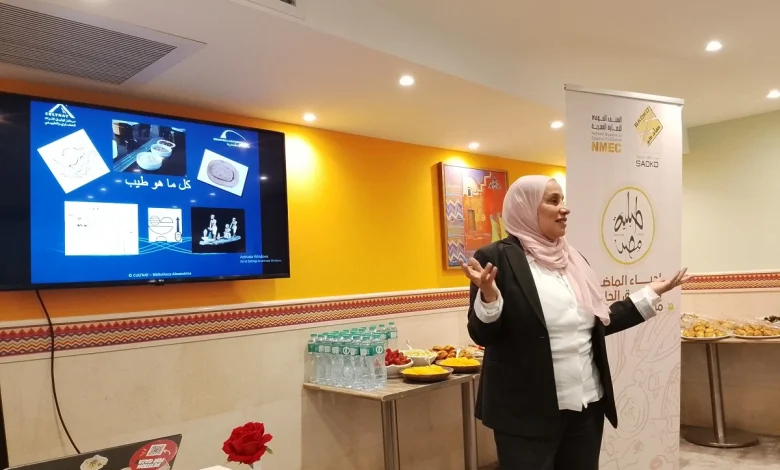
Dr Amira Sedik, Director of Heritage Projects at the Bibliotheca Alexandrina, Egypt’s renowned modern library and cultural centre in Alexandria, opened the workshop by discussing the documentation of Egyptian cuisine. She explained that documentation pertains to any historical element that can be developed and modified in form or content to become eligible for trademark registration.

Ancient Egypt possessed what may be the world’s first documented food brand, called “All That is Good.” This designation applied to everything produced and exported from Egypt and included a seal, logo, production date, and complete product details. Evidence can be found at the Imhotep Museum in Saqqara, located near the famous Step Pyramid south of Cairo, which houses the oldest fossilised cheese resembling modern cottage cheese, with all its details inscribed on the packaging. This 5,000-year-old cheese demonstrates that ancient Egyptians understood quality control, branding, and consumer information long before modern commerce emerged.

Dr Sedik discussed the characteristics that distinguished ancient Egyptian cuisine, explaining that Egyptian civilisation relied on three main traits, including food production and the exchange of food for other goods. She cited the example of ancient Egyptians reaching the Land of Punt, a legendary trading partner located in what is now modern-day Somalia or Eritrea, where they negotiated with weapons and food.

Part of the presentation.Photo: Heba Moawad

The Foundations of Egyptian Cooking

Egyptian civilisation relied on boiled or grilled foods rather than fried preparations, a distinction that persists in traditional Egyptian cooking today. Dr Sedik outlined the components of authentic Egyptian cooking and how ancient Egyptians designed their food to support daily health and psychological well-being, anticipating modern nutritional science by millennia.

The core ingredients included legumes such as wheat, barley, fava beans, and chickpeas, which Dr. Sedik identified as authentically Egyptian foods. Chickpeas were called “Hor Bek,” meaning “falcon’s head,” because the bean resembled a falcon’s beak, reflecting the sacred status of the falcon god Horus in Egyptian religion. Basic crops also included green onions, lettuce, and “melana,” a type of leafy green of Egyptian origin that remains popular in rural areas today.

Regarding fruits, Egypt’s fruit varieties were limited until the time of Muhammad Ali Pasha in the early 19th century. Ancient Egyptian fruits included only figs, sycamore figs, dates, and pomegranates. Interestingly, monkeys were trained to gather sycamore figs from tall trees. Pomegranate peels were ground and added to flavoured bread, demonstrating the Egyptian principle of using every part of the ingredient.

Proteins and Ancient Food Processing

Dr Sedik mentioned that ancient Egyptians invented cured meats, with the primary sources being cattle, buffalo, and goats. Different animals required distinct slaughtering and cutting methods, with specific names for each cut of meat. Examples include “Mouza,” “Rish,” “Sh al-Fakhda,” and “Terebianco,” with each cut designated for particular dishes. This sophisticated butchery system rivals modern French or Italian meat-cutting traditions in its precision and specialisation.

As for poultry, ancient Egyptians did not have domesticated chickens or pigeons. The primary birds were quail, duck, and six varieties of goose. Goose liver, the predecessor to French foie gras, was one of the main delicacies. Regarding fish, ancient Egyptians were distinguished by their variety of Nile and Mediterranean species. They invented specialized cooking methods including grilling with bran (“bi al-redda”), “sangari” style preparation, fish roe processing, and salting techniques like “feseekh,” a fermented fish dish still consumed during the spring Sham el-Nessim festival.

Part of the presentation. Photo: Heba Moawad

Lost Culinary Traditions

Dr. Sedik continued her discussion of Egyptian cuisine, pointing out that ancient Egyptians consumed papyrus roots, lotus flowers, and roses, ingredients now largely forgotten due to the influence of successive foreign cultures including Greek, Roman, Arab, Ottoman, and European colonial periods. She mentioned the sycamore fig, for which the Mediterranean port city of Rashid (Rosetta) was once famous. However, this variety is nearly extinct, with reportedly only one tree remaining on Jabal Abu Mandur among ancient tombs, a victim of changing agricultural practices and dietary habits.

Trademark Registration for Culinary Heritage

Dr Sedik outlined the conditions for registering cuisine or a restaurant as a trademark, explaining that specific dishes and recipes can be registered as brands even if they fall under the public domain. This requires developing the original recipe by adding new elements while observing geographical neutrality. The dish’s name may include a place name, though the registration protects the specific preparation under the trademark rather than monopolising the general concept.

She discussed examples of countries and museums that adopted the culinary heritage of Egyptian origin and developed it until it became associated with their own identity. The British Museum, for instance, designed a brand named “Ba and Hentut,” where “Ba” means the ancient Egyptian soul and “Hentut” means yeast. The brand produces bread based on ancient Egyptian yeast with modern innovations. She mentioned Mount Ararat in Armenia, which exports brandy globally with each type carrying a distinctive signature marketed through culinary tourism, demonstrating how food heritage can become a powerful economic and cultural asset.

Documenting Food Heritage Through Intellectual Property

Dr Fatma El-Qassas, a researcher in intellectual property and heritage, explained how intellectual property protects traditional dishes and culinary secrets while promoting tourism. She emphasised that Egyptian cuisine is extraordinarily rich despite misconceptions, pointing out that ancient Egyptians utilized various grains like wheat, barley, and tiger nuts to create the first healthy and sustainable cuisine. Therefore, most world cuisines borrowed from Egyptian traditions, either directly or through adaptation.

Dr El-Qassas clarified how intellectual property documentation differs from patents. Patents specialise in medicines and technology, while intellectual property encompasses several areas. Industrial designs determine the shape of a product or dish, distinguishing it visually as a protected design. Trademarks function as signs, marks, or trade names, while patents cover specific technology within products or dishes, including preparations that treat specific health conditions.

Geographical Indication: Protecting Place-Based Foods

Dr El-Qassas discussed the role of Geographical Indication (GI) in documenting and protecting traditional heritage dishes or foods linked to specific production methods or characteristics distinguished by place or product origin. She provided global examples like Roquefort cheese, made from sheep’s milk in specific French caves using traditional methods, and Egyptian examples like Mallawy cheese, a soft white cheese from the Upper Egyptian town of Mallawy, and Qareesh cheese, a strained yoghurt cheese. Plant varieties include Ismaili mango from the Suez Canal city of Ismailia and “Al-Mara’a” greens attributed to Nile irrigation systems.

She noted that Egypt’s Intellectual Property Law of 2002 is professionally advanced but requires development in the Geographical Indication provisions, which still lack executive regulations. A ministerial decree issued approximately four years ago registered three products in Matrouh, the northwestern coastal governorate, representing collective marks linked to trademarks, while work continues protecting other regional specialities.

The Documentary: “All That is Good”

The workshop concluded with a screening of a short documentary film titled “All That is Good,” reviewing what distinguishes Egyptian cuisine. The film explored “aish,” the Egyptian Arabic word for bread that literally translates to “life” or “living,” reflecting bread’s central importance in Egyptian culture. This linguistic connection emerged after ancient Egyptians discovered yeast, making Egypt the birthplace of leavened bread. The film showcased other Egyptian foods and their deep cultural meanings, illustrating how food and identity remain inseparable in Egyptian society.

The Egyptian Table initiative represents a crucial effort to document, protect, and revive Egypt’s culinary heritage before it disappears under the pressure of globalisation and changing food systems. By applying modern intellectual property frameworks to ancient food traditions, Egypt seeks to reclaim its position as one of the world’s foundational culinary civilisations while creating economic opportunities through heritage tourism and protected regional specialities.

Related Articles

Back to top button
BabMasr