The Umrah Journey: A Cultural Experience Between History and Modernity
At 7:30 p.m., Luxor International Airport was unusually crowded. There were many faces, features worn out from waiting, and eyes shining with tears of longing. Some were reading the Quran in low voices, while others were busy checking their travel documents. Hundreds of travelers were preparing to depart for one destination: Mecca.
What is striking about such journeys is that titles, positions, and jobs suddenly fade away in front of a piece of white cloth. The uniform eliminates barriers and makes everyone equal, as if in this crossing, class and social differences disappear, and everyone becomes part of a single group pursuing a single goal.
On board the plane, the seats turned into rows of “white seagulls.” When the pilot announced that we were approaching the miqat, the sound of the talbiya rang out from the mouths of the passengers, a scene that can only be described as a universal human celebration.
Mecca: The sanctity of the place and the grandeur of the architecture
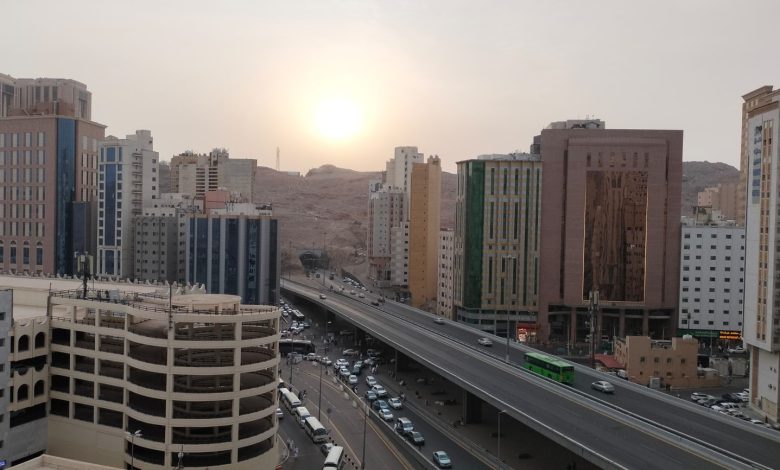
Arriving in Mecca is an amazing experience from the very first moment. On the one hand, there is the Kaaba, standing firm at the center of the scene for thousands of years, a symbol of faith and the destination of hearts. On the other hand, there are towering skyscrapers and luxurious hotel complexes surrounding the place, most notably the Clock Tower, which overlooks the Haram as a symbol of modern architecture.
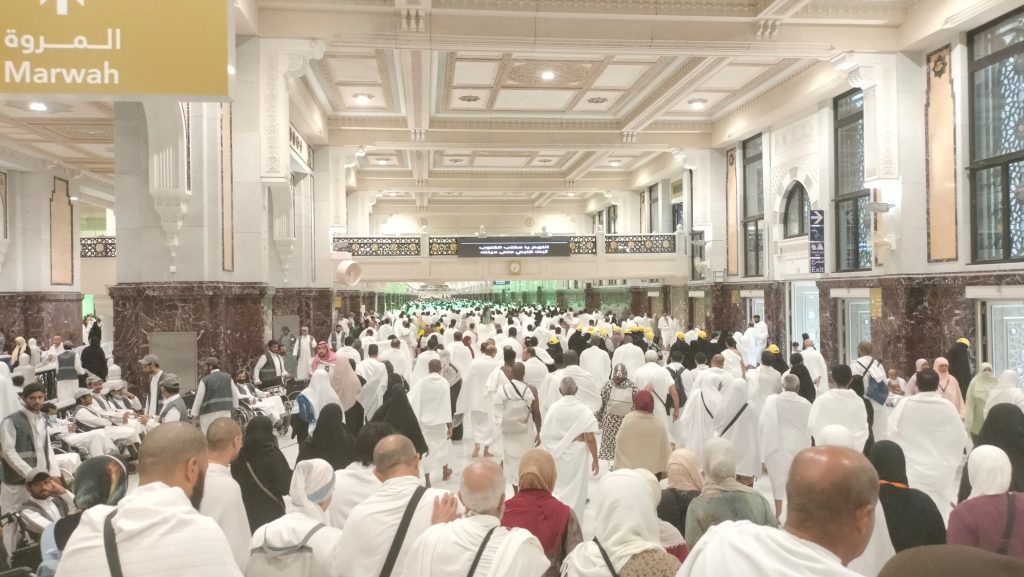
During the tawaf, the awe of the scene is evident, with thousands of feet circling in harmony around a building that is small in size but great in meaning. As for the ritual of running between Safa and Marwa, it has changed completely. It is no longer just an open valley, as described in the books of biography, but has become an air-conditioned, multi-story marble passageway. Technology here has not eliminated symbolism, but has reworked the spiritual experience into a modern form that accommodates millions of visitors annually. It is a paradox between historical simplicity and contemporary modernity.
The shrines: between geography and memory
Visiting Mount Arafat, Ghar Thawr, Muzdalifa, and Mina is not just a tourist trip, but a journey that evokes major events in Islamic history. The difficult terrain, rugged mountains, and winding roads allow visitors to imagine the hardships endured by the Prophet and his companions.
However, the Saudi state has reimagined these sites with highways, organized facilities, and wide walkways, transforming hardship into ease, but the memory remains present. This raises the question: Does a place lose some of its symbolism when it is transformed into an air-conditioned and organized site? Or is organization a necessity for geography to accommodate millions of people?
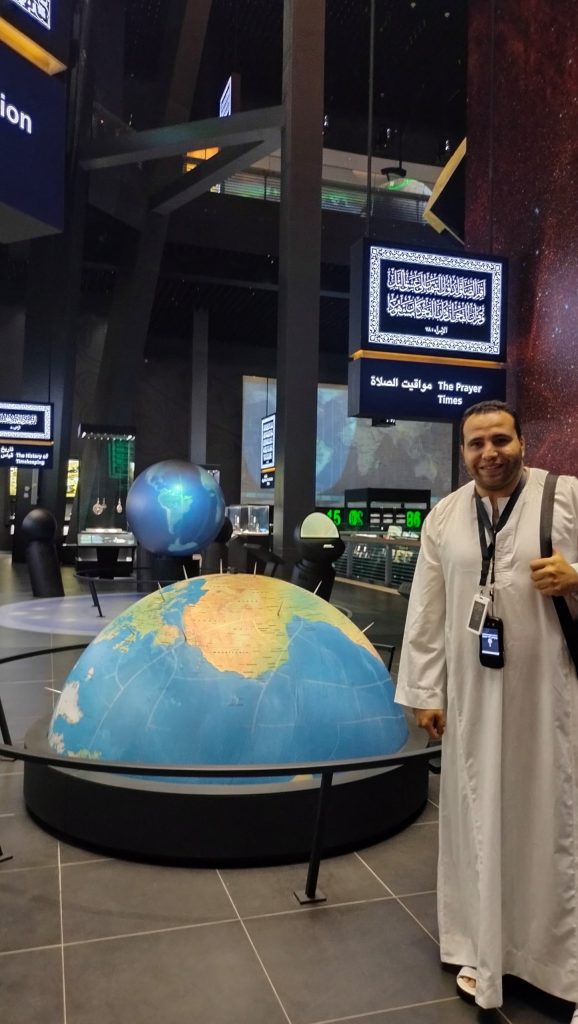
The Clock Tower Museum is a special case. Its exhibits of ancient manuscripts and astronomical instruments stand alongside the latest time-measuring technologies. On its terrace overlooking the Kaaba, visitors feel as if they are standing at a crossroads: between a deep-rooted spiritual past and a rapidly advancing material future.
I tried to write a newspaper report about the museum. I showed my press card to an official there, but after several phone calls, he said that I needed approval from the “Royal National Authority.” I was surprised, because in the Netherlands and Belgium I had photographed in parliament, foreign ministries, and universities without even being asked for my press credentials. Here, it seemed more complicated, as if the place were not just a museum but part of a highly sensitive and symbolic political system.
Medina: Peace of mind and the rhythm of life
When we moved to Medina, I felt like I had entered another city with a different spirit. If Mecca embodies majesty and awe, Medina epitomizes peace and tranquility. The weather is milder, the faces are more cheerful, and the system is clear but not tense.
Entering the Rawda Sharifa via the “Nusk” app was an example of the digitalization that has changed the management of rituals. It is no longer just a matter of arriving early, but of an electronic system that distributes visitors fairly.
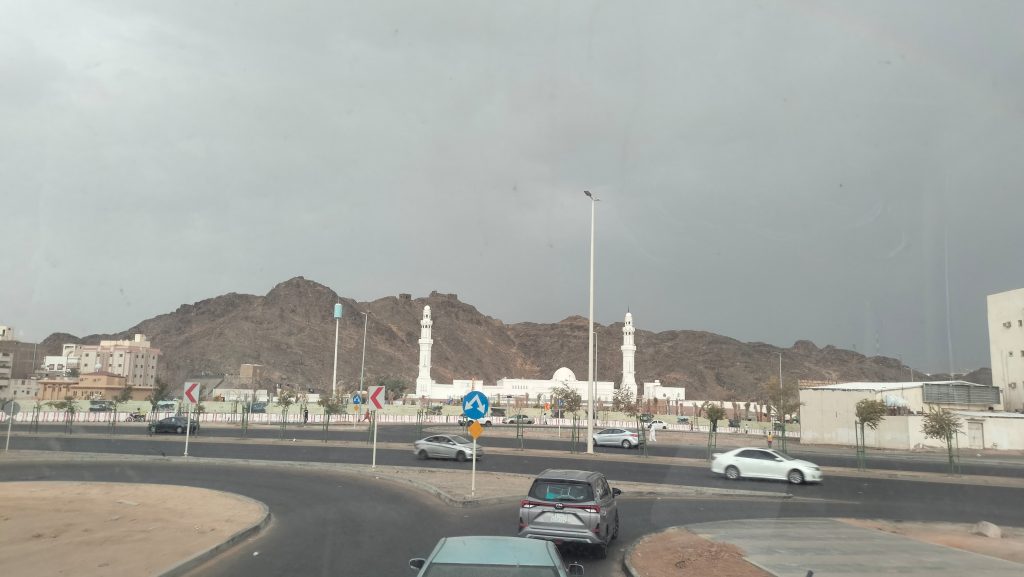
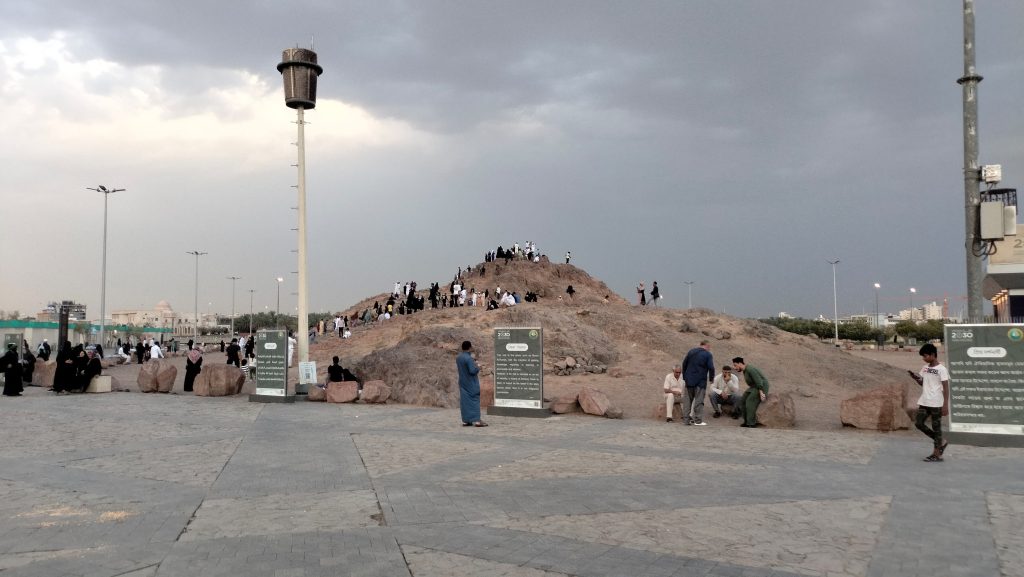
The shrines here—the Quba Mosque, Mount Uhud, and the Seven Mosques—carry a unique historical spirit. They are not just old buildings, but living pages of early Islamic history, read by the eye and recalled by memory. At every turn, there is something to remind you that this city was the scene of Islam’s first civilizational experience.
Details of organization and services
What is impressive is that the organization in Mecca and Medina is so strict that it does not allow for chaos. For example, the bus that took us stopped in a place that was not designated for that purpose, and the driver did not escape a hefty fine, paying 500 Saudi riyals in less than five minutes, with no compliments or exceptions.
However, strictness does not mean a lack of humanity. Water and food are distributed on the roads, and teams of young men and women offer assistance in different languages. Some hold the hands of elderly people to guide them on their way, Leda. and others explain to a group of visitors from Indonesia how to use the booking app. The streets are remarkably clean, and the work teams never stop, as if the entire place is in a state of constant alert to receive an uninterrupted stream of guests.
The other side: migrant workers and the reality behind the scenes
Amidst the spiritual atmosphere, I overheard conversations that revealed other layers of the scene. I met two Egyptians working in Saudi Arabia who spoke bitterly about the sponsorship system and high residency fees. One of them said, “
We live next to the holiest place on earth, but we suffer from daily worries that we did not expect when we came.” We are required to pay 6,000 riyals a year to the Saudi sponsor. If you don’t pay, your residence permit will not be renewed and you will be fined, imprisoned, and deported.
I was also struck by the prevalence of beggars in Mecca. Many women sit near the Haram, some selling seeds to feed the pigeons, others begging from passersby. I never saw this in Medina. I have not found a satisfactory answer, but the question continues to haunt me: Why is the picture so different between the two cities, despite their similar sanctity?
The impact of geography on people
The difference between Mecca and Medina seemed to me to be rooted even in geography. Mecca is surrounded by towering, barren mountains with little vegetation, which gives its people a certain sternness and harshness in their dealings. Medina, on the other hand, stretches across flat land dotted with palm oases, and its mountains are lower, which makes life more peaceful and the people more friendly and cheerful.
I met one of the Sufi leaders and asked him about this contrast. He replied, “God has distinguished the Kaaba with majesty, for it is the Sacred House of God, while the city is home to the Messenger of God, the gift of mercy, which is why it is dominated by tranquility and serenity.”
Diversity of nationalities: a human mosaic
In the Grand Mosque in particular, the sight of people is astonishing. Thousands of people of all nationalities: Africans, Asians, Arabs, Europeans, Americans. The multitude of costumes, accents, and languages makes the place resemble a huge human mosaic. Sometimes it is difficult to communicate with words, but a smile or a hand gesture is enough.
It is a microcosm of the Islamic world, where tongues are diverse and hearts are united.
Conclusion: Beyond the ritual
The Umrah journey, as I experienced it, was not merely the performance of a religious ritual. It was a human and cultural journey par excellence, a test of the intersection of spirituality and geography, the fusion of history and modernity, and the meeting of multiple peoples in one place.
From Luxor Airport to Jeddah Airport, from circumambulating the Kaaba to standing at Mount Ahad, and from the Clock Tower Museum to the Rawda al-Sharifa, the journey was a mirror of humanity as a whole: strict organization, hot weather, multiple languages, and reverence for the sacred.
In the end, I did not forget that employee at Jeddah Airport who smiled and said, “Your Umrah is accepted.” Her simple words were enough to close the circle: a journey that began with longing and ended with serenity, a journey that reminds you that Umrah is not just a ritual, but an existential experience that blends man, place, and time.