Saleh Riyad: Egyptian Artisan Preserving Coptic Christian Heritage Through Sacred Plaster Sculptures
Meet the Upper Egypt artisan hand-crafting religious sculptures for Coptic Christian homes and churches across Egypt
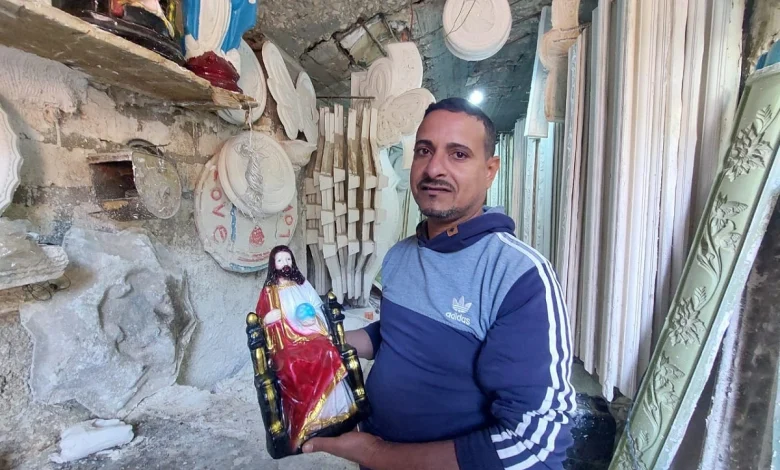
In the quiet village of Kom Abu Hagar in Egypt’s Asyut Governorate, a small five-meter workshop preserves centuries of Coptic Christian artistic tradition. Here, craftsman Saleh Adel Riyad transforms plaster into sacred sculptures of the Virgin Mary, Jesus Christ, and revered saints, keeping alive a disappearing handicraft tradition in Upper Egypt.
The Craftsman’s Journey: From Commercial Diploma to Sacred Art
Saleh Riyad, 40, was born in the village of Awlad Elyas in the Sadfa district of Asyut, a governorate in southern Egypt known for its significant Coptic Christian population. Inside his workshop, surrounded by the smell of plaster and the sound of metal tools, he works carefully on an unfinished sculpture.
“This isn’t an ordinary job. This is faith we make with our own hands,” Riyad explains, his hands covered in white plaster as he shapes the delicate folds of the Virgin Mary’s robe.
After earning his Commercial Diploma, Riyad left his village like many young men from Upper Egypt searching for work opportunities. He found employment in plaster decoration, and through years of daily practice and patience, he mastered the craft. What began as a trade evolved into a genuine passion for religious art.
Sixteen years ago, Riyad returned to his home region and opened his workshop in the neighboring village of Kom Abu Hagar. Drawing on his acquired skills, he began specializing in sacred Coptic sculptures, becoming one of the most prominent practitioners of this traditional art form in Asyut.
Creating Sacred Art: The Sculpture-Making Process
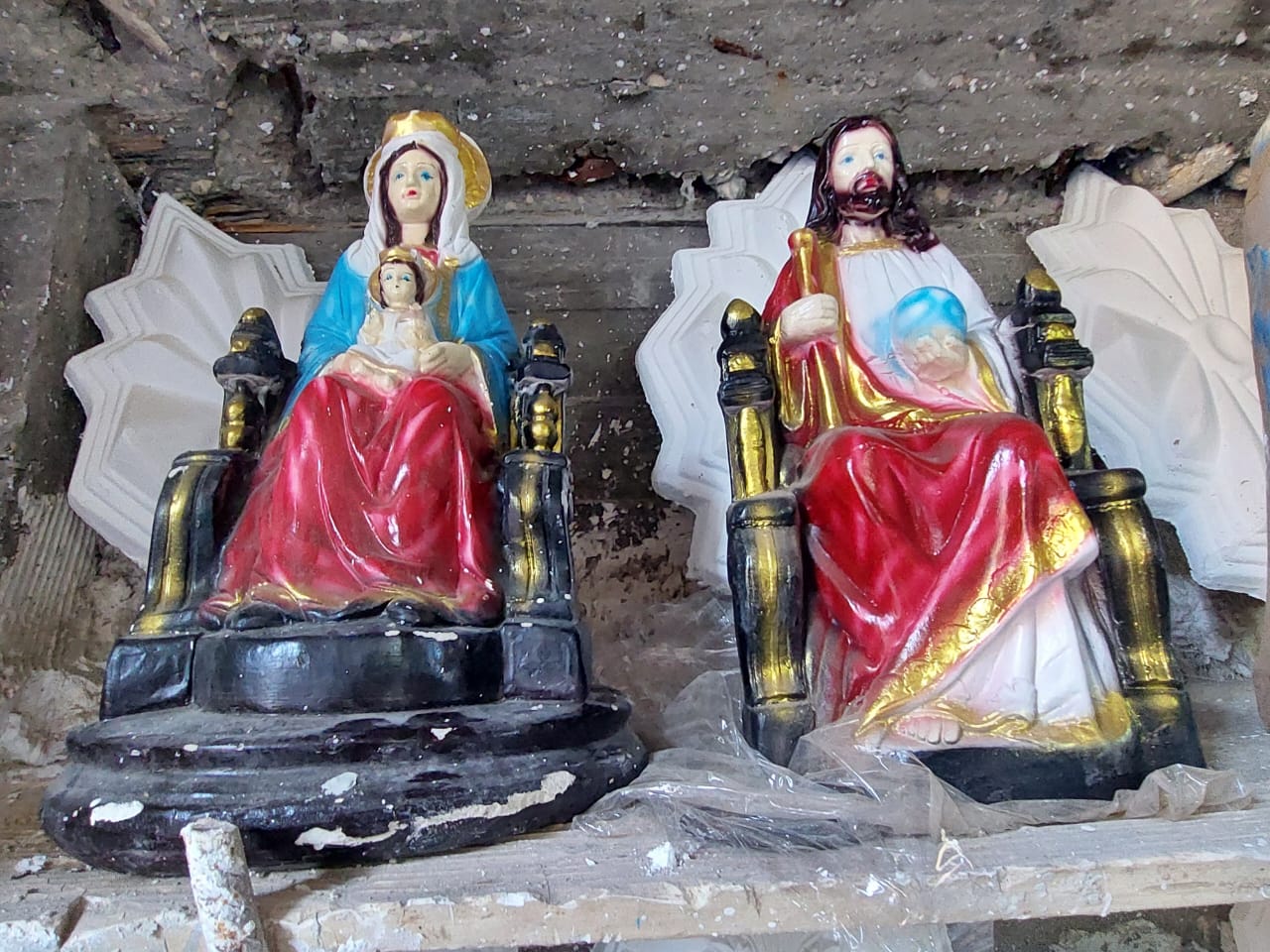
Riyad’s workshop produces sculptures of the Virgin Mary, Jesus Christ, and numerous Coptic saints, including St. George, St. Mina the Wonderworker, St. Mercurius, St. Martha, St. Demiana, and St. Anthony. Each piece follows a careful multi-stage creation process.
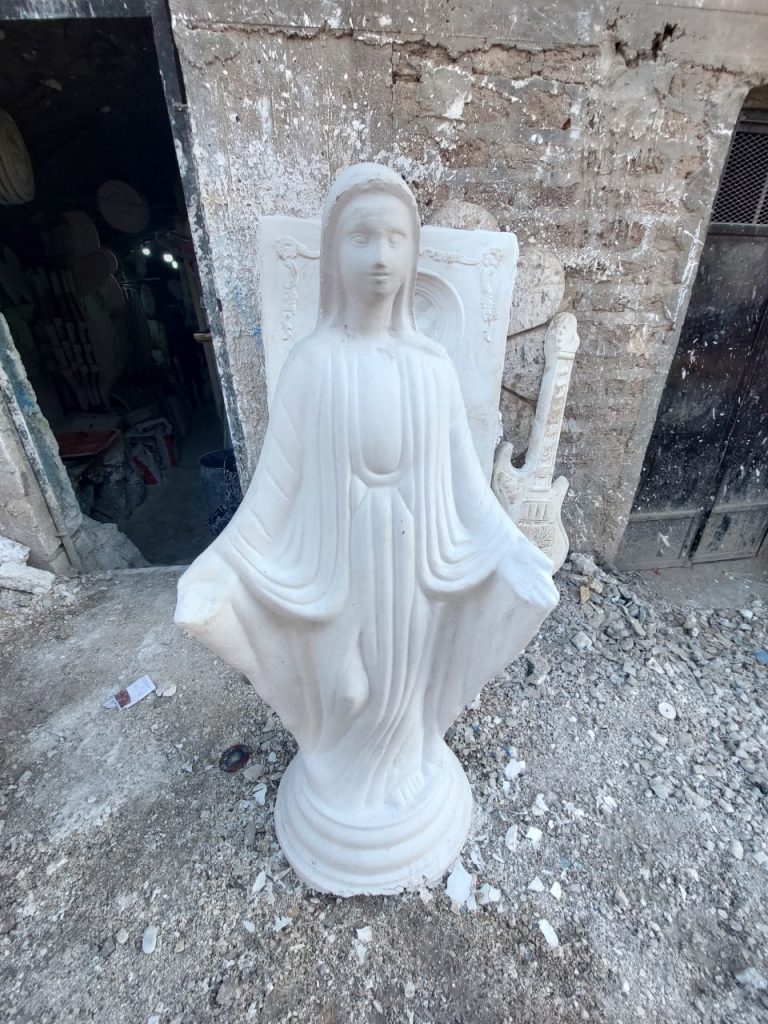
The journey begins with Riyad creating rubber moulds by hand, the foundation for producing the desired shapes. He then prepares the plaster mixture, carefully controlling its thickness before pouring it into the moulds. After the plaster sets and dries, the sculpture emerges for the second, more delicate phase: smoothing edges and refining fine details.
The final stage involves hand-painting each piece with oil paints, giving the sculptures their distinctive character and warmth. “The most important step is the features. They must come out with the scent of the place and the blessing of Upper Egypt,” Riyad says.
At day’s end, dozens of sculptures line wooden shelves throughout the workshop, drying before being offered for sale. Prices vary based on size and detail level, with larger, more intricate pieces commanding higher prices according to buyers’ preferences.
A Thriving Market in a Christian Village
The workshop’s location in Kom Abu Hagar, where all residents are Coptic Christians (Egypt’s indigenous Christian community, comprising approximately 10% of the nation’s population), facilitates the business naturally. Village residents deeply appreciate these religious art forms and frequently commission custom pieces.
The village contains three churches representing different Coptic denominations, all of which regularly acquire artworks from Riyad’s workshop. His customer base extends far beyond the village borders, with buyers traveling from distant areas throughout Egypt.

Holiday Demand and Spiritual Significance
Sales peak during religious holiday seasons, particularly before Coptic Christmas (celebrated January 7th according to the Coptic Orthodox calendar). During these periods, Riyad’s sculptures become more than art objects. They transform into spiritual symbols displayed in homes and churches, and given as gifts carrying blessings and religious significance.
The workshop produces diverse offerings: Virgin Mary sculptures, Jesus Christ figures in various sizes, crowns of thorns, combined Virgin and Christ pieces, and statues of saints that Coptic Christians eagerly purchase. These pieces serve multiple purposes, adorning home interiors, church spaces, and even balconies during religious celebrations.
Preserving a Disappearing Craft
Despite steady demand, the craft faces serious challenges threatening its survival. Rising raw material costs strain profitability, while younger generations show little interest in learning traditional handicrafts. Riyad expresses concern about the future: “This is a craft from our heritage, and we are trying to preserve it from extinction.”
In an era dominated by mass production and technological advancement, small workshops like Riyad’s represent resistance against cultural oblivion. Dozens of manual and heritage crafts throughout Egypt have already disappeared, making the preservation of remaining traditions increasingly urgent.
The Enduring Spirit of Traditional Craftsmanship
Riyad’s sculptures carry a spiritual character that modern manufacturing cannot replicate. Each hand-crafted piece embodies the peaceful message of Christian faith through the serene features of the Virgin Mary and Christ. These works connect contemporary Coptic Christians with centuries of religious artistic tradition rooted in Egypt, where Christianity flourished long before the Arab conquest in the 7th century.
Inside this small village workshop in Upper Egypt, the story of a sacred handicraft continues. Through skilled hands and patient devotion, Saleh Riyad illuminates homes and churches while preserving an irreplaceable piece of Egypt’s rich Coptic Christian heritage for future generations.