
The Translation Problem That’s Distorting Ancient Egyptian History
An architect turned Egyptologist argues for translating hieroglyphic texts directly into Arabic, bypassing European intermediaries.
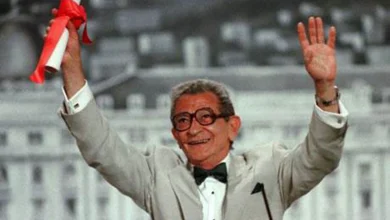
Yusef Tayyiba’s path to studying ancient Egypt began not with hieroglyphs, but with blueprints. As an architect trained to read buildings as texts, where every wall serves a purpose and every axis carries meaning, he found himself drawn to the “linguistic architecture” of ancient Egyptian writing. Now based in Australia, Tayyiba has founded Tayba Studies, a research initiative dedicated to translating hieroglyphic texts directly into Arabic, arguing that the language’s Afro-Asiatic roots make it uniquely suited to capturing ancient Egyptian thought.
In this interview with Bab Misr, Tayyiba discusses his recent translation of the Westcar Papyrus,a collection of magical tales set in the court of King Khufu (builder of the Great Pyramid) and his larger project to document hieroglyphic signs and make Egyptology more accessible to Arabic-speaking readers.
From Stone to Word
How did you transition from architecture to specialising in ancient Egyptian language?
As an architecture student, part of my training focused on architectural history and archaeology, particularly art history across the Middle East, Egypt and Iraq, especially. This opened my eyes to the extended civilizational history of the region and how it contributed to human development globally.
My perspective broadened further when I migrated to Australia. With that distance came renewed questions about personal identity and our civilizational heritage: What can our region offer the world as shared human heritage? What bright aspects of our history deserve illumination?
Years ago, I started a Facebook page focused on language and etymology. Through it, I connected with specialists and enthusiasts, leading to countless discussions that eventually resulted in founding Tayba Studies, dedicated to studying ancient Egyptian language and translating texts from their sources.
How did your architectural background influence your reading of ancient Egyptian texts?
The connection between architectural theory and linguistics is well established. Both disciplines share the fundamental issue of signification, expressing ideas in material form. Architecture is space shaped by lived culture; language and architecture are two sides of the same coin.
Architecture specifically trained me to read space as text: every wall carries a function, every axis has meaning. When I approached ancient Egyptian texts, I realised I was facing a linguistic architecture no less complex than physical buildings. What attracted me wasn’t abstract symbols, but the logic of their construction. I found myself moving naturally from stone to word.
An architect doesn’t read isolated elements but integrated systems, and that’s what I apply to texts. I ask: When was this written? What’s its relationship to ritual or administrative space? What does it say, and what does it leave unsaid? Reading between the lines is similar to understanding how space formulates architectural structure.
The Problem with Translation Through European Languages
What’s the biggest problem facing the translation of ancient Egyptian texts into Arabic?
Ancient Egyptian text must be understood not just linguistically, but spatially, temporally, and functionally. Many translations fail by stripping the text of its local civilizational and cultural framework.
The biggest problem we face is translation through a European intermediary. Often what’s translated isn’t ancient Egyptian itself, but a Western reading of it loaded with theological or philosophical concepts that don’t belong to the text or the region. This creates an understanding that appears scholarly on the surface but feels alien in spirit.
Total reliance on what the first generations of Egyptologists transmitted, despite its immense value, can lead to lost concepts or entrenched mistranslations resulting from the translator’s cultural distance or lack of available evidence at that time. Re-examination remains urgently necessary, especially given the tremendous progress in Egyptology and the many archaeological discoveries that have corrected previous ideas.
With all respect for the pioneering giants of Egyptology, someone from the region and local culture may be better positioned to understand the text’s dimensions within the framework of civilizational continuity and geographical reality. This isn’t about dismantling previous work or questioning it entirely, but about correcting what’s necessary and building on accumulated knowledge. This is the nature of science.
This is evident in linguistic commonalities and grammatical rules shared by the region’s languages, foremost our living Arabic language, which shares much vocabulary and many linguistic phenomena with ancient Egyptian, unlike Western languages.
How can ancient Egyptian language be read today without imposing modern concepts onto it?
By adhering to three strict conditions. First, return to the original text, not the translation. Second, understand the Egyptian system of thought; don’t search for modern equivalents. Third, resist the interpretative temptation. Not every silence is ambiguity, and not every symbol is myth. Faithful reading begins when we accept that the text isn’t required to resemble us.
Filling a Knowledge Gap
What motivated you to establish Tayba Studies? Was it reacting to a scientific vacuum or fulfilling a postponed project?
The main motivation is filling a knowledge gap. While many Arabic translations of hieroglyphic texts exist, Arabic libraries are almost entirely devoid of complete, consistent translations of hieroglyphic texts directly from their sources without passing through modern Western languages.
This stems from previous technical obstacles, whether printing hieroglyphic signs appropriately, writing phonetics with correct symbols, or properly citing references.
We decided to present ancient Egyptian writings to contemporary Arab readers from their direct sources, conveying the complete picture: the historical circumstances of the text’s writing and discovery, alongside its importance and position among other texts. We’re committed to presenting texts completely and integrally as written, with literal transliteration in both Latin and Arabic scripts, alongside meanings as we understand them.
This method suits continuous development and translation, and serves multiple future projects built on this foundationwhether rearranging elements or delving into meanings through comparisons and knowledge accumulated from different texts.
Tayba Studies represents a cognitive necessity. People from the region are interested in their ancient civilisation but are deprived of its vocabulary due to language barriers and academic intimidation. We aim to break down barriers between readers and rigorous scientific content, contribute to knowledge dissemination, and spread love of Egyptology among rising generations. This may restore the Arab reader’s confidence in their ability to read the region’s oldest languages themselves.
Correcting Popular Misconceptions
Has our understanding of Egyptian history changed when returning to original texts instead of intermediary translations?
Radically. When returning to original texts, we discover that Egyptians weren’t immersed in death obsession but obsessed with the idea of continuity. Religion for them was closer to an ethical-cosmic system, not merely ritualistic superstition.
What are the most dangerous common misconceptions about ancient Egyptian civilisation that the texts themselves correct?
Unfortunately, many intermediary translations have reduced ancient Egyptian civilisation to a romantic, ambiguous image within what’s known as “Egyptomania”, a state of cultural and artistic obsession with ancient Egypt manifested in fascination with Egyptian symbols, architecture, rituals, and myths, but in a selective, romantic manner separated from true historical and linguistic context.
Among Egyptomania’s negative effects: it entrenched the idea that ancient Egypt was solely a civilisation of temples and funerary texts, preoccupied with the afterlife. The truth is that hundreds of thousands of texts depict Egyptians’ daily struggles and hopes, alongside fantastical stories and tales for entertainment that were narrated and circulated. This is the aspect we seek to highlight, because it facilitates connecting with the past by realising that humanity is humanity, basic needs haven’t changed through the ages.
To liberate ancient Egyptian civilisation from Egyptomania, we must return to original texts and reconnect ancient Egypt with its Afro-Asiatic linguistic depth instead of isolating it. Here specifically lies our research project at the heart of the epistemological battle: deconstructing the obsession and rebuilding understanding.
The Westcar Papyrus: Tales of Magic and Power
Why did you specifically choose the Westcar Papyrus for this book?
Human history, at its core, is the history of storytelling. Ancient Egyptians, like other people, enjoyed narrating and listening to stories. Inscriptions, images, and oral myths constitute overwhelming evidence of a long storytelling tradition in ancient Egypt. Topics varied: deeds of gods, grand adventures and supernatural events, contemplations on life’s meaning, and also daily life and human emotions of ordinary people.
The Westcar Papyrus tales are among the most exciting Egyptian story collections. Named after its first modern owner, it’s currently preserved in Berlin’s Egyptian Museum, known as the Tales of King Khufu and the Magicians. These imagined stories are set during King Khufu’s reign in the Fourth Dynasty of the Old Kingdom (circa 2600 BCE) and involve strange magical events from the past and present, with prophecies for the future.
We present the Westcar Papyrus tales for the first time to Arab readers, specialists and non-specialists translated directly from ancient Egyptian into Arabic in a simple, attractive manner. This 21st-century work builds on predecessors’ efforts and benefits from numerous archaeological discoveries and progress in Egyptology to offer a newer, perhaps more accurate translation.
The Egyptologist Ernest Budge spoke in his book on ancient Egyptian literature about the importance of popularising stories for local readers, British in his case. William Petrie also pointed to the importance of images in bringing concepts closer and focusing ideas. Following this approach, we present this precious work as illustrated stories that place readers amid events to live the details and experience the emotions.
Alongside the visual dimension, we ensured the work includes complete texts in hieroglyphic script and translation, perhaps for the first time as a complete printed text with Arabic phonetics,providing an essential reference for Egyptology students and those learning ancient Egyptian language.
What’s the importance of the Westcar Papyrus in understanding religious and political thought in ancient Egypt today?
The Westcar Papyrus is one of the most important models of ancient Egyptian literature because it reflects the most common tale types of its era. Despite the existence of many educational and religious stories in ancient Egyptian heritage, the Westcar tales primarily aim at entertainment. Nevertheless, they’re not devoid of propagandistic messages and religious ones, such as emphasising the god Ra’s divine intervention in kings’ births and severe punishment for betrayal.
Does the papyrus carry symbolic or ideological messages still valid for reading today?
Despite their antiquity, the Westcar stories still offer a unique, entertaining experience worthy of sharing and contemplation. Their details resonate particularly with local readers due to civilizational continuity.
The papyrus was first translated by German Egyptologist Adolf Erman in the late 19th century, followed by translations into various European languages, French by Gaston Maspero, English by Ernest Budge and William Petrie, and then Alan Gardiner. Egyptian scholar Selim Hassan also discussed this papyrus in the 1940s within his presentation of ancient Egyptian literature in his Encyclopedia of Ancient Egypt.
Translating the papyrus directly into Arabic holds special importance since Arabic and ancient Egyptian belong to the same geographical scope and the same major language family: Afro-Asiatic languages. Based on this historical kinship and ancient Egyptian civilisation’s cognitive influence in the region through the ages, Arabic is one of the most successful media for transmitting ancient Egyptian thought and clarifying its special expressions.
This convergence appears in the similarity of many linguistic rules and the use of rhetorical embellishments, like repetition of wordplay in the story of the three kings’ birth. Furthermore, some ancient customs remain entrenched in local society, like wearing a shirt inside-out while awaiting a newborn, previously translated incorrectly in the versions we reviewed.
Reclassifying Hieroglyphic Signs
What challenges did you face in documenting and collecting hieroglyphic writing signs?
The biggest challenges lie in inherited classificatory chaos. We use classifications designed for European educational purposes, not for understanding the Egyptian system itself. Re-collecting and reclassifying isn’t merely technical work but a dismantling of an entire Orientalist legacy.
Added to that is the lack of an approved system for transferring ancient Egyptian phonetics to Arabic script, which is scientifically called “transliteration.” The earliest attempts in this field were by Ahmed Kamal Pasha, dean of Egyptian archaeologists, in his ancient Egyptian language dictionary, which never saw publication in his time and remained an unfinished, unedited manuscript combining Arabic and French.
In our transliteration of the Westcar Papyrus into Arabic phonetics, we preserved the original text’s right-to-left direction. We utilised the possibilities of connected Arabic script and diacritical marks. We also used the extended Arabic alphabet, including letters like چ (ch) and پ (p). Thus, we covered all ancient Egyptian sounds without using foreign symbols, as Western phonetics does.
Similar to conventional writing, we separated pronouns and suffixes at word endings to distinguish them, using connected letterforms. We added what was missing from the text between | | marks, distinguished names with quotation marks ” “, and placed kings’ names (cartouches) between parentheses ( ).
Why do we need to reclassify or reread hieroglyphic signs? How does this project specifically serve the Egyptian researcher?
Because a sign isn’t an abstract image but an intellectual unit. When an Egyptian researcher understands the sign’s logic, they liberate themselves from the position of passive reception and become a knowledge producer, not merely a consumer of explanation.
Language, Identity, and Heritage
How do you see the relationship between ancient Egyptian language and contemporary Egyptian cultural identity?
It’s not a relationship of nostalgia but of cultural continuity. Language isn’t a disconnected past but a deep layer in collective consciousness. When language is excluded, the Egyptian’s right to understand themselves outside imposed narratives is excluded with it.
Where does the challenge lie in official institutions’ dealings with linguistic and civilizational heritage?
With all appreciation for the great efforts made by official institutions and their important role in preserving the region’s heritage, I see the challenge in avoiding reducing heritage to merely touristic material or ceremonial symbol at the expense of a living knowledge project. Heritage isn’t served by display alone but by civilizational continuity, critical reading, and serious education.
Yusef Tayyiba is an architect and researcher in hieroglyphic language. He founded Tayba Studies to translate ancient Egyptian texts directly into Arabic. His recent work includes an illustrated, annotated translation of the Westcar Papyrus.