
From the City Gate and the Steadfastness Monument to El Ansari Market and Port Tewfik Promenade, a visual journey through the contours and daily rhythms of Suez.
In Suez, the camera captures a city writing its biography across layered histories. Every corner bears the imprint of endurance and confrontation, yet the city keeps shaping its everyday life with a pragmatic spirit and an unmistakable presence for anyone wandering its neighborhoods. Between rows of palm trees and flags raised along the roadsides, Suez reveals its layered identity as a port city and a living vessel of collective memory, renewed in every frame.
This photo essay traces a quiet visual path through the streets of Suez, showing how the city’s grand emblems intersect with the ordinary passages of its residents, turning each photograph into a small window onto a wider story of place and belonging.
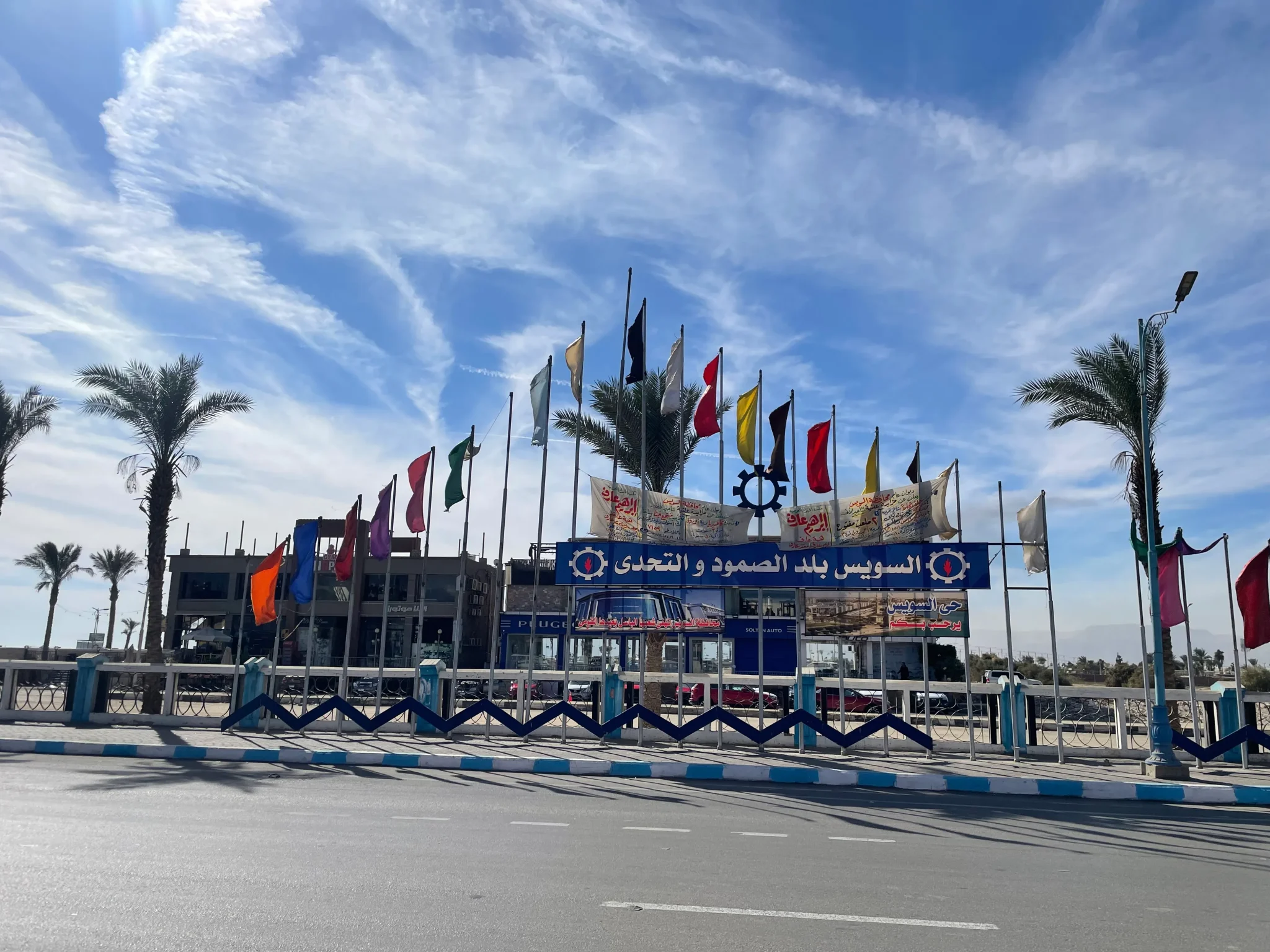
The City Gate
Beneath an open sky, flanked by rows of flags and palms, the phrase “Suez, Land of Steadfastness and Defiance” meets arriving eyes as a steady banner for a city whose streets and landmarks still tell a story of resilience at every turn.
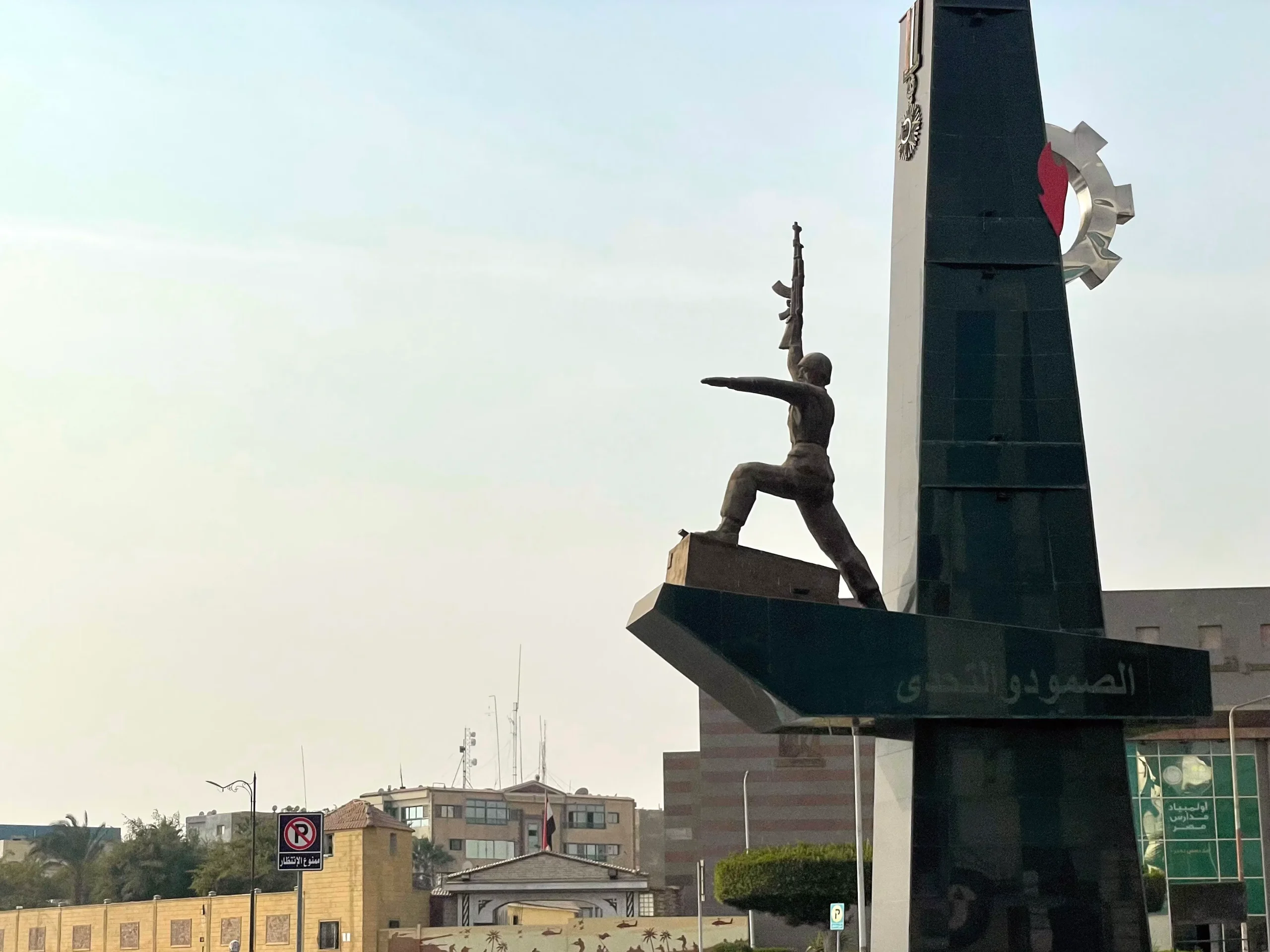
The Monument of Steadfastness and Defiance
A memorial pairing a soldier’s statue and a plinth inscribed with “Steadfastness and Defiance” alongside a column and an industrial gear evokes memories of shared struggle and collective labor inside Suez. The monument remains anchored in the city’s memory since the popular resistance of 1973, standing as a witness to its people’s resolve.
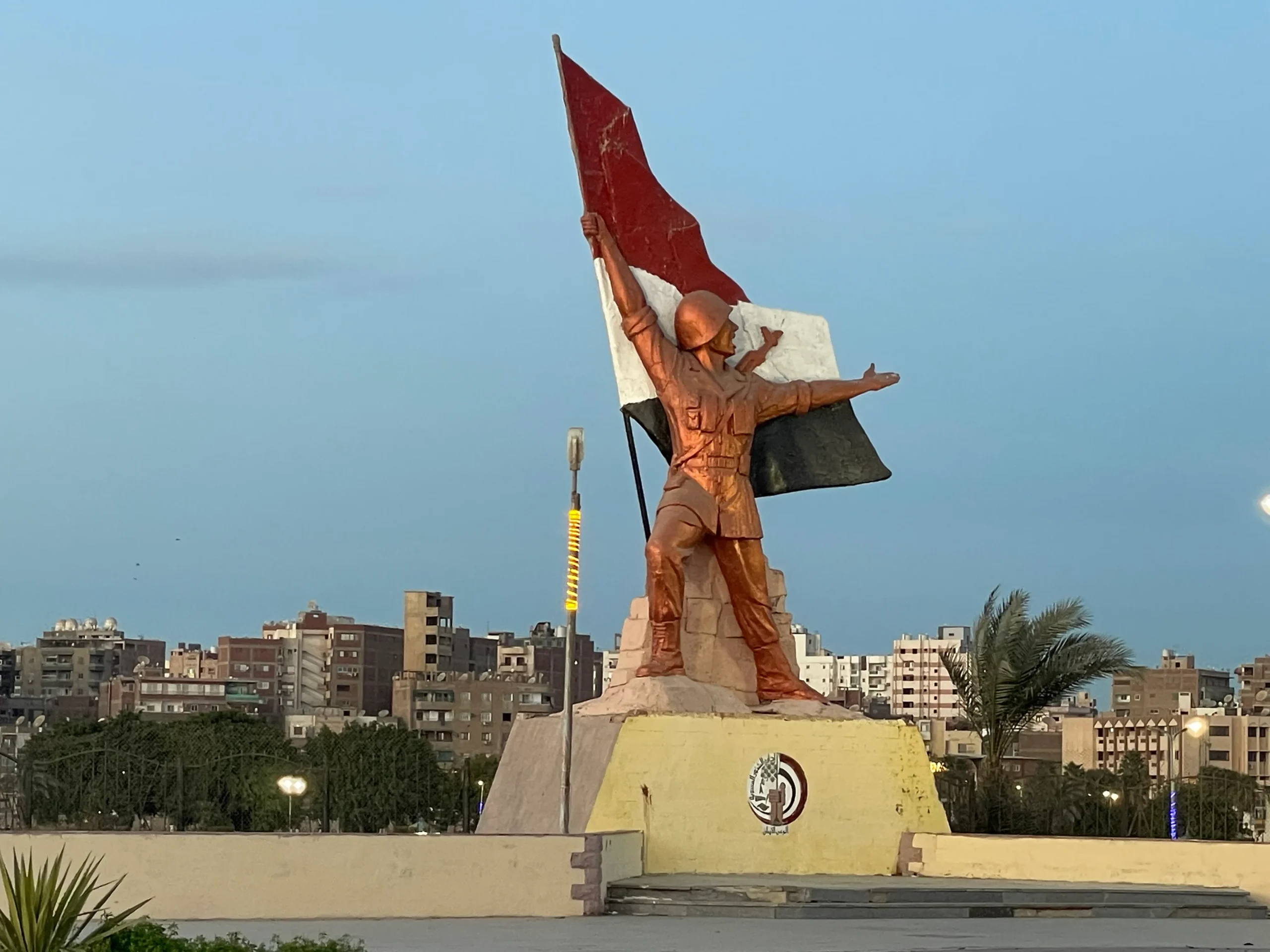
The Unknown Soldier Statue
The Unknown Soldier statue rises tall along the New Corniche of Suez, facing the Martyrs’ Garden, embodying wartime valor and popular resistance in defense of the homeland as one of the valiant city’s foremost historic and symbolic landmarks.
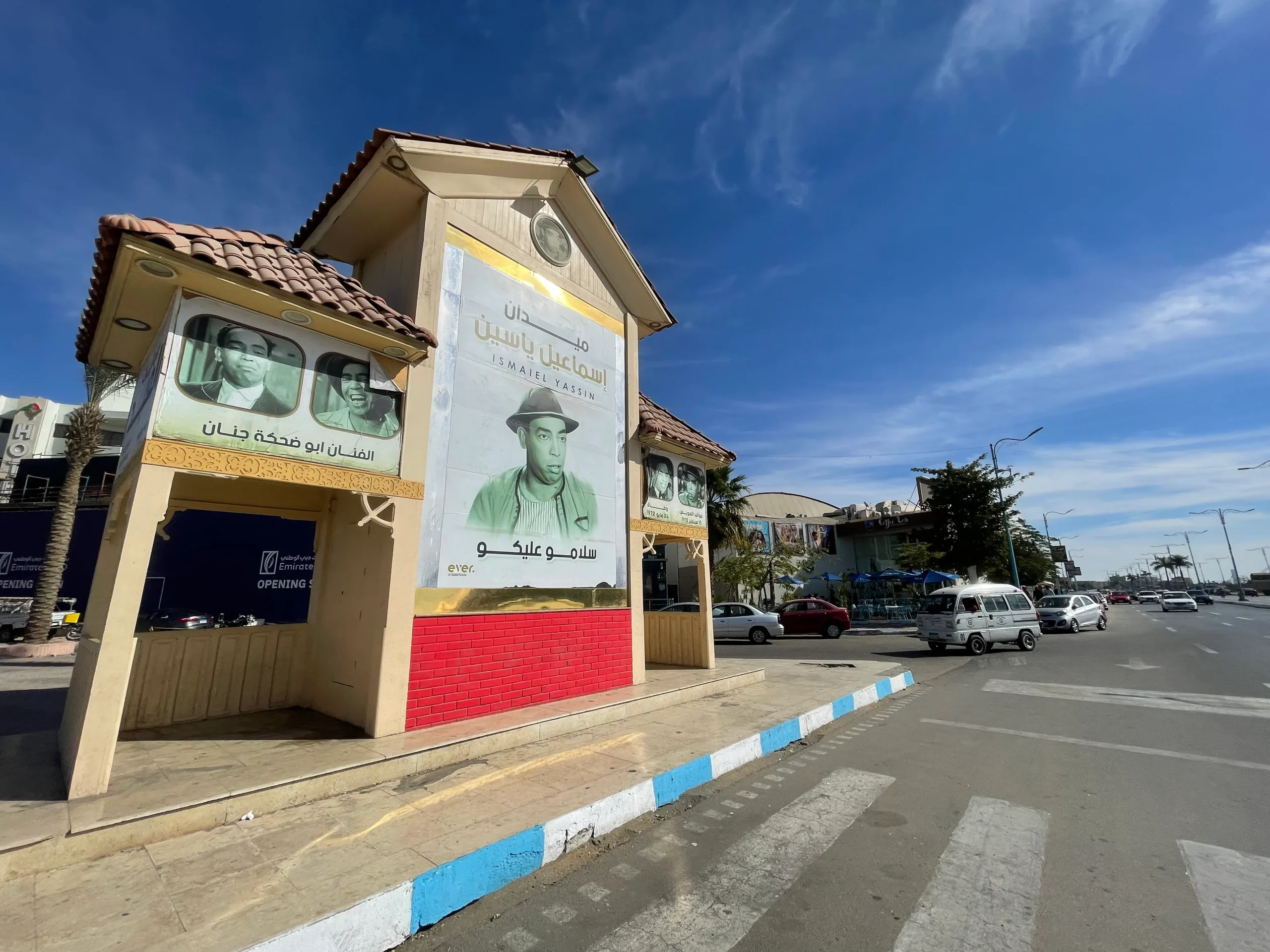
Ismail Yassin Square
A memorial sculpture honors the late artist Ismail Yassin, a native son of Suez, in the square bearing his name. His likeness anchors the monument alongside his famous greeting, “Salamo Aleiko,” becoming part of the visual identity of the city where he grew up.
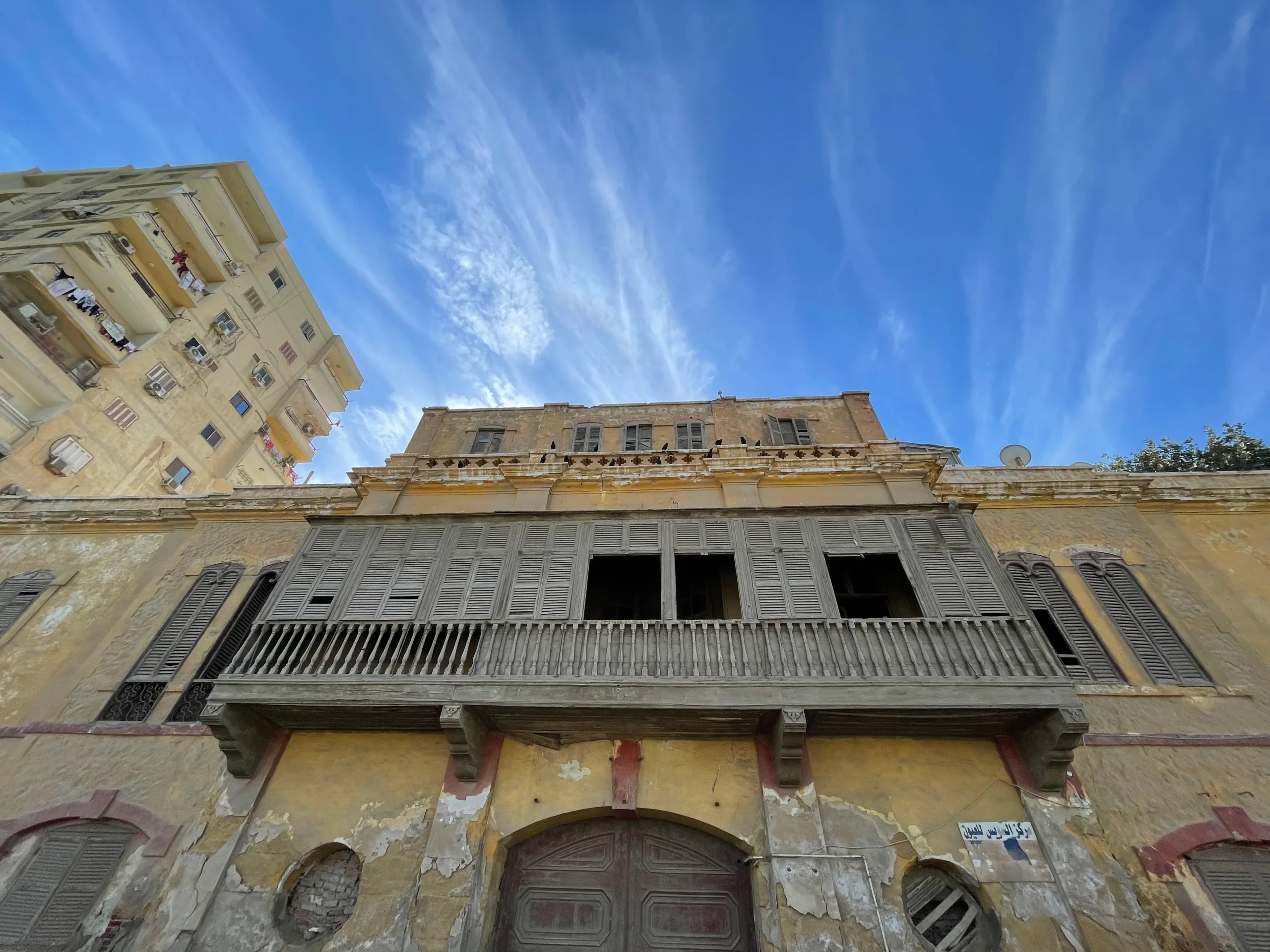
The Old House
In the Suez district, facing the El Khor shoreline along the Old Corniche, life once pulsed with a tireless flow of goods and travelers. Here, at this strategic threshold, vessels arriving from distant shores dropped anchor, carrying cargoes and passengers before unloading them at a house known as “Beit El Messagery,” one of the region’s key hubs of commercial exchange during the late nineteenth and early twentieth centuries.
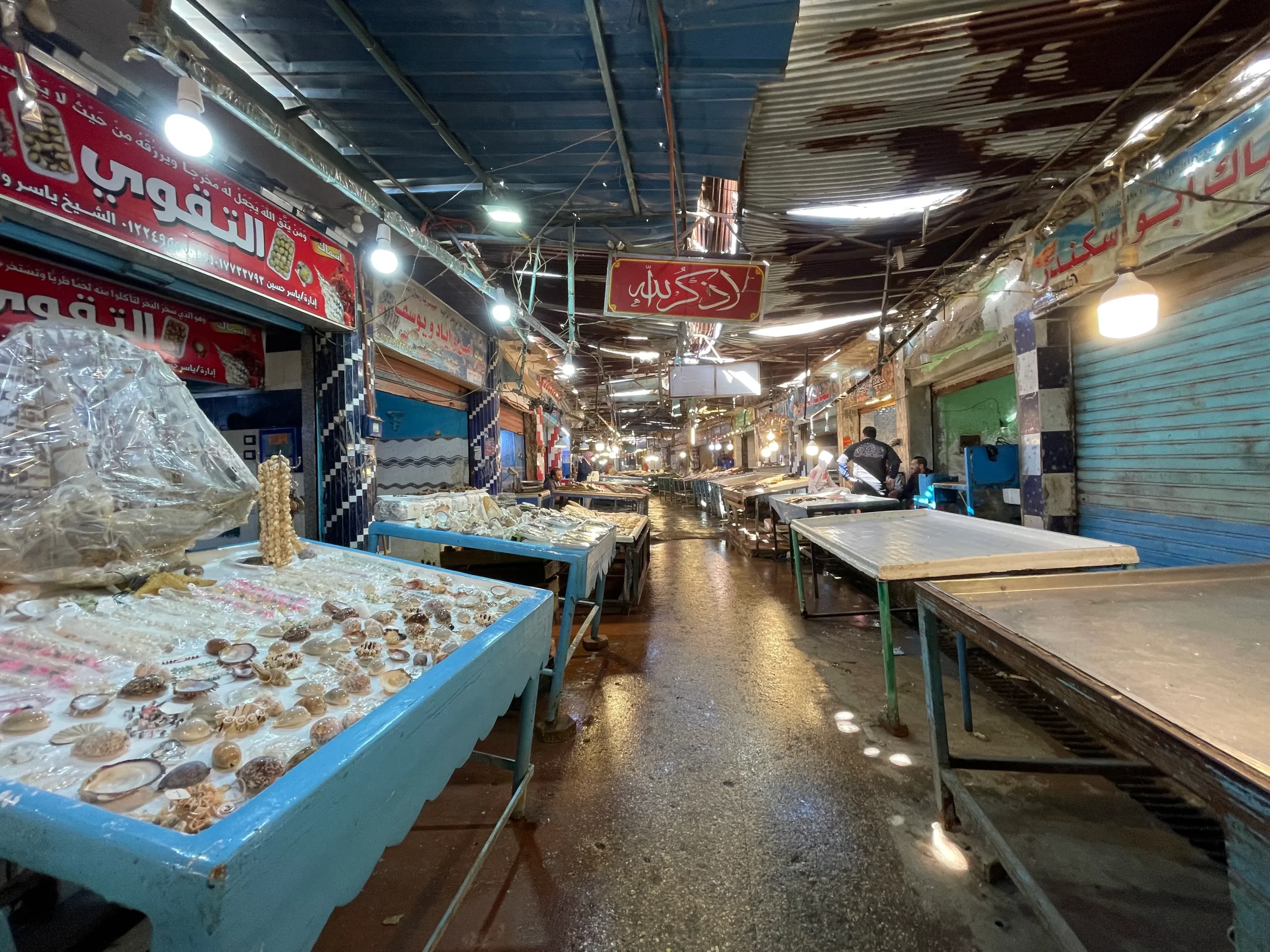
The Fish Market
Moving straight from the boats of the Gulf of Suez and the Red Sea to the market stalls, we step inside El Ansari Fish Market, the city’s oldest and best-known fish auction hall, where fresh Red Sea catches fill the heart of the resilient city.
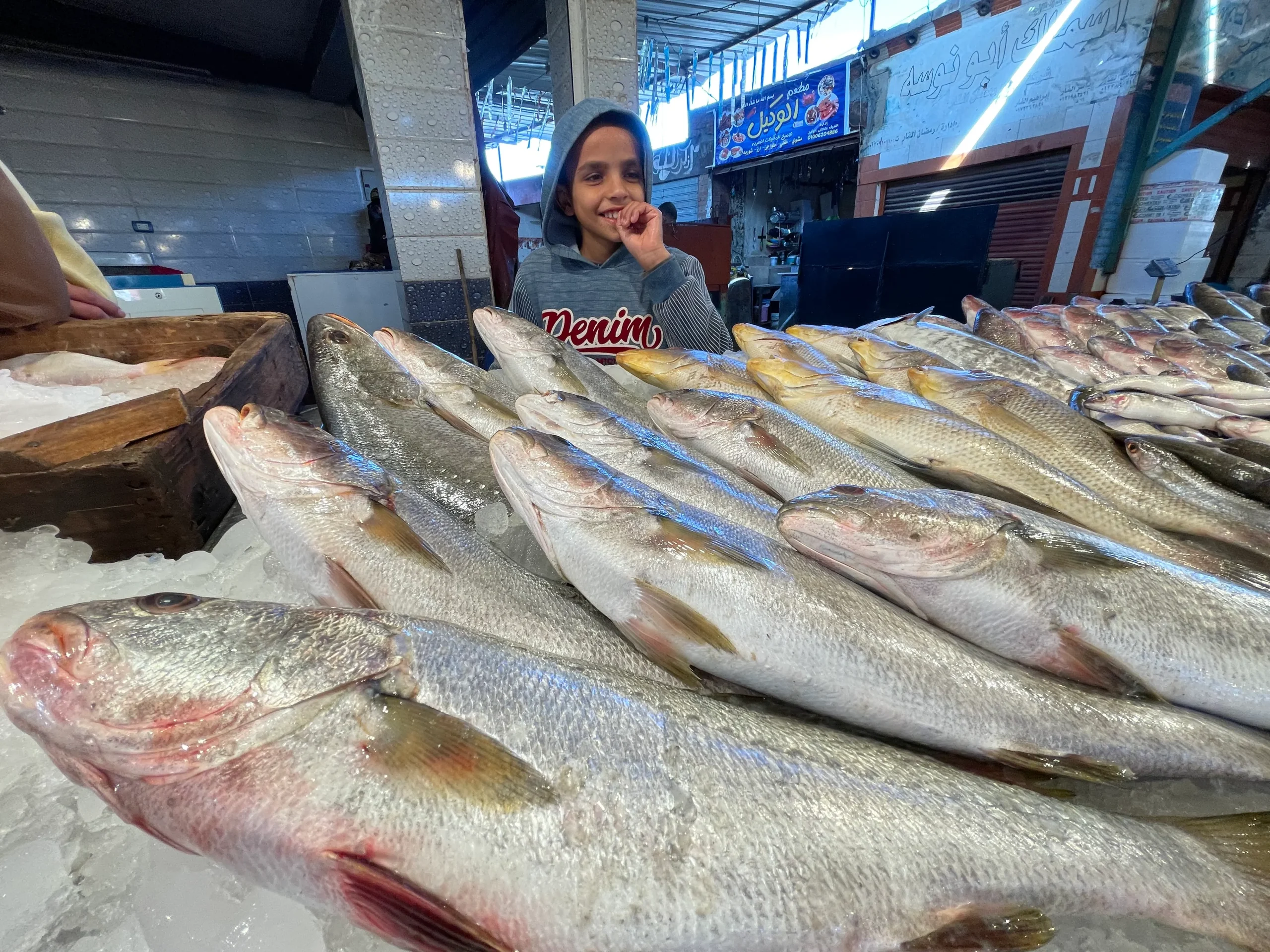
The Fish Boy
Behind ice-packed tables brimming with fresh Gulf of Suez catch, young boys stand shoulder to shoulder with older hands in El Ansari. The frame captures the bond between Suez locals and the sea, fishing, and trade from childhood onward, keeping the halaka (traditional fish auction market) a daily classroom where a new generation learns the trade’s craft and the sea’s bounty.
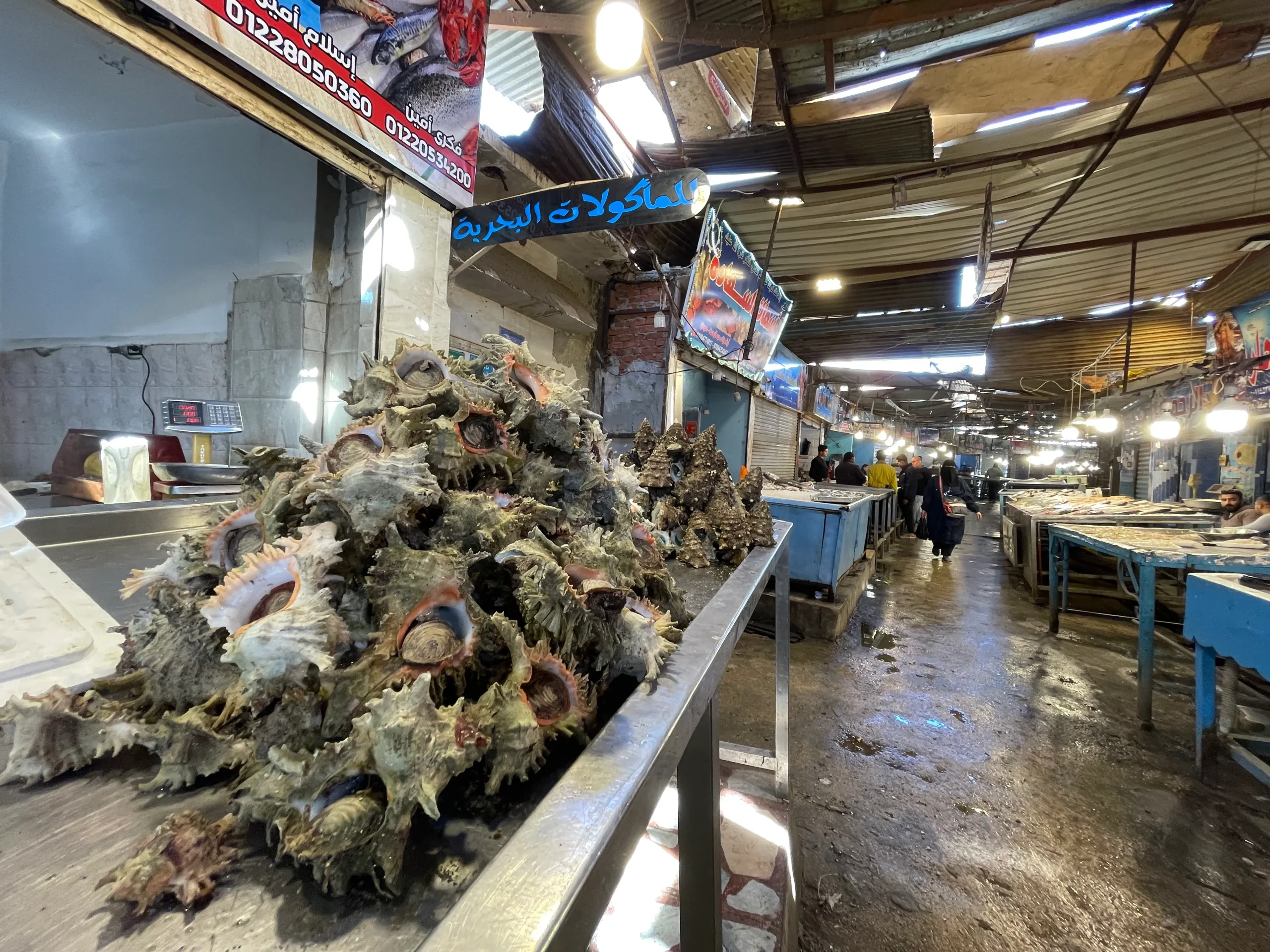
Seafood
Stalls in Suez’s El Ansari Market set aside space for sea snails shaded in hues shifting between blush pink and ivory. Gathered by fishermen from the deep gulf and its reefs, these marine creatures form an authentic part of Suez’s kitchen and coastal culture, while lending a stroll through the halaka a visual texture where the sea’s sustenance meets marine beauty.
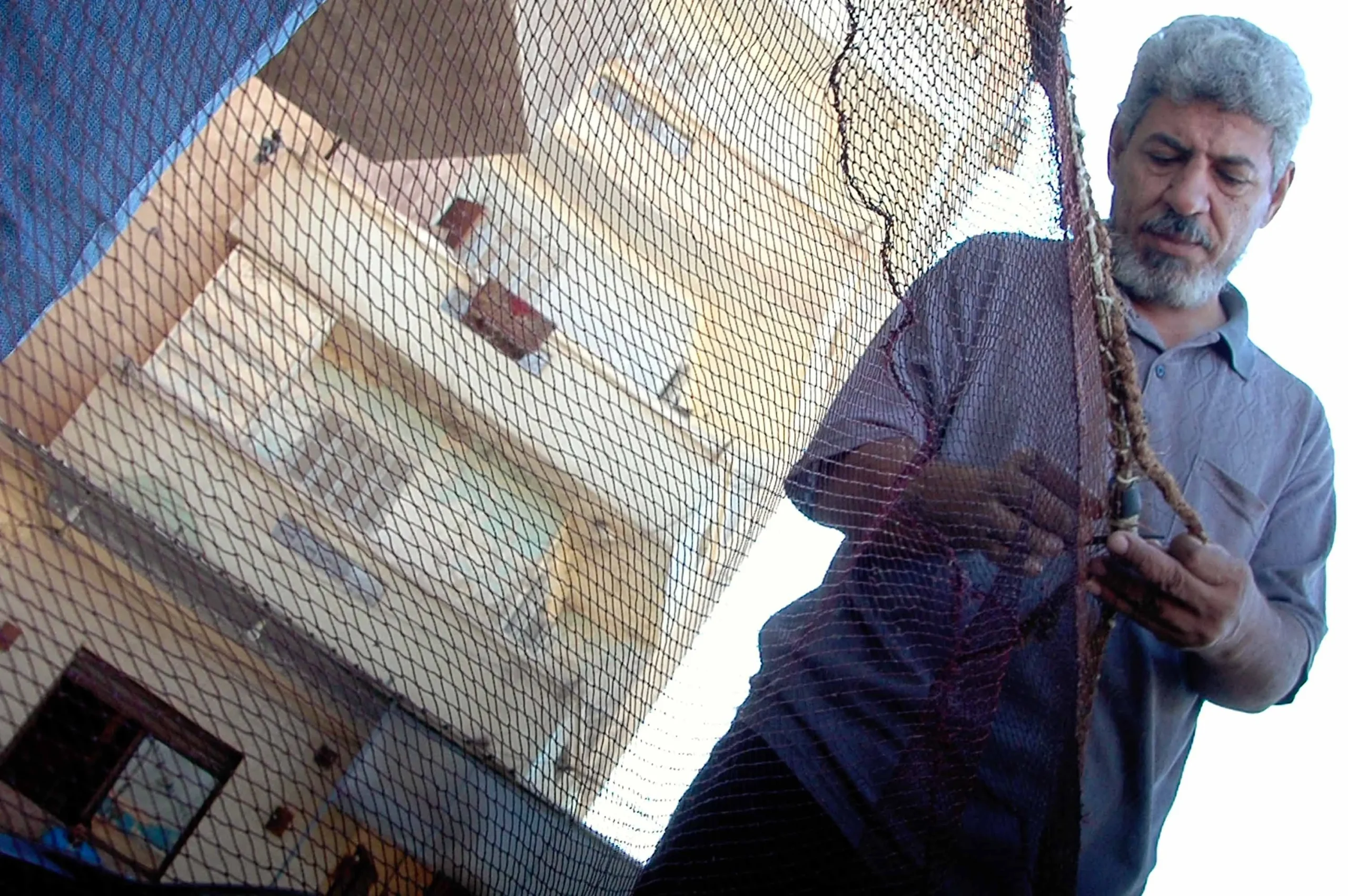
The Fisherman Mending His Net
Across the city’s fishermen’s quarters, nets stretch out everywhere, and fishermen sit for long hours repairing the ghazl (fishing net) and stitching back what waves and coral reefs have torn. This exacting handwork demands patience and inherited skill, serving as a daily ritual of preparation before boats set sail toward the Gulf of Suez and the Red Sea.
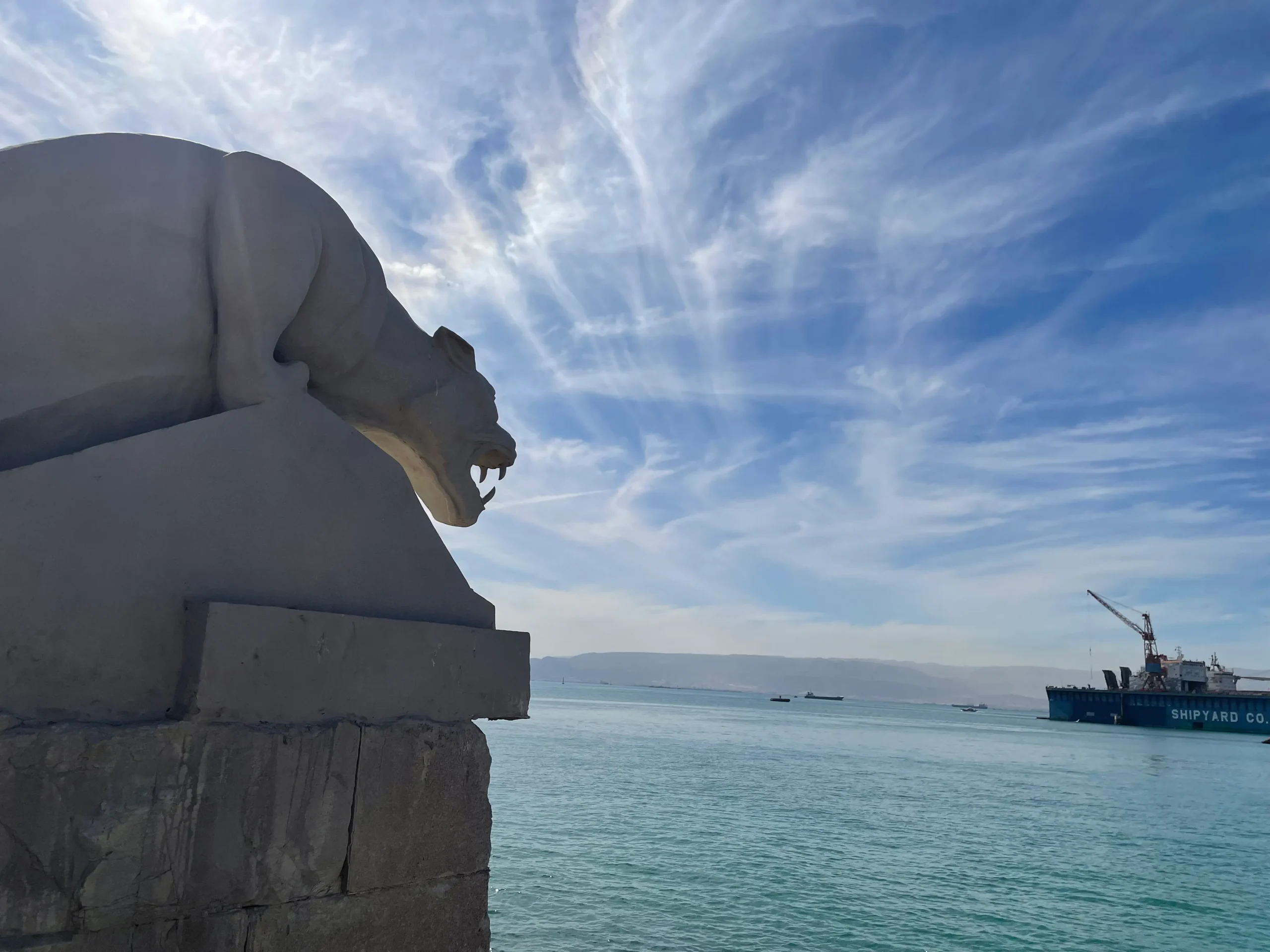
The Bengal Tiger on Port Tewfik Promenade
The Bengal Tiger statue stands guard over a century of the city’s history. Built in 1926, and despite the destruction of its original obelisk during artillery shelling in the 1967 war, the tiger held its ground atop its stone plinth on Port Tewfik Promenade, becoming one of the best-known landmarks woven into Suez residents’ memories and family photographs.
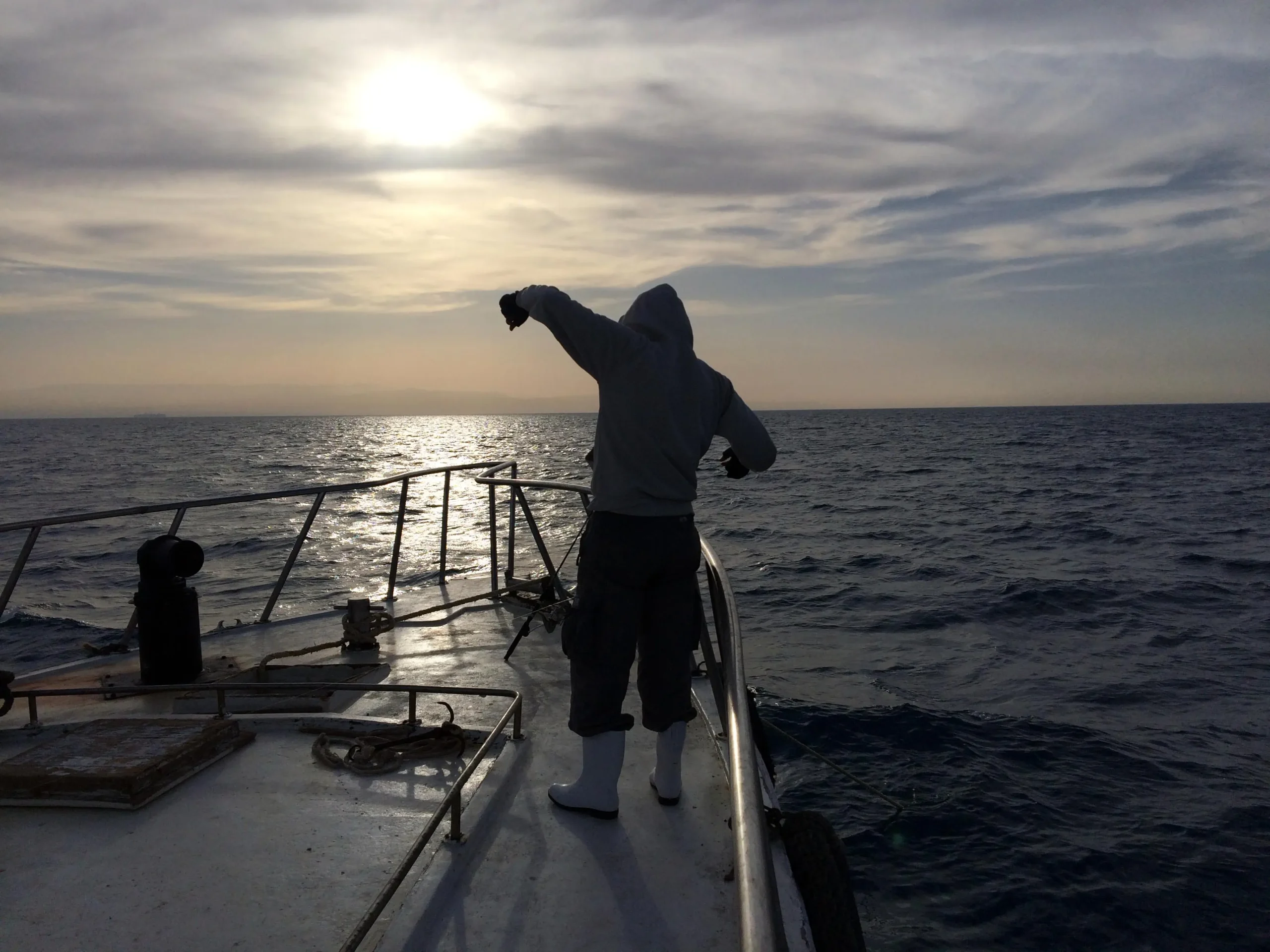
The Fisherman Aboard the Boat
With the first threads of light glinting across the waters of the Gulf of Suez, the city’s fishermen begin their day aboard fishing boats. A Suez fisherman in work gear and rubber boots stands by the gunwale gripping the net ropes, in a scene that distills the locals’ age-old bond with the sea, where the daily search for livelihood renews far from shore amid the hush of water and the surge of waves.
Sunset Scene
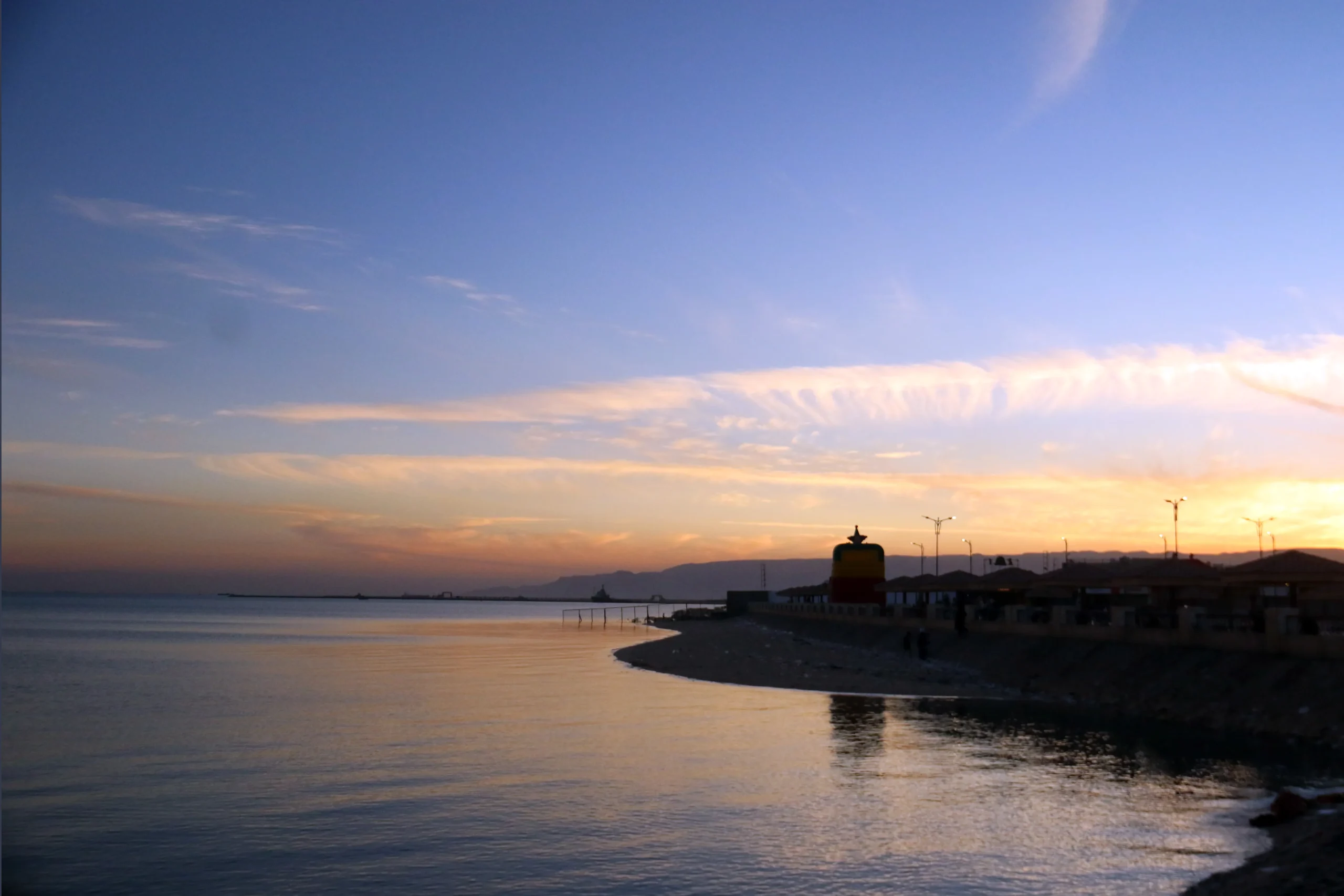
At dusk, details slip behind the shadows, leaving in the frame only the lines of the shore, a silent watchtower on the horizon, and calm water swallowing the last threads of light.