
Tales of master calligraphers and the vanishing street art of an Egyptian port city.
By Helmy Yassin
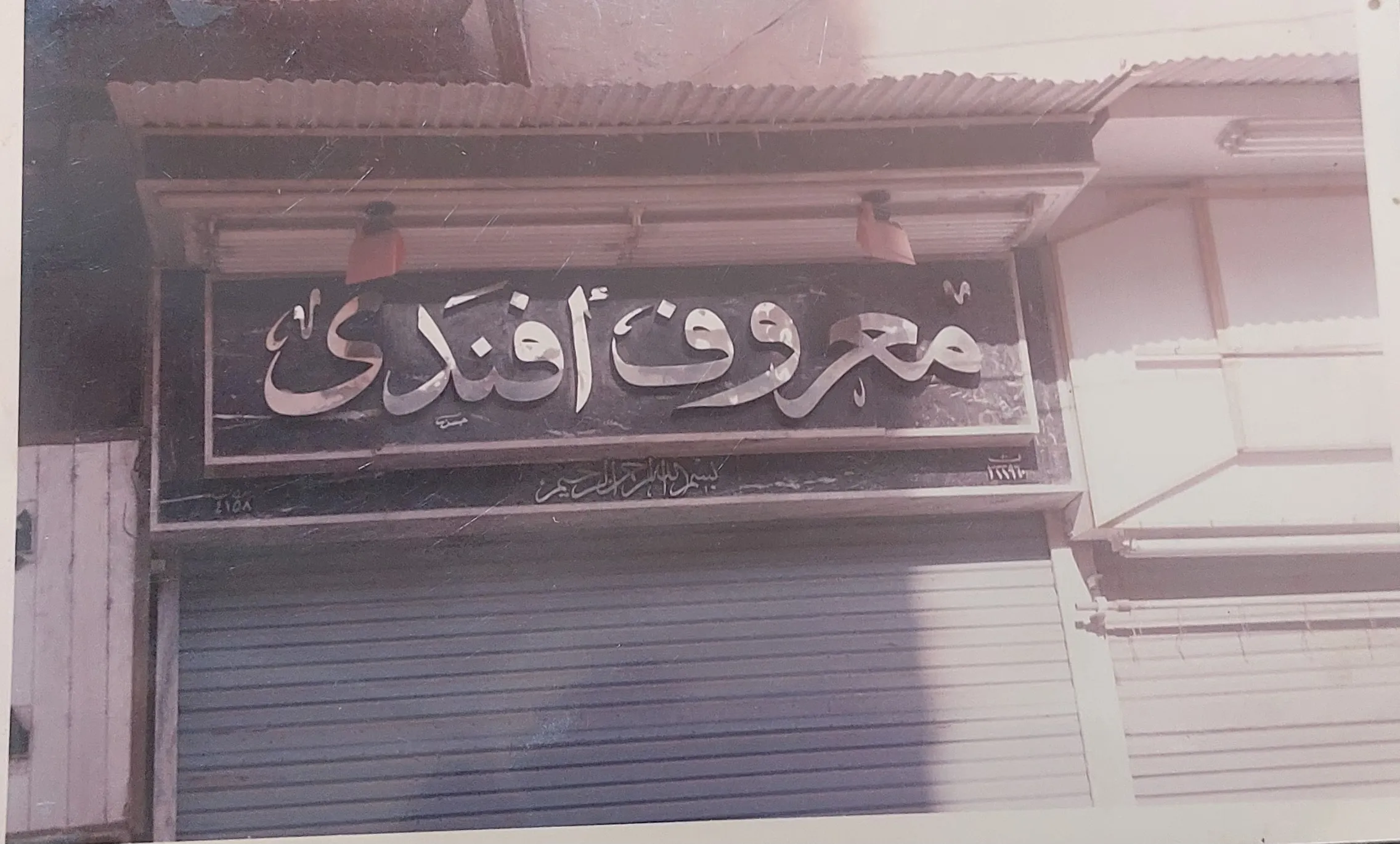
Along the weathered streets of Damietta, a city renowned for its master woodworkers and artisanal heritage, a handful of aging storefronts still guard a quieter craft. Above their thresholds hang signs whose letters were meticulously swept by hand, their palettes chosen with a painter’s eye, and their flourishes executed in a tradition now largely vanished from modern streetscapes.
Along the weathered streets of Damietta, a city renowned for its master woodworkers and artisanal heritage, a handful of aging storefronts still guard a quieter craft. Above their thresholds hang signs whose letters were meticulously swept by hand, their palettes chosen with a painter’s eye, and their flourishes executed in a tradition now largely vanished from modern streetscapes.
For decades, passersby glanced up at these boards without registering their artistry. Yet with the passage of time, they have endured as silent chroniclers of the city’s folk arts, forming a visual archive that stubbornly resists erasure even as the digital age overtakes the trade that birthed them.
The Calligrapher: An Architect of Place
Hassan Abu Youssef, a 75-year-old veteran of the trade, insists that sign-painting demanded a rare alchemy of innate talent, patience, and hard-won experience. A khattat (master calligrapher) never merely transcribed a name onto wood or tin; rather, he sat down with the shopkeeper to absorb the soul of the business, envisioning a form that would arrest the eye and anchor the shop’s identity in the neighborhood.
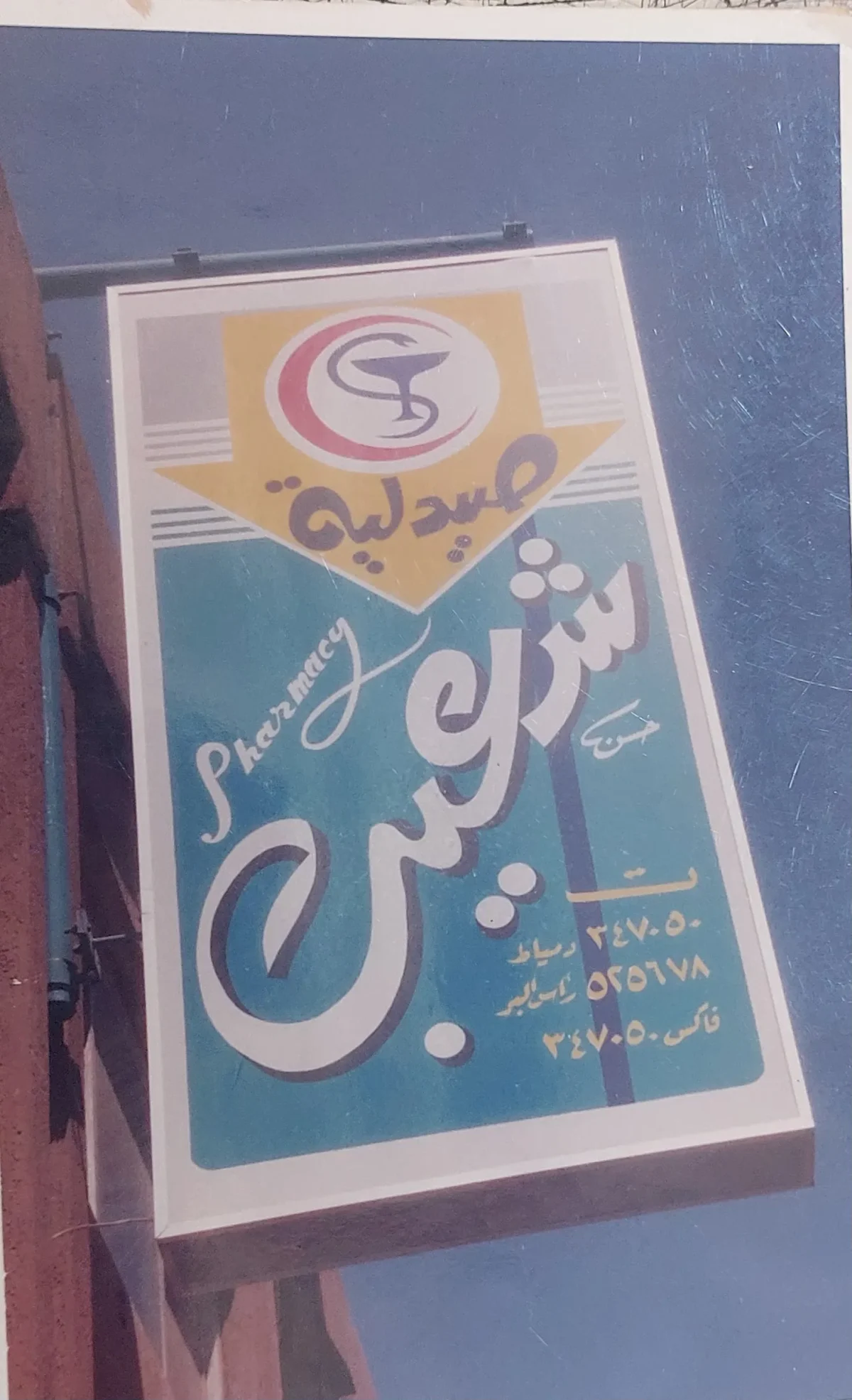
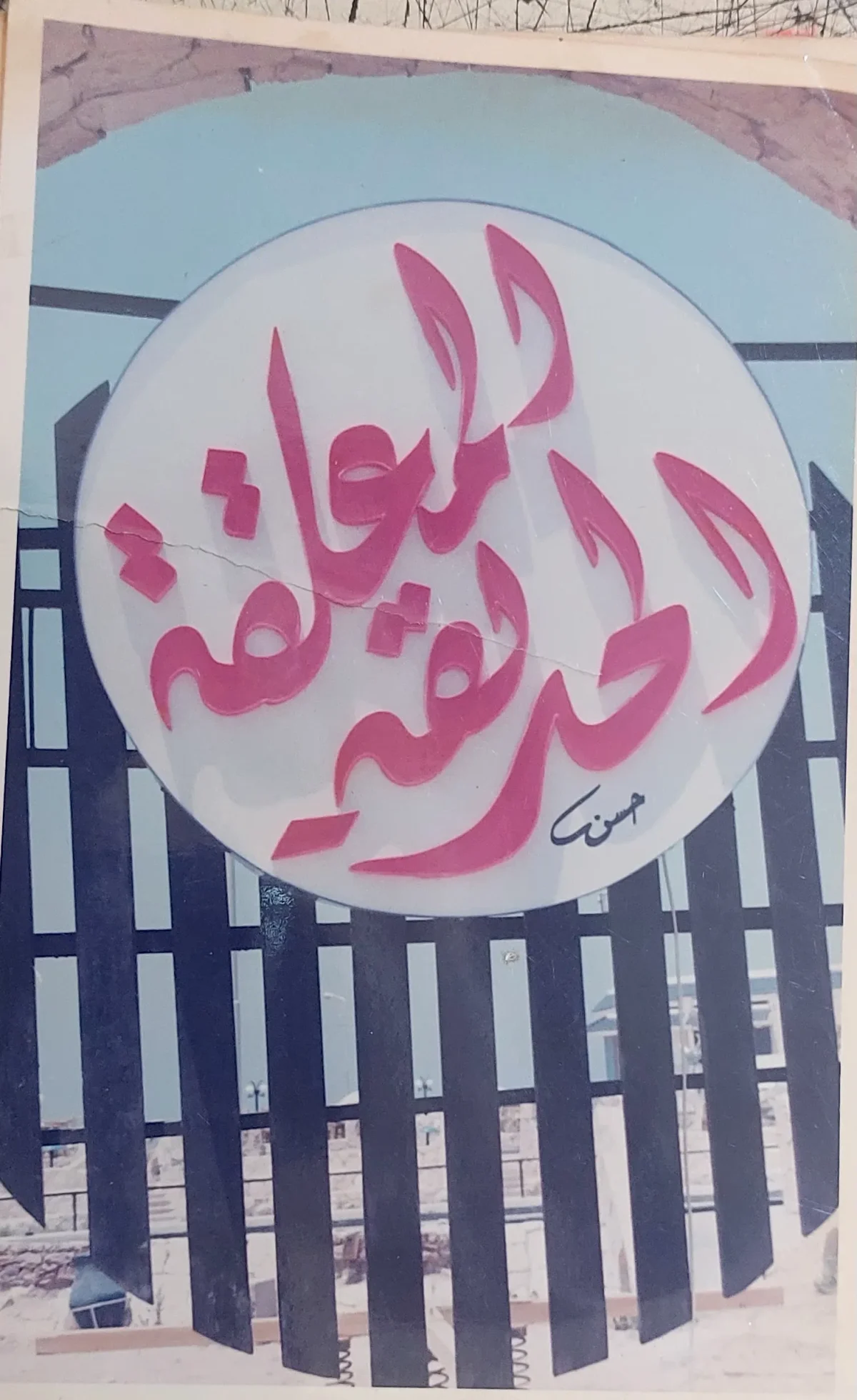
Some artisans commanded bold, sweeping strokes, Abu Youssef recalls, while others excelled in intricate arabesques and layered color palettes, shaping script until a commercial board rivaled a fine painting. Every commission unfolded through a rigorous choreography: measuring the canvas, sketching the layout, calibrating proportions and pigments, and finally laying down the ink and varnish. The process demanded absolute precision, as a single slip of the wrist or misjudged hue could ruin the entire piece. It was slow, exacting labor, yet each finished sign bore the unmistakable signature of its maker.
Ten Masters in the City’s Memory
Alaa Attia, son of the late Attia the Calligrapher, one of Damietta’s most celebrated sign-painters, recounts that for decades the city’s visual landscape was shaped by roughly ten masters, including Magdy, Salah, El-Dawoody, Hassan, and his own father. Each possessed a distinct stylistic fingerprint in how they curved a letter, harmonized colors, or balanced negative space.
No two workshops produced identical work; pedestrians and merchants alike could identify the hand behind a sign at a single glance. A noble rivalry animated the guild, rooted in artistic pride and innovation. Every calligrapher strove to outshine his peers in elegance and originality, turning Damietta’s commercial avenues into an open-air gallery of creative diversity.
“The calligraphers were always hungry to keep pace with evolving materials and tools,” Attia says. “They never clung stubbornly to old habits; they chased down new paints and pigments, experimented with specialized brushes for razor-sharp precision, and adapted their techniques to suit the scale and character of every board.” In their hands, the craft married inherited discipline with restless reinvention.
A Sacred Inscription and a Neighborhood’s Soul
Essam El-Mashta, who apprenticed as a youth in the workshop of Hajj Attia the Calligrapher, still remembers his very first lesson: mastering the names and mechanics of the six classical pillars of Arabic script, Kufic, Naskh, Thuluth, Ruq’ah, Diwani, and Farisi (Persian).
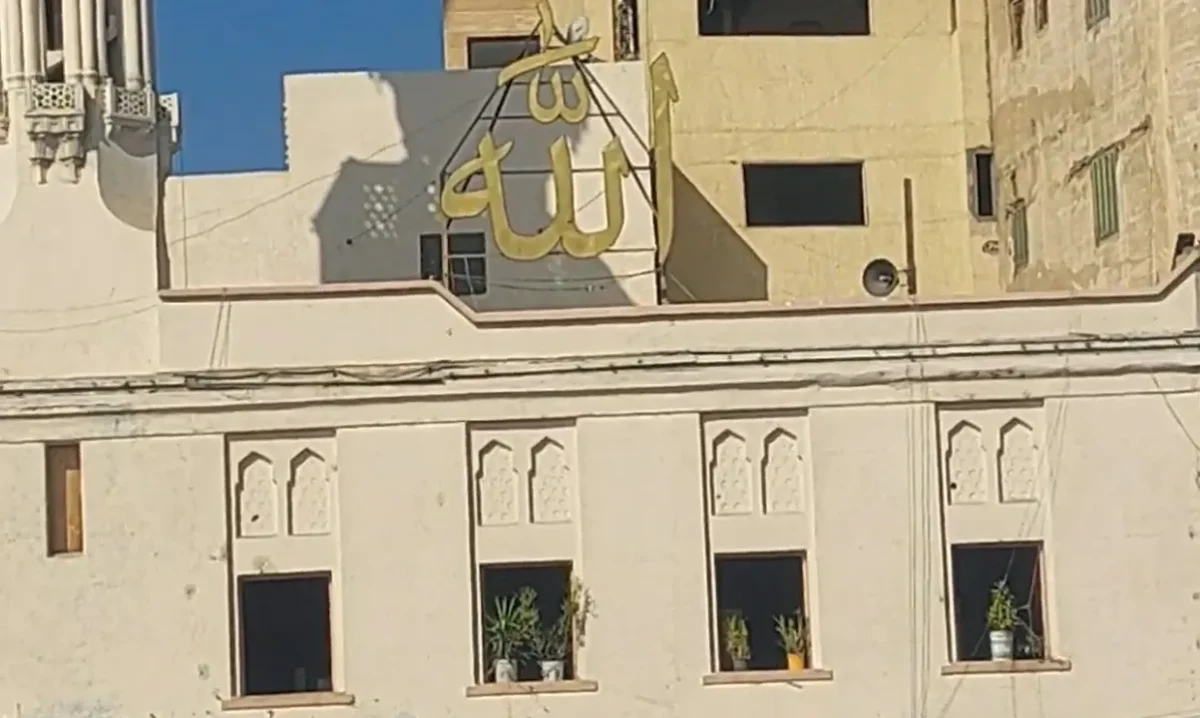
El-Mashta takes deepest pride in the signs he shaded and gilded over the decades, none more hallowed than the monumental inscription of “Allah” crowning Al-Shahid Mosque in central Damietta. Measuring roughly two meters high by two meters wide, mounted on an iron chassis and forged through traditional metalwork, the emblem defines not just the sanctuary, but the entire quarter.
“It was first crafted in the workshop of Hajj Mohamed El-Dawoody,” El-Mashta recounts. “I had the honor of chalking the letters onto the wood before they were carved out. The backing was timber, while the script itself was cut, curved, and welded from sheet metal.”
First raised in 1986, the sign underwent restoration between 1995 and 1996, when green opaline glass replaced its original copper and internal lighting was wired in during the holy month of Ramadan. Years of coastal weather eventually dimmed its glow, prompting a third refurbishment. “Sadly, I wasn’t part of that final restoration,” El-Mashta notes, “and it went back up without its lights.”
From Bristle to Screen
“Today we design our work on computers,” Abu Youssef admits. “The pigments and brushes sit in the workshop as relics, kept alive only as a tribute to the golden days. Even so, I still ache for the feel of the brush.” With a self-deprecating laugh, he confesses that his everyday handwriting with a ballpoint pen or pencil is “terrible,” reserving his true grace for the sable bristles he first picked up at age six.
El-Mashta shares that quiet nostalgia. When desktop publishing and digital printers swept into the advertising world, the soul of the profession began to shift. Tasks that once consumed hours of drafting and brushwork could suddenly be executed in minutes, driving many veteran calligraphers out of a trade that could no longer sustain them.
The tragedy, he explains, lies not in technology itself, which unlocked vast possibilities and eased physical labor, but in the erosion of manual dexterity and individual flair. Today, it is rare to stumble upon a sign that breathes like a human painting, complete with bespoke flourishes and the subtle, unrepeatable imperfections that prove a living hand once guided the stroke.
Stories Still Hanging on the Walls
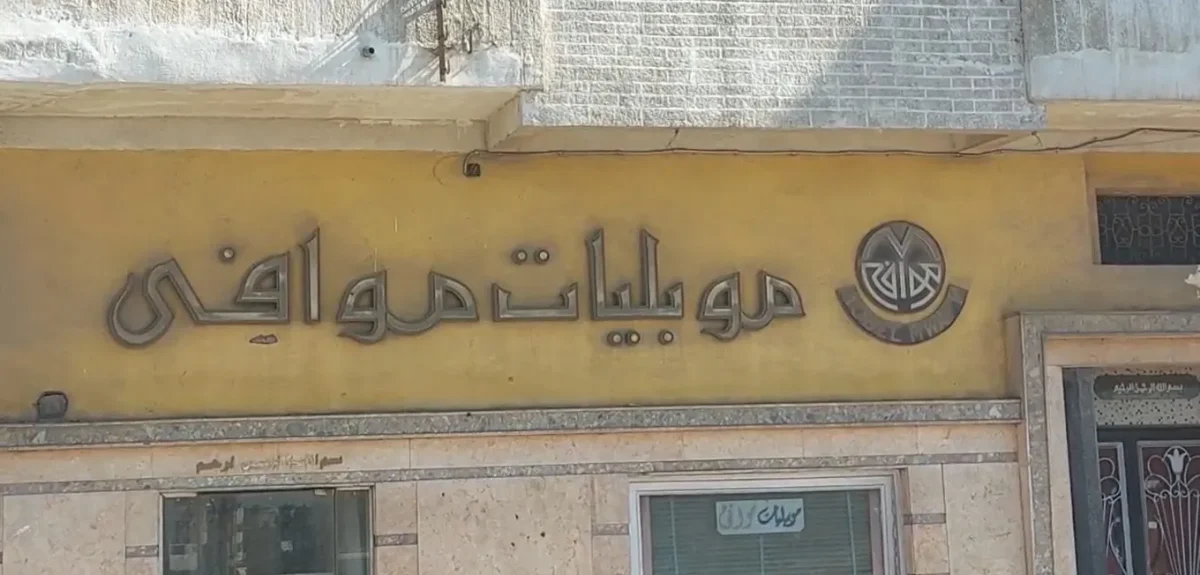
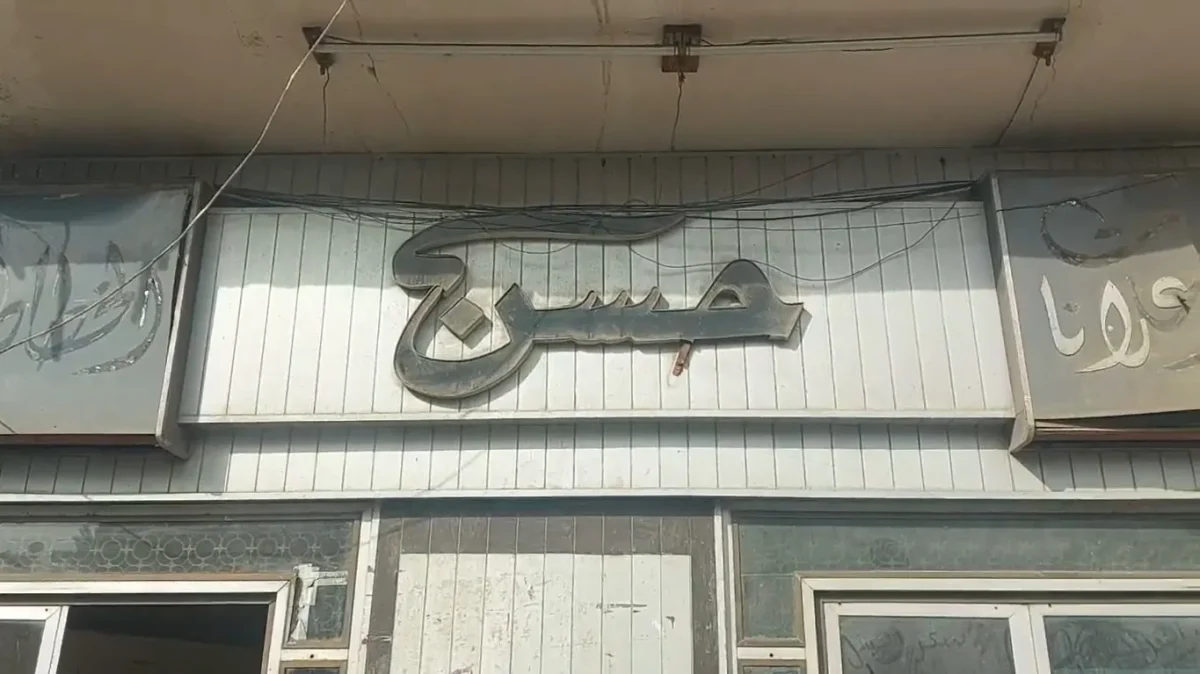
The bustling calligraphy workshops of old Damietta have largely shuttered, yet scattered across weathered facades, these surviving boards still hold their ground against the elements and urban redevelopment. They bear the names of family trades and beloved merchants woven tightly into the generational memory of the city.
Each board stands as proof of an era when commerce and fine art shared the same brushstroke, and when human intuition chose every curve and color. Modern pedestrians may hurry past without a second glance, yet the survival of these signs poses an urgent question about how to document and safeguard Damietta’s visual heritage before its final traces vanish. It is a question that carries newfound weight since 2021, when UNESCO inscribed Arabic calligraphy onto its Representative List of the Intangible Cultural Heritage of Humanity.