

Minya’s female farmers are transforming Egyptian agriculture using autonomous land management and AI advisories to grow export-grade crops for Europe.
By Asmaa Montaser
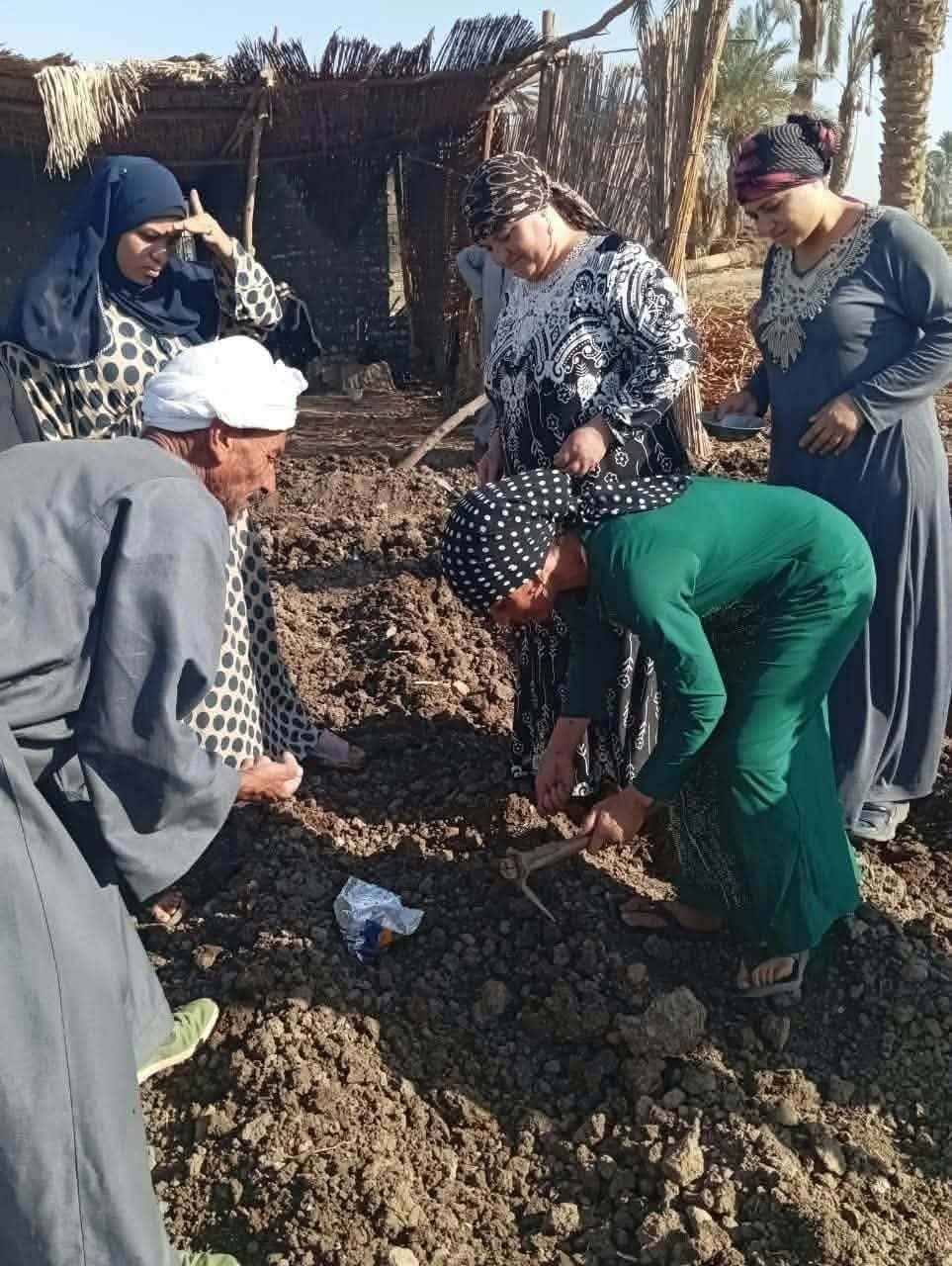
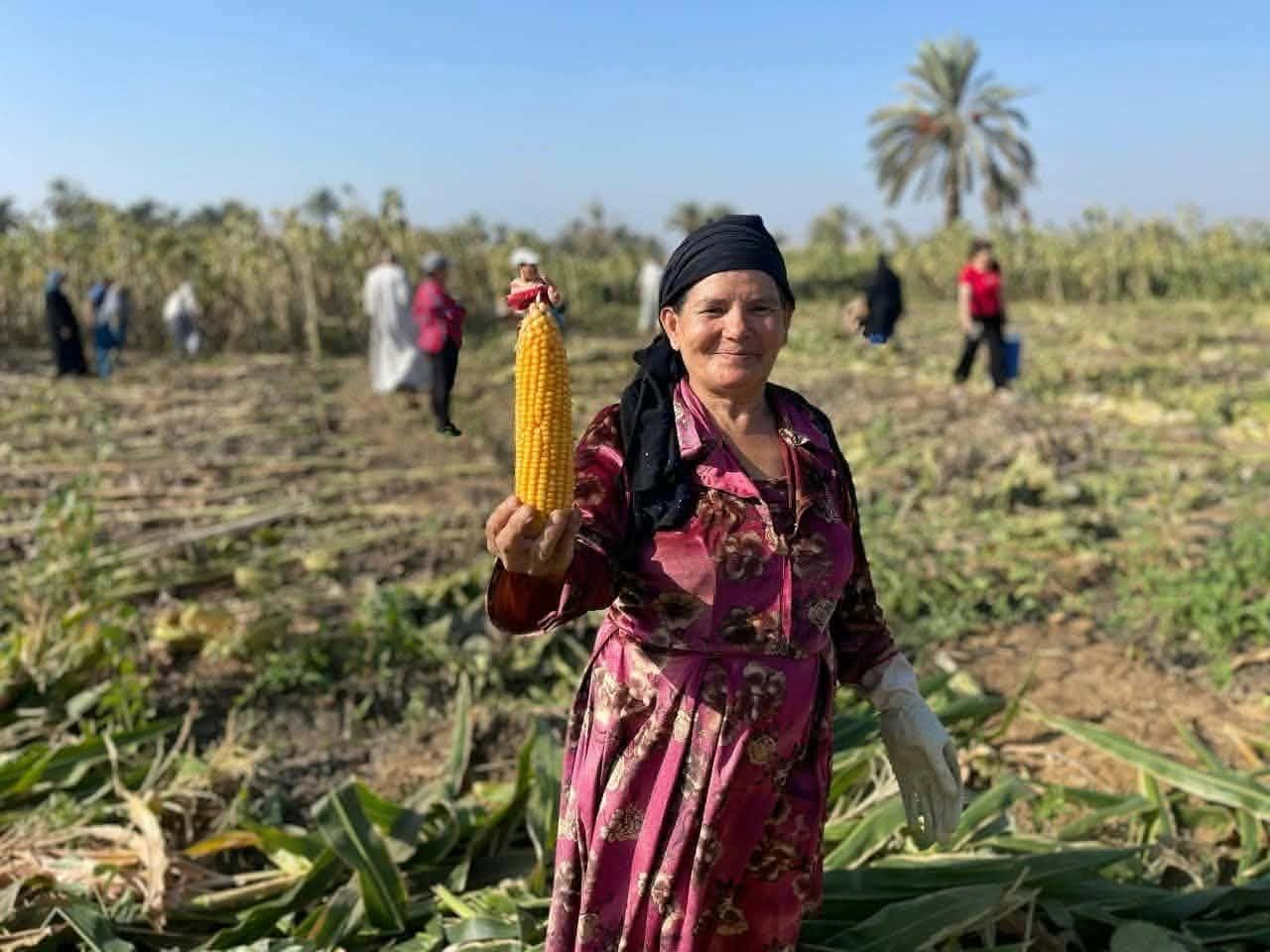
In the southern Minya village of Kom El-Mahras, part of the Abu Qurqas district, 15 female farmers pooled their resolve to lease 15 feddans (roughly 15.5 acres), planting them with sweet potatoes and taking full command of the operation. Further north, on Sharuna Island in the Maghagha district, another cohort of women ventured into cultivating maize, guided by real-time agricultural advisories delivered via WhatsApp through an artificial intelligence system.
Kom El-Mahras: Leased Land and Deferred Promises
Therese Khalaf notes that while her village has long grown accustomed to seeing women toil in the fields alongside their husbands and kin, the sight of women claiming executive authority and steering an agricultural enterprise alone was uncharted territory.
The first hurdle was securing the soil itself. Before signing the lease for the 15 feddans, the women had to convince the landowner of their capability to see the venture through, negotiating an arrangement to pay a fraction of the rent upfront and defer the remainder until after the harvest was reaped and sold.
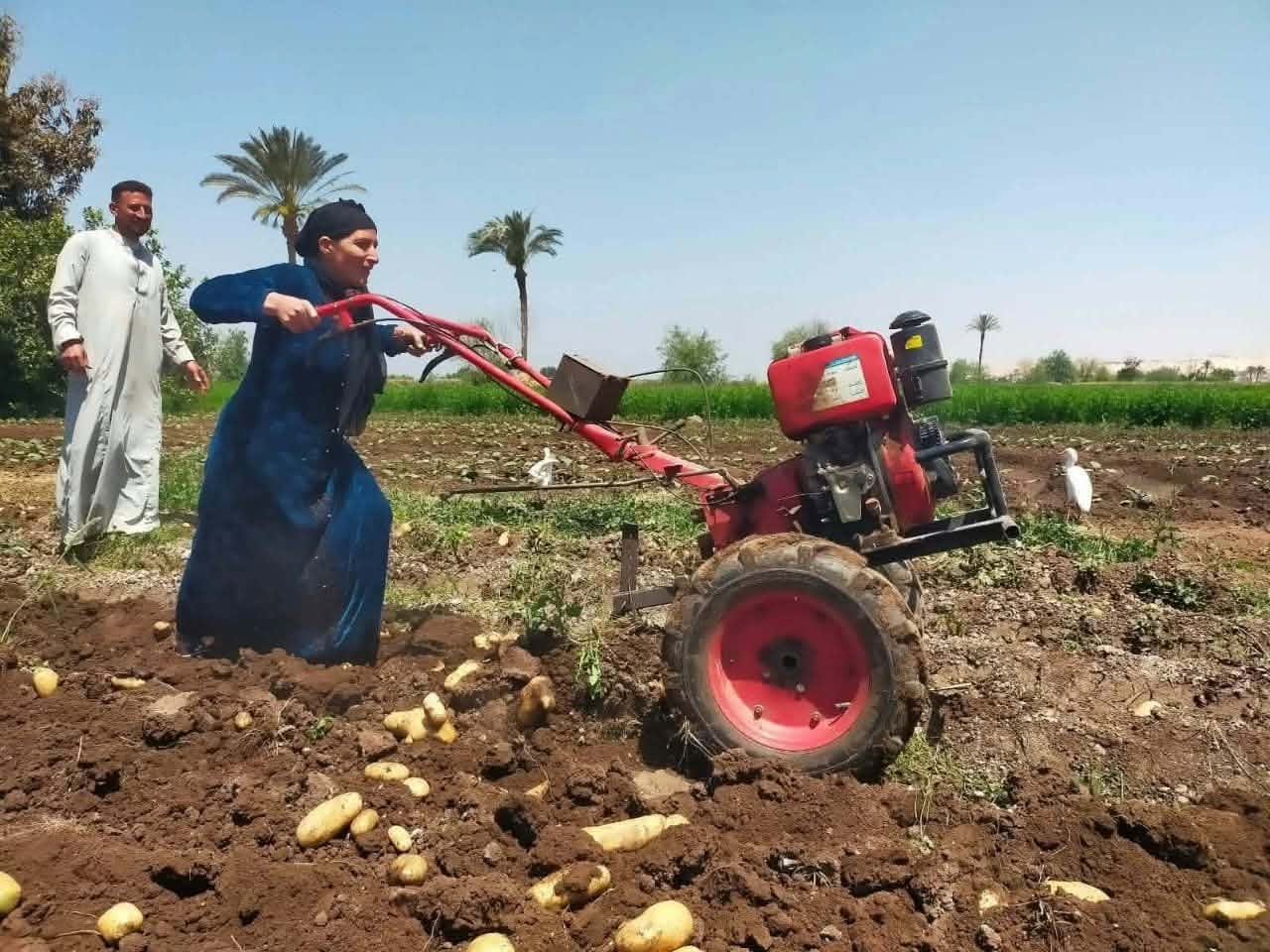
With the land secured, they turned to preparing the earth and sourcing seedlings and agricultural inputs. While the farmers hired male laborers equipped with tractors and heavy machinery for the initial plowing, they shouldered every subsequent phase of cultivation themselves, right up to the harvest.
“Many doubted we could sustain a project run entirely by women, yet we held fast to the experiment,” Therese says.
Among the 15 pioneers is Sarah Fares, a mother of four whose children study at faculties of engineering, medicine, and pharmacy. Her domestic duties never deterred her from mastering every intricate stage of sweet potato cultivation, from transplanting seedlings, hoeing, fertilizing, and irrigating to harvesting, sorting, and packing.
“The fields know no rest; they neither wait for mild weather nor for the scorching sun to relent. Irrigation schedules and crop monitoring follow their own unyielding rhythm,” Sarah says. She adds that while villagers initially met the initiative with skepticism, their tune changed once the crop emerged, to the point where local men began urging their own wives to join the venture.
Sharuna: Maize Cultivation and Digital Guidance
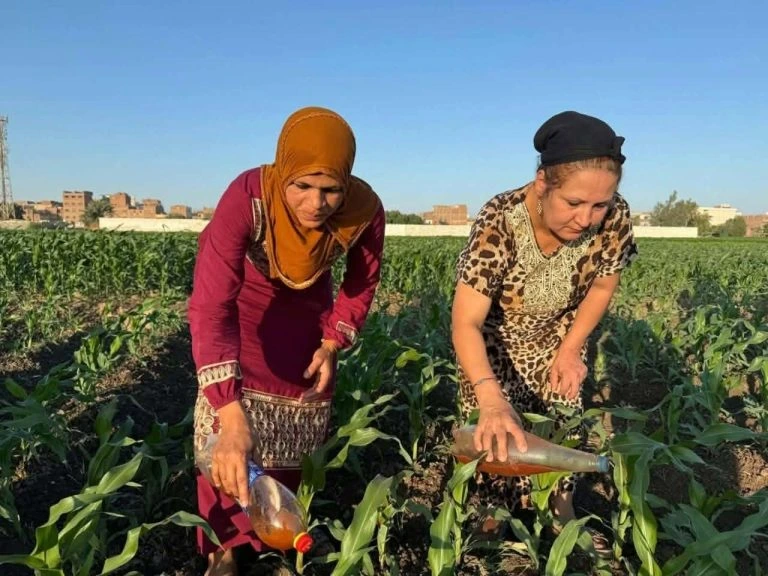
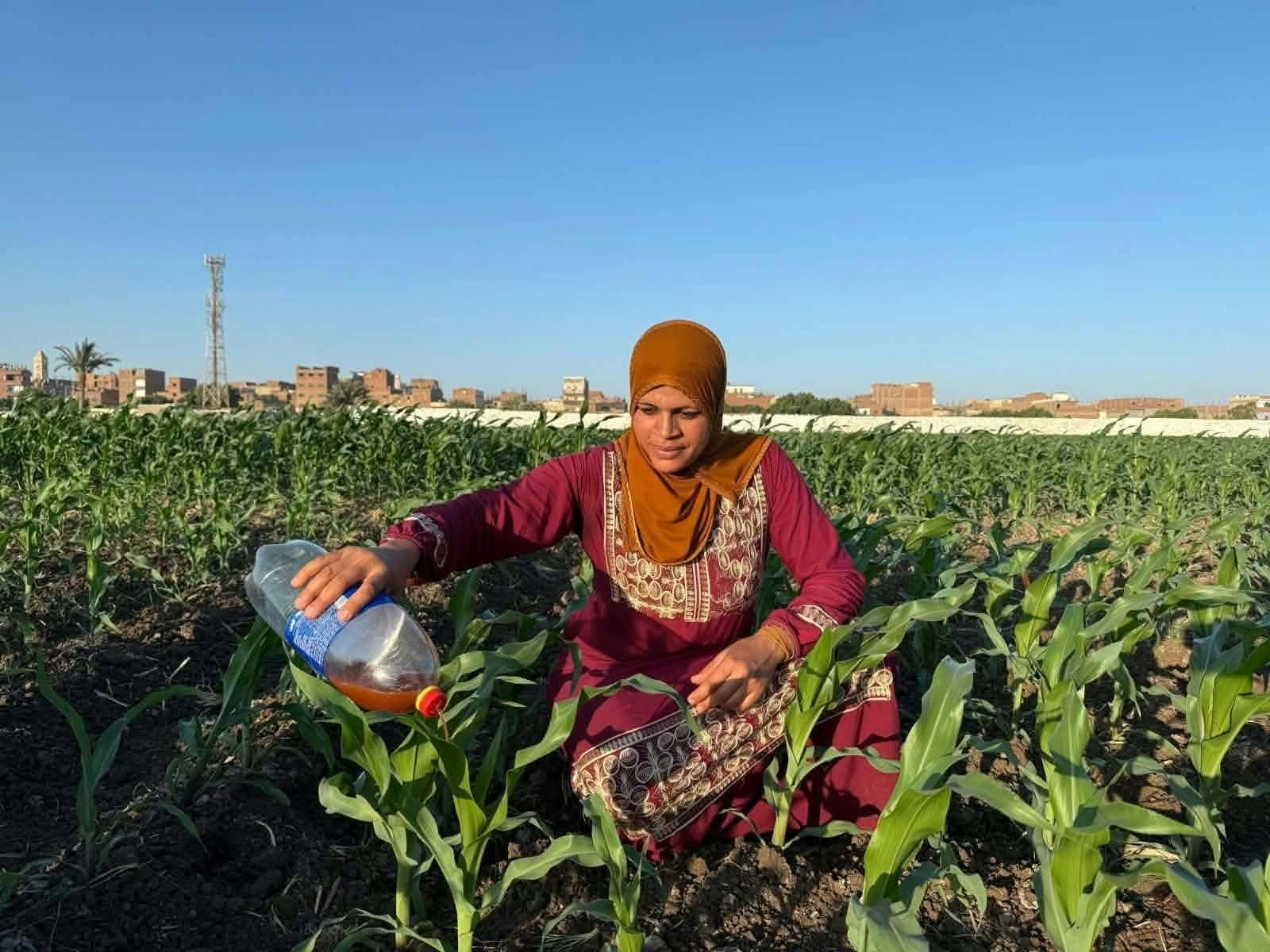
On Sharuna Island in Maghagha, Samah Hamdy and Marian Fady embarked on a journey to cultivate maize. Samah describes her work alongside her peers as an odyssey that begins with selecting and tilling the earth, followed by vigilant monitoring through every phase of growth, noting that neglecting a single step inevitably diminishes the harvest’s quality.
She explains that the most grueling aspect of the labor lies in stooping for hours beneath the relentless sun to tend the plants, alongside plowing the earth and clearing the soil of weeds and stones.
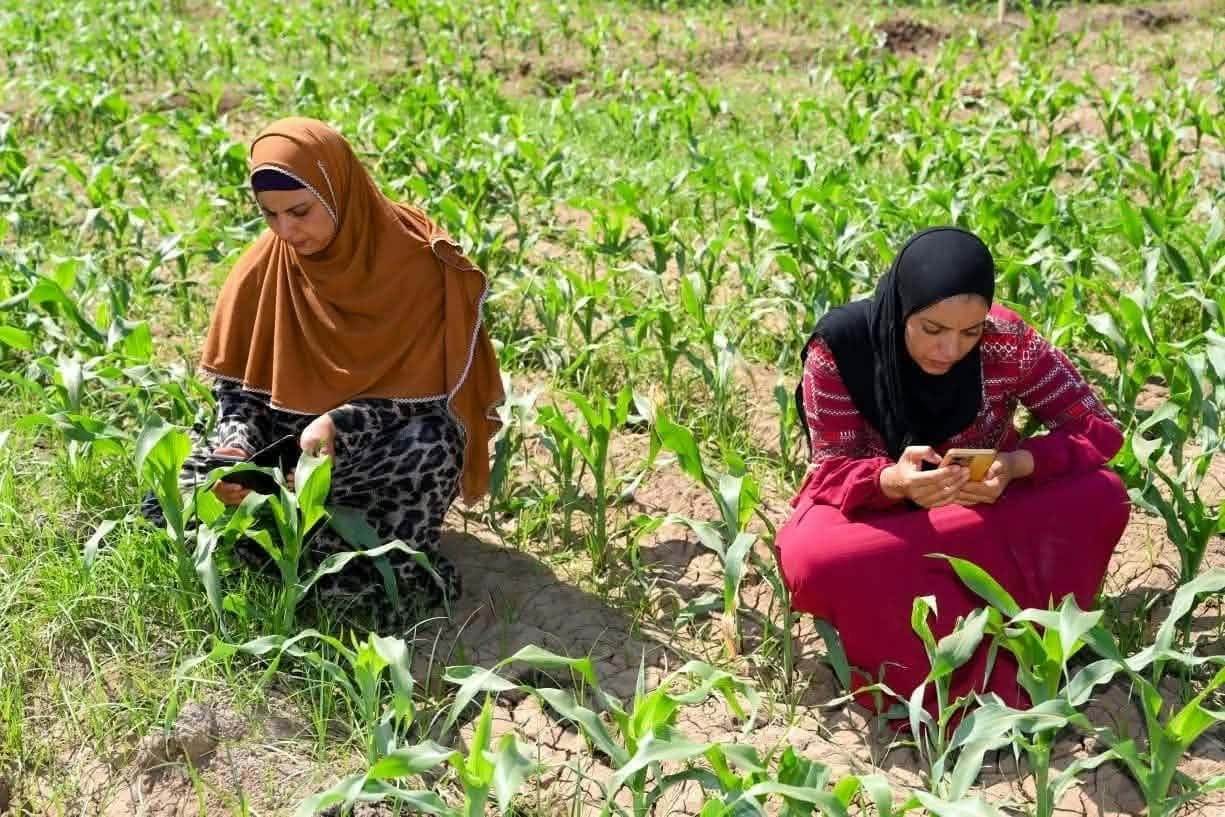
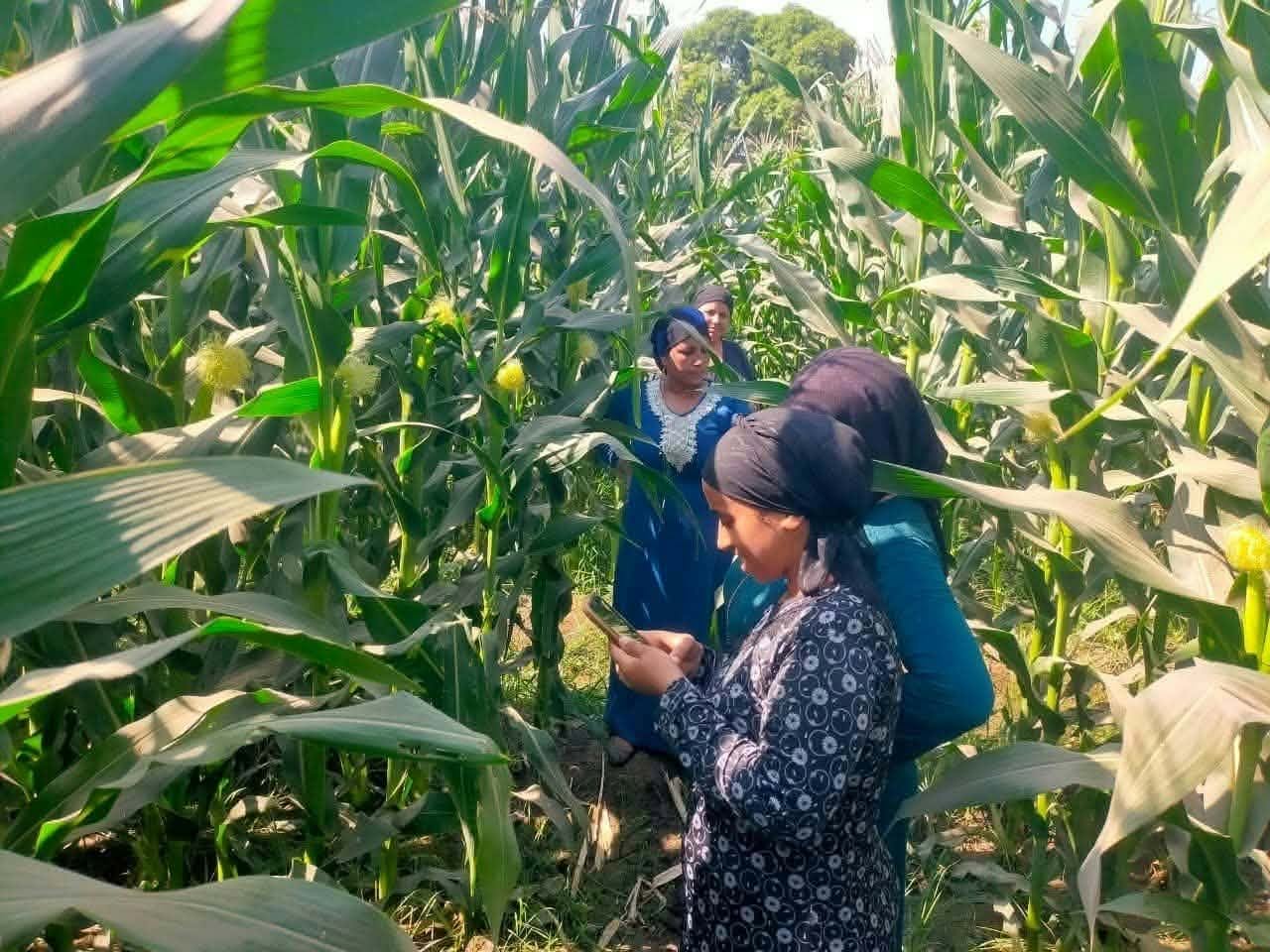
Marian, meanwhile, leaned on an AI-powered agricultural advisory system via WhatsApp. Through the platform, she tracked precise schedules for irrigation and fertilization, sending photographs of the crops whenever she spotted discoloration on the leaves or cobs to receive tailored diagnostic guidance.
She notes that she made a point of heeding the counsel of agronomists and seasoned farmers alike, admitting that her greatest anxiety stemmed from erratic weather swings and their potential toll on crop quality.
From Furrow to Foreign Markets
Momen Gilany, a Farmer Field Schools expert at the Food and Agriculture Organization of the United Nations (FAO), views these initiatives as a watershed shift in the role of rural women, marking a transition from traditional field labor to managing productive enterprises and shaping household economic decisions.
According to Gilany, the maize cultivation trial on Sharuna Island yielded an average of roughly 35 ardabs (a traditional Egyptian grain measurement) per feddan, marking a 15 to 22 percent surge over conventional methods.
In Kom El-Mahras, the ambition extended well beyond the harvest, as the women explored agro-processing opportunities, including crafting baked goods from sweet potato flour. Gilany also points out that female farmers achieved remarkable yields in wheat cultivation using raised beds and manual planters, with one trial yielding between 26 and 27 ardabs per feddan.
He advocates that women’s involvement must not end at cultivation and harvest, urging their integration into sorting, packing, marketing, and food processing to amplify economic value and elevate household incomes.
A Pioneering Harvest
For his part, Dr. Emad Ismail, Manager of the FAO’s Rural Communities Empowerment Project in Minya, confirmed the triumph of the female-led initiative in Kom El-Mahras, which produced sweet potatoes tailored to the stringent specifications of European markets.
The venture unfolded under the “Women Label” initiative, a program designed to economically empower rural women and integrate them across every link of production, marketing, and export. The FAO launched the initiative in Egypt to commemorate 2026, which was declared the International Year of the Woman Farmer.
Ismail explains that the project targeted the cultivation of 15 feddans of sweet potatoes through the “Thamra” (Fruit) Women’s Productive Cooperative. The endeavor yielded a total of 96 tons from just 12 feddans, after three feddans were excluded following initial inspection and their growers were advised to channel that yield into the local market.
Maximizing Every Yield
Ismail adds that the harvested crop was strategically allocated: 78 tons were dispatched to sorting and packing stations bound for European markets, 12 tons were sold domestically for human consumption, and six tons of imperfect tubers that fell short of human consumption standards were redirected to livestock feed, ensuring every tier of the harvest was utilized without waste.
He notes that the produce delivered to sorting and packing facilities undergoes rigorous technical processing, including washing, sorting, and grading by size, quality, and export criteria, while filtering out any crops that fail to meet international standards.
Among the trial’s crowning achievements, Ismail highlights, was producing a harvest entirely free of pesticide residues, as verified by laboratory analyses conducted by the Ministry of Agriculture in accordance with European Union benchmarks. He hails this milestone as proof of the farmers’ capacity to cultivate export-grade crops that satisfy the strictest technical and sanitary demands abroad.
He clarifies that the choice of crop variety was far from arbitrary, having been selected specifically to satisfy European appetites. The farmers planted a sweet potato cultivar prized by European importers for its superior quality, prioritizing strict export standards over merely maximizing raw tonnage per feddan.
Export Standards: Quality Over Quantity
Addressing why the overall yield per feddan was comparatively modest against some conventional fields, Ismail explains that this stemmed from choosing an export-oriented cultivar engineered for distinct quality traits favored in Europe, rather than a variety bred solely for bulk volume.
He emphasizes that every variable, from the chosen cultivar and planting spacing to fertilization schedules, pesticide protocols, agricultural interventions, and technical advisories, was calibrated to satisfy export mandates and achieve requisite quality benchmarks.
He stresses that the true measure of the initiative’s success lies not in sheer volume, but in its adherence to global standards and its competitive edge in foreign markets.
Ismail points out that this triumph did not materialize over a single season; rather, it was anchored in thorough preparation and training. The farmers spent an entire agricultural season immersed in the FAO’s Farmer Field School, mastering the fundamentals of climate-smart agriculture, post-harvest handling, and tailored farming practices designed to safeguard crop integrity.
He reiterates that the “Women Label” initiative aims to foster comprehensive economic empowerment, spanning the provision of inputs, fertilizers, seedlings, and extension services through to harvesting, sorting, packing, marketing, and export.
Crucially, the initiative mandates that women hold at least a 50 percent ownership and management stake in the participating enterprises and entities, guaranteeing them no less than a 50 percent share of the returns. This structure ensures that female farmers are not relegated to manual labor, but stand as decision-makers and primary beneficiaries of the profits.
He adds that the initiative is developing a dedicated brand identity to market the produce under the name “Women of Minya,” granting the farmers an independent commercial footprint, strengthening their gateway into European markets, and transforming a localized farming effort into an economic model rooted in female ownership across supply and export chains.
Following this success, Ismail reveals that agreements are already in place for the upcoming winter season to launch a new venture cultivating aniseed in alignment with international standards for global markets.
“She Grows”: Artificial Intelligence in the Fields
The project manager notes that the FAO’s support for female farmers also encompasses the “She Grows” initiative, which delivers smart advisory services for maize and wheat via WhatsApp using artificial intelligence, drawing directly on extension bulletins issued by the Ministry of Agriculture.
During its inaugural season, the platform fielded more than 15,000 inquiries from female farmers regarding maize cultivation. By applying the system’s recommendations, developed through a partnership between the FAO in Egypt and an information technology firm, farmers achieved an estimated 25 percent surge in maize productivity.
Echoes of Antiquity: Women and the Soil in Ancient Egypt
The presence of women in Egypt’s agricultural landscape is scarcely a modern phenomenon; reliefs and murals adorning ancient tomb walls chronicle the Egyptian woman’s deep bond with the land stretching back to the Pharaonic era.
Dr. Mohamed Fakhry, Director of Excavations and Archaeological Missions in Minya, explains that women in antiquity harvested crops, gleaned ears of grain, sowed seeds, and processed yields, particularly during peak agricultural seasons. Alongside field labor, they ground grain, baked bread, preserved vegetables through drying and salting, and spun flax, a craft overwhelmingly dominated by women.
Fakhry highlights the tomb of the priest Petosiris at the Tuna el-Gebel necropolis in Minya as one of the most vivid archaeological testaments to women’s agricultural roles during the Late Period. Its carvings depict women sowing seeds, carrying baskets, gathering wheat and flax harvests, binding flax stalks, and harvesting clusters of grapes into woven baskets.
Similarly, reliefs in the tombs of El-Bahnasa and Tell el-Amarna capture ancient Egyptian women harvesting wheat and barley, portraying them wielding sickles to reap grain into large baskets, alongside gathering grapes and tending harvests.
Fakhry adds that the tomb of Paheri at El-Kab, near Edfu, offers another compelling record of women in ancient Egyptian agriculture. Dating to the early Eighteenth Dynasty of the New Kingdom, the tomb belonged to a royal scribe of the grain accounts.
Its walls feature intricate scenes of rural life, including plowing the earth with cattle, alongside depictions of a woman and a child following behind the reapers to glean fallen ears of grain.