

The Architecture of Masculinity: How Nasser’s Cinema Sculpted the Modern Egyptian Identity
An interview exploring how iconic mid-century film stars sculpted modern Egyptian identity, nationalism, and masculinity under the Nasser regime.
In the collective memory of Egyptians, films do not merely survive through their plots, but through the haunting persistence of their protagonists’ faces. Yet, what do these countenances betray when scrutinized under a contemporary lens? What do they reveal about Nasserite Egypt?
In her seminal work, Male Egyptian Film Stars in the Nasser Era, cultural historian Samar Abdel Rahman plunges into forgotten archives, vintage trade magazines, and long-buried documents to read cinematic history through an alternative prism. Focusing on three titansOmar Sharif, Ismail Yassine, and Farid Shawqi she charts how these men embodied dreams of social mobility, romance, and belonging, navigating the seismic shifts of a transforming society. In this expansive conversation, she dissects her archival odyssey, the deliberate curation of her subjects, and what their artistic trajectories reveal about the intersection of stardom, nationalism, and state power during one of the region’s most culturally fertile epochs.
Gender studies so often gravitate toward the representation of women on screen, yet you chose to cast your gaze upon male stardom. What drew you to this paradigm, especially given the scarcity of academic resources?
We all harbor a deep familiarity with the Golden Age of Egyptian cinema; we live alongside its images. Yet growing up, the debates around me invariably plateaued into a simple binary: Rushdy Abaza versus Omar Sharif. I sensed that cinema possessed a far more profound, tectonic influence on society, and that these cultural heroes were the anchors of that weight.
As for the academic literature, the only figure who had received rigorous monograph treatment was Farid Shawqi, whom Walter Armbrust has written about extensively. Even now, it remains exceptionally rare to find analytical texts on Egyptian cinema written in English, whereas Arabic sources are more plentiful. We have Joel Gordon’s Revolutionary Melodrama: Popular Film and Civic Identity in Egypt’s Nasser Era, and of course Armbrust’s scholarship, though the latter treats cinema as a subset of a broader Egyptian cultural tapestry.
When I embarked on this project, I knew I wanted to write about our cinema, but through the specific vector of stardom. The idea crystallized from a simple observation: we rarely remember the title of a film; instead, we index it by its titans. We say, “This is a Souad Hosny film,” or “That is an Abdel Halim vehicle.” We remember the stars. I wanted to begin there.
Naturally, the vacuum of academic precedents terrified me. But I reasoned that the absolute absence of sources was an invitation to produce something entirely pristine and original. That became my fuel. To unearth anything substantive, I had to submerge myself in archival entertainment chronicles like Al-Kawakib (The Planets) and Al-Mussawar (The Illustrated). A persistent anxiety haunted my early doctoral days: what if I am denied access to these vaults? The entire trajectory of the dissertation hinged on that archival pilgrimage.
Fortunately, a beautiful institutional correction occurred recently. The American University in Cairo digitized and opened the archives of Dar Al-Hilal online, fundamentally altering the landscape for researchers, cinephiles, and cultural historians alike.
The studio archives remained frustratingly impenetrable, which was another source of dread. However, the foundational texts of Egyptian critics like Ali Abu Shadi and Samir Farid provided an invaluable intellectual scaffolding. I must also credit my late father, a film director himself, who guided me toward the correct institutional labyrinths in Egypt to hunt down these documents; this book is dedicated to his memory. Following him, the scholar Mahmoud Qassem effectively a walking encyclopedia of Arab film generously shared his personal network. I found that once you articulate your quest, the doors of collective memory open; people genuinely wanted to help. There were also serendipitous discoveries: at the Egyptian Catholic Center for Cinema, I stumbled upon a rare biography of Farid Shawqi, and scattered across private digital archives, I found verified receipts of Ismail Yassine’s personal financial donations to the Egyptian military.
Your triad of subjects Omar Sharif, Ismail Yassine, and Farid Shawqi could not be more disparate. What dictated this specific curation?
The selection process followed a strict tripartite methodology. First, I isolated the temporal boundary: from the dawn of the 1952 Revolution to the immediate eve of state nationalization. I felt that the core thesis I wanted to prove would dissolve if I dragged it into the bureaucratic era. Second, I mapped the apex of male stardom during this window, identifying the names that held the most absolute, unmediated sovereignty over the public imagination. Third, I evaluated the sheer volume of their output and the unique artistic morphology of their careers.
This structural filter immediately yielded Omar Sharif. He was the sole star of that epoch to transcend domestic borders and achieve international, Hollywood zenith. He was our first archetype. I had considered Rushdy Abaza and Shoukry Sarhan, but they ascended concurrently, and Sarhan’s early on-screen manifestation was texturally too close to Sharif’s territory.
The second metric prolificacy and sheer industrial weight belonged indisputably to Ismail Yassine. He is an artist who requires an entire volume unto himself because he fundamentally revolutionized the mechanics of cinematic production; films were conceived, funded, and titled entirely around his persona.
Then came Farid Shawqi, Wahsh al-Shasha (The Monster of the Screen). He possessed an immense, sprawling filmography, but I wanted to trace his embryonic phase specifically how he masterfully dismantled his early casting as a villain to reshape his image during this precise political decade.
Crucially, all three men are inextricably bound to the mental image of Nasser’s Egypt. The curation was not casual; it was anchored in their commonalities and their sharp contrasts. For example, did the audience of Ismail Yassine overlap with that of Omar Sharif? We cannot definitively say, because demographic box-office metrics from that era simply do not exist. During my doctoral defense, a committee member challenged me, noting that while we routinely parrot the title of Farid Shawqi as Malik al-Terso (The King of the Third-Class Gallery), we have no empirical data proving his audiences were exclusively working-class. We accepted this narrative currency because Shawqi himself meticulously curated and cemented that mythos in his twilight years.
Thus, we are looking at distinct iterations of hyper-success: one voyages to England and becomes a global commodity; the second creates an iconic cinematic brand where the film bears his actual name, a testament to an overwhelming box-office gravity that functioned independent of critical consensus; and the third continuously sheds his cinematic skin from the 1940s through the 1960s, eventually transitioning seamlessly into television. Let us not forget that Shawqi was also the shrewd producer of his own myth.
Through these three lenses, we observe a cinema that was actively drafting a new definition of what it meant to be Egyptian. This was not coarse, state-mandated propaganda; it was an organic, spontaneous exercise in cultural empowerment. These films were not advertisements for Gamal Abdel Nasser, with one notable exception: Port Said, a film openly commissioned by Nasser himself, where he personally requested Farid Shawqi to dramatize the events of the Tripartite Aggression.
The rest of the cinematic output, including Ismail Yassine’s oeuvre, was driven by personal, commercial, and artistic impulse. When we watch these films today through a contemporary lens, it is easy to misread them as sycophancy toward the regime. That binary reading misses the mark. In the early 1950s, before the political apparatus had fully hardened into a military bureaucracy, these films were the canvas for collective aspirations. In Struggle in the Valley, Omar Sharif embodies the idealistic agricultural engineer, the son of the soil dreaming of structural reform. The actors themselves were walking a tightrope, balancing these ideological dreams against the lived reality of the street.
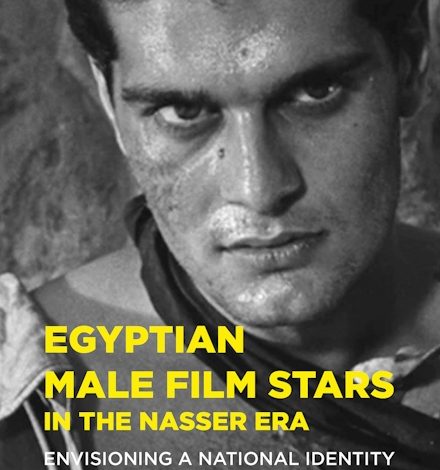
In your chapter on Omar Sharif, you dissect his persona as a synthesis of Nasserite ideals and the aristocratic “Jeune Premier” lover. Did his high-profile marriage to Faten Hamama accelerate this construction?
Universally, yes. When you scour the period’s archives, Sharif does not exist as an isolated entity in his early career; he is perpetually framed alongside Faten Hamama. She was the undisputed sovereign of the screen; he was the uninitiated newcomer. It was her name that sold the tickets, not his.
Their marriage transformed their real-world romance into the ultimate public facade, cementing his status as the romantic ideal. They became the ubiquitous emblem of modern love across every magazine cover. They were not the industry’s first power couple they were preceded by Leila Mourad and Anwar Wagdi, and Mohamed Fawzi and Madiha Yousri but Sharif and Hamama possessed a distinct, electric modernity. The fact that their union bridged a sectarian divide caused a massive cultural stir and invited considerable conservative blowback. Decades after their deaths, their romance remains a cultural fixation, kept alive by his legendary, late-career declarations that he never truly loved another woman.
Was that absolute truth or masterful self-mythologizing? I cannot know. Sharif was an incredibly sophisticated, self-aware media operator. Even in his final years, upon returning to Egypt and appearing on talk shows, he rehearsed that exact narrative. Whether it belonged to his private truth or his public performance is irrelevant; what matters is how it fortified his cinematic architecture as the eternal “Lover.” When he transitioned into British, American, and Italian cinemas, his romantic lifestyle became cosmopolitan, most famously involving Barbra Streisand. Because of her public alignment with Israel, his romantic life suddenly took on a fraught, geopolitical dimension back home.
His evolution as the romantic archetype was birthed with Faten Hamama, but it didn’t end with her. It returned to her only when he was speaking within the geographical borders of Egypt; abroad, his persona operated on entirely different cultural frequencies. It is a classic entertainment phenomenon: the intimate relationship becomes an inseparable extension of the public star text.
Did his national identity undergo a fundamental mutation once he was absorbed into the Hollywood and European studio systems?
I look at this through a dual lens. Initially, Sharif emerged as a vessel for a specific nationalist pride. The moment he attained international stardom, however, his domestic identity shifted: he became a prestige commodity, an Egyptian face that could be deployed to signify any non-Western “Other.” He no longer represented the local nationalist project; he represented the Europeanized Arab, or the sophisticated Middle Easterner navigating the West with ease.
He comfortably inhabited this liminal space, openly prioritizing European cinema over Hollywood because he viewed himself as culturally European rather than American; he saw a sharp distinction between the two artistic cultures. There is a secondary episode that I omitted from the book because it fell outside my temporal timeline: Anwar Sadat later mobilized Sharif for a discrete intelligence assignment. Sharif executed the mission but refused to ever repeat the experience.
Did the public’s perception of him shift? Intensely. Following his relationship with Streisand, a large segment of the Egyptian populace viewed him as a man who had bartered away his national heritage, an accusation Sharif treated with complete indifference. His immediate cosmopolitan environment shaped his lifestyle, but it did not alter his core; he was inherently a pluralistic intellectual. I cannot definitively declare whether his inner self changed, but the gaze of the Egyptian public shifted irrevocably. Youssef Chahine initially crafted a cinematic image for Sharif that shone a spotlight on his national, grounded identity; Hollywood dismantled that provincial specificity.
Ismail Yassine’s military comedies were openly leveraged by the state to popularize its institutions, yet you characterize his performance of masculinity as “non-hegemonic.” How did a bumbling, non-macho figure become the populist face of a military seeking domestic prestige?
The Ismail Yassine phenomenon is perhaps the most spectacular success story in our cultural history. Even now, in 2026, his work remains universally recognized. Films like Ismail Yassine in the Navy are not relics; they are viewed continuously. His enduring appeal lies in a paradox: he achieved immortality by playing the perpetual failure the man structurally incapable of executing basic tasks.
What happens when you drop this comic liability into the rigid machinery of the military? That friction birthed the icon. The state utilized his vulnerability to transmit a highly sophisticated populist message: “If Ismail Yassine, with all his physical clumsiness and psychological neuroses, can be forged into a man by the army, then any peasant or citizen can achieve the same.”
These films functioned as emotional infrastructure for the waves of young conscripts, particularly those migrating from agrarian provinces into the modern state apparatus. It humanized the uniform.
Can we read Yassine’s comedy as a form of subterranean subversion rather than compliant state propaganda?
The text easily supports both readings simultaneously. It is deeply satirical, but the mockery is never leveled at the regime’s legitimacy or the low-ranking soldier. Instead, it lampoons the existential dread of authority and the absurdity of bureaucratic rank. It was a therapeutic comedy. By shining a comedic light on societal anxieties, the satire dissolved tension through the gentle humor that defined the era.
There is a vast difference between mocking an institution and articulating the very real fear of that institution. It was absolutely a tool of propaganda, even if Nasser never personally ordered its production; it successfully incentivized military enlistment. But its ultimate legacy is its permanent real estate in the Egyptian psyche.
Farid Shawqi’s transition from a typecast cinematic brute to the champion of the working-class gallery the neighborhood Futwwa (Traditional Neighborhood Strongman) is legendary. To what extent did his ascension dismantle the archetype of the educated, suit-wearing Effendi (Educated Urban Gentleman) on screen?
I don’t believe the Effendi archetype was annihilated; rather, the two models coexisted in a shifting class hierarchy. The Effendi remained visible, but his socio-political status was downgraded to that of a humble bureaucrat a transformation masterfully executed by Shoukry Sarhan and Kamal Al-Shennawi. The rise of Shawqi’s Ibn al-Balad (The Authentic Working-Class Son of the Soil) did not erase the educated class; it simply stripped the old aristocratic elite and the Westernized dandy of their narrative monopoly on screen.
Was the cinematic rise of the Futwwa a top-down strategy by the regime to court the proletariat, or was it a bottom-up populist taste that forced its way into the industry?
It was entirely a bottom-up, populist phenomenon. The archetype was incubated in the literature and realist novels of the period before migrating to the screen, responding directly to the desires of the working-class neighborhoods. The state did not possess a master plan to direct cinema toward the Futwwa silhouette to court the working class; the market demanded it, and the culture delivered.
You note a profound historical irony: filmmakers initially begged the Nasser regime to nationalize the industry to protect them from the onslaught of Hollywood, but the reality was a stifling state bureaucracy. How did this dream curdle, and can art ever retain its autonomy once it is absorbed by the state?
In the wake of the 1952 Revolution, every professional guild looked to the new regime as a blank canvas for their own corporate desires. Since the late 1940s, Egyptian filmmakers had been pleading for protectionist tariffs, fully aware that they could not compete with the capital-intensive distribution of Hollywood. They openly demanded quotas asking the state to mandate two domestic screenings for every foreign film.
When the regime initially intervened, it left the market dynamics relatively untouched. However, the state soon introduced ideological incentives: if your screenplay championed Pan-Arabism or Nasserite social reforms, you were granted substantial tax exemptions. Eventually, this evolved into direct state financing.
Filmmakers celebrated this, believing state capital would shield them and elevate them to global competitiveness. But the regime soon realized that cinema was too potent a weapon to leave to the whims of the free market; the films had to align with the new political order. This established a damaging precedent that every subsequent administration inherited. Under Nasser, the old pashas were caricatured as decadent villains; under Sadat, cinema was mobilized to show that Nasser’s era was a claustrophobic police state. This cycle has less to do with the ideology of the specific ruler and everything to do with the structural ceiling of freedom. Your liberty was absolute when critiquing the dead regime, but strictly prohibited when looking at the living one.
The true catastrophe occurred when the state fully nationalized the studios. The corporate bureaucracy destroyed the creative ecosystem. They treated film production as if it were a government ministry or a military supply line. Bureaucrats with zero artistic literacy were appointed to head historic institutions like Studio Al-Ahram.
There is a fundamental difference between state patronage and state intervention. What began as financial support curdled into total creative control, culminating in outright expropriation. Legendary private production houses, most notably Mohamed Fawzi’s company, were nationalized, triggering an industrial collapse. Artists simply fled the system: Kamal Al-Shennawi retreated to television, while a massive exodus of acting and directorial talent migrated to Beirut and Istanbul, creating an intellectual void in Cairo during the late 1960s.
Paradoxically, the films produced during this state-controlled window are routinely ranked as the greatest masterpieces of Egyptian cinema. But this was not because of the bureaucracy; it was because the crisis forced visionary directors to invent the Cinema of the Auteur. We must also remember that this era collided with the trauma of the 1967 Naksa (The Six-Day War) a geopolitical catastrophe that dwarfed the film industry, forcing art to respond to a fractured national psyche.
How did the post-1952 revolutionary charter reshape the contours of the modern Egyptian identity? Was cinema leading this cultural transformation, or merely projecting it?
It was a dialectical conversation. The dreams projected onto the celluloid were born at the exact moment the public was saying, “If this new ideology represents us, this is the aesthetic form we want it to take.” Cinema acted as the marketing department for the revolutionary dream.
Cinema was not predicting the future; it was manufacturing the post-1952 imaginary. In the immediate wake of any revolution, a collective euphoria convinces the populace that utopia is around the corner. In this embryonic phase, people want to see their optimism validated. Did it translate into material structural change? That depends entirely on your metric of measurement. What is undeniable is that these three stars articulated and performed the ideology of modern Egyptian identity before it was ever formalized in state charters. Consider the very concept of Uruba (Pan-Arabism): it was Nasser who codified this into the Egyptian cultural consciousness. Prior to his era, it was exceedingly rare for Egyptians to define their nationhood through an exclusively Arab lens.
Did Egyptian cinema sacrifice its cosmopolitan, pluralistic identity when it insisted on wrapping its history in a strict nationalist garment?
It undoubtedly narrowed its focus. If you look at the pre-revolutionary cinema of the 1940s, nationalist anxieties were already present, but they were treated with a light, pluralistic touch. Look at Mohamed Fawzi’s Fatma, Marika, and Rachel—a comedy that unpacks sectarian and national unity through a chaotic, multicultural lens.
Once the state narrowed the definition of identity to “Egypt for Egyptians,” treating nationalism as a monolith with a single, state-approved definition, cinema lost a specific cosmopolitan texture. It sacrificed diversity for ideological cohesion.
Youssef Chahine remains the supreme exception here. He spoke obsessively about Egyptian nationalism, yet his definition of that nationalism remained sprawling, elastic, and fiercely resistant to a dogmatic mold.
You highlight the historical debate over what constitutes the true birth of Egyptian feature cinema—the dispute between Layla and In the Land of Tutankhamun. How has nationalist discourse actively rewritten film history?
The crisis hinges on the bureaucratic impulse to sort history into rigid categories of “Egyptian” and “Foreign” a direct byproduct of the “Egypt for Egyptians” post-colonial zeal. The historical narrative was aggressively reshaped to crown Layla as the true genesis of our cinema because it was funded by domestic capital, directed by an Egyptian, and featured an entirely indigenous cast. Conversely, In the Land of Tutankhamun was directed by an Italian expatriate living in Egypt.
This retrospective picking of sides reveals how deeply defensive the culture was under the shadow of British colonialism. When you are fighting for sovereignty, pure indigenous authorship becomes an obsession.
While it is beautiful that an entire crew could be recruited locally in the 1920s, this nationalist rewrite deliberately erases the truth that Egypt’s cultural golden age was fundamentally polyglot, multicultural, and hyphenated. From the 1920s through the 1950s, there were foreign communities who knew no other home but Cairo and considered themselves culturally Egyptian. By forcing history through a nationalist filter, we risk amputating portions of our own heritage in our desire to claim an immaculate, uncorrupted identity.
Your book notes that the star system in Egypt diverged sharply from the Hollywood studio model because it was built upon ancient traditions of theater and classical Arabic song. How did this musical pedigree shape the performance of masculinity on screen?
It dictated everything. I deliberately selected three stars who did not sing. Had I chosen Abdel Halim Hafez, the entire thesis would have shifted; for a musical star, his discography always held sovereignty over his filmography. In the Egyptian star system, a performer’s cultural gravity multiplies exponentially if they possess a musical voice, because melody is our spiritual bedrock.
This radically alters the performance of masculinity. Look at Abdel Halim: decades after his death, his vulnerability still moves generations of women. Because he was a singer, his masculinity was permitted to be fragile, wounded, and deeply emotional.
In contrast, Ismail Yassine desperately wanted to be a classical vocalist in his youth, but the industry brutally rejected him because his physical features did not align with the rigid aesthetic standards of the romantic crooner. We have very strict cultural gatekeeping around the musical male archetype. A singer like Mohamed Abdel Mottaleb was a giant of folk music, yet the industry never cast him as a romantic lead. Ahmed Adaweya revolutionized street music, yet he was permanently confined to the margins of performance. The musical genre dictates the exact boundaries of the masculinity you are allowed to perform.
Your research relies heavily on vintage showbiz magazines. What were the logistical challenges of decoding these materials, and how did the entertainment press expose the friction between a star’s private life and their public screen persona?
The vintage press was a goldmine precisely because it allowed me to contrast the mythology of these men with their material realities. The archival press documents, for instance, that Omar Sharif spent his early career as an absolute subordinate to Faten Hamama’s star power. In the magazines of the mid-1950s, she is the structural center of the industry; he is merely the handsome consort. That power dynamic inverted entirely only when he crossed over into global cinema.
Furthermore, the long-form print interviews of that era captured the true intellectual caliber of these actors. The press reveals that Farid Shawqi’s real-world intellect was the absolute antithesis of the illiterate Futwwa brute he played on screen. In reality, he was an incredibly progressive, urbane, and modern intellectual whose private life looked nothing like the conservative street morality he commodified on screen.
The chief methodological frustration was parsing empirical fact from critical bias. When a period critic writes that a film was a commercial disaster or an artistic failure, I had to ask: is this the objective reality of the box office, or is it merely the elite disdain of a single bourgeois critic detached from public taste?
This is why I deeply regret not being able to interview the ordinary citizens who actually populated the Terso galleries during Farid Shawqi’s prime. I wanted to ask them directly: “Did you actually watch these films in the grand theaters of the 1950s, or did your relationship with these icons form decades later through afternoon television reruns?” We inherited a pre-packaged cultural memory that tells us Yassine and Shawqi were immediate, roaring successes, and that Sharif was universally adored. I wanted to test the cracks in that monolith. I also dreamed of accessing their private estates to read the raw fan mail sent directly to their homes, unmediated by the public relations machinery of the entertainment editors.
Did you ever attempt to contact the descendants or grandchildren of these three titans to bridge that archival gap?
It was a constant ambition. Had time and logistics permitted, I would have loved nothing more than to record oral histories with their estates. I actually initiated contact with the brilliant, late producer Nahed Farid Shawqi, and had finalized plans to fly to Cairo to interview her. Tragically, that window coincided with the absolute paralysis of the COVID-19 lockdowns, and the interview never materialized. If this research births a sequel, it will be anchored entirely in unearthing the private, domestic archives held by their families.
In the final analysis, did Nasser-era cinema do justice to the complexities of the modern Egyptian man, or did it saddle him with an ideological weight far heavier than his shoulders could bear?
It did not crush him under an artificial weight. Rather, it permanently transformed his consciousness. It successfully sculpted a definitive archetype of the modern Egyptian man mapping his features, his vernacular, his anxieties, and his aspirations directly into the cultural lexicon.
Cinema achieved something extraordinary: it provided a clear mirror for the first generation of rural migrants who were flooding out of the agrarian provinces into the concrete reality of Cairo and Alexandria, trying to understand what it meant to be modern. Cinema did not invent a false, hyper-heroic myth for the Egyptian man; it merely crystallized his face, capturing his real-world evolution with stunning, poetic precision.