Faces and Colors of Upper Egypt: Art Exhibition Unites Self-Taught Artists and Fine Arts Students in Luxor
West Luxor exhibition showcases Egyptian talent while connecting local artists with international collectors and tourists
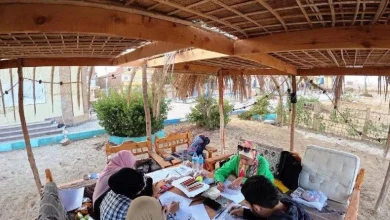
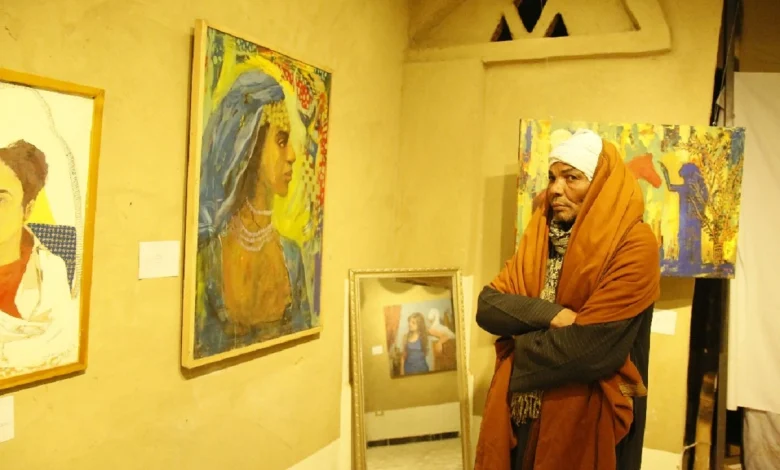
In West Luxor, Egypt, an art exhibition is breaking down barriers between academic and self-taught artists while connecting Upper Egyptian creativity with a global audience. The “Humans of Upper Egypt” association organised the showcase, bringing together self-taught visual artists, formally trained painters and sculptors, and students from the Faculty of Fine Arts.
The exhibition, which opened on on Thursday and runs until January 10th, has attracted local tourists, professional artists, and audiences from the region to view paintings and sculptures that celebrate the culture, heritage, and people of southern Egypt.
Creating Opportunities for Emerging Egyptian Artists
Mahmoud Hawary, founder of the “Humans of Upper Egypt” association, explains that the exhibition’s primary goal is to support art in all its forms, with a special emphasis on self-taught artists. These talented individuals, who lack formal academic training, have struggled to find genuine outlets for sharing their work with wider audiences.
The support extends beyond amateur artists to include Faculty of Fine Arts students, who possess significant creative potential but face challenges marketing their work and finding quality exhibition spaces. The exhibition has already demonstrated success, with five artworks by Upper Egyptian students sold to collectors from four different countries.
Portraits of Time: Student Artists Capture Upper Egyptian Life
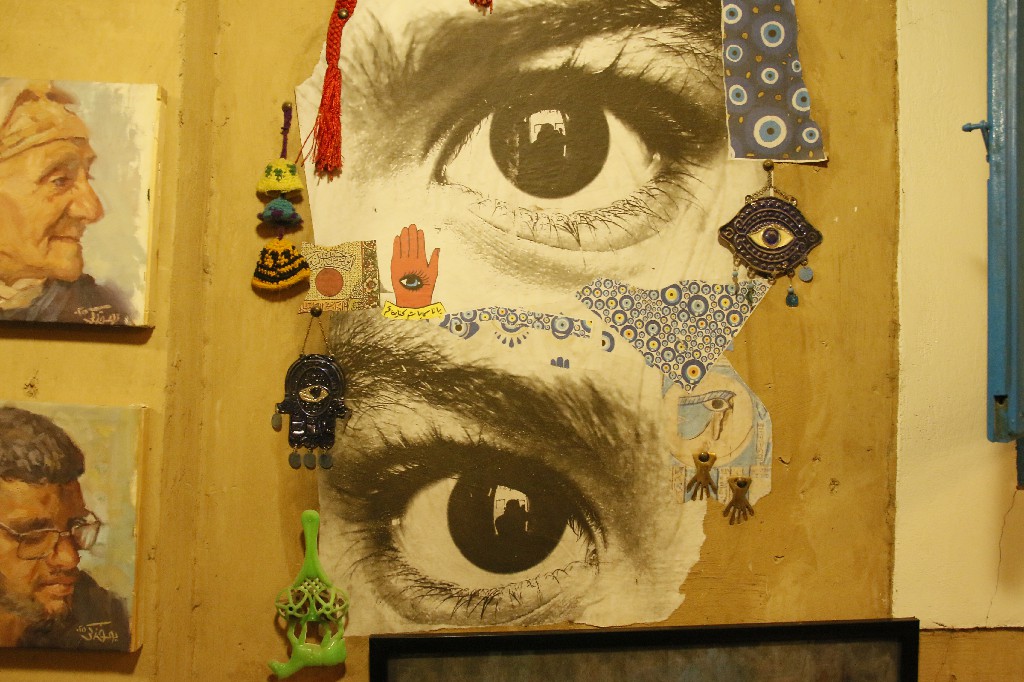
Mariam Al-Gharbawi, a student at Luxor’s Faculty of Fine Arts, exhibited her first artwork outside college walls. Her oil painting titled “Teta” (Grandma) required ten consecutive days to complete. The work reflects her passion for portraying elderly subjects, as she sees in facial wrinkles the “details of time” that words cannot express. She dedicated this piece to her own grandmother, honoring their deep bond.
Fellow Luxor native Salma Ezz El-Din, a third-year student and previous winner of the prestigious “Salah Taher” award, works primarily in watercolours. Her pieces draw on Luxor’s natural landscapes and the distinctive character of Arab faces. She believes watercolours offer special flexibility, and prefers smaller sizes that more effectively capture viewer attention and intensify emotional impact.
Documenting Cultural Heritage Through Contemporary Art
Upper Egyptian cultural traditions feature prominently throughout the exhibition. Artist Amr Hassan Gomaa from Esna center presented work evoking Ramadan memories from his village, specifically depicting women carrying cookie trays to communal ovens. This heritage tradition, which he documented using a live model to accurately capture body movement, was inspired by a 1980s film scene that remained in his memory since childhood.
Artist Amany Ahmed Salah, a 2024 graduate, revives Egypt’s ancient past through her work. Drawing inspiration from a historic photograph taken by foreign travelers at Egyptian temples, Amany depicts a girl in a black galabiya (traditional Egyptian garment) standing beside the towering columns of Karnak Temple in Luxor. She transformed the original photograph’s uniform brown tones into a vibrant oil painting with rich earthy colors, creating visual balance that links ancient stone monuments with contemporary human vitality
Sculpture and Human Connection
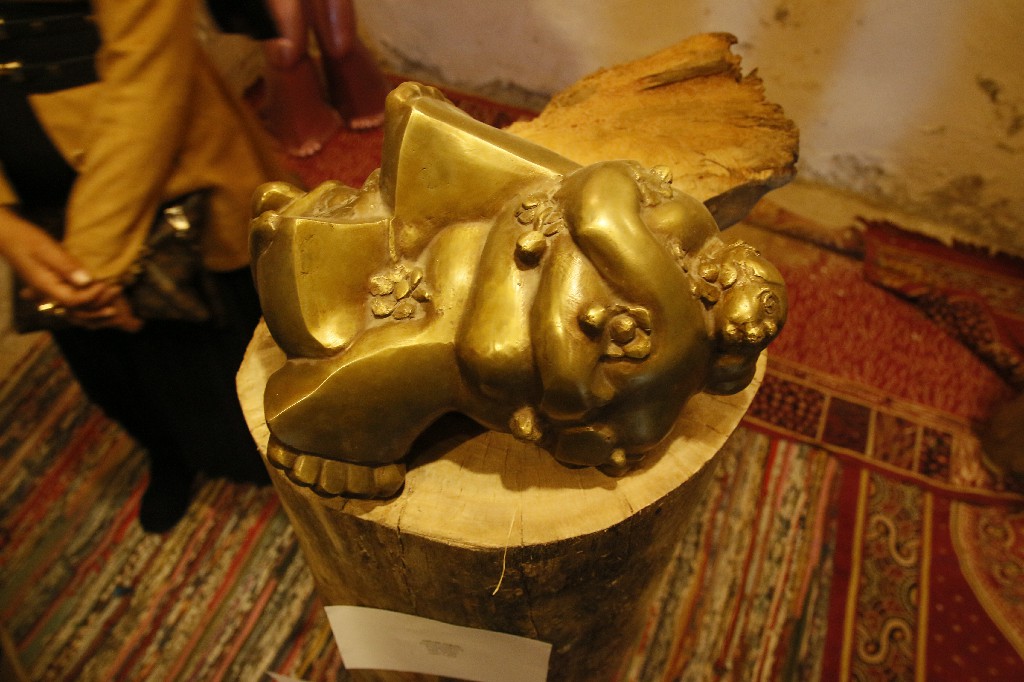
In the sculpture section, Zahra Naguib, a teaching assistant at the Faculty of Fine Arts, contributed five sculptural works using diverse materials including bronze, stone, alabaster, and polyester. Her pieces focus on human bonds, embodying warm relationships between parents and children, and between friends.
Naguib emphasizes that art represents the missing “connecting link” in contemporary relationships. She praises the exhibition for breaking through Luxor’s artistic stagnation and successfully integrating academic and amateur artists in one space.
Rahma Ibrahim, who brings 12 years of painting experience, exhibited a work titled “Ocean Turns Process.” Having explored surrealism, cubism, and abstractionism, she ultimately settled on oil painting as her preferred medium for expressing psychological complexity. Her piece likens sadness to powerful ocean waves that begin huge and frightening but gradually fade and erode at the shore, offering a philosophical perspective on human emotional processes.
More Than an Exhibition: A Cultural Hub for Luxor
Liana Zanin, director of the foundation, clarifies that the “House of Humans” in Luxor functions as more than a simple exhibition gallery. The venue serves as an integrated cultural center combining visual arts with sports and entertainment through workshops, yoga sessions, and film screenings.
“Our vision stems from the belief that art is the common denominator bringing together locals, students, and teachers in a collective human experience that transcends racial or cultural differences,” Zanin explains.
The exhibition represents a significant step forward for Upper Egypt’s art community, providing emerging artists with professional exhibition opportunities while fostering cultural exchange between Egyptian creators and international audiences in one of the world’s most historically rich cities.