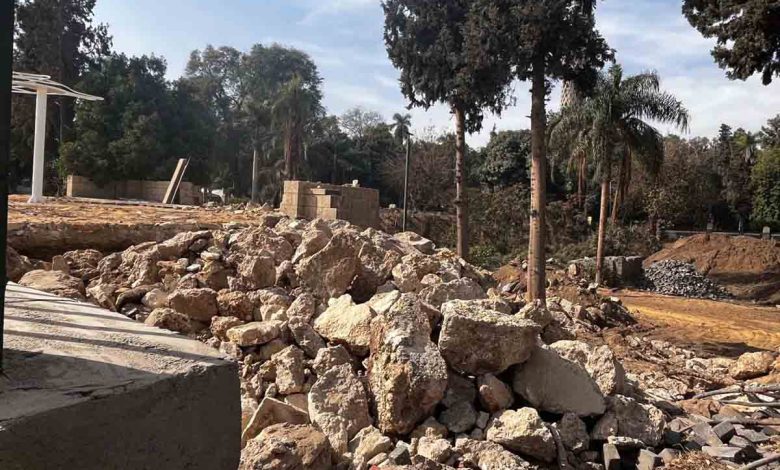
Masalla Park Under Threat: Petition Demands Halt to Construction and Concrete Works
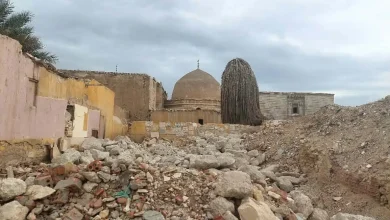
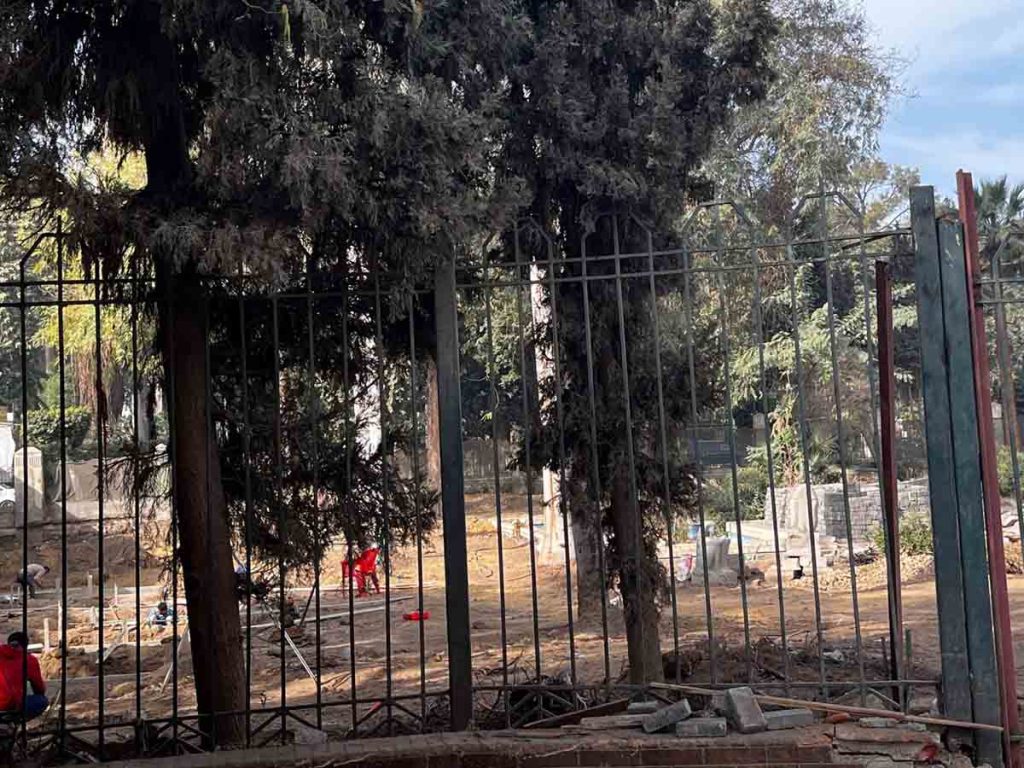
More than three months after Bab Masr investigated the activities at Masalla Park in Zamalek—under the headline “Soil Excavation and Concrete Bricks… What Is Happening Inside the Heritage Masalla Park?”—the park’s fate remains uncertain. Construction continues within the park using heavy machinery, without any official announcement regarding the details of the project. Several heritage-focused organizations have noted multiple issues in the park, including excavations in various areas—two along the park’s eastern edge and another near the on-site studio—as well as the laying of foundations for pouring concrete.
In response, civil society organizations in Zamalek have launched an online petition to gather signatures and demand that Masalla Park not be turned into an area hosting restaurants. They pointed out that “the heritage Masalla Park in Zamalek is under threat, as a company is set to develop the park and convert a significant portion of its green space into restaurants, cafes, and kiosks.”
Foundations and Concrete Work in the Heritage Masalla Park
Nadira Zaki, Chairperson of the Zamalek Development Association, has condemned the construction activities underway at the heritage Masalla Park in Zamalek. In an interview with Bab Masr, she revealed that foundations have already been laid to pour concrete for several restaurants in the park—a site originally established during the era of Khedive Ismail as part of the Nile Gardens.
Zaki argued that these developments violate all established principles and standards for urban coordination aimed at preserving parks with distinguished architectural character in Egypt, as outlined in Decree 44/09/21/8, which was approved by the Supreme Council for Planning and Urban Development, chaired by the Prime Minister.
She called on the Prime Minister to intervene urgently before the construction is completed and to clarify the project’s status regarding its submission to the Supreme Council for Planning and Urban Development.
Satellite Documentation of the Park’s Deterioration
Nadira Zaki told Bab Masr that the park’s crisis began in 2021 with the launch of the “Rotating Wheel – Ain al-Qahira” project, which was later halted, leaving behind construction equipment and bricks scattered throughout the park. She added: “The park has been closed ever since, and in 2024 our association began communicating with the Urban Coordination Authority. We then learned that an investment company is interested in building restaurants in the park.”
Zaki clarified that the association does not yet know whether the construction will affect the entire park or just a portion of it. She explained: “There was communication between the company and the Urban Coordination Authority according to the guidelines set by the National Urban Coordination Authority for developing heritage parks. These guidelines recommend utilizing no more than 5% of the park’s area, preserving the park’s fence without opening it onto the sidewalk, and halting the cutting of trees and reduction of green spaces.”
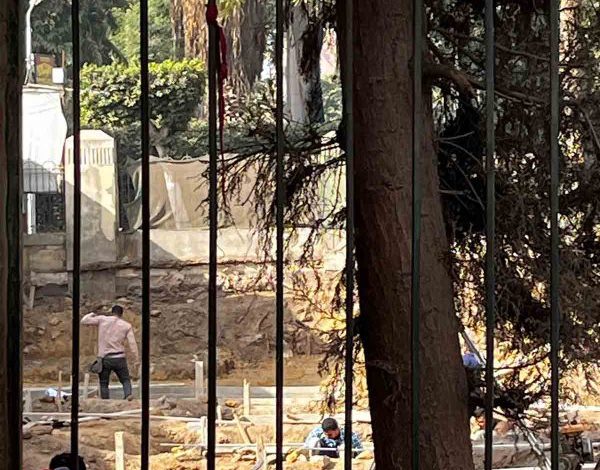
She also noted that satellite images captured by the association reveal extensive excavations in several areas of the park. “Since mid-January 2025, we have been surprised by the continuous excavations in three distinct areas, which we documented from the outside due to the prohibition on entering the park,” Zaki concluded.
Construction Works in the Park
Bab Masr reached out to Mohamed Al-Qarsh, the spokesperson for the Ministry of Agriculture, to obtain an official statement regarding the construction activities in the park. Al-Qarsh stated that the park falls under the responsibility of Dr. Ahmed Helmy, Director of the Institute of Orchard Research. However, after contacting Dr. Helmy, he denied that the park falls within his jurisdiction.
Defacement of the Heritage Park
Activist Nadira Zaki explained that despite extensive efforts by her association, they have yet to receive any response or clarification regarding the ongoing project. She noted that the project proposal was submitted with the understanding that final approval rests with the Supreme Committee—which operates under the authority of the Prime Minister—but the project has not yet been presented to this body. Zaki added that her association views these developments as a defacement of the park, especially since civil society’s initiatives were aimed at fostering cooperation and enhancing the park’s benefits.
She stressed the critical importance of preserving the park’s historical character, which dates back to the era of Khedive Ismail. Zaki emphasized that the park is one of the Nile Gardens managed by the Cairo Governorate, alongside other significant sites such as Al Andalos Park and Nile Park. She further argued that the current trend toward commercial investment in the gardens of Zamalek and along the Nile’s banks is far from ideal, insisting that these spaces should be preserved as integral parts of the city’s natural and historical heritage.
Nile Gardens
Nadira Zaki emphasized that the Ministry of Environment was present at the Climate Conference, noting that many of the project’s decisions contradict the principles adopted at the conference. She called for the involvement of dedicated specialists in the project, stressing the importance of including experts in heritage parks—such as those from Orman Garden and the Zoological Garden—since Egypt boasts a wealth of expertise in this field.
Zaki explained that the current changes in the park undermine its heritage and historical value. She recalled that the park was originally a promenade linking several gardens, and that Nile Park was once part of a series of gardens stretching from Qasr al-Nil Bridge into Zamalek. She added that the park underwent modifications in the 1970s when an obelisk and some antiquities were introduced, partially altering its character. Although parks naturally evolve over time, the changes underway are substantial and have significantly affected the fundamental layout of these historic spaces.
Demands and Conditions
Masalla Park on Zamalek Island is one of Cairo’s most significant heritage parks. Located along the Nile between Al Andalos Park and Nile Gardens, it spans approximately 5 feddans. Established in the late 19th century during the era of Khedive Ismail, the park is a vital part of Egypt’s natural and garden history.
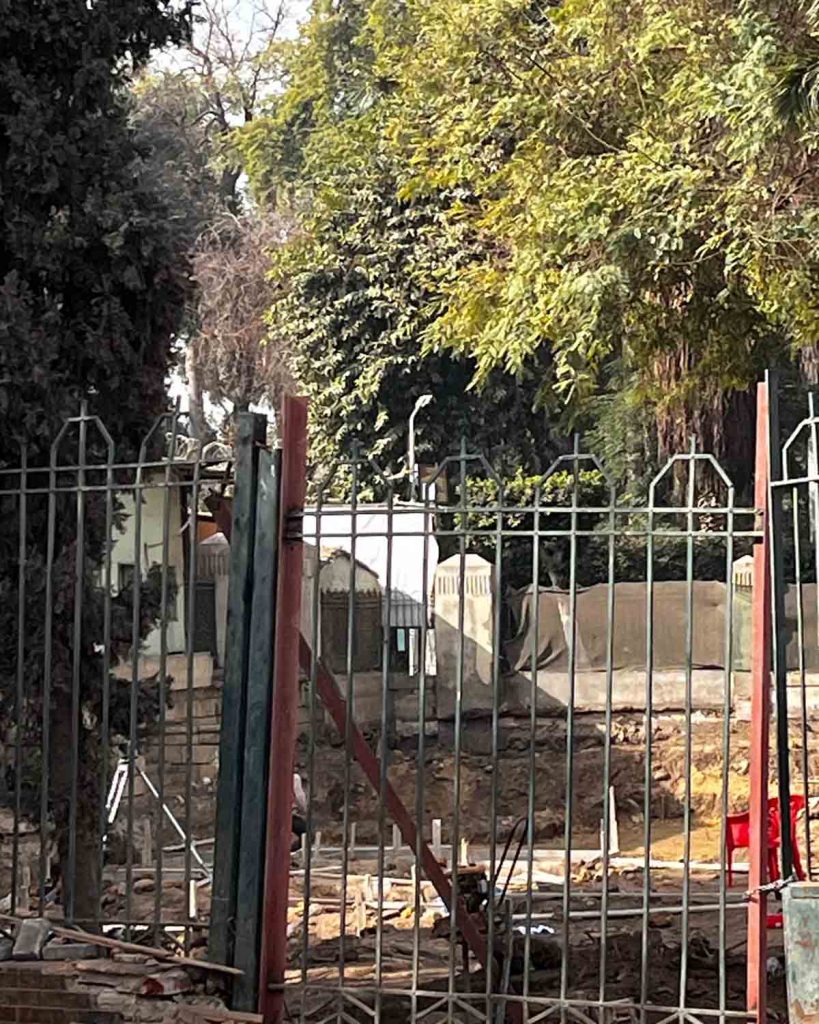
However, the current restoration work—which employs heavy machinery—has prompted civil society to demand that the ongoing project be suspended by the responsible company. They insist that all restoration plans be reviewed by the Supreme Council for Urban Planning and that the project fully adheres to the regulations designed to preserve heritage parks.
Civil society organizations are calling for the establishment of a committee composed of experts in agriculture, heritage gardens, restoration, and antiquities to oversee the work. They insist on appointing a specialized company in heritage garden restoration to implement the project, or alternatively, referring the matter to the appropriate government institutions.
Furthermore, the associations have recommended strict adherence to environmental law and the undertaking of comprehensive studies to assess the environmental, traffic, and social impacts. They stress the importance of preserving the park’s green spaces and protecting its heritage trees. The groups demand that the integrity of the park be maintained, prohibiting any modifications that might compromise its aesthetic appeal. In cases where the construction of buildings is necessary, such structures must be temporary and limited in scale, in accordance with urban coordination standards. Additionally, they call for the prevention of commercial activities, allowing only a modest restaurant to serve the park’s visitors in a manner that respects the site’s character.