Antiquities Authority refuses to demolish Abdel Majeed Pasha Palace in Mallawi
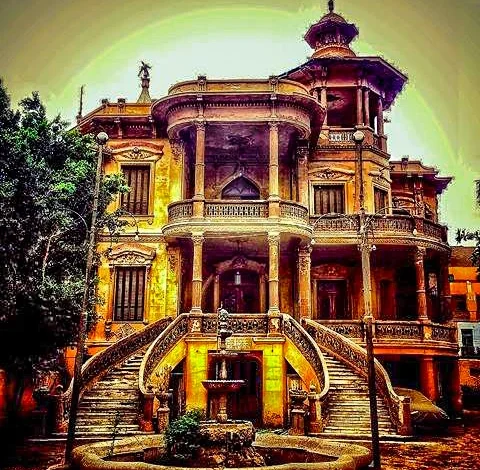
Recently, a memo circulated on social media indicating the start of procedures to demolish the historic Abdel Majeed Pasha Palace in Mallawi, Minya Governorate. This was based on a memo issued by Dr. Mohamed Ismail, Secretary General of the Supreme Council of Antiquities, on September 2. The aim was to form a committee to inspect the palace and assess its historical, scientific, or religious value. A comprehensive report would then be prepared for submission to the competent authority, and the necessary legal procedures would be completed.
Formation of the committee
The committee was formed by Dr. Diaa Zahran, head of the Islamic Antiquities Sector, Dr. Magdy Alwan, professor of Islamic antiquities at the Faculty of Arts, Assiut University, and Dr. Yasser Abdel Salam, head of the Islamic Antiquities Department at Cairo University. In addition to the Director General of Antiquities of Middle Egypt and a group of specialists.
The Ministry of Antiquities has neither denied nor confirmed the recent incident. It has remained silent throughout this period. However, according to documents we obtained from private sources, the committee was formed at the request of the palace’s owner, Osama Ahmed Abdel Hafez, who submitted a request to the Council of Ministers to remove the palace from the antiquities register. Based on his complaint, a committee was formed to decide on the palace’s fate.
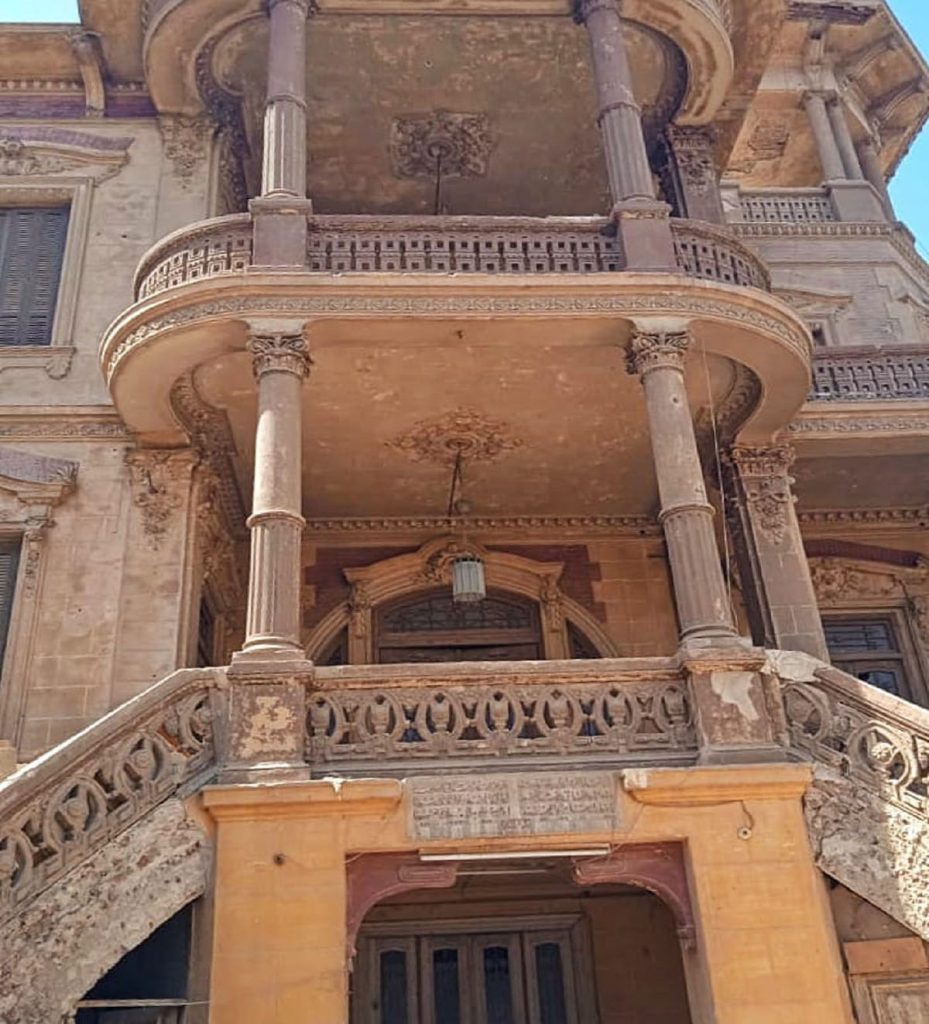
Review of registration and history
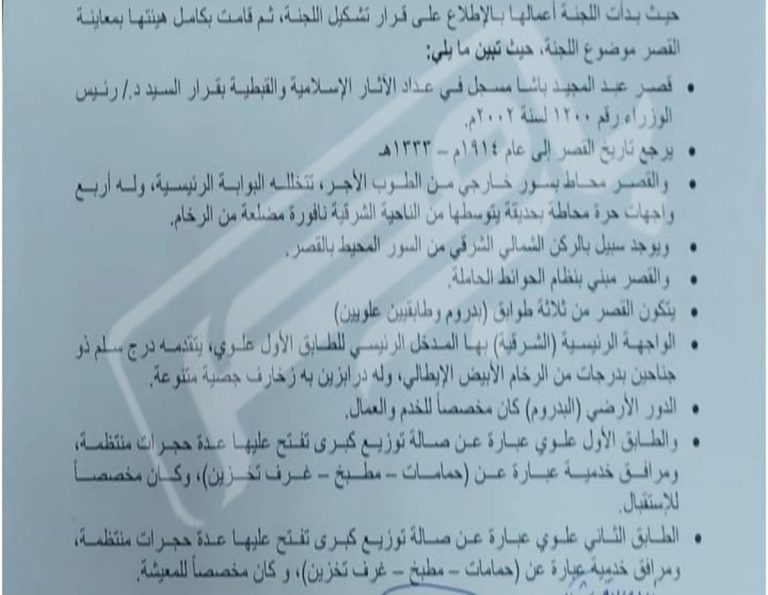
According to official documents, the committee decided to inspect the palace on October 2. The decision to register it was reviewed and it was found that it had been registered by a decision of Dr. Atef Ebeid, Prime Minister of Egypt, in 2002. The palace was built in 1914.
Overall opinions
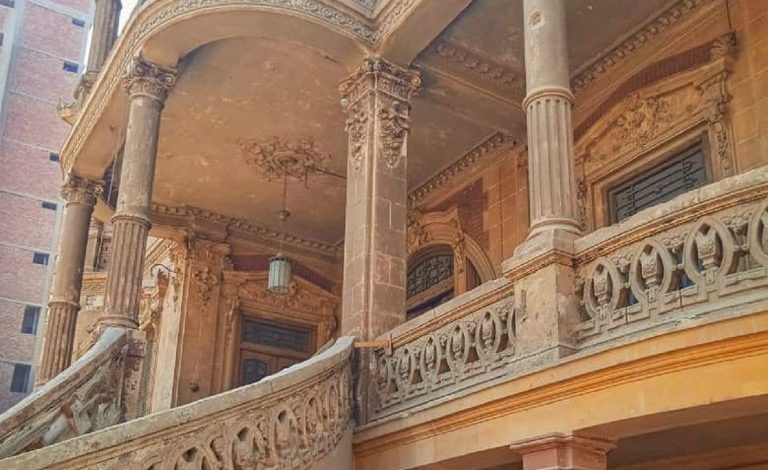
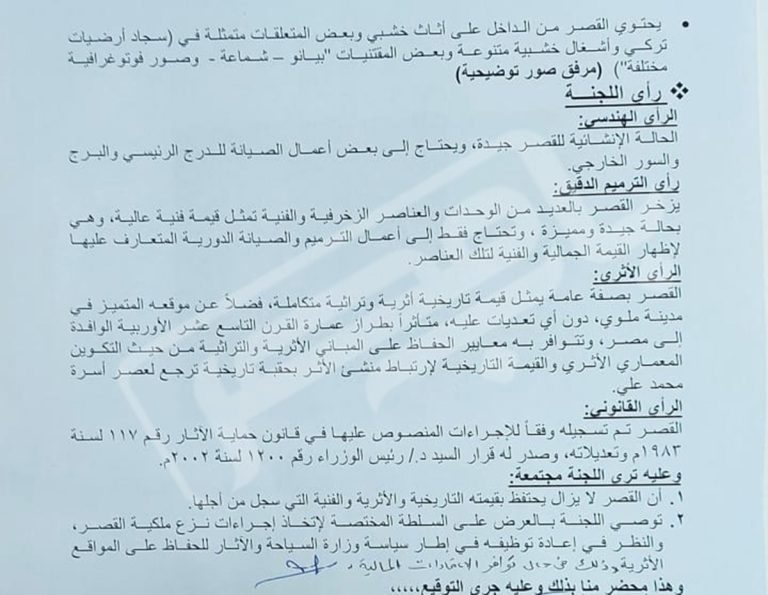
From an engineering standpoint, the committee found that the palace was in good structural condition. It only needed some maintenance work on the main staircase, the tower, and the outer wall. With regard to detailed restoration work, the committee explained that the palace is rich in many decorative and artistic elements of high artistic value. These are in good condition and distinctive, but only require periodic restoration and maintenance work to reveal their aesthetic and artistic value.
From an archaeological point of view, the committee considered that the palace represents an integrated historical, archaeological, and heritage value. In addition to its distinguished location in the city of Mallawi, there are no encroachments on it. It also noted that the palace was influenced by the 19th-century European architectural style that came to Egypt. It also noted that the palace meets the criteria for the preservation of archaeological and heritage buildings in terms of architectural composition and historical value, as the builder of the monument is associated with a historical period dating back to the era of Muhammad Ali Pasha, the former governor of Egypt.
From a legal standpoint, the report stated that the palace was registered in accordance with the procedures stipulated in the Antiquities Protection Law No. 117 of 1983 and its amendments. It was also issued a decision by the Prime Minister No. 1200 of 2002.
Based on this, the committee unanimously agreed that the palace still retains its historical, archaeological, and artistic value for which it was registered. It recommended that the competent authority take measures to expropriate the palace and consider reusing it within the framework of the Ministry of Tourism and Antiquities’ policy to preserve archaeological sites, “provided that the necessary financial resources are available.”
Description of the interior of the palace
According to the committee’s report, the palace is surrounded by an outer brick wall. It has four open facades surrounded by a garden with a polygonal marble fountain in the middle on the eastern side. There is also a passageway in the northeast corner of the wall surrounding the palace. The committee also found that the palace was built using a load-bearing wall system. It consists of three floors: “a basement and two upper floors.”
The eastern facade includes the main entrance to the first floor, preceded by a double staircase with Italian white marble steps. It has a balustrade with various plaster decorations. The ground floor (basement) was reserved for servants and workers. The first floor includes a large hall with several rooms opening onto it. It also has service facilities (bathrooms, kitchen, and storage rooms). It was used for receiving guests.
The second upper floor also has a large hall and a number of regular rooms and service facilities (bathrooms, kitchen, and storage rooms). It was used for living quarters.
Interior acquisitions
The committee confirmed that the palace contains wooden furniture and some belongings, including Turkish carpets, various woodwork, a piano, and multiple photographs.