Debate Ignites Over a Modern Amenity in an Ancient Landscape
As controversy stirs over a relocated cafeteria near Karnak Temple’s Sacred Lake, Egyptian archaeological officials clarify the preservation standards protecting the ancient Luxor site.
By Amany Khairy
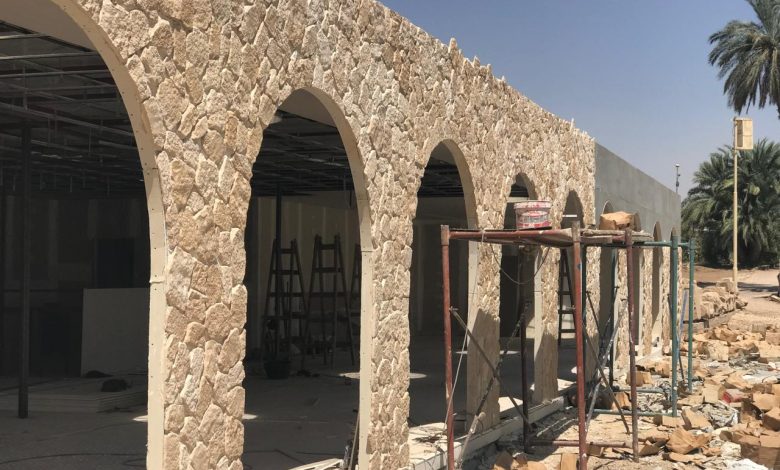
Images circulating across Facebook have ignited a fierce debate, showing the construction of a new cafeteria near the hallowed Sacred Lake within the Karnak Temple complex in northern Luxor. The digital murmurings offered little clarity regarding the authenticity of the photographs or the materials employed, stirring a wave of anxiety over how such a structure might compromise the architectural integrity and historic majesty of the ancient site.
A Necessary Respite for Weary Travelers
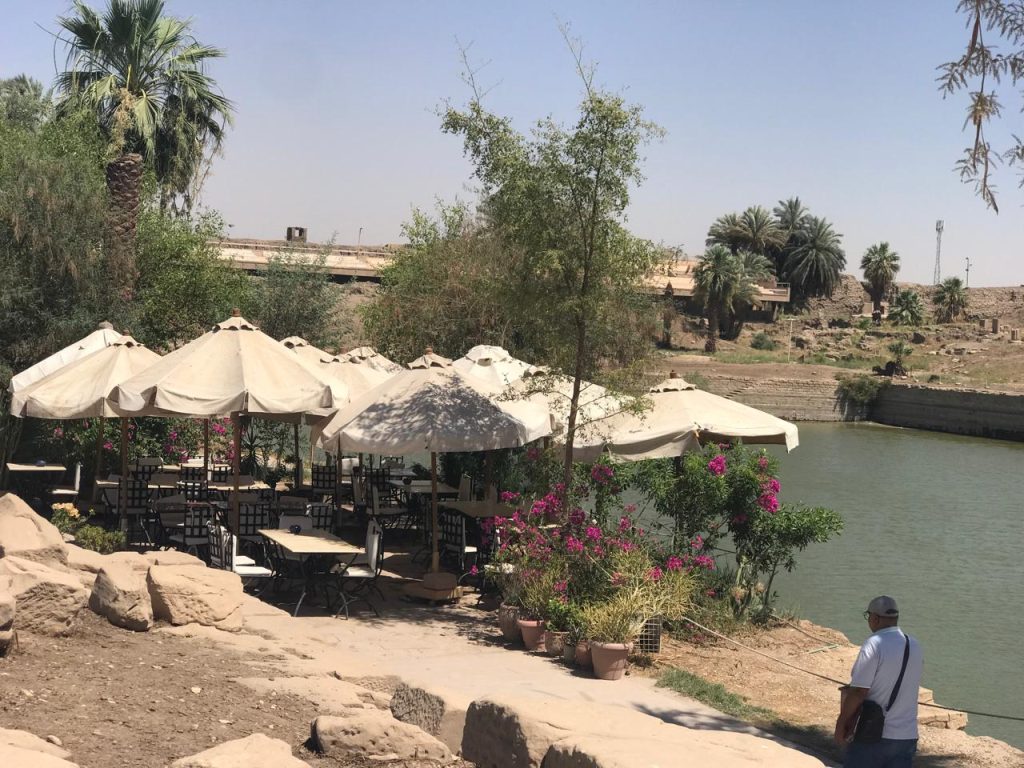
Nasr Salama, director of the Aswan branch of the Zahi Hawass Institute for Antiquities and Heritage, expressed profound bewilderment at the social media uproar. He clarified that a cafeteria has long existed on the grounds to serve international visitors, anchored there to provide essential restrooms, bottled water, and light refreshments like biscuits and juice.
Salama emphasized that such an amenity remains vital within Karnak, the world’s grandest open-air museum. It strains logic, he argued, to expect travelers to traverse these vast, sun-baked expanses without access to hydration or basic comforts, particularly under the punishing zenith of Luxor’s heat. Without these modest services, official complaints would inevitably mount, which is why the establishment has always quietly occupied the far left of the temple complex, near the Sacred Lake.
Preservation Guided by Strict Standards
The regional heritage director noted that hospitality assets are standard practice, drawing a parallel to the taf-taf (an open-air tourist tram) that transports visitors directly to the temple gates. Refreshing the cafeteria or shifting its footprint presents no inherent crisis, he maintained, provided the work honors strict preservation codes, chiefly ensuring that materials blend seamlessly with the temple’s ancient aesthetic and do not obstruct the historic vistas.
No alteration can occur within an Egyptian archaeological sanctuary without the explicit blessing of the Permanent Committee of the Ministry of Tourism and Antiquities, a mandate requiring exhaustive architectural blueprints and material reviews well before breaking ground. Salama dismissed the digital outrage surrounding an institution that has stood for years, asking why the issue had never surfaced until now. He reiterated that offering simple comforts to weary visitors poses no threat, especially given the cafeteria’s distance from the primary monuments.
Constructing the kiosk out of wood or assembling it as a makeshift trailer remains out of the question due to fire hazards that could jeopardize the sanctuary. The materials presently utilized pose no danger to the antiquities. A genuine crisis would only arise, he remarked, if stone masonry were erected at the temple’s facade, a misstep that would severely mar the visual landscape and the evocative atmosphere of the site.
Guardians of Heritage Demand Official Transparency
Dr. Abdel Rahim Rihany, an archaeological expert and head of the Campaign for the Defense of Egyptian Civilization, questioned the stark silence from the Ministry of Tourism and Antiquities. Speaking to Bab Misr, he wondered why officialdom had failed to issue a formal response despite the rapid, widespread dissemination of the images.
Rihany stressed the urgency of verifying the photographs to determine whether they capture reality or digital fabrication. He pressed for clarity on whether the ongoing works received formal authorization from both the Ministry’s Permanent Committee and international custodians, most notably UNESCO.
The public deserves comprehensive disclosure regarding the materials chosen for the construction, he argued, specifically whether they threaten the physical antiquities or inflict visual pollution upon the historic vista. A formal ministerial statement remains imperative to illuminate the facts for an anxious public.
Relocation Born of Restoration
To untangle the narrative, Bab Misr connected with an official within the Karnak Temple archaeological zone, who spoke on the condition of anonymity to clarify the unfolding situation.
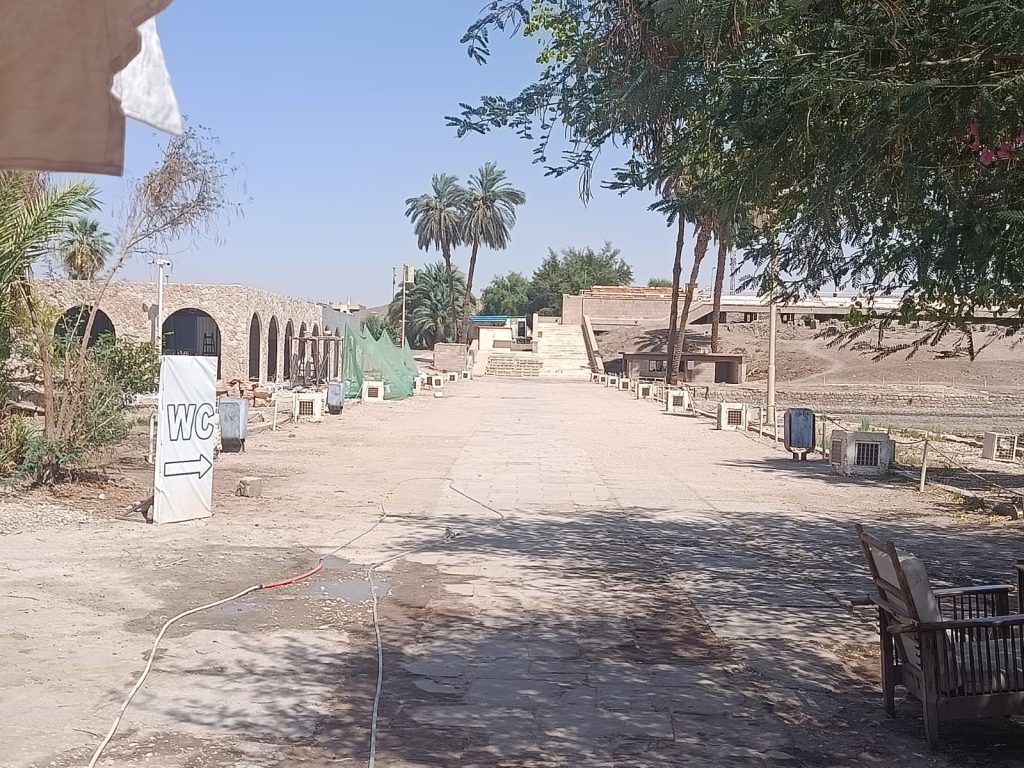
“The Karnak Temples have long hosted a cafeteria to serve travelers from across the globe,” the official explained. “However, we recently initiated vital restoration works at the Chapel of Taharqa, situated within the open courtyard of the Great Amun Temple. Because the old cafeteria obstructed these conservation efforts, the decision was made to relocate it, not to build an entirely new one. This measure was fully vetted and approved by the Permanent Committee of the Ministry of Tourism and Antiquities and the former Secretary-General; it is by no means a sudden directive.”
Speaking exclusively to Bab Misr, the official added that the new site sits roughly twenty meters away from the Sacred Lake and does not overlook it at all. The structure avoids blocking any vistas, nestled discreetly along the pathways of the Sound and Light show terraces, adjacent to its original footprint.
The construction relies entirely on demountable gypsum board panels, carefully textured to mimic stone and painted in earthy, sand-swept tones that harmonize with the ancient landscape. The official categorically denied the internet rumors alleging the use of poured concrete or heavy structural pillars, reassuring that the integrity of the sanctuary remains uncompromised.