The Fractured Grid: Demolition, Class Warfare, and the Remaking of Cairo’s Urban Soul
An elegant, journalistic translation analyzing Dr. Omnia Khalil’s critique of Cairo’s rapid urban transformation, mass evictions, and the deepening class warfare reshaping the historic capital.
By Aya El-Samalousy
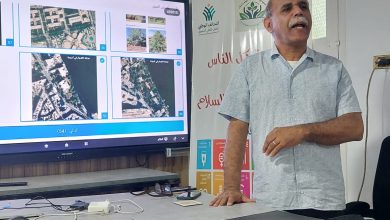
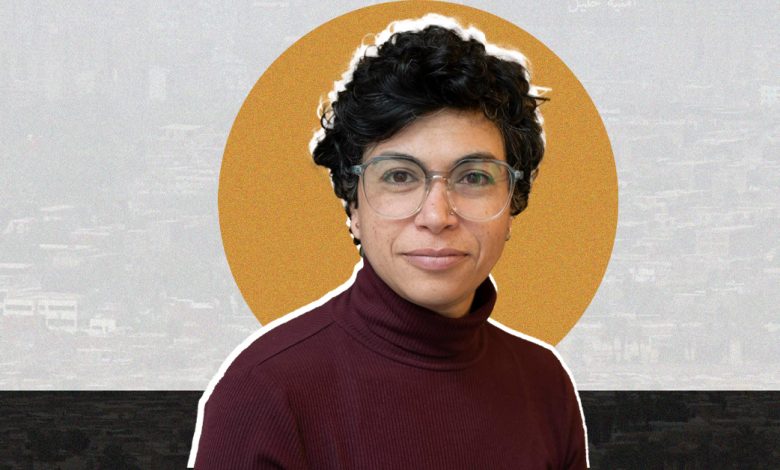
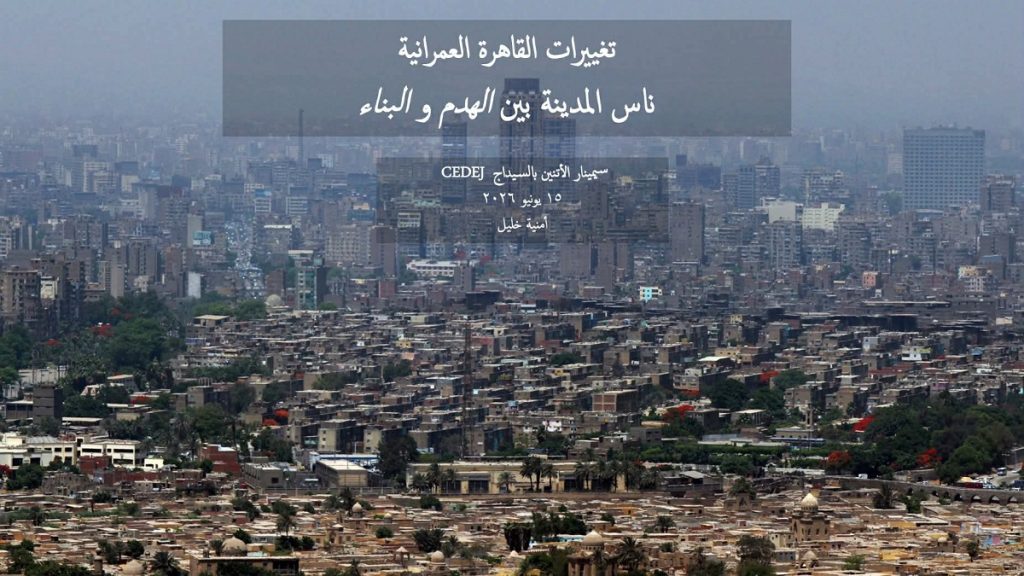
Last Monday’s seminar at the CEDEJ center, moderated by researcher Ahmed El-Serougi, hosted a presentation by urban scholar Dr. Omnia Khalil, a lecturer at the City College of New York. Khalil dismantled the ongoing dialectic of demolition and construction, mapping the breathless structural shifts tearing through Cairo’s urban fabric over the past decade. Her premise remains unyielding: physical mutations within a city inevitably trigger forced social and economic displacement, stripping inhabitants of their ability to navigate and decipher their own everyday spaces.
These transformations unfold along two parallel tracks. The first is a campaign of erasure and eviction, targeting historic working-class neighborhoods under the guise of eradicating “unsafe areas” or “reclaiming state lands.” The second is an aggressive expansionist drive, materialized in a speculative building boom of luxury investment ventures, mega national projects, and an omnipresent web of highways and flyovers.
Drawing upon extensive ethnographic fieldwork centered on the historic quarters of Bulaq Abu al-Ela and Old Cairo, Dr. Khalil meticulously documented the impact of these urban policies on the daily movements and survival strategies of local residents. Through her study, she posed pivotal anthropological inquiries regarding the true cost of physical alteration in a metropolis, exploring how displacement reverberates through social memory and daily transit.
The Metamorphosis of a Metropolis
Dr. Omnia Khalil opened her discourse by emphasizing that the urban convulsions reshaping contemporary Cairo are not abstract theories, but a visceral reality lived by its citizenry over recent years. She noted, however, how the capacity of researchers to observe and archive this transformation has fluctuated across shifting political epochs.
She reflected that if anyone had predicted in 2010, or even as recently as 2018, that Cairo would undergo such a radical, sweeping transmutation at this dizzying velocity, no one would have believed it. Yet, the writing was already on the wall, signaling that the city stood on the precipice of momentous upheavals, a reality she endeavors to capture through the lens of rigorous fieldwork and anthropological critique.
The researcher traced the timeline of evictions and demolitions spanning from 2017 to 2024, noting that the summer of 2017 struck a definitive spark with the displacement waves on Warraq Island. Those events culminated in fierce, overt clashes between security forces and locals. While specialists understood that evictions had quietly begun much earlier, the raw publicity of these confrontations transformed this moment into a watershed historic marker.
She then turned to 2018, describing it as the decisive hour for the Maspero Triangle. Here, the physical dismantling and systematic emptying of the district began, paving the way for the total eviction of its community and the leveling of the earth. Khalil illuminated the dangerous precedent of the Maspero case, explaining how it served as the master blueprint. It codified the legal mechanisms and bureaucratic procedures that the Egyptian government would subsequently deploy to execute evictions across Greater Cairo and the wider nation.
Tracing the chronological arc to 2019, Khalil highlighted the erasure of sprawling swathes of Old Cairo. The demolitions commenced in the Ain al-Hayat area to clear ground for new developments, leveling local schools in their wake. The bulldozers then advanced through Ain al-Sira and the historic terrain behind the Sour Megra el-Oyoun (the historic aqueduct wall), cutting deep into the very heart of the ancient quarter.
The Myth of the Red Lines
The researcher deconstructed the problematic framework of “red lines” and the institutional taxonomy of “unsafe areas.” She recalled the 2008 decree by former President Hosni Mubarak establishing the Informal Settlements Development Fund (ISDF) following the catastrophic rockslide of Al-Duwayqa.
She explained that the fund sought to categorize informal settlements using international standards, dividing unsafe zones into four distinct tiers. Consequently, “red lines” were drawn to delineate the geographic borders of unsafe pockets within broader development schemes, as seen in the Maspero Triangle. Khalil pointed out a widespread, perhaps naive, assumption among the public that evictions would remain confined within these officially designated hazardous borders. However, field observations revealed that by 2018, the demolitions breached these red lines, swallowing vast, unclassified neighborhoods across Old Cairo.
She cited Warraq Island as another striking example. The island possessed no official red lines or hazardous classifications; it was simply a vibrant residential ecosystem. Yet, it witnessed a drastic shrinkage of its green expanses and a systematic expulsion of its populace. This, the researcher argued, signaled a fundamental shift in the state’s legal narrative: the justification was no longer about rehabilitating unsafe areas, but something entirely different.
Dr. Khalil delved into the quagmire of official data and statistical methodologies. She conceded that, as an anthropologist, her focus had long centered on qualitative truths and social realities rather than the cold language of numbers, particularly given the stark absence of transparent state mechanisms tracking the exact numbers of displaced citizens.
She explained that in March 2024, she attempted to construct a systematic census using public data from the Informal Settlements Development Fund regarding the number of residential units contained within the red lines of each district.
Through her calculations, she discovered that the population residing strictly within these demarcated hazard zones in the Cairo and Giza governorates alone reaches approximately 2.8 million people. She emphasized the staggering magnitude of this figure, which represents a significant percentage of the metropolitan population, while noting that this tally completely omits those displaced outside the official red lines, whose numbers remain unrecorded due to a total lack of tracking mechanisms.
State Promises and the Reality of Relocation
The researcher analyzed the yawning chasm of compensation and resettlement mechanisms, contrasting official narratives, which championed the relocation of all residents to purpose-built alternative housing projects like Al-Asmarat, Ma’an, and Ard El-Khayala, against the hard data. She revealed that a meticulous tally of the apartments constructed within these state-sponsored complexes, based on public government announcements, yields a total of only 30,800 units.
She added that even if one adopts a conservative research methodology averaging four to five members per household, these complexes can accommodate, at their absolute zenith, no more than 200,000 residents. This exposes a breathtaking deficit between the 2.8 million people affected by evictions and the meager 200,000 absorbed by alternative housing. This disparity raises a haunting question: where did the rest of Cairo’s displaced souls go?
The scholar bolstered her thesis with findings from her intimate fieldwork tracking thirty families from Old Cairo in the period leading up to the COVID-19 pandemic, prior to March 2020. Her data revealed that only ten of these families successfully secured apartments in the Al-Asmarat complex.
She attributed this failure to the deeply exclusionary criteria embedded within resettlement protocols. The state routinely disqualifies widows, widowers, and divorcees, while forcing extended families or elderly individuals lacking independent incomes to share a single unit with their adult children. Furthermore, the cramped architecture of these social housing units renders them spatially and culturally incapable of hosting extended kinship networks, prompting many families evicted from Old Cairo in 2019 to cling to their ancestral neighborhoods, seeking informal housing alternatives before the bitter winter descended.
Khalil expanded her observations to the lived realities within alternative housing and the subsequent phenomenon of reverse migration. Her geographical tracking took her deep into three primary locales within Bulaq Abu al-Ela, including Ramlet Bulaq, alongside visits to families displaced to Al-Asmarat from both the Maspero Triangle and Old Cairo.
The researcher drew a sharp contrast between the experience of the Maspero Triangle residents, whose contracts featured exceptional provisions granting them property rights to buy, sell, and trade their units, prompting many to sell their apartments and flee Al-Asmarat altogether, and the residents of Old Cairo, who faced suffocating administrative surveillance and draconian oversight from local municipal authorities.
She recounted an incident from 2020 where municipal employees issued monetary fines and written warnings worth fifty Egyptian pounds to illiterate families under the pretext of improper waste disposal, reassuring them verbally that it was merely a routine advisory note.
The Price of Admission: Security Deposits and Financial Strain
The researcher raised the issue of economic burdens and the demanding proof of income required from displaced residents. Obtaining alternative housing necessitates upfront security deposits totaling several thousand pounds, followed by a lifelong commitment to monthly rent and the stringent presentation of formal income statements to prove financial solvency.
She argued that this condition functions as a structural filter of exclusion, completely out of reach for vulnerable segments dependent on modest pensions or precarious, informal day labor. Khalil also touched upon the psychological and social wounds inflicted by alternative housing, uncovering severe codes of conduct imposed upon the residents that erode their sense of citizenship and dignity. For instance, families are strictly prohibited from moving their old furniture into the new apartments under the pretext of spatial constraints and pre-furnished layouts; they are told to arrive carrying nothing but their clothes.
She added that residents confront rigid behavioral and architectural policing within Al-Asmarat’s ten-story concrete blocks. Though Egyptian building codes mandate elevators for any structure exceeding seven stories, the use of elevators here is tightly restricted, governed by a neighborhood custodian appointed to control them. Basic living necessities, such as butane gas cylinders, are banned from the lifts, deepening the residents’ sense of alienation and reinforcing the painful impression that they are viewed as undesirable citizens.
Khalil explained that those segments who failed to meet the state’s compensation criteria, including a vast swath of Ramlet Bulaq’s populace, migrated across the Nile to areas like Warraq al-Hadar, directly opposite Warraq Island, to buy or rent housing within their modest financial means.
As eviction waves intensified after 2020, new informal enclaves sprouted on the peripheral fringes of the capital, mirroring a systematic banishment of the poor to the margins. Consequently, makeshift transport networks and microbus lines have emerged to stitch these far-flung outposts back to their original neighborhoods, driven by the enduring social and urban lifelines maintained by the displaced.
The Digital Arena and Narratives of Resistance
The researcher also examined the digital landscape and narratives of resistance playing out across social media platforms. Analyzing the vitriolic commentary surrounding recent demolitions in the Manyal El-Roda district, she highlighted fierce debates among residents weighing the futility of remaining against the compromises of relocation and compensation values.
From an anthropological and linguistic perspective, she noted the emergence of potent metaphors used by residents to articulate their displacement, frequently likening their predicament to that of Palestinians expelled from their lands by an occupying force. Khalil observed that these profound comparisons began crystallizing within the public discourse during the initial evictions of Warraq Island, years before the cataclysmic events of October 2023 and the ongoing destruction in Gaza. The deployment of such rhetoric, she argued, underscores the devastating psychological trauma of eviction, exposing the official state narrative, which paints these clearances as celebrated acts of urban development and fair compensation, as a construct in desperate need of critical deconstruction.
Monumentalism and Political Semiotics
The researcher then pivoted to the opposing pole of the dialectic: the architecture of construction, decoding the political and visual semiotics manifested in the state’s mega-projects, chief among them the New Administrative Capital and New Alamein.
She analyzed this symbolic and aesthetic shift by citing the grand mosque of the New Administrative Capital. In 2019, the construction of these colossal religious monuments coincided with a calculated visual realignment in state broadcasting during the Adhan (the Islamic call to prayer) on official state television channels. For decades, the collective visual memory of generations born in the eighties and nineties was anchored to serene broadcasts from the Holy Mosques of Mecca and Medina during the call to prayer. This iconography was abruptly replaced by panoramic sweeps of the New Capital’s mega-mosque, a deliberate effort to cement a new religious and political aesthetic tethered to the concept of the “New Republic.”
She pointed out that this visual pivot occurred alongside saturation ad campaigns, such as the Ramadan commercial “The Sweetness of Beginnings,” featuring prominent public intellectuals, artists, and celebrities. The campaign sought to market the New Capital as the ultimate emblem of upward mobility and technological advancement, boasting monorails and monolithic libraries. These urban and visual aesthetics, Khalil contends, demand a critical interrogation regarding exactly who they are meant to serve.
The scholar placed the aggressive expansion of highway networks and flyovers under the microscope of socio-economic critique. Citing data from the Central Agency for Public Mobilization and Statistics (CAPMAS), which indicates that the total number of licensed vehicles in Egypt stands at roughly 11 million, with Cairo claiming 25.7 percent, Giza 14.4 percent, and Alexandria 7 percent, she explained that these figures encompass all vehicle types, not just private cars.
She clarified that more than half of the capital’s vehicles consist of public transit, microbuses, and heavy freight, raising an academic and economic inquiry into who actually benefits from these concrete overpasses. The ban on microbuses, public buses, and motorcycles on these new highways means, in her view, that they do not serve mass transit or the broader populace. Instead, they cater exclusively to a privileged sliver of private car owners, necessitating a rigorous academic review of these multi-million-pound budgets to gauge their actual social and environmental viability.
Khalil projected this very question onto the architectural visions for the Maspero Triangle development and the luxury towers, cafes, and upscale malls lining the Nile Corniche. A persistent question lingers: for whom are these spaces built, and who can truly afford to inhabit or occupy them?
She hinted that this existential inquiry now breaches the upper economic strata. The original blueprint for the Maspero demolitions included the six residential blocks sandwiched between the Ramses Hilton and the state television building, structures inhabited by an affluent social elite boasting powerful historic ties to state apparatuses before 2011.
She added that despite their privilege, these affluent residents found themselves utterly unable in 2019 to open channels of negotiation with decision-makers to halt the demolition of their homes. This left them in a state of profound shock, forced to reckon with the absolute, sweeping nature of urban decrees that render social status entirely irrelevant.
Deciphering the New Urban Paradigm
Dr. Omnia Khalil concluded her presentation by distilling three foundational concepts vital to understanding the contemporary urban condition of Cairo. She began with the first principle: agency and community participation, questioning whether ordinary citizens possess any choice or self-determination in shaping development projects that often dismantle the existing social fabric.
She traced the total absence of community participation to the erasure of local municipal councils and the severely limited power of parliamentarians to mount effective inquiries against the breakneck timelines of evictions. This exclusion, she asserted, trickles up from marginalized groups to the middle and upper-middle classes, as evidenced by the futile negotiation attempts made by the residents of Heliopolis or the Maspero Corniche towers with the Cairo Governorate. This top-down enforcement extends to the mass uprooting of trees, the leveling of historic cemeteries, and the dismantling of heritage districts.
She then turned to the second concept: the loss of spatial memory and urban disorientation caused by the rapid mutilation of the landscape, which strips the city of its fundamental landmarks.
She shared an intimate personal anecdote from her fieldwork, recounting how her own mother called her, deeply distressed and lost, unable to recognize familiar streets due to the dizzying maze of new flyovers and highways. Khalil remarked that this disorientation is not the romantic, exploratory wandering championed by philosopher Walter Benjamin. Rather, it is a profound amnesia of space and community. Today, even geographers are forced to open digital mapping applications while driving across overpasses just to figure out what historic neighborhood they are floating above, a devastating loss for the collective memory and a normalization of historical erasure.
The researcher identified the third, most potent, and analytically sharpest concept for diagnosing the status quo: class warfare and hostility. The current urban apparatus reproduces and deepens class chasms by banishing millions of residents from their vital ecosystems to build luxurious, pristine citadels that, according to national income statistics, only 4 percent of Egyptian society can ever dream of affording.
The Ghost of Survival
Dr. Khalil noted that this class stratification ensnares even those populations who managed to survive physical demolition. They are caught in a web of shifting legislative and economic realities, including the amendment of old rent laws, building violation reconciliation codes, the erosion of real wages, skyrocketing sovereign debt, and successive waves of currency devaluation. These compounding crises deepen a pervasive sense of grief and alienation within the city.
Dr. Omnia Khalil’s thesis ultimately forces us to confront a final, haunting, and prospective question: if the city is being violently uprooted from its historic soil to cater to the ambitions of an insulated elite, while expelling the vast majority of its creators and inhabitants, who will breathe life into these cold concrete walls tomorrow? And to which Cairo do these millions belong, lost as they are above the highway overpasses of alienation?