The Cathedral of the Virgin Mary: A Century of Faith, Healing, and Heritage in Aswan
Explore the storied history of Aswan’s Church of the Virgin Mary and St. Daniel Comboni. From its 19th-century foundations to its vital role in education and healthcare during the construction of the High Dam, discover how this architectural marvel remains a hallowed sanctuary of faith and a cornerstone of communal service in southern Egypt.
By Wafaa Amin
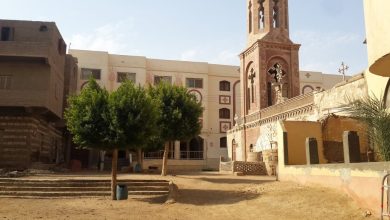
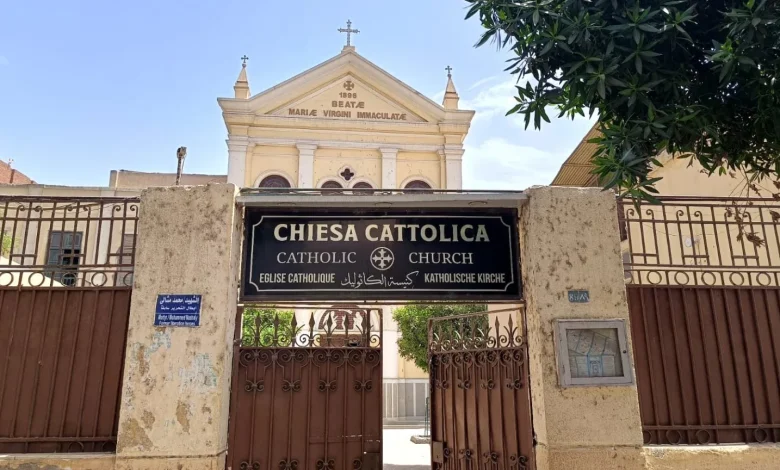
In the pulsing heart of Aswan, the Church of the Blessed Virgin Mary and St. Daniel Comboni stands as a sovereign sentinel of faith. One of the oldest Coptic Catholic bastions in Upper Egypt, its foundations were laid over a century and a half ago, dating back to the mid-nineteenth century. Throughout its storied existence, this hallowed sanctuary has never been a mere house of liturgy; its mission has rippled outward into the secular world through education and healing. From welcoming weary foreigners during the monumental construction of the High Dam to serving as a spiritual compass for the local community, the church remains a cornerstone of Aswan’s cultural and religious identity.
Foundations and the Jubilee of History
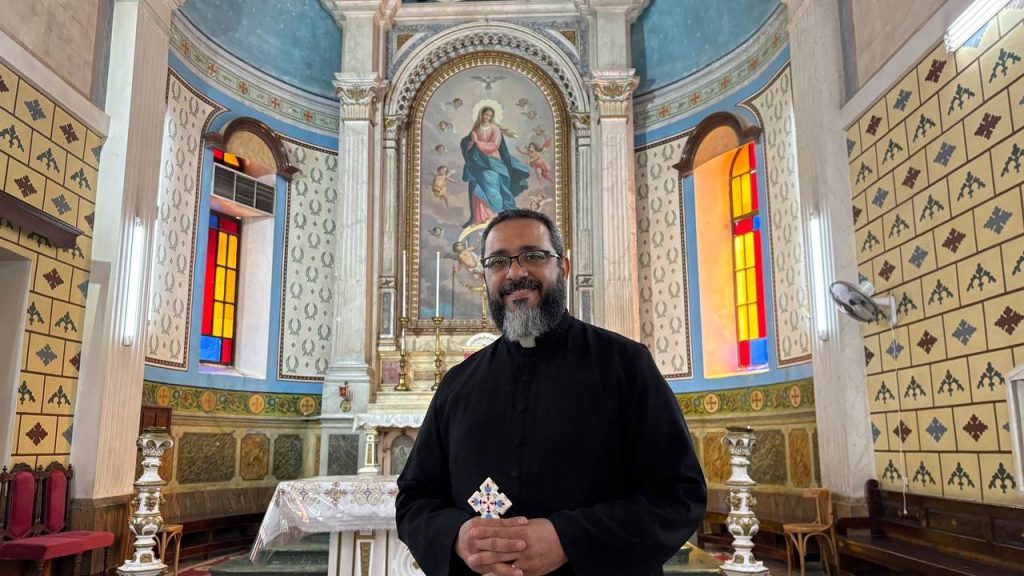
Father Amgad Ezzat, the Assistant Pastor, speaks of the church’s lineage with palpable reverence. “The structure was consecrated under the auspices of Bishop Anba Antonio Ruvego in December 1896,” he explains. “It is an archaeological jewel of Aswan, where the first Mass echoed through these halls upon its completion, marking it as a pioneer of service for the entirety of Upper Egypt.”
He emphasizes that the church’s embrace has always been ecumenical in spirit. For more than 150 years, it has cast its doors wide to any traveller or seeker treading the dust of Aswan. This year, the church enters a Jubilee (a year of sacred celebration), a milestone that Father Ezzat describes as a vital station in its spiritual and human odyssey. The church’s prominence is etched in stone and ink, verified by royal and republican decrees of ownership and meticulous historical registers that chronicle the prestigious guests who have sought solace within its walls.
The Icon of the Queen of Heaven
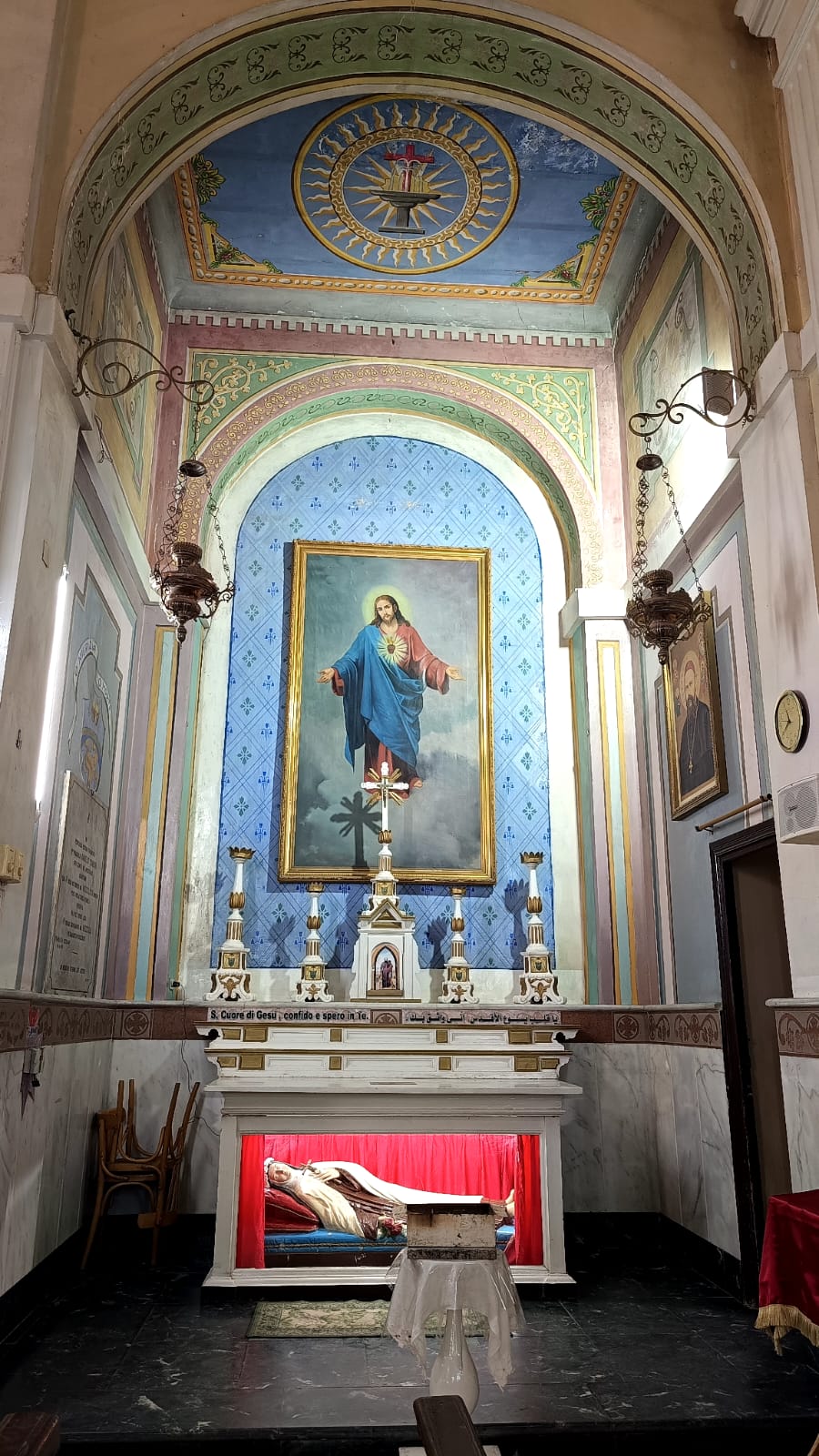
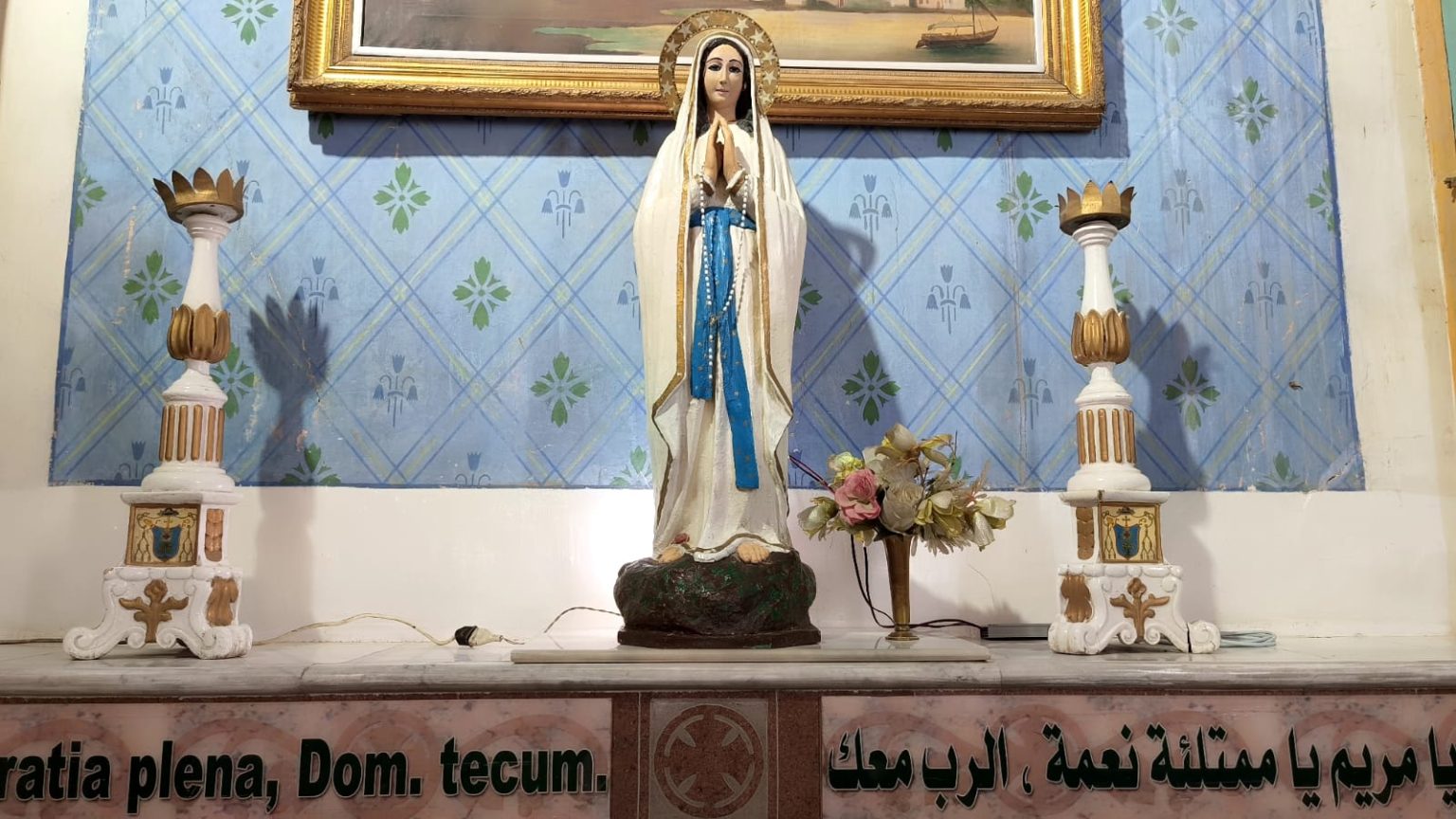
Within the nave, the church enshrines a primary icon: a historical painting of the Virgin Mary that commands the space. She is depicted in a state of Tajalli (divine manifestation), reigning as Queen of Heaven and Earth. According to Catholic doctrine, she is the Mother of Christ, and this specific rendering has been a focal point of veneration since the day of the church’s inauguration.
“This painting is a relic of our origin,” Father Ezzat notes. Beyond its spiritual weight, it possesses immense archaeological value, accompanied by a collection of antique lamps remnants of an era before electricity and other historical canvases. Together, they form a tapestry of artistic and architectural heritage that draws researchers and pilgrims alike to study the intricate aesthetics of Coptic art.
A Global Haven for the Soul
Father Ezzat describes the church as a “window to the world.” Long before the High Dam reshaped the Egyptian landscape, this church was already a refuge. During the dam’s construction, it became an anchor for the influx of international engineers and workers, as well as Egyptians arriving from every corner of the republic.
The church’s ministry was never confined to the pulpit. The Comboni Sisters brought healing through their medical dispensaries, while the “St. Therese” school, an annex of the church, became one of Aswan’s most prestigious educational institutions. This dual commitment to the mind and body was born of a philosophy that worship is inseparable from communal service a holistic mission to uplift the human condition.
A Masterpiece of Basilican Grandeur
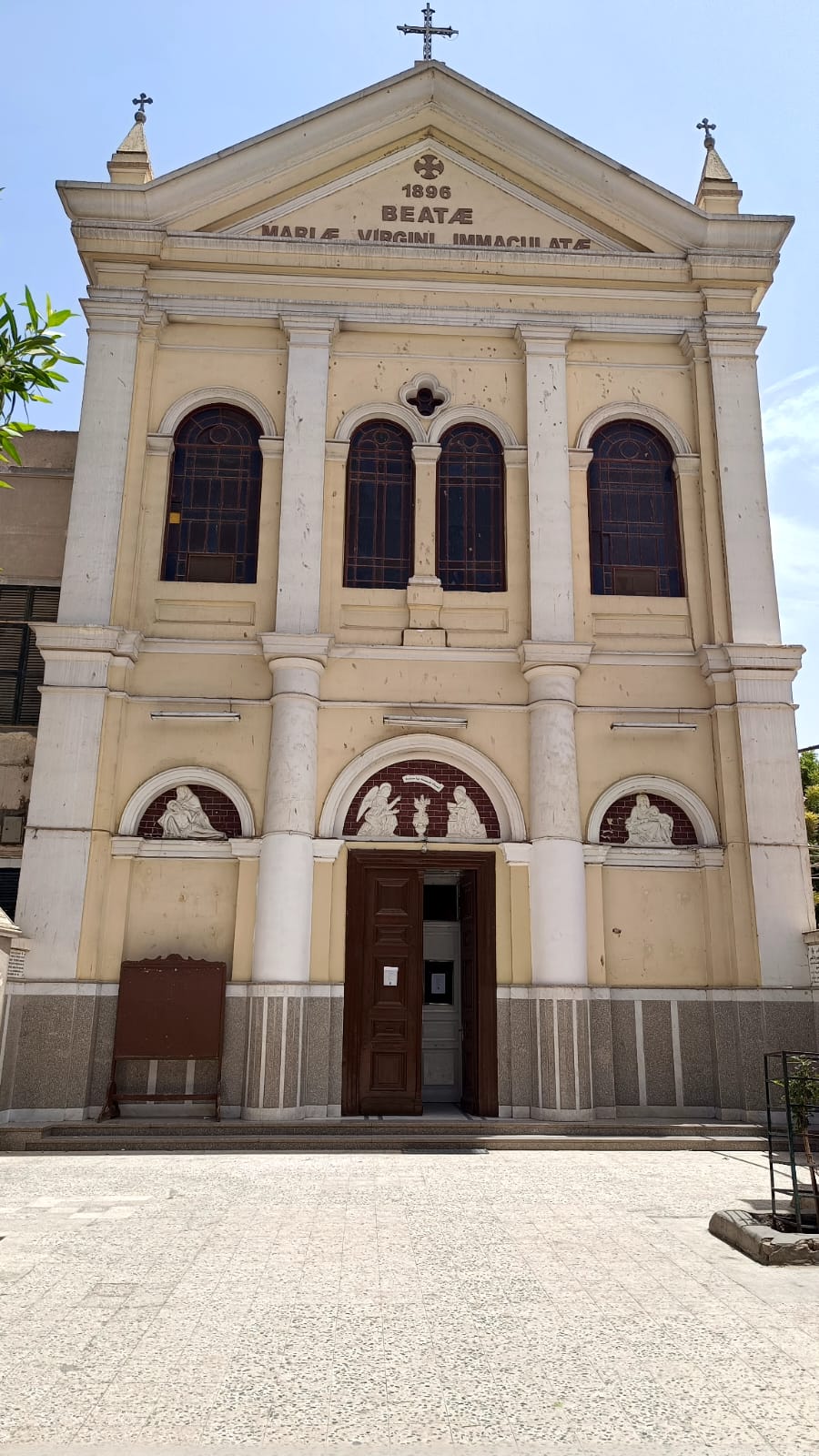
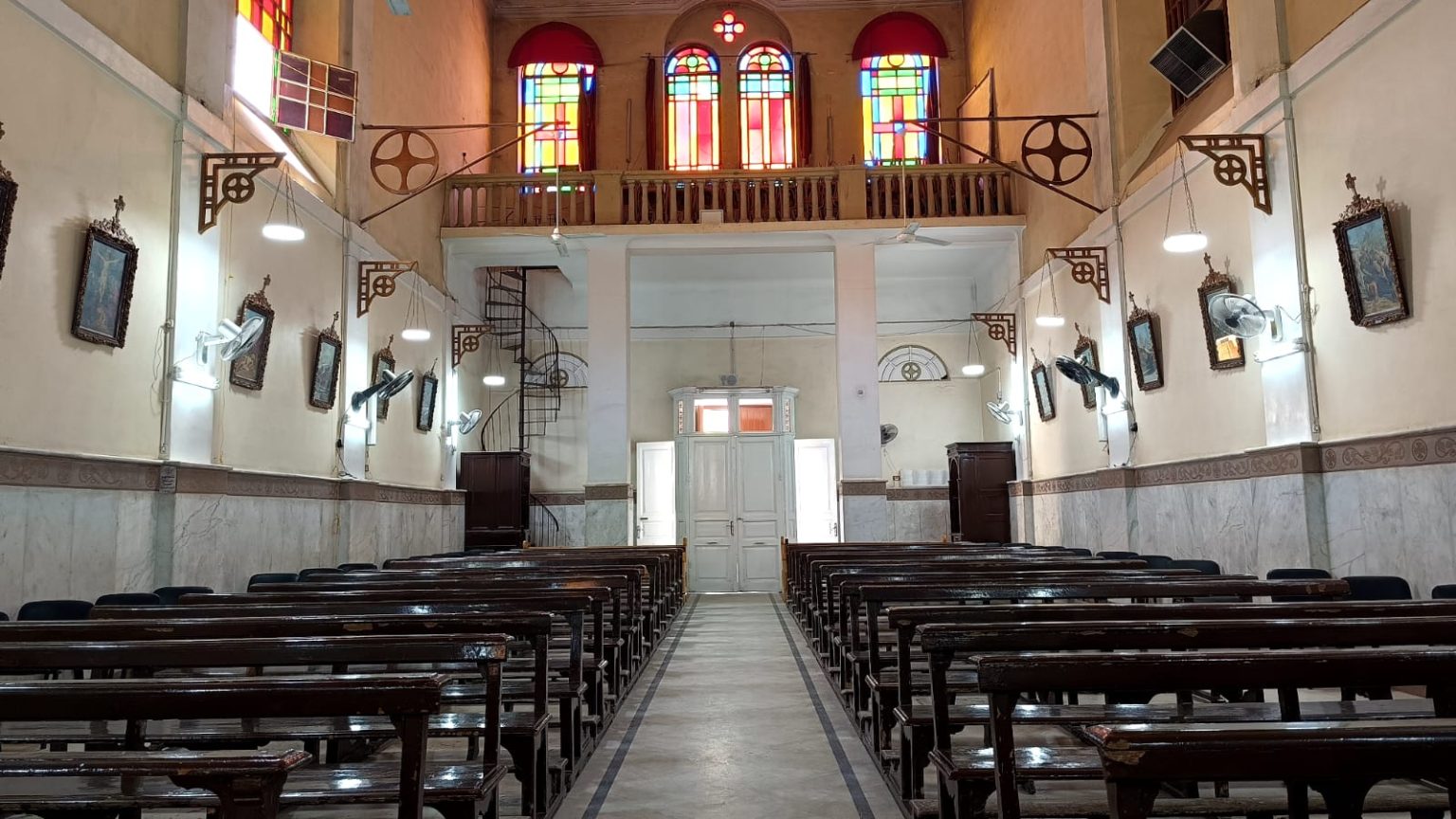
Architecturally, the church is a marvel of the Basilica style. From the exterior, it presents a stately facade of three aisles; yet, the interior reveals a stunning feat of engineering: a vast space entirely unburdened by columns. In its day, this was a zenith of architectural progress in Upper Egypt.
The basilican design, originally used for Roman courts and public assemblies, was adopted by early Christians for its majestic volume and sense of transparency. This “Luminal Basilica” features high-set windows that allow sunlight to cascade into the Sahn (the central nave), terminating in a semi-circular apse where the altar is enshrined. Remarkably, the church has never undergone a full restoration; instead, it is meticulously maintained with periodic refreshments of paint and flooring to preserve its original luster.
Pioneers of the Faith
The church’s history is inextricably linked to St. Daniel Comboni, the first saint to labor in Africa. In an era darkened by the shadow of the slave trade, Comboni was a clarion voice for human dignity and liberty.
Father Ezzat points out that Comboni insisted on this specific location, even though the geography was vastly different before the modern dams changed the river’s flow—this site once stood just past the Second Cataract during the ancient flood seasons. Through his vision, the church became a “Minaret of Mercy,” a beacon of education and healthcare that has guided Coptic Catholics in the south for centuries.
The Feast of the Virgin and the Memory of Consecration
Beyond the traditional liturgical calendar, the church’s most radiant day falls on December 8. This marks both the feast of the Virgin Mary according to the Catholic calendar and the anniversary of the church’s consecration. It is a day of profound pageantry, where a congregation exceeding five thousand faithful gathers. The air is thick with prayer and celebration, presided over by His Grace Bishop Emmanuel Ayad of the Eparchy of Thebes, Luxor, and Aswan, honoring a legacy that remains as steadfast as the granite of Aswan itself.