“O Dome of the Prophet” and “The Sanctuary Doves”: Pilgrimage Songs Are a Living Folk Tradition in Egypt’s Oases
“Whiter than milk, stronger than the sun.” Meet the grandmothers of Egypt’s New Valley who keep the ancient pilgrimage songs of the oases alive.
Long before pilgrims board their buses or planes, the voices of elderly women rise across Egypt’s oases, singing the old songs known as Hanoun (or Henoon). These traditional pilgrimage songs, sung by elder women rather than professional male performers, represent one of the oldest layers of Hajj-related folk music in the country. While men might be hired to perform at public celebrations, the Hanoun tradition is deeply personal—passed down through generations of women who sing while cooking, grinding wheat, or preparing for the journey. These songs are divided into two parts: farewell songs for those departing, and greeting songs for when the pilgrims return home safely.
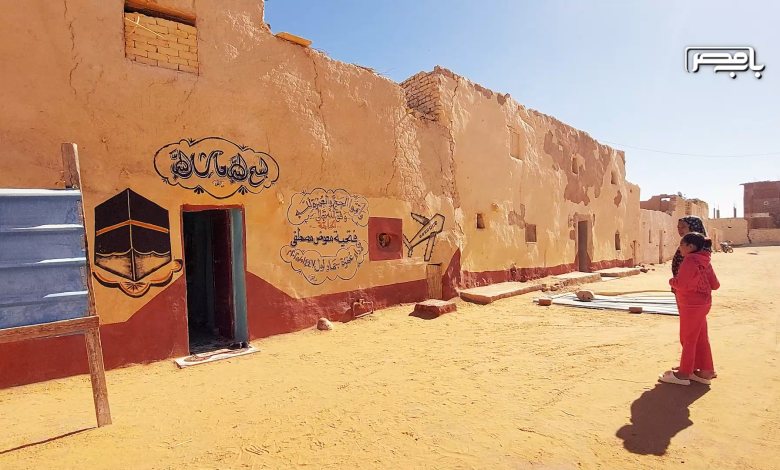
In Egypt’s Western Desert oases, the Hajj pilgrimage is far more than a religious obligation. It is a social season and a cultural heritage event, bringing out the most beautiful expressions of popular joy—from vivid wall paintings to the sounds of devotional chanting and the pilgrims’ songs that women have passed down from mother to daughter for decades. Across the New Valley governorate, these pilgrimage songs vary distinctly from one oasis to another, each with its own dialect and local vocabulary. Together, they form a living archive of the region’s memory and the spirit of its people.
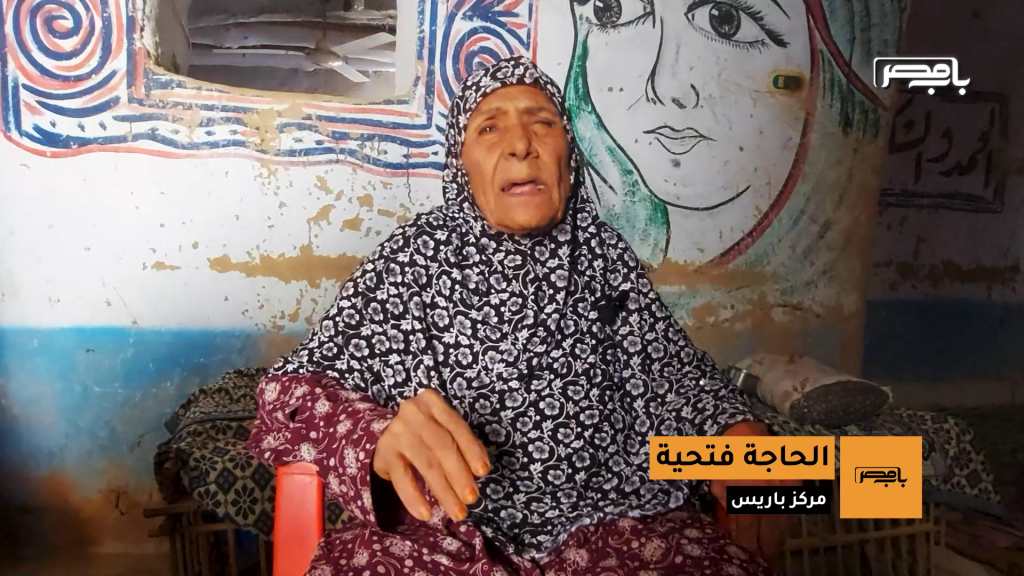
Paris Center: “O Dome of Our Prophet”
In the far south of the New Valley lies the Paris Center. Here, folk songs are marked by deep simplicity and imagery drawn directly from the surrounding environment. Women raise their voices especially during the Hajj season, bidding farewell to loved ones heading for the Hejaz with songs full of longing and heartfelt emotion.
Hajja Fathia Muawad, from the Paris Center, sings a tender song that highlights the brilliant whiteness of the Prophet’s Mosque dome. She compares it to the purest thing she knows: fresh milk. From there, she moves to describe a light greater than that of the moon or the sun—a spiritual reference to the light of the Prophet himself.
“O dome of our Prophet—whiter than milk,
O dome of our Prophet—whiter than milk.
I want to visit him, enter his courts,
And see the glow of his light—overpowering the moon.
O dome of our Prophet—whiter than milk,
I want to visit him, enter his courts,
And see the glow of his light—your grandfather, O Hassan.
O dome of our Prophet—whiter than marble,
I want to visit him, enter his courts,
And see the glow of his light—overpowering the day.”
The lyrics weave together description, homesickness, and personal dreams of visiting the holy lands. In this worldview, the Prophet’s light transcends even the sun and the moon—the most basic laws of nature.

The Great Gates of the Mosque
Moving north to the capital of the New Valley, the Kharga Center—specifically the village of El Sherka 17—Hajja Jamila Rabouh reveals another spiritual layer of the Grand Mosque in Mecca. The songs here emphasize awe and reverence: the mosque’s massive gates, the draped curtains, and the scent of musk.
What makes this song particularly striking is its environmental touch. For oasis dwellers, no sacred or safe place is complete without palm trees. So, the lyrics imagine two date palms standing inside the Grand Mosque, projecting a distinctly oasis-like image onto the holy site in Mecca.
“Our Prophet’s gate—large, with curtains.
O day of my wishing—the moment we visit him.
Our Prophet’s gate—large, I sprinkle it with musk.
O day of my wishing—the moment we enter.
Two palm trees in the sanctuary—O boy, as you go in
And as you leave—Omar and Musa watching over.
Two palm trees in the sanctuary—O boy, as you sit,
Omar and Musa right beside them.”
Hajja Jamila explains that the phrase “O day of my wishing” is a sigh from the depths of the heart, an expression of overwhelming longing for the visit. The mention of Omar and Musa as guardians of the sanctuary also shows how religious and historical figures blend together in the region’s oral tradition.
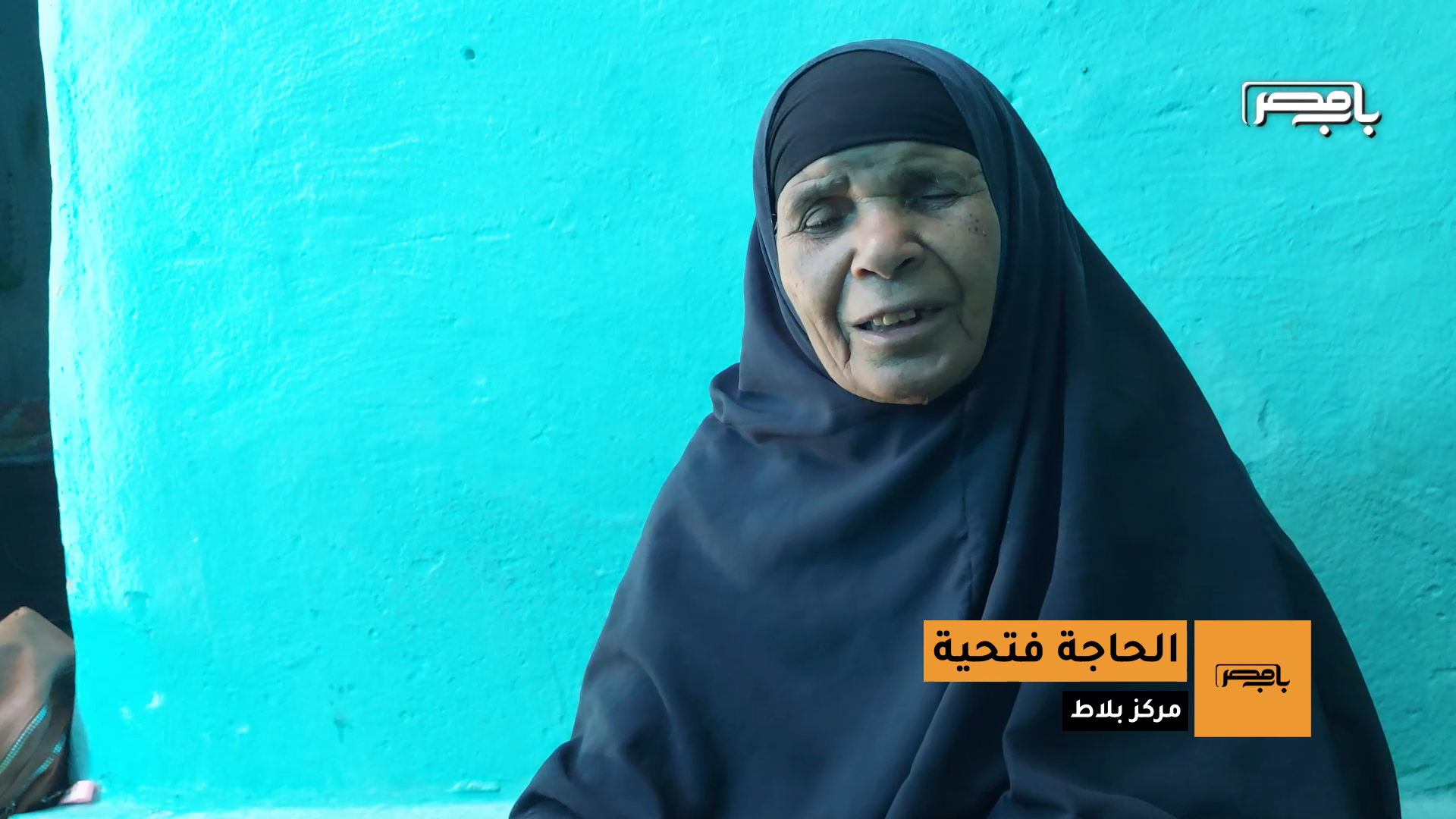
Balat Center: “Sanctuary Doves and Healing Zamzam”
In the Balat Center—historically part of the Dakhla Oasis but now its own administrative area—the rhythms grow more varied, and the songs expand to include actual pilgrimage rituals: standing at Arafat, calling out to the doves of the sanctuary, and describing the healing waters of the Zamzam well.
Hajja Fathia Muawad sings again, her voice carrying the weight of years. She captures the moment of forgiveness on Mount Arafat, then moves to the tears of those who love the Prophet, and finally to the ritual of feeding the “sanctuary doves” and drinking Zamzam water from an old copper tasa (bowl).
“On Mount Arafat, the caller cried out:
Go, pilgrims—you’ve achieved your wishes.
He woke from sleep weeping—his tears a sea to swim.
My beloved Al-Mustafa wept; sleep was forbidden him.
O dove of the sanctuary, with your colorful wings—
We send you sesame seeds at Muhammad’s door.
O well of Zamzam—your buckets are chains,
And drinking from you is a traveler’s cure.
O well of Zamzam—your buckets are silk,
And drinking from you heals the sick.
On the path of the precious Prophet—sing, my daughters.
What fills the path from Zamzam? The lover prays.”
Hajja Fathia notes that these ancient traditional songs are still alive in her memory. The people of the Balat Center continue to sing them when saying farewell to pilgrims heading for the holy lands—what the locals still call the “lands of Hejaz.”
Throats That Preserve a Memory
Dr. Mohamed Abdullah, a researcher specialising in oasis folk heritage, has spent years tracing the evolution of Hajj songs across the New Valley’s three main centers—Paris, Kharga, and Balat. What he has found, he says, is far more than just musical variation.
“It’s not simply a matter of different dialects or vocabulary,” Dr. Abdullah explains. “These songs reveal a rich tapestry of local identity. But more than that, they confirm something essential: for the people of the oases, this music has always been the ‘provision of the soul’—what sustains them spiritually when the physical journey is impossible.”
He points out that in an era long before smartphones, satellite television, or even reliable radio reception, the voices of oasis women served a vital function. “Their throats were the postal service carrying longing across the desert,” he says. “They were the camera that captured the shrine, the palaces, the doves of the sanctuary, and the well of Zamzam for those who never had the chance to see them with their own eyes.”
Writer and heritage scholar Nasser Muhsib, who has documented much of this oral tradition, agrees—but he also sounds a note of urgency. “This is not just folklore from the past,” he insists. “It is a living, breathing document. It pulses with love, with loss, with hope. And it needs active protection if it is not to vanish.”
Muhsib, who has published extensively on oasis culture through the General Authority for Cultural Palaces, believes that every note rising from the throats of the New Valley’s grandmothers carries an entire history within it. “Behind each sound is a story,” he says. “The story of a people who took the cruelty and isolation of the desert and turned it into a road paved with musk and silk—a road stretching from these oases all the way to the gates of the sanctuary.”