Palms, Crowns, and Crosses: How Egypt’s Coptic Christians Celebrate Palm Sunday in Upper Egypt
In Upper Egypt, Palm Sunday is a festival of color, craft, and community. Families gather palm fronds, weave them into crowns and crosses, and fill the churches with hymns. A tradition passed down for generations.
By Jasmine Mehna and Asmaa Muntasser
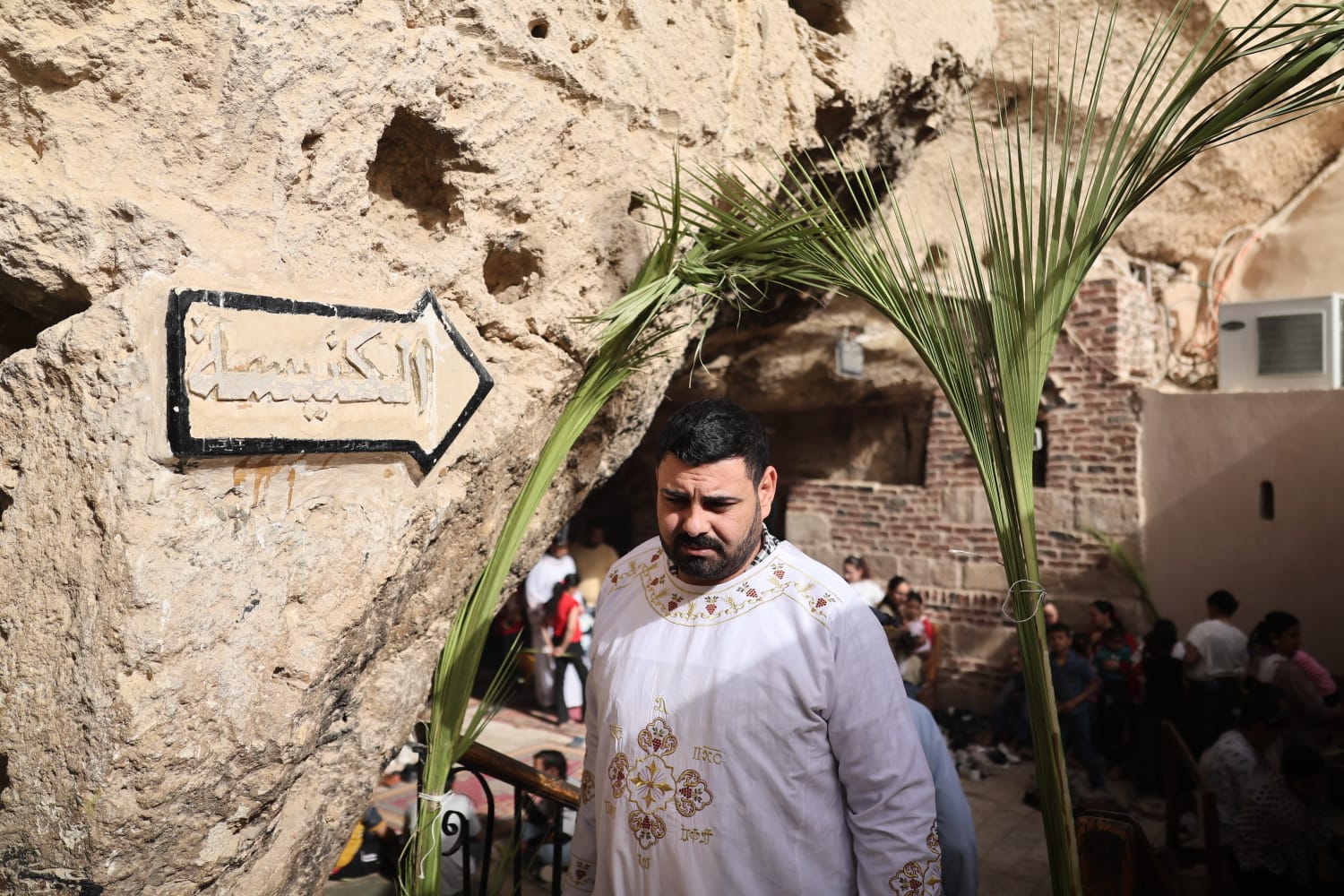
Churches are adorned, hymns rise, and Coptic communities across Asyut and Minya gather to celebrate Palm Sunday. Citizens from all walks of life come to participate in the Palm Sunday liturgy. On this occasion, churches and homes fill with palm fronds, along with handcrafted shapes of crosses, crowns, and hearts. The scene reflects the deep connection of the people to this commemoration of Christ’s entry into Jerusalem.
Welcoming Christ With Palm Fronds
Maurice Boutros, 50, from Asyut, says they are overjoyed by the celebration of Palm Sunday. “The atmosphere is beautiful, and everyone looks forward to it, even Muslims,” he explains. “We are committed to celebrating it because of its special sanctity in our hearts.” Christ was welcomed into Jerusalem with olive branches, which is why the day is known as Palm Sunday or the Feast of Olives.
He adds that Palm Sunday marks the beginning of Holy Week. It is the seventh and final Sunday of Lent, preceding Easter, or the Feast of the Resurrection. “It is the day Christ entered Jerusalem,” he says. “For us, it is a day of joy, happiness, and celebration.”
Special Customs and Traditions
Eman Farid, 45, a homemaker, explains that the celebration of Palm Sunday involves a set of special customs and traditions. Palm fronds are distributed outside the church and used to make small crosses and various shapes, such as crowns to be worn on the head.
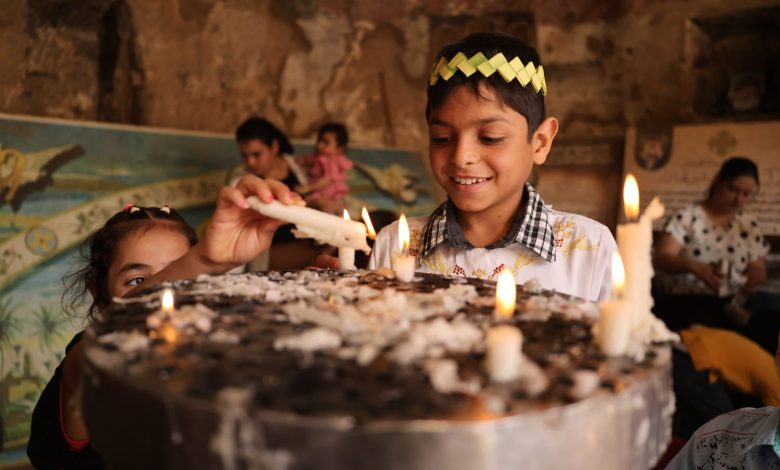
“This day is joyful for all Copts in Asyut, especially the children,” she says. “They participate in making their own shapes, listening to the story of Christ’s entry into Jerusalem, and singing Coptic hymns.”
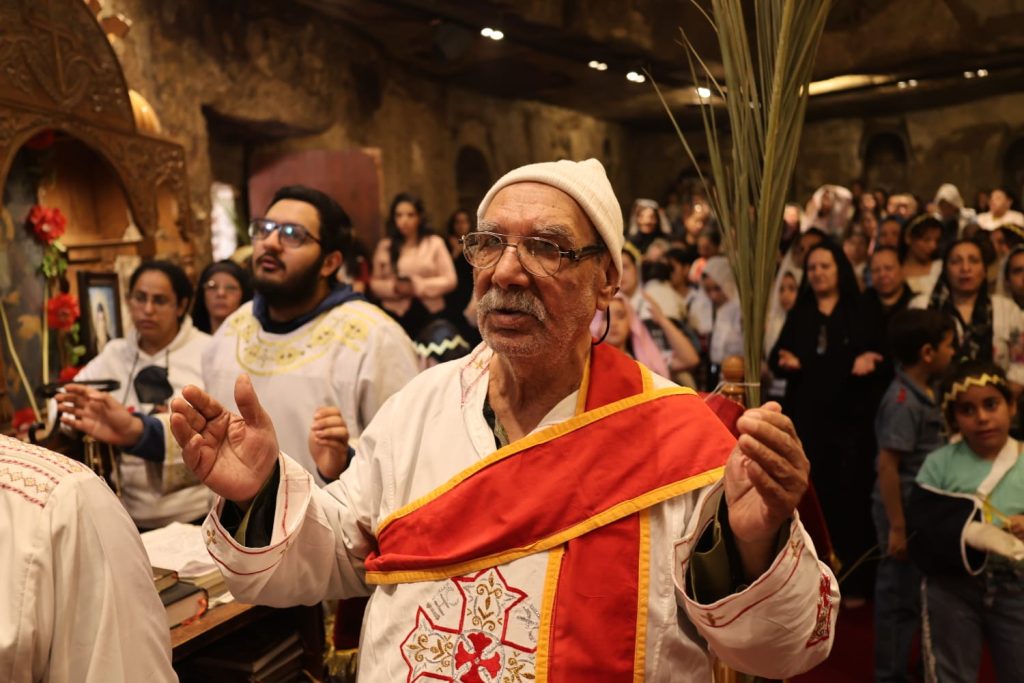
On this day, the church holds special prayers known as the Palm Sunday procession. Priests walk with worshippers, carrying palm fronds and singing hymns. “It is a scene that holds a special place in our hearts,” she says. “Joy and happiness prevail on this great occasion.” Passages from the Gospel are also recited, a spiritual symbol of the spread of Christ’s message throughout the world.
She notes that Palm Sunday comes after Great Lent, a first-degree fast during which certain foods are avoided. The church permits the eating of fish during this period for protein. There is also the Fast of Jonah, the Wednesday and Friday fast, the Nativity and Epiphany fast, and the Fast of the Virgin Mary. Eman expresses her happiness at celebrating these holidays that bring families together to acquire palm fronds and wear them during the Palm Sunday liturgy.
Palm Frond Selling Season
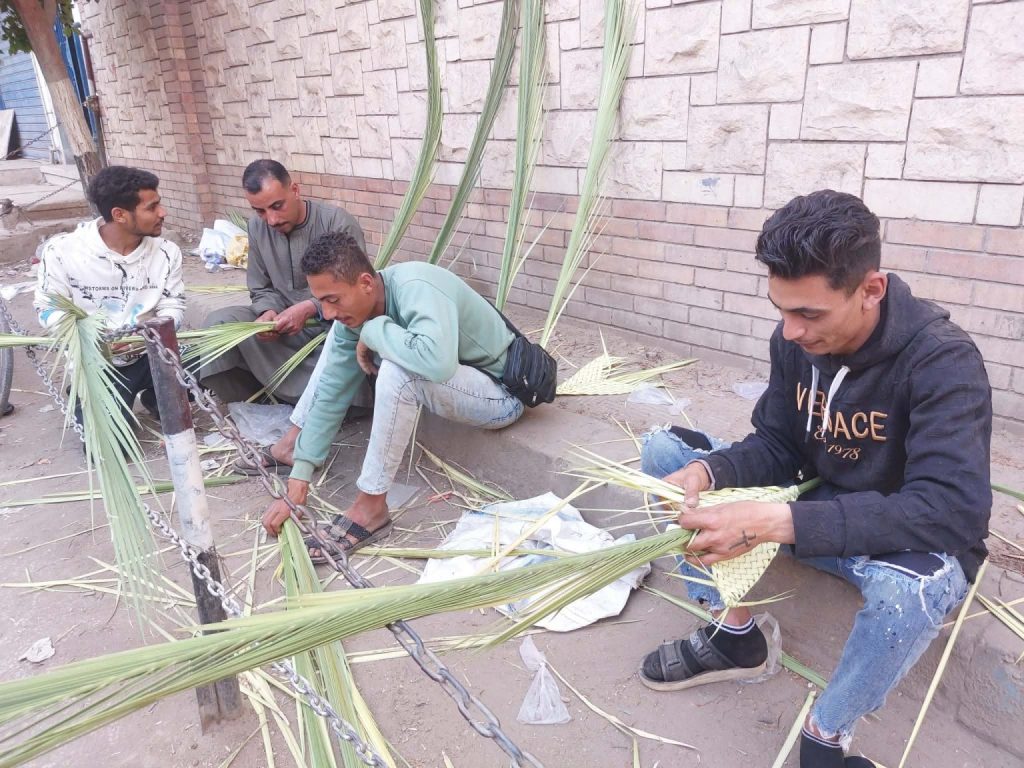
Mouwad Louqa, 49, a palm frond vendor, explains that Palm Sunday is an important season for sellers. They gather palm fronds, shape them into various forms, and sell them to people in the streets and outside churches. “It is a tradition passed down from our ancestors for decades,” he says. “It is a source of livelihood for us, even if temporary.” Most people buy palm fronds, he adds, and even some Muslims buy them for their children.
They stay up at night to craft these shapes. The work requires precision and skill. Sometimes customers come to learn the crafting method themselves, and the vendors teach them. The shapes they make, such as caps, crosses, and bracelets, have also become available online, allowing buyers to choose from various beautiful designs. Prices start at around 20 pounds and vary depending on the shape and effort involved.
Palm Sunday in Minya
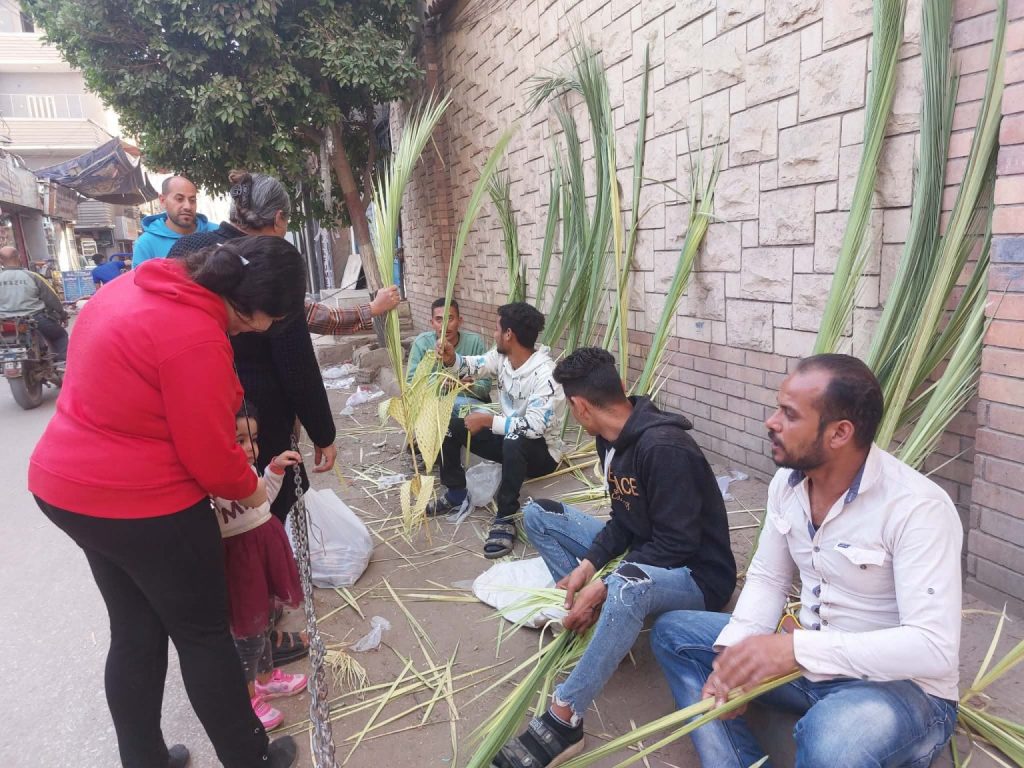
In Minya Governorate, church courtyards take on a festive character. Palm frond vendors spread their simple rows on the ground, quietly shaping the fronds into crowns and hearts that bring an atmosphere of joy. People buy palm fronds and wheat stalks to adorn their heads and clothes, placing them on their doors.
Copts flock to churches to celebrate Palm Sunday. Halls are decorated with palm fronds and flowers. Children hold crosses and flowers made from palm fronds, singing spiritual melodies known as the Palm Sunday hymn.
Kerollos, David, Abdel Massih, Samih, and Shady, palm frond sellers outside churches in the Abu Qurqas district, all confirm that people eagerly buy palm frond products made from “white palm heart.” These include crowns, hearts, bracelets, and crosses, celebrating the anniversary of Christ’s entry into Jerusalem. During the feast, Copts decorate their homes and churches with palm fronds and wear crowns made from them, especially the children.
They note that they inherited this craft from their grandfathers, until it became part of their daily lives before being merely a source of livelihood. Their hands move with experience and speed as families stop before them to choose pieces that carry the joy of a special day. Here, they are not just selling palm fronds. They are making small moments of happiness, carried on children’s heads and remaining in memory with each passing year.
A Craft Inherited From Grandfathers
Samih Samir, one of the palm frond vendors, says they wait for this occasion each year to sell their wares. They inherited the craft from their grandfathers and have become skilled at shaping the fronds. The products are displayed outside churches. Prices start at around 30 pounds, depending on size and shape, with demand for special designs, especially from children who love wearing palm frond crowns.
Palm fronds were a symbol of victory in ancient times, he explains, which is why they became a symbol of celebration. They are shaped into many forms, including crowns, crosses, flowers, and more, during Palm Sunday, which precedes Holy Week.
Kerollos Eid, a palm frond seller in Abu Qurqas, Minya, says that the shapes are many. There are crosses of all sizes, small cross medals, crowns with names written on them, and wheat stalks. All are made from palm fronds alone, with no other materials. The crafting process involves several stages. First, the fronds are dried. Then they are moistened with water and placed in burlap to soften. After that, they are shaped into various forms with flexibility, ensuring the palm fronds last as long as possible without spoiling.
Participating in the Liturgy
David Girgis, another palm frond seller, notes that men, women, and children participate in this occasion with joy, as it is a happy occasion for everyone. On the morning of Palm Sunday, they go early to church carrying their palm frond creations to attend the Palm Sunday procession. Children delight in carrying the various shapes. They then participate in the prayers with them and return home to hang them, keeping the memory until the following year.
Shady Emad, another vendor, says he learned the craft of braiding palm fronds as a child, at age 12, from his family, who were known for this craft. Each year he would learn new shapes and designs. He now makes different sizes of crowns and crosses, along with new shapes like a “camel” made from palm fronds, as well as a wheat-stalk cross decorated with flowers, shapes containing the Eucharist, wheat stalks, and a green candle.
Abdel Massih Ibrahim, a palm frond seller, notes that vendors position themselves near churches, each choosing their spot to display their products. Some give these creations as gifts to one another and adorn themselves with them. Many Muslims also buy palm fronds to join the Copts in their celebrations.