Where the Whole Neighborhood Bakes: Minya’s Communal Eid Cookie Tradition
In Minya governorate, families still gather to make Eid cookies by hand, firing up traditional village ovens and passing recipes through generations. The cookies are shared, the stories are told, and a centuries-old tradition survives.
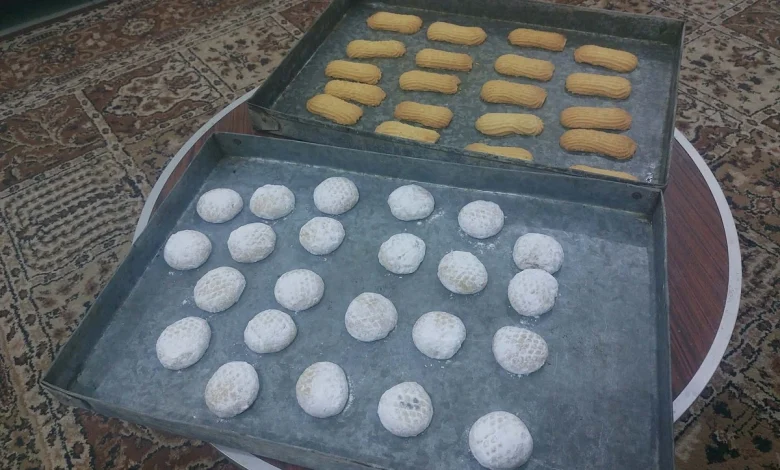
As Eid al-Fitr approaches, the joy in Minya governorate does not begin with buying cookies from shops. It begins inside homes, where traditional village ovens glow and laughter rises around the low wooden table. Here, more than cookies are made. Memories are crafted. Stories are woven. And the family gathering, the lamma that gives Eid its true meaning, comes alive once more.
Store-Bought Cookies Are Too Expensive
Soad Abdel Hamid, a homemaker from the Abu Qurqas district in Minya, faced a familiar dilemma as Eid approached. Store-bought cookies were expensive. Her household budget needed stretching.
Her solution was the old one. She would make Eid cookies at home.
“When I saw how expensive cookies were in the shops and bakeries, I said no to buying from outside,” she explains. “I decided to make the cookies at home so we wouldn’t break our children’s joy. It’s a habit we’ve kept. I bought all the supplies for cookies and biscuits. My sisters, relatives, and neighbors gathered just like in the old days. We prepared the trays and the molds. We brought the clarified butter and the regular butter. We let the yeast rise to make fayesh cookies. We divided the work among us.”
The Rotating Cookie Plate
Soad insists that the joy of Eid feels incomplete without these gatherings.
The “rotating cookie plate” has become a guest in every home, she says. Each household empties the plate, refills it with its own cookies, and sends it to the neighbors. In this way, every family tastes the cookies and biscuits made by every other. It is an annual tradition, as authentic as the holiday itself.
Sugar Dolls for the Children
Madiha Al-Sawy, an employee, describes the anticipation that surrounds homemade Eid cookies.
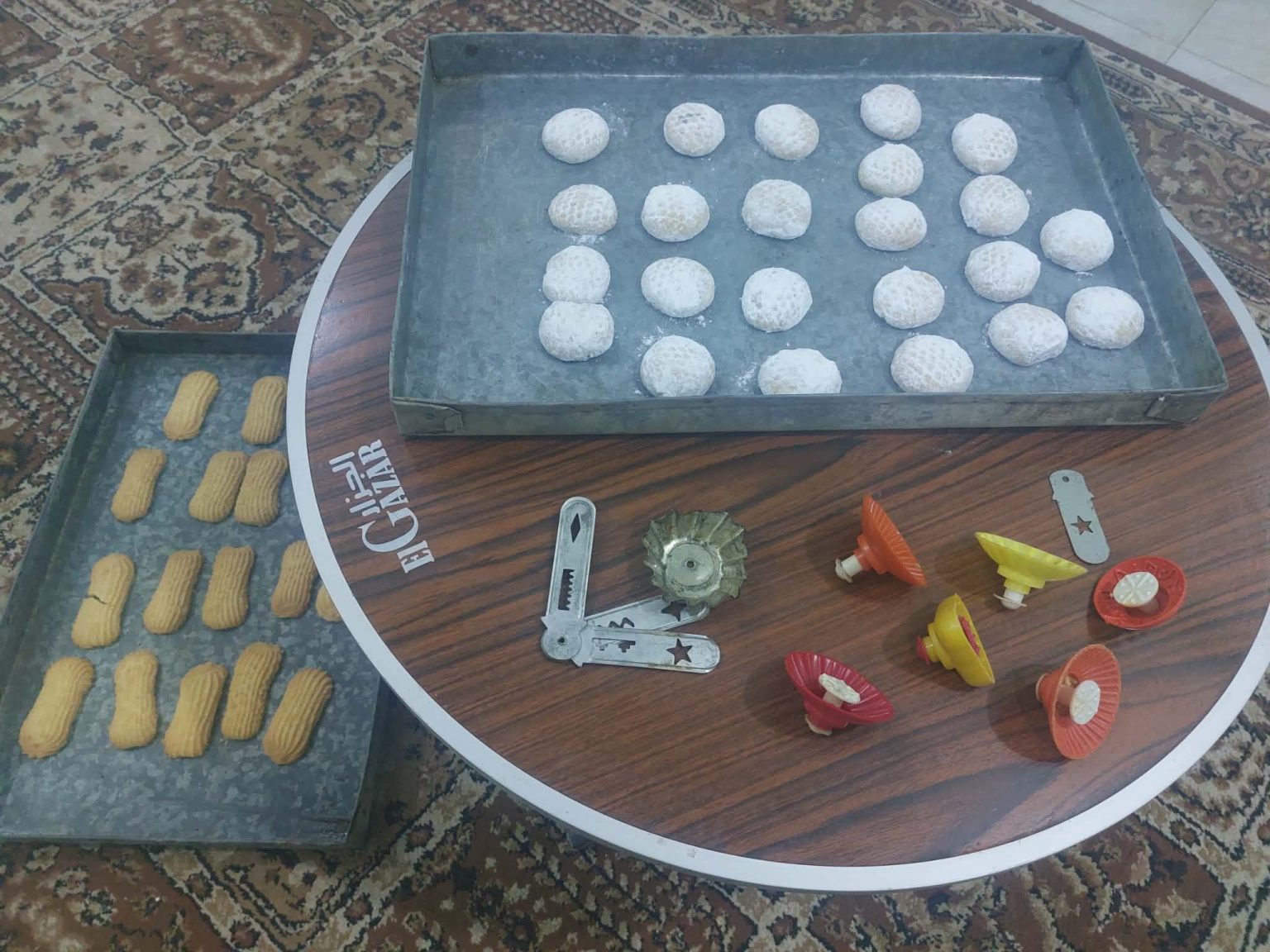
“The whole family waits for them,” she says. “Especially the children, who insist on participating in the making. They shape ‘sugar dolls’ from the dough, bake them with the cookies, and decorate them with sugar.”
On cookie day, joy fills the air. “Everyone wants to participate, to knead, to stamp the cookies. The smell of cookies fills the street. It reminds us of the good old days, when our grandmother baked cookies and we gathered around her with the neighbors by the village oven, seeking warmth on winter nights like these. I still remember my grandmother’s words: ‘Cookies aren’t sweet without the gathering.'”
Om Mena and Om Michael Join In
Om Mena and Om Michael, Coptic Christian women from the Abu Qurqas district, make a point of joining their Muslim neighbors in making Eid cookies. They wait for this occasion every year.
“I feel great happiness when I share in my Muslim neighbors’ joy of making Eid cookies,” Om Mena says. “And they share with us when we make our cookies for our holidays. We share everything together. It’s a great joy.”
Om Michael adds, “We help arrange the trays and bake in the oven with our neighbors. May God multiply these holidays. These gatherings are the best thing we wait for.”
Bride’s Cookies and Eid Cookies
Many families in Minya arrange weddings during Eid days. The making of the bride’s cookies and biscuits is a long standing tradition in Upper Egypt. The joy of the bride’s cookies mingles with the joy of Eid cookies.
Hagga Sanaa Abdullah explains. “My daughter’s wedding falls on Eid. I came with my neighbors to make the bride’s cookies and biscuits alongside the Eid cookies. All the neighbors are happy and celebrating with me. Even the bride’s fateer pastry, we will make it together. We start at dawn. The best part of this occasion is the gathering of neighbors and loved ones. Everyone sings for my daughter.”
Unforgettable Memories
Hagga Atefat, a retiree, recalls her own memories of making cookies.
“I remember sitting beside my mother, just as my daughters sit beside me now. The stories my grandmother, aunts, and uncles’ wives told. The funny moments between them. Their competition over cutting, stamping with molds, and baking in the village oven. Their sitting together until dawn on the night before Eid. I still keep my mother’s tools, her biscuit machine and molds, to this day.”
These gatherings, she insists, are essential to the joy of Eid. “The smell of cookies filled the houses. I love having my grandchildren help me make them. So they learn the customs and traditions. So they have sweet memories that stay with them their whole lives.”
The Gathering and the Village Oven
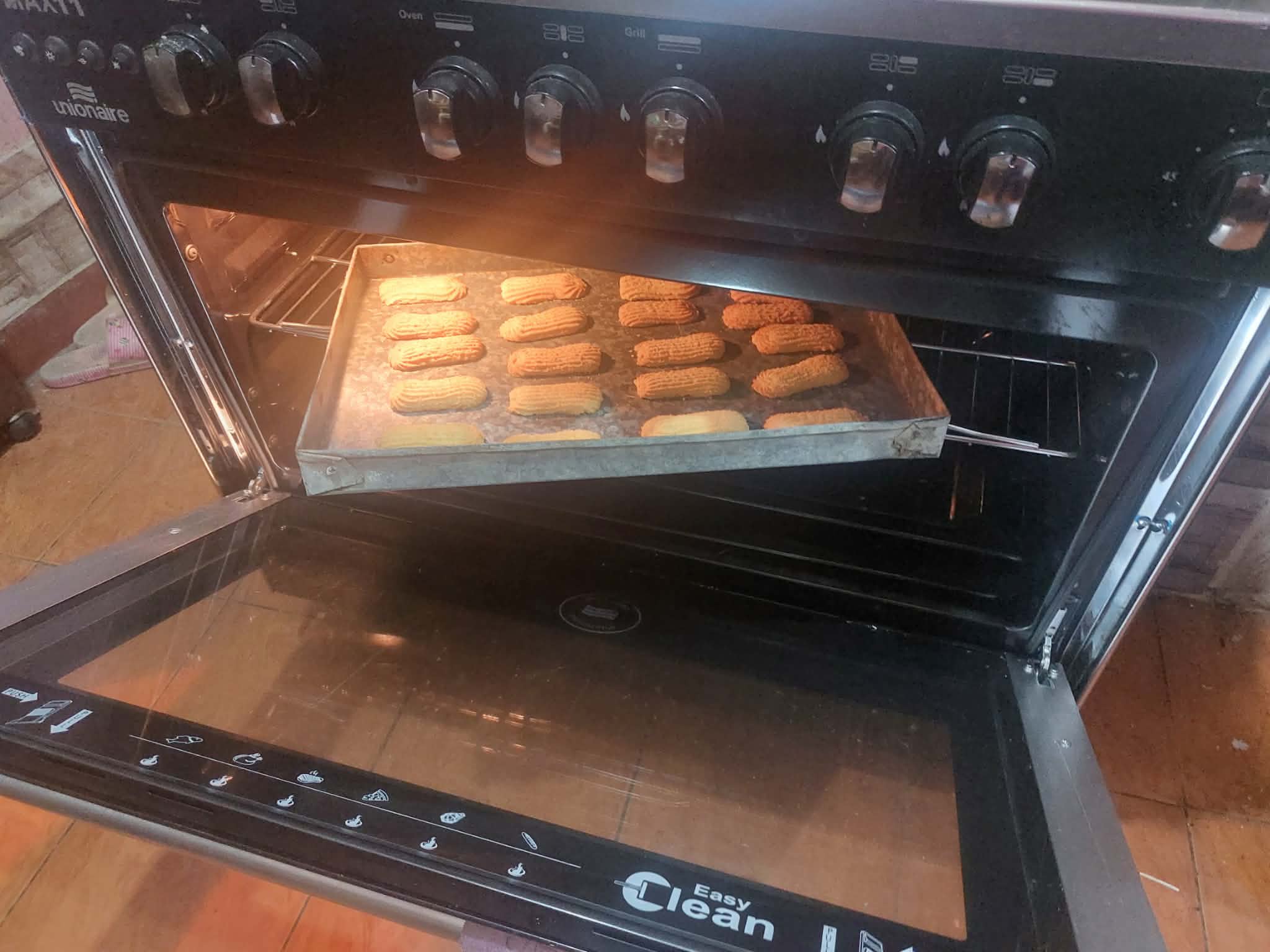
Despite the spread of gas ovens and modern appliances, Om Alaa prefers to bake her cookies in the traditional village oven made of mudbrick.
“Eid cookies aren’t sweet without the gathering,” she says. “We insist on making them at home to preserve our memories with our mothers from childhood. The taste is different from the village oven. Despite modern ovens, cookies and biscuits have a special flavor that can’t be replaced.”
She concludes, “Biscuits are always tied to Eid. The children argue over who will turn the biscuit machine handle. They are cut, arranged on trays, and baked in the village oven, which gives them a distinctive taste and different aroma. It’s what separates village biscuits from city biscuits. We have inherited these recipes, generation after generation.”