A City in a Basement: One Man’s 40-Year Mission to Save Port Said’s Memory
In 1987, engineer Magdy El-Bassaty was asked to repair a flooded basement in Port Said. Instead, he discovered a forgotten archive of original architectural drawings. Forty years later, he is still fighting to preserve the city’s built heritage.
By Osama Kamal
There is a rare moment in some people’s lives when a hidden door opens in time. They step through, and from that moment, a city is no longer just streets and buildings. It becomes a living memory.
For engineer Magdy El-Bassaty, that moment came in a basement.
In 1987, the Suez Canal Authority’s engineering department assigned him to renovate the basement of the iconic Qubba Building in Port Said. Every winter, groundwater flooded the space. It was a routine maintenance job, nothing more.
But as El-Bassaty began work, he noticed something. Later additions had altered the basement’s original layout. He removed them all, guided by a principle he still repeats: “Never alter what the founders established.” He believed that the original builders understood the land, the environment, and the needs of the people who would live above. True construction, he was convinced, rests on understanding that hidden relationship between place and people.
When he restored the basement to its original state, the flooding stopped completely.
The Forgotten Archive
The real discovery, however, was not the dry basement. It was the pile of architectural drawings stacked in the corner.
Authority officials asked him to dispose of them. They were duplicates, they said. The originals were stored in Ismailia, and copies existed with the French company that had managed the canal until 1956.
El-Bassaty looked at the drawings and saw something else. He saw originals of Egyptian memory. He kept them.
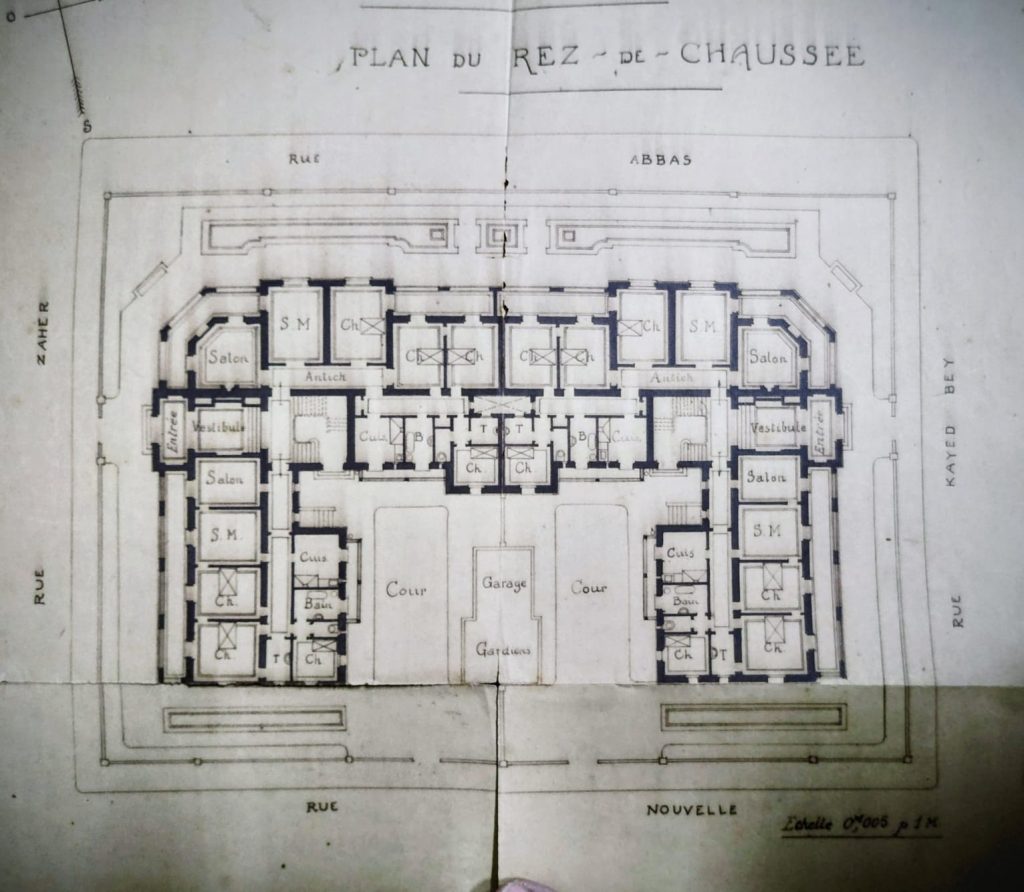
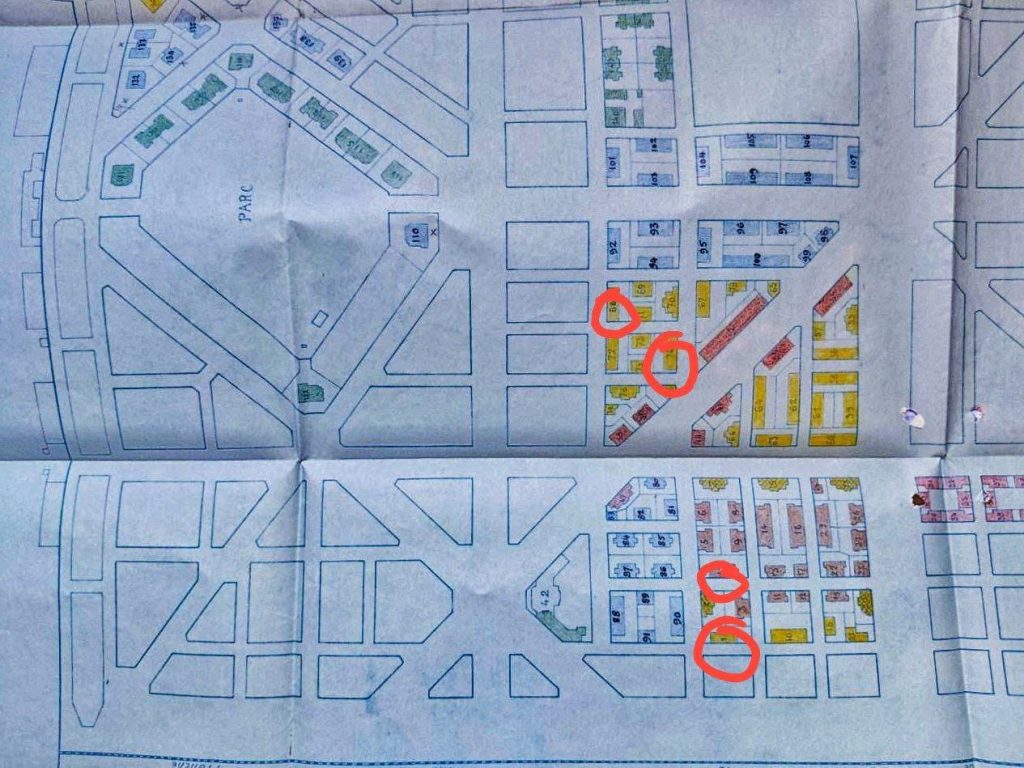
Those drawings taught him to read the city differently. Each building, he discovered, had its own code. A birth certificate. An identity card.
The Qubba Building carried code 198. An older wooden building nearby carried code 189. The presidential rest house, once known as Gamal Abdel Nasser’s retreat, carried code 205. The tugboat captains’ building carried codes 254 and 267. Beautiful structures where senior Suez Canal Authority employees still live today.
The French consul’s house in Port Said carried code 140. Locals called it “Eugenie’s House,” assuming the Empress Eugenie had stayed there during the canal’s opening celebrations in 1869. Later, it became known as the Nuns’ House, when the Sisters of Charity lived there before moving to another villa in the 1980s. The naval club in Port Fouad carried code 141. Its drawings dated to 1863, which meant life had begun in that suburb sixty-three years before its official founding in 1926.
These were not just engineering codes, El-Bassaty realized. They were secret birth dates of places.

Saint Eugenie’s Church and De Lesseps’s House
From that moment, the drawings ceased to be preserved papers. They became spiritual maps of Port Said and Port Fouad. Through them, El-Bassaty could see the city’s earliest origins.
Port Said itself, he explains, began in the area between Eugenie and Al-Nahda streets. That was the only patch of land suitable for construction. There, builders erected Saint Eugenie’s Church, De Lesseps’s house on the site that later became the Amiri Hospital, the French consul’s house, the Lycée school, the Good Shepherd School, the nuns’ residence, and the Qubba Building.
El-Bassaty observes that both Port Said and Port Fouad bore a distinctly European character from their founding. Building materials came from Europe, not from the local environment. They arrived by sea, while the adjacent lagoon remained shallow and muddy, navigable only for food transport. Construction techniques thus extended directly from the expertise of European builders who worked on the canal project.
Materials and Methods
Despite the scarcity of stone in that sandy environment, the French consul’s house was built with stone salvaged from demolished buildings elsewhere. The French, however, relied heavily on a distinctive construction material known as “Conybeton,” named after the French engineer who invented it. A mixture of Port Said sand and a lime-like substance called French lime.
This mixture produced a solid concrete block used in several important structures: the breakwaters, the lighthouse, the Good Shepherd School and its attached church, Saint Joseph’s School, Saint Famille Church, Saint Eugenie’s Church, and the French Lycée.
Ali Mubarak noted this technique in his book “Al-Khitat al-Tawfiqiyya,” calling it “artificial stone.” Engineers turned to it because of the scarcity of natural stone in the region, after first testing it in France before bringing it to Egypt.
El-Bassaty recalls that while restoring the Good Shepherd School, he discovered it was among the earliest buildings in Port Said constructed this way. The French used the method for their most important structures. He applied the same knowledge when asked to restore part of an old wall, using the original materials so the wall’s appearance and structure would remain unchanged. He believes restoring old buildings must respect their original architectural language.
Saint Famille Church
Through the drawings he preserved, El-Bassaty could trace how the French company built most of the city’s early landmarks. They constructed Saint Famille Church (the Holy Family) and Saint Joseph’s School. In 1902, they built the Charcabier Club, now known as the Port Fouad Club, making it Egypt’s first sporting club, predating the Railway Club in 1906 and Al-Ahly Club in 1907. They built the company’s public warehouses, known today as the General Warehouse, around the time of the Suez Canal’s opening. They also built the famous building known as “Al-Mukhtalet” (the Mixed Building), which began as the city’s municipal headquarters before becoming the Mixed Court and later the Court of Appeals.
The pavilion from which King Fouad announced the founding of Port Fouad in 1926 stood beside this building, constructed in the Andalusian style. El-Bassaty still holds approximately 168 detailed drawings revealing its finest architectural elements.
In his reading of the city’s history, he also recounts the story of the company’s public workshops, initially located near Gate 20 in Port Said. The company later decided to move them to their current location in Port Fouad. Planning for these workshops began around 1900, but construction dragged on for years, finally completing just before the city’s official opening in 1926.
The Spiritual Life of a Growing City
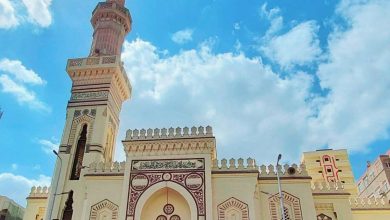
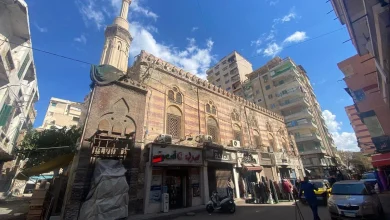
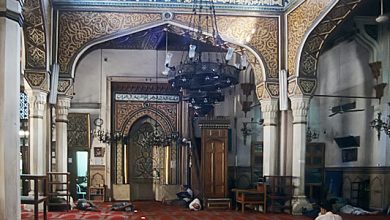
Mosques appeared later in the city’s history. Port Said knew the Tawfiqi Mosque as early as 1882, followed by the Abbasi Mosque in 1904. Small zawiyas and retreats preceded the grand mosques, such as the Qasifi Zawiya in the Sharq district and the Ghandar Zawiya in the Arab district. Simple places, yet they represented the earliest spiritual life in the emerging city.
Later, the Italian contractor Paolo Rosty, who converted to Islam and worked for the royal family, built the Grand Mosque in Port Fouad in 1948. The same year, he built Al-Rahma Mosque in Port Said, then known as Farouk Mosque.
A Personal Connection to Place
Perhaps El-Bassaty’s birth date explains something of his deep connection to the city. He was born in 1956, the year of the Suez Canal’s nationalization and the tripartite aggression against Egypt. The year Port Said became a symbol of national resistance. It is as if he arrived in the world at the very moment the city was redefining its relationship with the nation. His connection to Port Said thus transcends geography into something deeper than belonging.
He was born in a house inside the famous Abdo Nagim Building in Port Fouad, the jewel of Port Said’s suburbs. Abdo Nagim was a major agricultural exporter in the city and left clear humanitarian marks there. He built the Theater Club on Memphis Street near the lighthouse for public benefit on land he owned. In the 1940s, he contributed a large sum to establish the Fawziya Charity Hospital. His name remained engraved on a marble slab at the hospital’s entrance until it was removed during renovations in the 1990s. He also helped establish the Emergency Pharmacy with representative Hamed Al-Alfi and contributed extensively to charitable works.
El-Bassaty and the Stories of Port Said’s Architecture
In Port Fouad, El-Bassaty’s relationship with buildings began. But its roots also trace to his father, a contractor who was among the first Egyptians to set foot in the city in 1937, after it opened to Egyptians following the 1936 treaty. Before that, the French and Levantines had been the Asian suburb’s first inhabitants. That was the name the French gave it just four years after excavation began in 1863, before it took King Fouad’s name upon its official opening in 1926.
The boy thus grew up in the world of contractors and builders. He shadowed his father from childhood, accompanying him to work sites, meeting his much older friends and partners. Through them, he heard countless stories about the emerging city’s history, until it seemed he had lived alongside its original founders, those Mediterranean adventurers drawn by the dream of the Suez Canal.
But the path to engineering was not straightforward. When he enrolled in Cairo University’s Faculty of Engineering, he initially chose the electrical department and remained there for two years. Then he met engineer Hashem Al-Minshawi while the Suez Canal Authority commissioned El-Bassaty’s father to restore a building in the Port Said Arsenal. Al-Minshawi said something simple that changed his life: “Will your father build you a power station? Don’t abandon your father’s profession. Stick to your father’s work so they don’t defeat you.” It sounded like folk wisdom, but it pushed El-Bassaty to switch to civil and structural engineering.
Steel Structures
The switch was risky. If he failed in his new year, he would be expelled from the faculty. But he took the risk and succeeded. Among those who helped him was Dr. Shafiq Aggour, one of Egypt’s leading structural engineering pioneers, especially in steel structures. El-Bassaty continued consulting him even after graduation. When faced with welding issues while restoring an old Suez Canal Authority building, Aggour advised against welding because iron manufactured before World War II differed from later production. The authority’s engineering department approved his opinion after Aggour contacted its leadership, many of whom had been his students.
El-Bassaty graduated as a structural engineer in 1980, but his real expertise in the city’s buildings began years earlier. After Port Said’s residents returned from displacement in 1974, he helped his father demolish dilapidated houses and build new ones. There, his precise knowledge of the city’s building history began to form.
Among the most famous stories from that period concerns the Damiati Building, adjacent to the “Iron House” (Al-Beit Al-Hadid), Port Said’s architectural jewel. The British forces built the Iron House in 1888 as their main headquarters. Ownership later passed to the Italian Simonini, a pioneer in the city’s hospitality industry, then to Abdul Rahman Pasha Lutfi Shabara, who began as a postal service employee and became the city’s pasha and icon.
The Iron House
Abdul Rahman Pasha Lutfi Shabara bought the Iron House from its Italian owner. He later sold the building as scrap iron in stages during the 1950s and 1960s. In the 1970s, the land was sold to Ahmed El-Torgoman for the enormous sum of seven million pounds. As for the adjacent Damiati Building, its rubble after demolition went to a group of contractors in Damietta for twenty thousand pounds, an amount no Port Said contractor could afford at the time.
After the four upper floors were removed, the ground and first floors remained, occupied by a manufactured goods company. When demolition was ordered for these floors, El-Bassaty’s father and four other contractors bid for the contract. They won for five thousand pounds, a large sum at the time, believing the building, like the others, contained valuable wood. But they discovered it was built with iron. The iron sales alone yielded nearly double what they had paid.
Political Engagement
El-Bassaty was never far from public affairs. He joined the Youth Organization as a top high school student and served on the governorate’s youth committee, which included names still remembered in Port Said’s history: Mohamed Abdel Fattah Al-Arabi, Mohamed Ismail, Ali Othman, and El-Sayed Qassem. They were supervised by Mahmoud Abdel Wahab, who was close to President Gamal Abdel Nasser. That committee was the last before the Youth Organization was suspended in 1974 and dissolved in 1975.
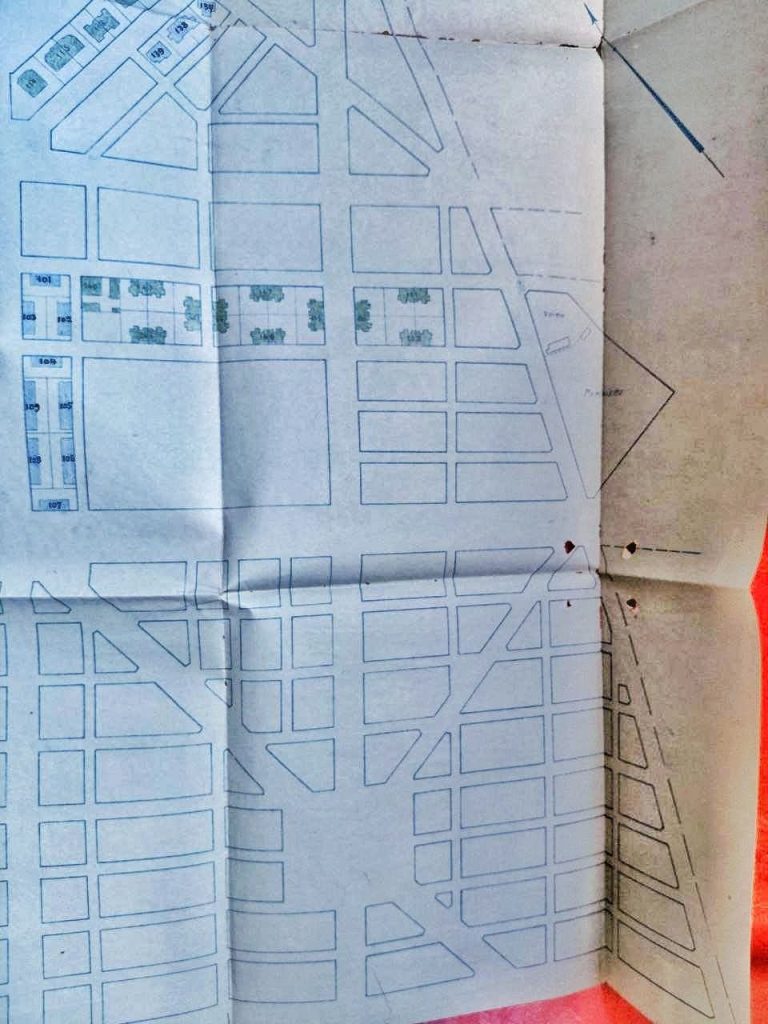
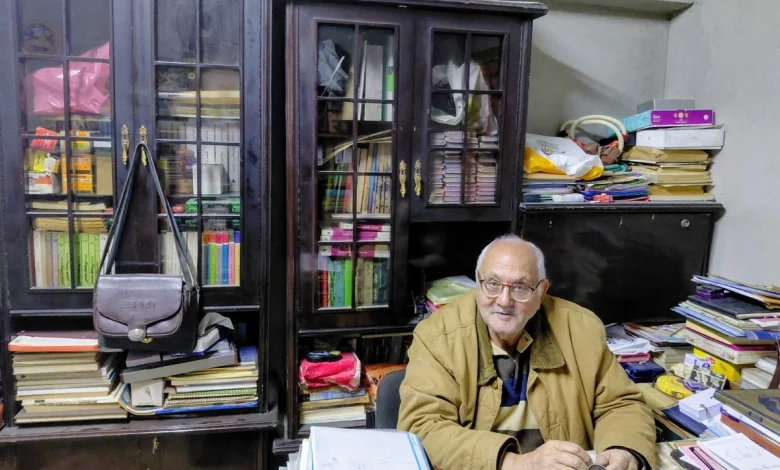
(Image: Magdy El-Bassaty’s maps of forgotten buildings. Photo credit: Osama Kamal)
The Nasserist Thought Club
At university, El-Bassaty joined fellow Nasserist students in founding the Nasserist Thought Club. Among them were Hamdeen Sabahi, Abdel Halim Qandil, Ahmed Al-Sawy, and Abdullah Al-Sennawi.
Through his work as an engineer and contractor for the Suez Canal Authority, El-Bassaty participated in restoring numerous buildings in Port Said and Port Fouad. These included the Qubba Building, the Good Shepherd School and its attached church, the Farmashiya Building (the Suez Canal Authority employees’ hospital), the Motorist Ward in the Port Said Arsenal, the tugboat captains’ buildings, and the authority’s garage. He was also tasked with moving the nuns from the French consul’s house to another villa and establishing a church inside it.
The French Built, the English Camped
El-Bassaty believes the French truly built the city because they were builders by nature and because they managed the Suez Canal Company. The English, who later controlled Port Fouad during the occupation until it became known as the “English Shore,” left only three stone buildings associated with their three camps: Holiday Camp, Transit Camp, and Family Camp. Their primary reliance was on tents, not buildings.
The French divided Port Fouad into distinct zones: villas, apartment buildings, economical housing, and popular housing. Areas ranged from 80 to 120 square meters for popular housing, 300 to 400 square meters for apartment buildings, and 800 to 1,200 square meters for villas. The layout was a centralized grid reminiscent of Garden City streets, with roads converging on a single center where services gathered.
Port Said, meanwhile, was laid out on a regular grid of intersecting longitudinal and transverse streets. The French prepared its urban expansion on the same pattern, but this plan was neglected after their departure in 1956, even though they had specified everything down to the locations of traffic islands and the types of trees to be planted there.
And so, from that first moment in the Qubba Building’s basement, Magdy El-Bassaty has carried the city’s maps in his papers and its secrets in his memory. It is as if the buildings themselves chose him to be the keeper of their stories. The guardian of a memory visible only to those who know how to listen to the whispers of old walls.