The Golden Elixir: How a 1,000-Year-Old Date Drink Became the Soul of Ramadan in Egypt’s Western Desert
In Egypt’s New Valley Governorate, Ramadan tables are incomplete without Mareesa—a thick, golden date drink made by hand in clay pots. This is the story of a tradition that has survived centuries.
In the winding pathways of the ancient village of Munira, in the Kharga Oasis of Egypt’s New Valley Governorate, a scent lingers. It is the smell of memory—of generations past, of a people whose lives have revolved around the palm tree for thousands of years.
Here, the date is not just a crop. It is the strategic reserve, the lifeblood of the economy, the “compassionate mother,” as locals describe it. And from this deep relationship with the palm has emerged the region’s most famous Ramadan tradition: Mareesa.
This thick, golden liquid, made from pressed dates (agwa), has been lodged in the collective memory of oasis dwellers for centuries with its unforgettable taste. What began as a simple date infusion has become a sacred ritual,a drink without which the month of Ramadan feels incomplete.
Traditional Preparation: Handmade and Fired in Clay
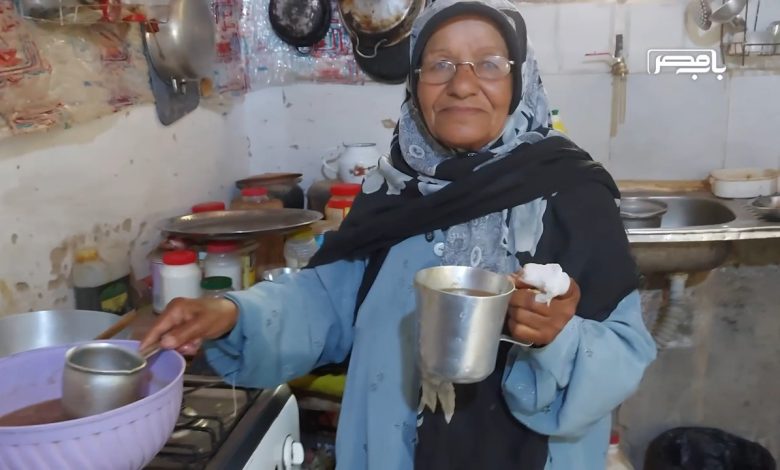
Hajja Fatma Qandil, an eighty-year-old resident of Munira, remembers how things used to be done.
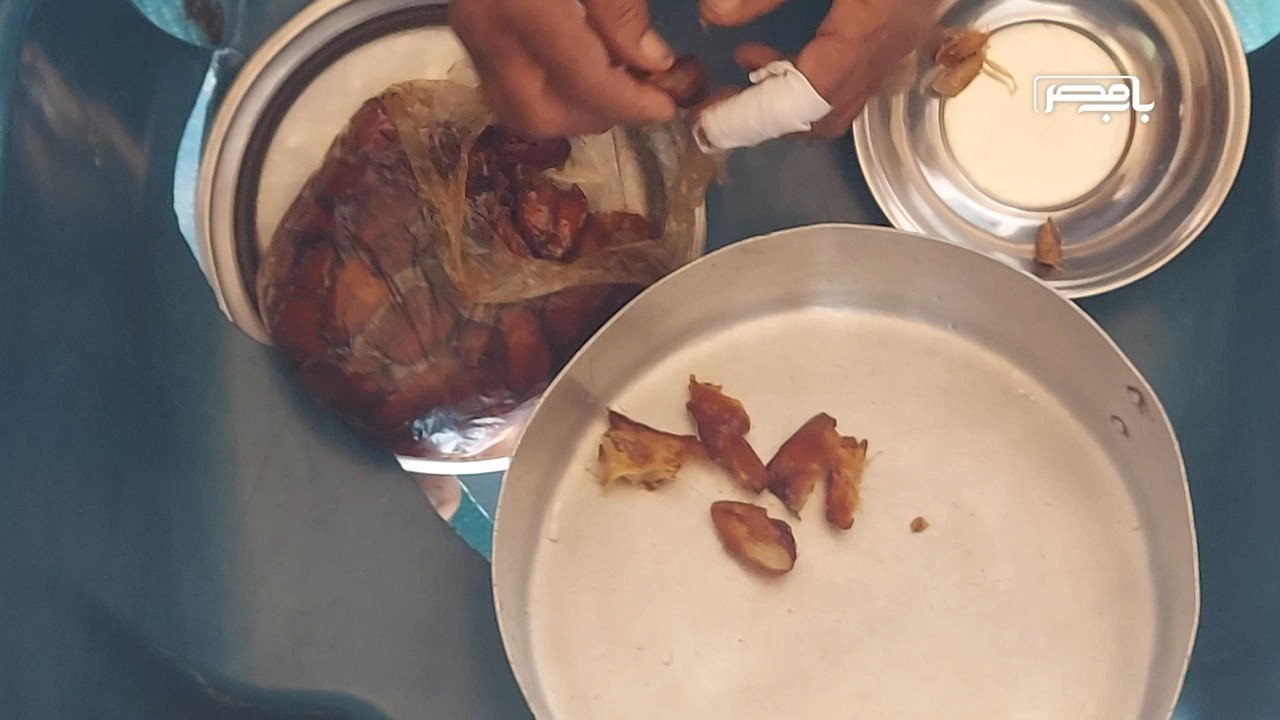
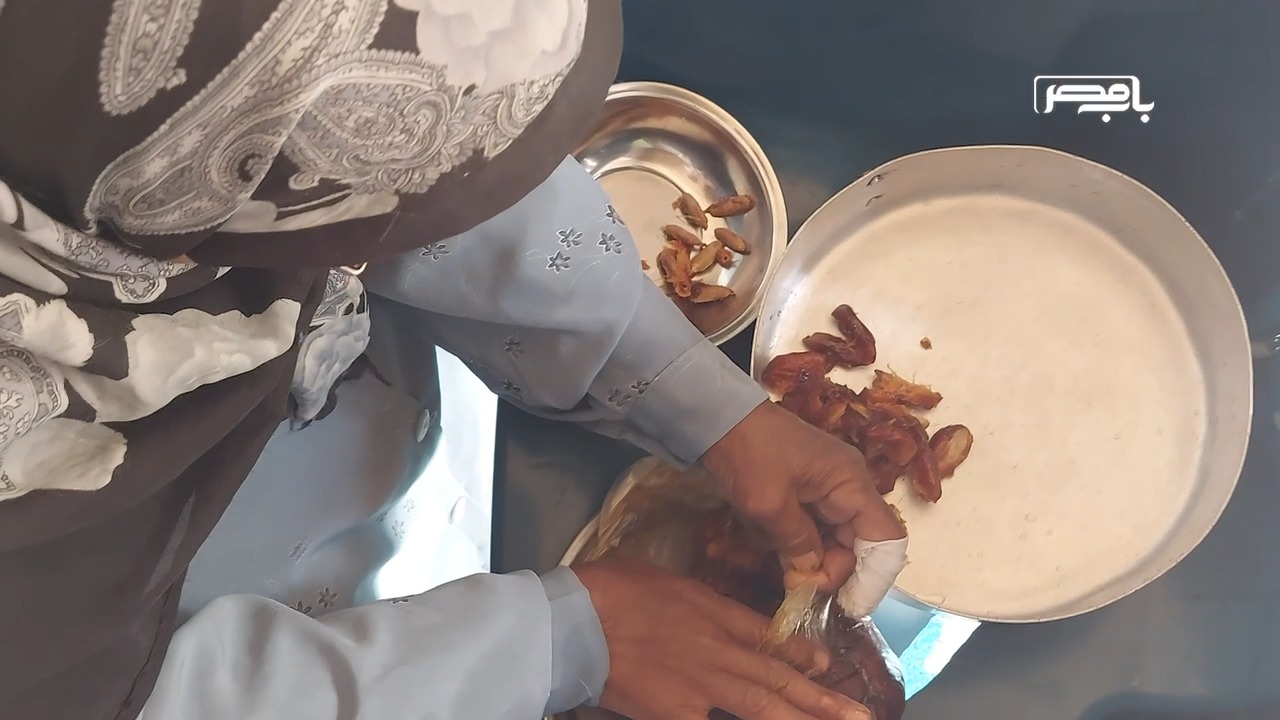
“In the old days, the men would go out to the fields,” she says, her hands moving as she speaks, illustrating techniques passed down through generations. “During Ramadan, we had no blenders, no modern tools at all. Before the month began, every household had sheets of Saiidi dates. From those, we made agwa,soft, pressed dates. We didn’t know any other varieties back then, just Saiidi. The secret was all in the hands.”
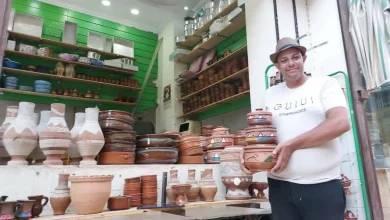
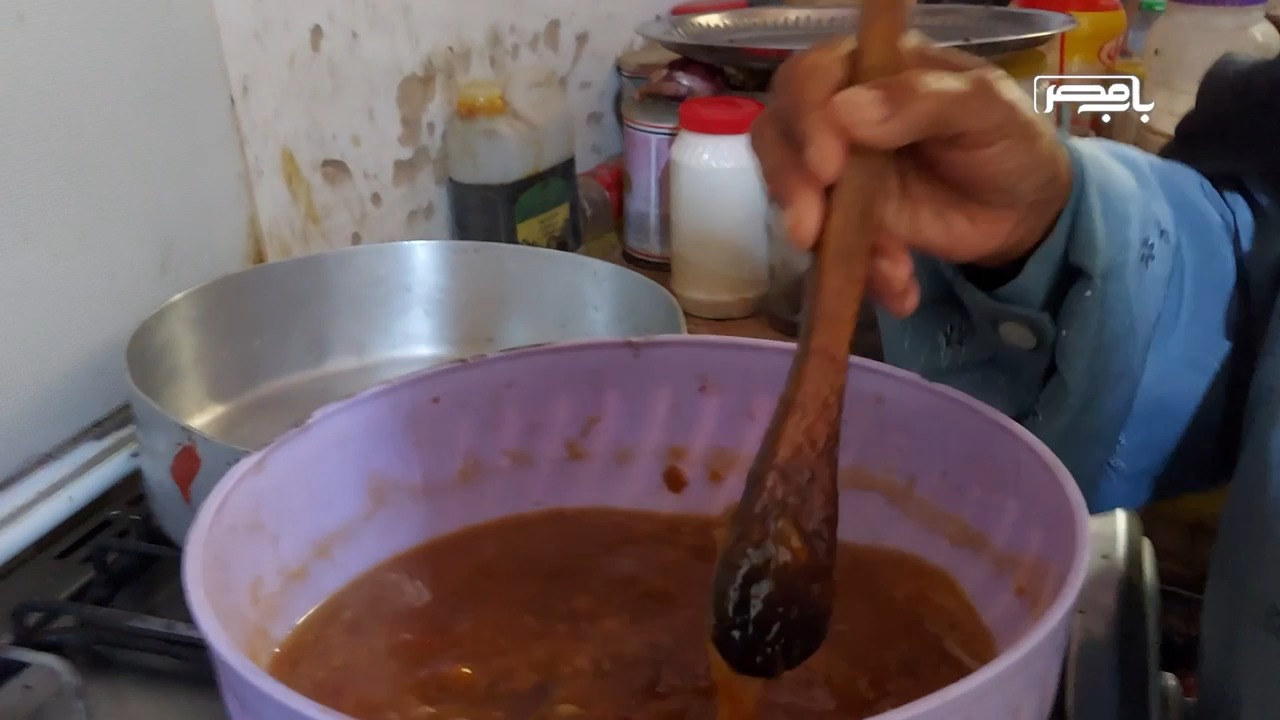
She explains the process. First, the dates are soaked in water inside clay pots. These pots are essential, she emphasizes,they keep the liquid naturally cool and give it a distinctive flavor. The name “Mareesa” itself comes from the Arabic word mars, meaning to knead or press. After the dates have soaked long enough for their flesh to dissolve into the water, the mixture is pressed and squeezed by hand until it becomes a thick, dense liquid.
Then comes the final, crucial step. “Half a lemon,” Hajja Fatma says. “You add it to the mixture. It balances the high sugar content of the dates and gives it a smooth consistency. It also prevents it from oxidizing.
More Than a Drink: Mareesa in the Oasis Imagination
For the people of the New Valley, Mareesa is not simply juice. It is a cultural artifact,a reflection of oasis identity.
Mahmoud Daniel, an artist and researcher focused on documenting local heritage, explains its significance. “People here don’t classify Mareesa as an ordinary drink,” he says. “It holds a kind of sacred status in homes across Kharga. It’s the memory of our ancestors, made tangible.”
Throughout Ramadan, Mareesa dominates iftar tables. Its ability to restore energy after long hours of fasting,especially in the harsh, dry climate of the desert, makes it indispensable. But its value goes beyond nutrition. “It’s the living memory of the elders,” Daniel adds. “It’s the physical expression of the palm tree’s generosity, and of the oasis dweller’s ability to work with the local environment to produce something healthy and traditional at the same time. That’s why younger generations hold onto it, even with all the processed drinks available now.”
Historical and Economic Roots
Dr Mohamed Abdullah Al-Barisi, a researcher specializing in oasis heritage, places Mareesa in a broader context.
“The drink is part of how oasis communities learned to make use of everything the palm tree offers,” he explains. Historically, dried dates (agwa)were the primary method of food storage, capable of lasting for years. Turning them into Mareesa was a way to ensure access to a nutritious liquid during times of scarcity or when travelling across mountain trails.
Economically, the date remains central to the New Valley. Local statistics show that the governorate is home to millions of palm trees, producing tons of dates annually. The Saiidi variety and agwa are particularly important. Mareesa, Al-Barisi notes, represents one of the most refined forms of traditional home-based food processing. “It’s a testament to the skill of oasis women, their ability to transform raw dates into a complete nutritional product.”
Munira and the Fight for Authenticity
In Munira, the attachment to tradition runs deep. Mahmoud Daniel points out that residents of this village, part of the Kharga Oasis, have refused to abandon their traditional methods of making Mareesa.
Hajja Fatma Qandil embodies this resistance. For her community, modernity is not always progress—sometimes it threatens the authenticity of taste and the integrity of inherited knowledge. Local sources in the village insist that the Mareesa made in the traditional clay vessels,the baram or qidra, is superior in quality to anything produced with modern appliances. This conviction has kept the tradition alive, making Mareesa a signature element of New Valley heritage.
As Daniel puts it, the drink stands as witness to an unbroken history, linking the palm trees of the oases to the people who tend them. It is proof that folk heritage in the New Valley is not a relic of the past. It is still alive, still made by hand, still preserved in the collective memory of a people who refuse to let it go.