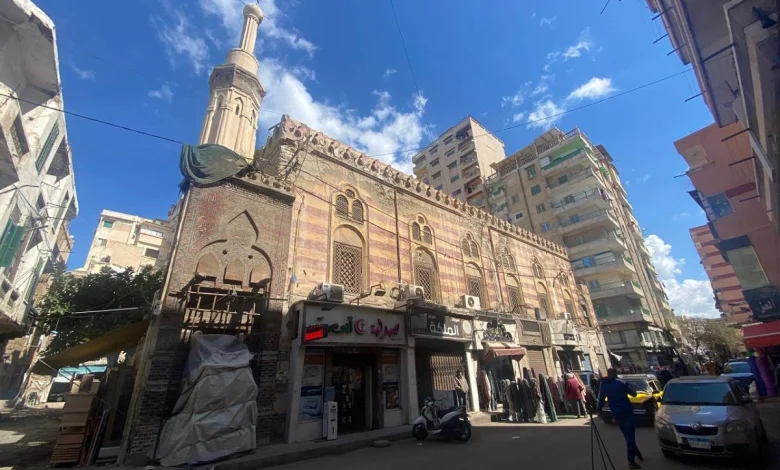
Can a Website Save Alexandria? Inside the Crowdsourced Archive Fighting Erasure
In Egypt’s second city, rapid development is erasing centuries of history. One Alexandrian is fighting back with a camera, a website, and a simple idea: let the people themselves build an archive before it’s too late
By Merna Gohar
A city is more than its buildings. It is memory, etched into stone balconies, hidden behind layers of signage, passed through conversations in coffee shops and narrow alleyways. In Alexandria, those details are disappearing. The city is changing quickly, and with each change, another piece of its history slips away.
The Alexandria Archive project began as a response to that loss. Its founder, Islam Ali Abdel Qader, grew up in the Bahari district. He started with a simple impulse: to photograph the buildings and facades he passed every day, before they vanished.
A Walk Through Old Alexandria
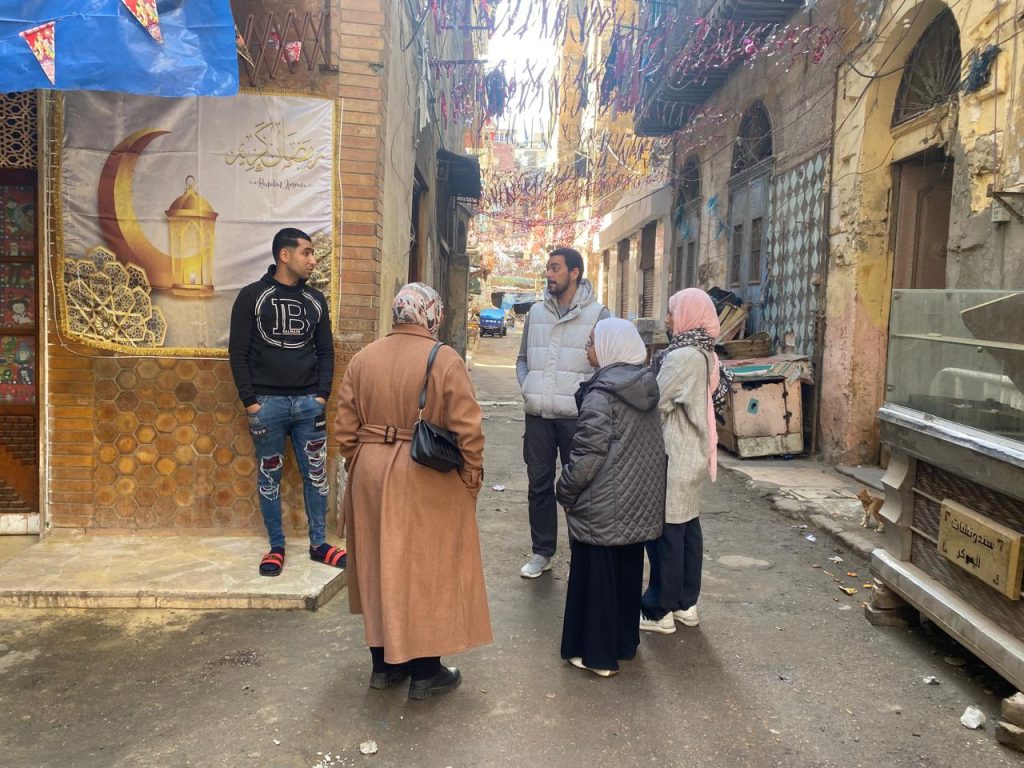
“If we only look straight ahead, we won’t see anything,” Islam says, as he begins a walking tour with some members of the Alexandria Archive team.
Islam’s father used to tell him stories about old buildings and neighbourhoods that had changed or disappeared entirely. Some he had seen himself; others were already gone. “It upset me whenever I found something had been demolished,” he recalls with a smile. “So I thought: let’s photograph it. Let’s preserve it as much as we can.”
Just as nineteenth-century photographers documented the transformation of cities around the world, Islam uses his camera for the same purpose today, except this time, the subject is Alexandria itself.
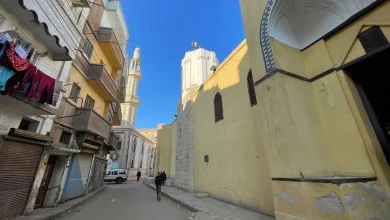
We walk through the streets of Manshiya and Gomrok, past Zenet El-Settat and the Turkish market. Shops crowd together. Signs tangle overhead, making it difficult to look up. The sky is obscured by awnings and advertisements. The old balconies and stone carvings have become details few people notice anymore.
Islam graduated from the Faculty of Science and works in marketing. But photography is not just a hobby, it has become a full-fledged project: a digital archive of Alexandria that documents not only buildings but the spirit of the city and its small, easily overlooked details.
“I photograph the present and the past,” he says during the walk. “I show people what this place used to look like. I show them its current state, because there’s no guarantee it will stay this way—it might fall, or be removed. I document it from every angle.”
How It Began
The idea came to him on September 6, 2023. Islam was passing by the site of a beautiful old building that had just been demolished, near a famous shop on Tousson Street (formerly Salah Salem). It wasn’t just an ordinary structure,it carried something of the grandeur of the past. The sight of it bothered him. And from that feeling, the question emerged: Why not document all of this before it disappears?
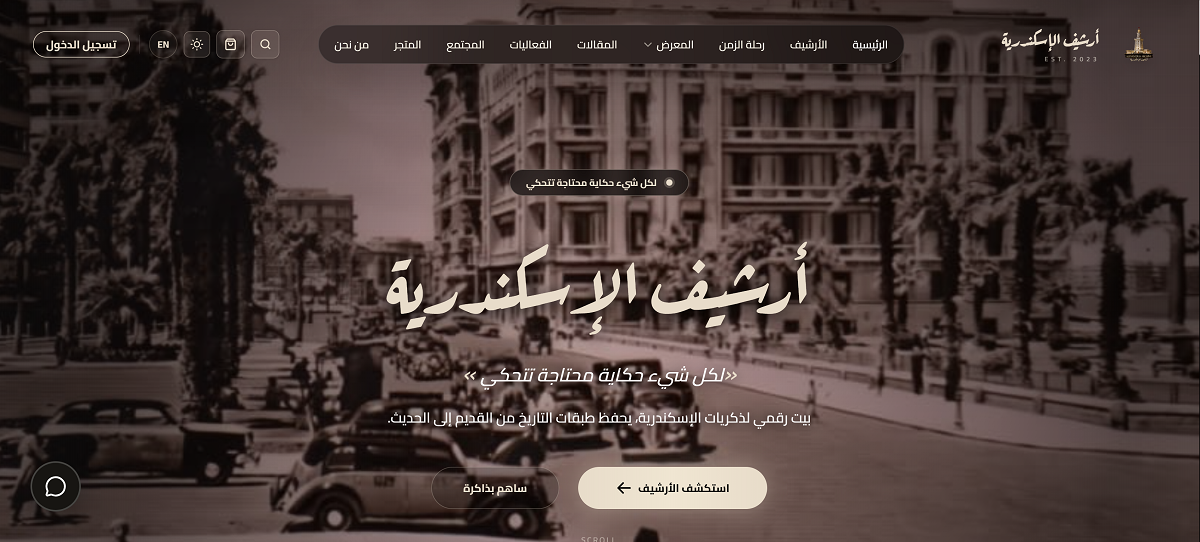
He created a Facebook page called “Alexandria Archive” and began posting the photographs he took, sharing documents and information he came across. Over time, the page grew into something larger. The digital archive officially launched in 2026, after more than three years of continuous work.
A Participatory Archive
“The Alexandria Archive is participatory,” Islam explains. “Any Alexandrian, anyone with a photo—Egyptian or foreign,can upload it. The information is reviewed, and the source of the image is recorded.”
The platform is not limited to individuals. Institutions,churches, and organisations with their own archives can also upload historical photos and materials. What began as one person’s effort has become a collective responsibility, shared by the city’s own residents.
The archive does not stop at photographs. The website includes historical articles, a podcast, and music and songs that reflect the spirit of Alexandria. It is available in both Arabic and English, and users can contribute in either language. Sources and copyright information are carefully documented, ensuring that materials are preserved for future generations.
As we walk through the old streets of Alexandria, examples of what the archive seeks to preserve appear around every corner.
Mosques and Houses That Tell History
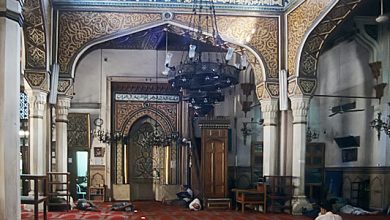
We continue until we reach the Shorbagi Mosque, one of Alexandria’s oldest, established in 1758. It is a suspended mosque,a relatively rare architectural style in the city. Islam points to the sealed entrance. Approximately 48 million Egyptian pounds were spent in 2009 on a restoration project, he tells me, but the work was never completed.
We climb the steps, attempting to glimpse the interior, but the door is firmly locked. Rubble has accumulated at the entrance. Islam mentions that people still live in the annex—small rooms or apartments overlooking an internal courtyard, as if history and the present occupy the same space.
From there, we head to the Terbana Mosque on France Street, older than Shorbagi by about a century. Its ancient Roman columns speak to layers of history, but the mosque is also closed.
Memory Between Two Windows
We continue walking until we stop in front of a collapsed house in the Jewish quarter. As we photograph it, an elderly woman passes by and stops to speak with Islam. She points to the ruined building and tells him it was her old home. After it collapsed, she was moved to the house directly across the street.
What separates her from her former life is a narrow street, just a few steps. From the window of her new home, she looks out every day at the ruins of her old one. The scene needs no commentary. Memory suspended between two windows.
In the Jewish quarter, the archive does not feel like just a website or a platform for uploading photos. It feels like an attempt to fix a moment in place before it vanishes. As the woman continues on her way, Islam raises his phone to take another photograph. He cannot prevent demolition or change the city’s trajectory. But he can try, at least, to keep its features from falling into oblivion.