Upper Egypt

From Sea Coral to Deer Antler: The Hidden Craft of Egypt’s Prayer Beads

Discover how Egyptian artisans craft luxury prayer beads from coral, deer antler, amber, camel bone, and rare ivory in a centuries-old sacred tradition.

By Amany Khairy
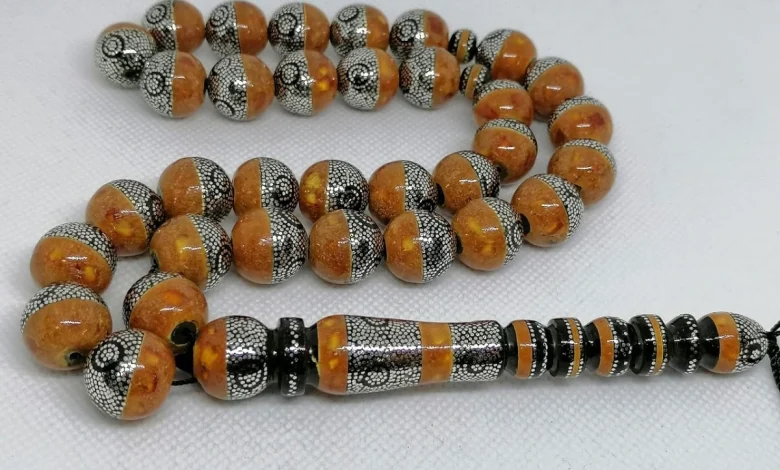
Closely strung beads, aligned side by side in sequences of 33 or 99 units and sometimes more, have long accompanied worshippers in the remembrance of God, replacing the counting of fingers. Over centuries, prayer beads sebhas have evolved far beyond simple wooden or plastic designs. Today, they are crafted from an extraordinary range of materials, including sea coral, deer antlers, camel bone, amber, and even elephant ivory, which remains the rarest and most expensive material in the world of prayer beads.

From Fox and Wolf Fur to Decorative Prayer Beads

Leather tanneries offer a wide variety of hides, ranging from cowhide to those of foxes and wolves. While cowhide remains the primary material for shoes, bags, and jackets, fox fur is particularly prized for its softness and aesthetic appeal. In some cases, it is used for rugs, garments, and home décor.

Islam Alaa, owner of a leather tannery, explains that some customers have highly specific tastes in interior decoration, requesting fox fur skins to adorn walls or furniture, adding a luxurious visual touch. A single fox skin can reach prices of up to 600 EGP.

سبحة 10 مللي من الكوك
10 mm rosary beads made from kok wood

Every Hide Has Its Client

Mohamed Abu Shanab, who is the third generation of Sebha makers. Notes that each type of hide has its own clientele. Fox and wolf skins, for instance, start at around 500 EGP per piece, while wolf hides can reach up to 1,000 EGP. Some workshops transform these skins into prayer beads through complex manufacturing processes, sourcing materials from hunters or animal farms across Egypt’s Delta region.

More exotic hides, such as leopard and lion skins, are exceedingly rare in Egypt and typically become available only in exceptional circumstances, such as accidental poisoning in wildlife farms. Their prices range from 30,000 to 60,000 EGP and are primarily sold to buyers in the Gulf region. Rhino hide, meanwhile, is almost impossible to obtain and requires special handling, making it extraordinarily valuable.

Craftsmanship and Innovation in the Workshops

Abbas, a raw-materials trader who serves as an intermediary between leather merchants and workshop owners, explains that customers constantly seek novelty. Prayer beads today are made from bakelite, plastic, polyester, coconut wood, amber, pendulum stone, and even unconventional natural materials such as fox leather and camel bone.

Workshop owners, he says, turn their homes into spaces of experimentation, driven by innovation and necessity. Without constant adaptation, survival in the trade becomes impossible.

He describes the process of crafting beads from leather: the hide is cut, placed into silicone moulds, and layered with polyester resin until it hardens. These materials are readily available in Cairo’s Souq Al-Gomaa tanneries and are legally traded.

سبحة بلية من المرجان الأسود
Loose rosary beads made of black coral

Elephant Ivory: The Most Expensive Misbaha

Hajj Mohamed Abbas adds that while prayer beads can be made from elephant ivory, the practice is strictly prohibited in Egypt and is both rare and costly. Ivory is sold by the kilogram for staggering sums, and a single tusk may weigh between 15 and 20 kilograms, requiring expert craftsmanship to divide it into workable sections.

Some beads are also fashioned from camel bones, which are carefully segmented and treated before becoming the base material for manufacturing.

Sea Coral: A Marine Treasure Turned into Beads

Prayer beads made from sea coral and jet coral are especially popular. Black coral is sourced from the depths of the Red Sea, while brown and red coral are obtained from specific areas in Suez.

Abbas explains that coral is not the only marine material used; some artisans incorporate sea turtle shell, which can reach prices of up to 5,000 EGP per kilogram. These shells are compressed, moulded, and shaped before being cut into tiny cylindrical segments. Additionally, certain natural sea stones, believed to bring good fortune, are harvested at prices ranging from 400 to 500 EGP per kilogram.

Despite this diversity, jet coral and black and red coral remain the most sought-after materials, with prices for a single misbaha starting at 500 EGP and rising according to bead density.

Rare Materials and Diverse Tastes

According to Abdelhadi El-Sayed, a prayer bead craftsman, the most expensive pieces are made from deer antler and elephant ivory. Both materials are extremely rare and internationally restricted, only becoming available under exceptional conditions, such as the natural death of animals. These raw materials are sometimes imported from African countries like Chad and Zimbabwe.

Deer antlers, meanwhile, are collected from licensed farms where male deer naturally shed their antlers after mating season. Although accessible, their high price per kilogram makes antler prayer beads among the costliest on the market.

El-Sayed notes that misbahas are no longer limited to traditional materials like bakelite and mastic. They are now crafted from aromatic seeds and spices such as anise, mint, ginger, and cloves — any substance capable of holding form and fragrance. Some designs incorporate silver or precious stones, further elevating their value.

Ultimately, he concludes, the diversity of customers fuels the endless reinvention of prayer beads, ensuring that this ancient craft continues to evolve across generations.

Related Articles

Back to top button
BabMasr