Upper Egypt

A Thousand Years of Light: How Ramadan Decorations Shaped Egypt’s Streets and Homes

Tracing over 1,000 years of Ramadan decorations in Egypt, from Fatimid lanterns to modern lights, revealing how faith, family, and tradition shaped the streets.
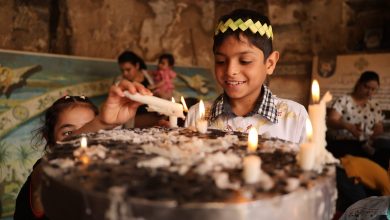

For more than a millennium, the arrival of Ramadan in Egypt has been marked not only by prayer and fasting, but also by the lighting of lamps. From flickering oil lamps in medieval Cairo to today’s glowing LED strings cascading across balconies, Ramadan decorations have long transformed Egyptian streets into luminous celebrations of faith, memory, and communal joy.

Far from being a modern invention or a passing custom, Ramadan decorations in Egypt are rooted in deep historical traditions, carefully documented by medieval historians and preserved through generations of popular practice. What began as a ceremonial illumination gradually evolved into one of the most cherished rituals of the holy month,transforming entire neighbourhoods into living canvases of colour and light.

When Cairo First Lit Up: The Fatimid Origins of Ramadan Illumination

The earliest recorded references to Ramadan lighting in Egypt date back over a thousand years, to the Fatimid dynasty (969–1171 CE), which ruled from Cairo. In his monumental work Al-Mawa‘iz wal-I‘tibar bi-Dhikr al-Khitat wal-Athar, renowned Egyptian historian Taqi al-Din al-Maqrizi recounts how the Fatimid rulers gave extraordinary importance to religious occasions, particularly Ramadan.

Mosques were lavishly illuminated, and lanterns were suspended across streets and public squares. When Caliph al-Mu‘izz li-Din Allah entered Cairo in Ramadan in 973 CE, crowds greeted him by night, carrying torches that bathed the city in a sea of light. While the now-iconic Ramadan lantern (fanous) is not explicitly mentioned in these accounts, historians agree that this moment laid the foundation for Egypt’s enduring association between Ramadan and illumination.

3e4ed072 c200 4959 974c 0c7db3774dfa
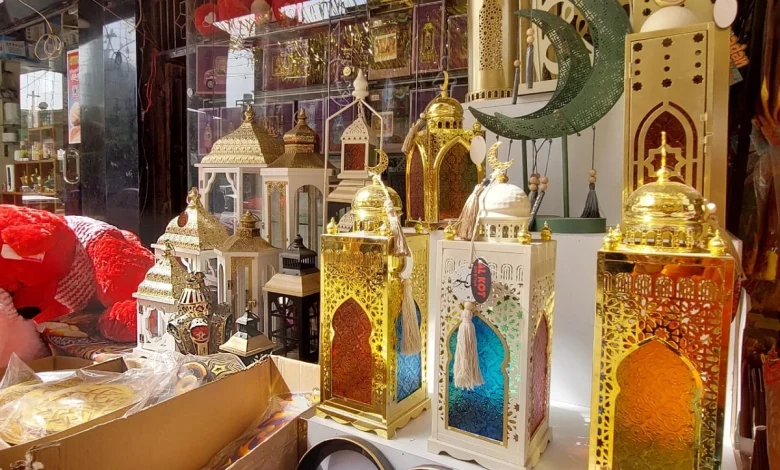
Ramadan decorations and lanterns in Assiut — Photo: Jasmine Mehna

Mamluk Cairo: When Light Became Art

By the Mamluk era (1250–1517), light had evolved into an artistic expression. The historian Ibn Iyas, in his chronicle Bada’i al-Zuhur fi Waqa’i al-Duhur, vividly describes Cairo’s religious festivities, highlighting the ornate glass lamps and mosque lanterns that adorned public spaces.

During this period, the craftsmanship of mosque lamps reached extraordinary heights. Intricately decorated glass vessels, etched with Quranic verses and geometric motifs, transformed functional lighting into works of sacred art. Many of these masterpieces now reside in museums of Islamic art around the world, standing as silent witnesses to an age when illumination symbolized both spiritual reverence and aesthetic splendor.

From Palaces to Alleyways: How Ramadan Light Entered Everyday Life

In the 19th century, under the rule of Muhammad Ali Pasha and his successors, Egypt underwent sweeping urban transformations. Modern street lighting, new architectural forms, and expanding neighborhoods reshaped Cairo’s public spaces. Historian Abd al-Rahman al-Rafi‘i documents how these changes gradually shifted festive illumination from royal palaces and mosques into residential quarters.

As electric lamps replaced oil lanterns, Ramadan decorations became increasingly communal. Families began decorating their balconies and alleyways, turning private celebration into collective spectacle. Over time, this tradition spread beyond Cairo to provincial towns and rural villages, creating a nationwide culture of Ramadan illumination.

ddb1c9a0 5775 4f20 bf80 050bbc6331c8
Ramadan decorations and lanterns in Assiut. Photo: Jasmine Mehna

Paper, Scissors, and Shared Joy: Homemade Ramadan Decorations

Long before store-bought lights and plastic lanterns flooded the market, Ramadan decorations were handcrafted rituals of love and anticipation.

Najwa Ali, 55, from the town of Sidfa in Upper Egypt, recalls the preparations of her childhood. “Before ready-made decorations appeared, Ramadan in our home began with colored paper, old notebooks, scissors, and endless laughter,” she says.

Families gathered days before the holy month. Mothers sat cross-legged on the floor, children clustered around, while fathers carefully sketched crescent moons and stars. Sheets of paper were folded, cut, and unfolded into delicate lace-like patterns, strung together to form garlands that transformed humble homes into festive sanctuaries.

Even glue was homemade,crafted from flour and water over gentle heat. “Our hands would get sticky, the paper often ended up crooked,” Najwa laughs. “But no one cared. It wasn’t about perfection. It was about being together.”

Creativity from Scarcity: Turning Everyday Materials into Festive Art

In working-class neighbourhoods and rural villages, creativity flourished despite limited resources. Plastic fertilizer sacks, once emptied, were washed, dried, and repurposed into colorful decorations. Cut into crescents, stars, and ribbons, they shimmered beneath streetlights, giving entire alleys a carnival-like glow.

Neighbors collaborated, children raced to hang the decorations, and elders watched with pride. “Ramadan was crafted by hand, piece by piece,” Najwa reflects. “Every street became a collective artwork.”

b469f229 bb32 4879 93a7 4fa00ddfbca6
Ramadan decorations and lanterns in Assiut.Photo: Jasmine Mehna

The Silent Glow of Modern Lights

Today, ready-made LED strings, inflatable lanterns, and mass-produced decorations dominate Egyptian markets. With a flick of a switch, balconies light up in synchronised brilliance: beautiful, efficient, and effortless.

Yet for many, something vital has been lost.

Mohamed Sayed, a 60-year-old lantern vendor in Assiut, notes, “Modern decorations are stunning, but they’re quiet. They don’t carry the noise of scissors, the smell of glue, or the chaos of children running around. People still long for that.”

Economic pressures and rising costs have also reshaped the market. Lantern prices now range from modest plastic models to handcrafted metal pieces costing hundreds of dollars. As living expenses rise and school terms coincide with Ramadan, many families decorate less than before.

Still, the tradition endures. Across Egypt, lights continue to shimmer, echoing centuries of faith, artistry, and shared longing.

More Than Decoration: A Ritual of Belonging

In Egypt, Ramadan decorations are far more than festive embellishments. They are acts of remembrance, identity, and continuity. From Fatimid torchlit processions to paper garlands crafted by children’s hands, they weave together past and present, sacred and domestic, memory and celebration.

Each glowing street becomes a testament to Egypt’s enduring relationship with light. A thousand-year story that still unfolds, night after luminous night.

Related Articles

Back to top button
BabMasr